Managing RV Travel Medical Appointments: A Practical Planning Guide
A medical appointment does not have to bring your RV trip to a halt. With a little lead time, you can keep specialist visits, prescription refills, and routine screenings on track while still enjoying the campground.
For seniors, full-time RVers, and couples easing into van life, the goal is simple: let health care set the rhythm of the route, not erase the route. Good planning leaves room for a lakefront campsite, an unplanned extra rest day, and the occasional road delay.
Key Takeaways
- Put every appointment, prescription medications refills, and required lab visit on one shared calendar before choosing campsites.
- Stay near your care location for at least one flexible day before and after important visits.
- Confirm insurance rules, provider networks, and pharmacy access before crossing state lines.
- Carry a current medication list, insurance cards, and key records in both paper and secure digital forms.
- Build slower driving days into your route, especially after treatment, testing, or long clinic visits.
Start With the Appointment Calendar, Not the Camping Map
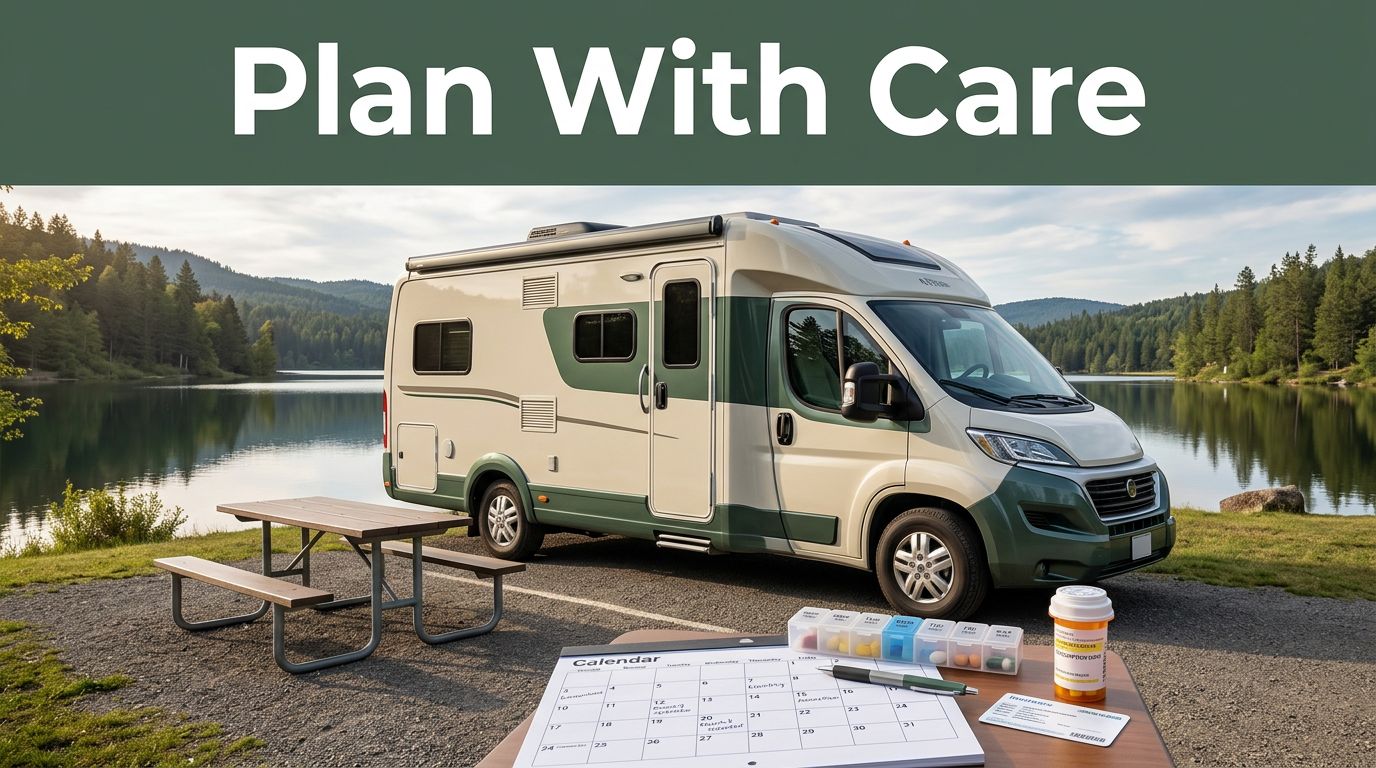
The easiest way to plan RV travel around medical appointments is to build the trip outward from the dates you cannot move. Add visits with your primary care physician, dental appointments, specialist follow-ups, lab work, imaging, infusion dates, and prescription refill windows to a shared paper or digital calendar. By mapping out this routine medical care early, you ensure your health remains a priority while you explore.
Then mark a practical arrival date. For a routine appointment, plan to reach the area two days early. For a procedure, new specialist visit, or appointment that could lead to testing, give yourself three or four days. Road construction, tire trouble, weather, and campground check-in times do not care about your calendar.

Avoid scheduling a 450-mile driving day before a 9 a.m. appointment. Arriving tired, rushed, and stiff makes a simple checkup feel harder than it should. Instead, choose a campground within 30 to 45 minutes of the clinic and plan a low-key day before the visit.
A calendar also reveals your natural travel windows. If you have a cardiology visit in Arizona every March and an eye appointment in Michigan each September, those dates can shape your seasonal migration. The rest of the route becomes more enjoyable because the fixed points are already handled.
Before leaving, call each provider’s office. Ask whether an appointment can be moved to telehealth, whether fasting is required, and if the doctor needs recent labs. RVShare’s guidance on handling medical needs on the road also stresses contacting doctors and other care providers before extended travel.
Treat appointment days as anchor days. Campsites, attractions, and driving mileage should flex around them.
Build a Medical Care Map for Every Stop
Your route needs more than fuel stops and scenic overlooks. Before you book camping, look up the nearest hospital, urgent care clinics, and walk-in clinics for minor needs, along with the closest pharmacy and grocery store. Save addresses and phone numbers in your phone, but also write them in a travel notebook. Cell service can disappear when you need it most.
Start with the campground itself. Check the road conditions, gate hours, distance to town, and whether the site has reliable cell coverage. A beautiful public campground 90 minutes down a winding mountain road may not fit well before a medical visit.
For longer stays, search for clinics that accept your insurance and are accepting new patients. Urgent care can handle many time-sensitive concerns, such as a urinary tract infection, minor injury, rash, or medication question. However, medical emergencies like chest pain, stroke symptoms, severe breathing trouble, or uncontrolled bleeding require an emergency room visit immediately.
A good arrival routine helps, especially when boondocking or staying on public land:
- Find the closest emergency room and confirm the driving route.
- Locate a pharmacy that can access your prescription profile.
- Save the campground office number and local non-emergency number.
- Identify a nearby place with dependable Wi-Fi for telehealth calls.
- Research local veterinary care in case your pets need unexpected assistance.
THOR Industries’ road health planning advice is a useful reminder to keep family health needs in mind before changing locations. Your care map gives you more freedom because you already know where to turn if plans change.
Check Coverage Before You Cross a State Line
Your health insurance coverage can shape RV travel more than many campers expect. Original Medicare generally allows beneficiaries to see providers nationwide who accept Medicare, while Medicare Advantage plans may use restrictive regional HMO or PPO networks. Because the details vary significantly by plan, call the number on your insurance card to verify your out-of-state coverage.
Ask whether routine care is covered away from your home area, how urgent care is handled, and if you need a specialist referral for your specific needs. It is also important to discuss how your plan manages pre-existing conditions and whether it requires you to spend a minimum amount of time in your state of residency. Many seniors who travel extensively choose to rely on Medicare and Medigap policies paired with a Part D prescription plan for broader access. If you are not yet eligible for Medicare, consider looking into ACA Marketplace plans or resources like the RVer Insurance Exchange to find a policy that fits your lifestyle.
Because health insurance coverage often depends on your state of residency, it is wise to speak with a licensed agent who understands full-time travel. They can explain how domicile requirements, such as maintaining Florida residency, might influence your network options. Always write down the representative’s name, the date, and the specific answers you receive.
If you use a primary doctor near your home base, ask how the office handles out-of-state lab orders, portal messages, and referrals. Some offices can send orders to national lab locations, while others require you to return for testing. Knowing these requirements prevents a frustrating phone call halfway through a trip.
For retired military families, TRICARE may offer options that differ from civilian plans. Veterans enrolled in VA health care should also ask their care team about community care and traveling veteran resources before departure.
Keep Records and Prescriptions Ready to Move
A roadside medical visit goes faster when you can answer basic questions without searching through cabinets. Keep a one-page medical records summary in your wallet or day bag. Include diagnoses, allergies, prescription medications with dosages, doctors’ names, emergency contacts, insurance details, and your preferred pharmacy.
Place a printed copy in a waterproof folder. Store a second copy in secure cloud storage that you and a trusted family member can access. Keep original insurance cards with you, rather than buried in a storage bay.
Medication planning deserves its own calendar. Ask your doctor about a 90-day supply when appropriate, then refill early enough to cover travel delays. National pharmacy chains such as CVS can often transfer eligible prescriptions between locations, although controlled medications and state laws may limit transfers.
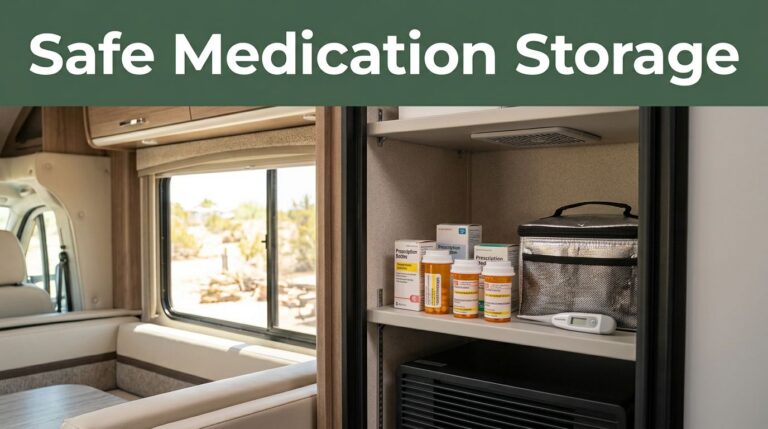
Never leave medicine in a hot tow vehicle or outside storage compartment. Heat and moisture can damage many prescriptions. Bring medications into the RV and use a small insulated pouch for travel days when needed.
Telehealth services can help with follow-up questions, chronic-condition check-ins, and minor concerns. You can also utilize various telemedicine apps to connect with providers; however, this depends on a solid internet connection and a provider licensed to treat patients where you are physically located. Confirm those rules before relying on a virtual visit.
Angel Flight West’s advice on using an RV for medical transportation raises another useful point: consider access, comfort, fuel needs, and nearby hospital options when your journey involves specific medical transportation needs.
Give Yourself Recovery Days and Easier Driving Miles
The appointment itself may take an hour, but the day can still drain your energy. Blood draws, imaging, dental work, medication adjustments, and difficult conversations with a doctor all take a toll. Plan an easy day afterward whenever possible to recover from your routine medical care.
Stay in the same campground after a procedure. Choose a site with full hookups if fatigue, heat, or mobility concerns could make setup harder. Also keep simple meals, extra water, and basic supplies on hand so you do not have to run errands after a long clinic visit.
For regular travel days, many full-time RVers prefer 200 to 300 miles rather than pushing farther. Your ideal limit may be lower, especially in bad weather or unfamiliar terrain. Slower miles give you time to stop for stretching, fuel, lunch, and unexpected detours.
Use a simple rule for appointment weeks: no difficult driving on the day before, the day of, or the day after an important visit. That cushion protects your health and makes the journey feel like camping rather than a deadline race.
RV Life Insider shares practical road wisdom for travelers who prefer a steadier pace. You can subscribe to the RV Life Insider newsletter for fresh camping tips, travel ideas, and RV lifestyle resources delivered to your inbox.
Stay Connected With Your Care Team and Your People
Before a longer trip, tell close family members where you expect to be and share your general route. You don’t need to report every campground, but someone should know your next major stop and how to reach you. If you are planning an extended trip or crossing borders into countries like Canada, it is wise to research travel medical insurance to ensure you have adequate coverage beyond your standard policy.
Set up your patient portals before leaving home. Test your password, turn on two-factor authentication, and confirm that your phone can receive login codes. Portal access makes it easier to view test results, request refills, and message a doctor’s office from a campsite.
Travel companions should know where you keep medical records and medications. If you travel alone, carry emergency contact information in your wallet and consider adding it to your phone’s emergency medical ID. A few minutes of preparation can spare others a frantic search.
Community advice can also help when you are working through the realities of health care on the road. A discussion among full-time RVers offers firsthand perspectives on balancing changing health needs with the desire to keep traveling.
For more trip-planning tools, travel stories, and practical RV resources, View Our Website. You can also View All Our Newsletters to find topics that fit the way you travel.
Frequently Asked Questions
How far in advance should I arrive at my destination before a medical appointment?
For routine checkups, it is best to arrive at your campground at least two days early to account for potential road delays or vehicle issues. If you are undergoing a procedure or visiting a new specialist, plan for three to four days of lead time to ensure you are well-rested and prepared.
Can I refill my prescriptions while traveling across state lines?
Most national pharmacy chains can transfer eligible prescriptions between locations, but you should verify this with your pharmacist before departure. Always request a 90-day supply when possible and refill your medications early to account for travel delays or limited access in remote areas.
How do I confirm that my health insurance will cover me in different states?
Call the customer service number on your insurance card before you leave to ask about network limitations and out-of-state coverage for routine or urgent care. If you have a restrictive plan like an HMO, you may need to seek pre-authorization or look into temporary travel insurance to ensure your care remains covered while on the road.
What should I include in my emergency medical folder?
Keep a printed summary that lists your diagnoses, allergies, current medication dosages, and contact information for your primary care physicians. Storing this information in a waterproof folder alongside your insurance cards ensures you have everything needed for a quick check-in at an urgent care or emergency department.
Keep the Road Open With a Flexible Plan
Managing RV travel medical appointments and enjoying the freedom of the open road can easily coexist on the same calendar. The secret is to prioritize your care dates, allow for generous arrival and recovery time, and select camping locations that keep pharmacies and hospitals within a reasonable distance.
The strongest travel plans always leave room for a change of course. With your health records packed, your prescriptions managed, and a few extra days built into your schedule, you ensure that your medical care becomes a seamless part of the route rather than the end of your trip. By staying organized, you can enjoy your journey with the confidence that your health needs are fully supported.
This post may contain affiliate links. If you make a purchase through these links, I may earn a small commission at no extra cost to you.