How to Practice RV Driving Before Your First Camping Trip
Your first trip can feel bigger when the RV is bigger than anything you’ve driven before. A weekend of camping sounds fun, but the drive there can sit in the back of your mind.
The good news is simple: practice RV driving in small, calm sessions, and the fear drops fast. You don’t need a perfect first day. You need a safe place, a plan, and time to repeat the basics.
Know your rig before the wheels move
Every rv handles a little differently. A Class B feels closer to a van life setup, while a Class A or long trailer needs more space, more patience, and wider turns. Before you drive, learn the size of your rig and how it moves.
Start with the numbers that matter most: height, length, width, and loaded weight. Write them on a card and keep it near the driver’s seat. Height matters for bridges and canopies. Length affects turns and fuel stops. Weight changes braking distance and how the rig feels in crosswinds.
Check these basics before your first practice run:
| What to know | Why it matters |
|---|---|
| Overall height | Helps you avoid low clearances |
| Overall length | Tells you how much room turns need |
| Mirror position | Reduces blind spots |
| Tire pressure and load | Affects control and braking |
Those four items shape almost every move you make. Once you know them, the RV stops feeling like a mystery.
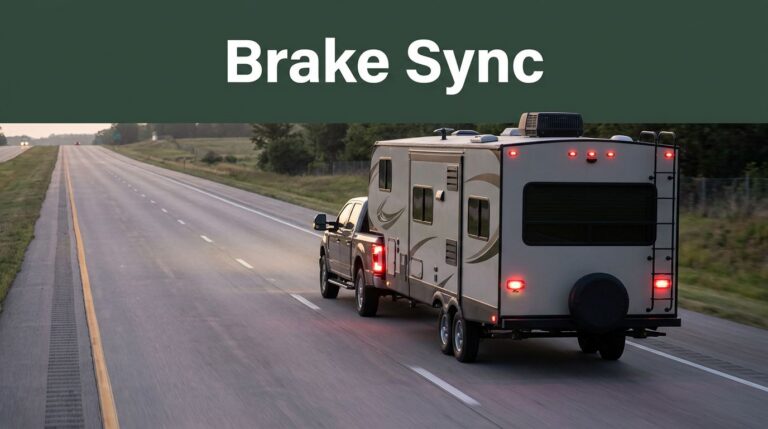
Next, set the driver’s seat, mirrors, and camera views before you roll. Cameras help, but mirrors still do most of the work. If you’re towing, learn where the trailer sits in each mirror and how quickly it reacts when you steer.
If you’re traveling with a partner, agree on hand signals and a few simple words. “Stop,” “straight,” “driver side,” and “passenger side” are enough. Keep the language short, because long instructions create confusion fast.
Slow and smooth beats fast and tense.
Load the RV the way you’ll use it on your trip. Water, food, gear, and passengers all change how it feels. Many full time rv’ers still do a short refresher drive after a break, because a loaded coach never feels exactly like an empty one.
For seniors, shorter sessions work better. Forty minutes of focused practice is more useful than two tired hours. Take water, sit down between drills, and stop while you still feel sharp.
Build confidence in an empty lot
The best place to start is a large, open parking lot with clear pavement and few distractions. You want room to think. You also want space to make a mistake without pressure from traffic or a line of impatient drivers.
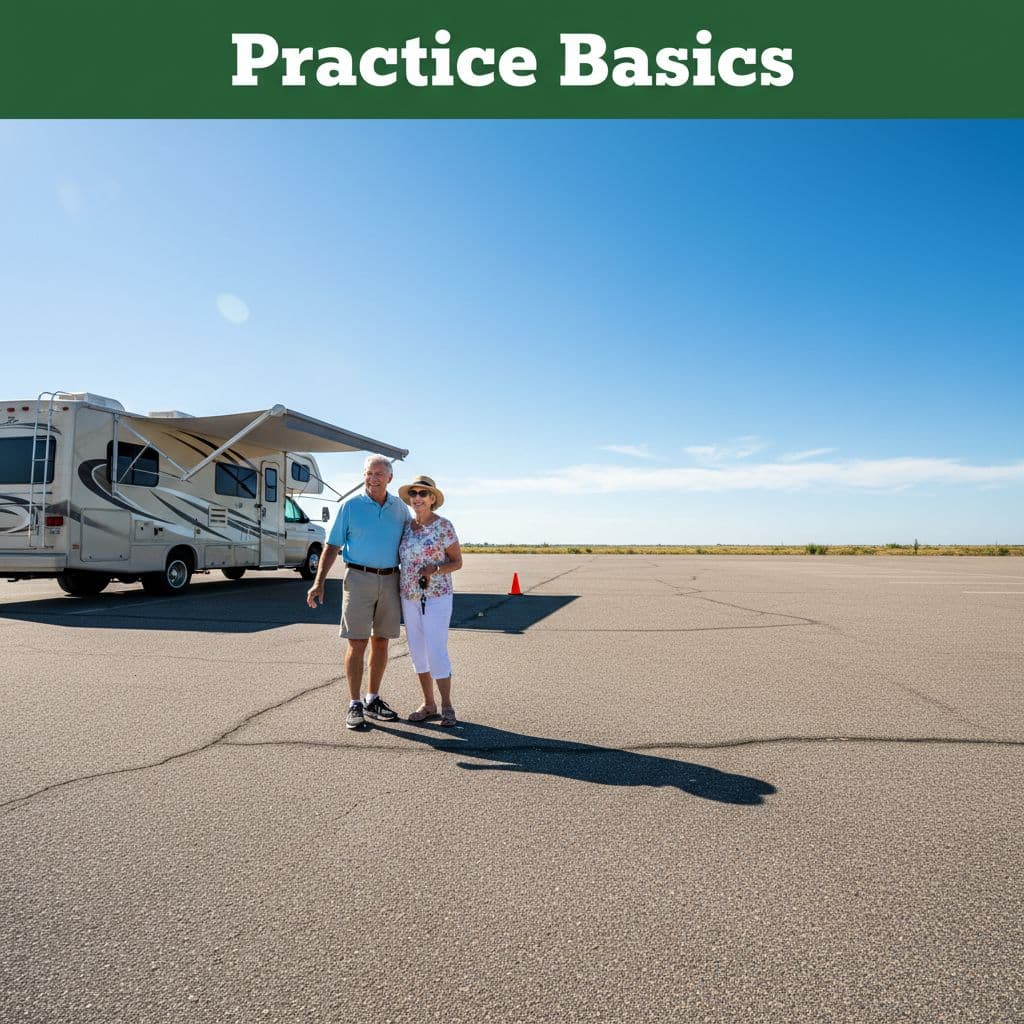
Bring a few traffic cones, buckets, or even water bottles filled with sand. Use them to mark lanes, corners, and a pretend campsite. Suddenly, an empty lot becomes your training ground.
Begin with the easiest moves. Drive straight for a short distance and stop gently. Then do it again. Pay attention to how much pedal pressure the RV needs and how long it takes to settle after braking. If you have a motorhome, notice rear overhang and tail swing. If you tow a trailer, watch how it tracks inside your turn.
After that, practice wide right turns and left turns. Start later than you think, and let the back wheels clear the corner before you cut in. Many new drivers clip curbs because they turn too soon. That mistake is easy to fix in a parking lot, where the only witness is a cone.
Spend time on mirror checks. Glance left, center, right, then back to the road ahead. Build the habit now so it feels normal later. If you rely only on the backup camera, you can miss what matters at the edge of your rig.
Keep each drill simple and repeat it until it feels boring. Boring is good. Boring means your hands and eyes are starting to work together without stress.
This is also where many camping tips start to make sense. A calm setup beats a rushed one. The same goes for driving. Whether you’re in a small camper van, a trailer, or a big coach, the goal is the same: calm, clean moves you can repeat.
Practice turns, braking, and backing before traffic
Once the lot feels comfortable, add the moves that cause the most stress on a first trip: tighter turns, backing up, and stopping with control.
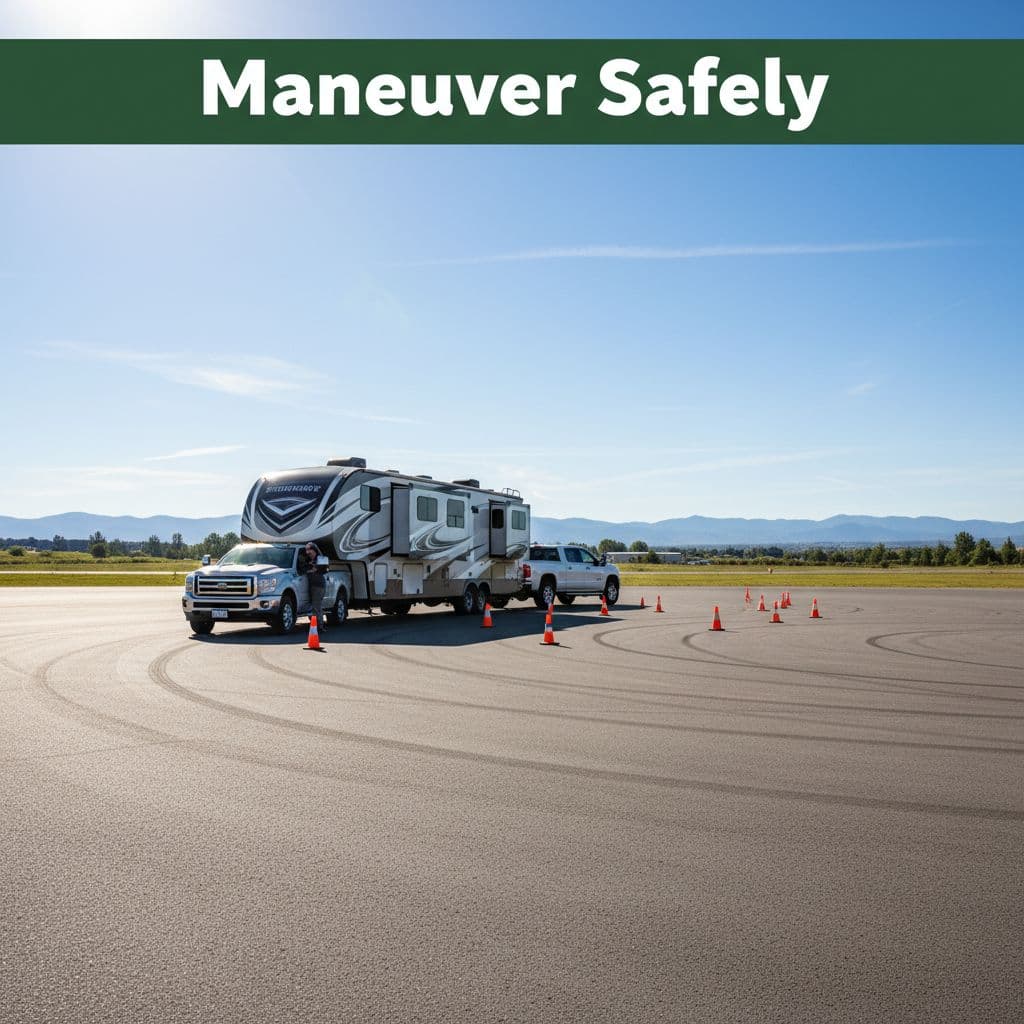
Set up a row of cones and drive through at low speed. This teaches lane placement and helps you see how much room your RV needs. Then practice braking from 15 to 20 mph. Stop in a straight line, and feel how the weight shifts forward. A loaded RV takes longer to stop than a car, and that fact needs to live in your muscle memory.
Now build a simple backing area with cones. Mark a wide box that acts like a campsite or parking space. Back into it from both sides, one try at a time. If you’re towing a trailer, place one hand at the bottom of the steering wheel. Move that hand in the direction you want the trailer to go. Small inputs work better than large ones.
If the trailer starts to fold too much, pull forward and reset. That isn’t failure. It’s good driving.
If you lose the setup, pull forward and reset. Good drivers do that early.
For motorhomes, back slowly and keep your spotter visible at all times. If you can’t see your spotter, stop. Never let anyone stand directly behind the rig. Stay patient, because most backing problems come from rushing the first few feet.
Try this practice flow for one session:
- Drive straight and stop smoothly.
- Make several wide turns around cones.
- Back into a marked space from each side.
- Repeat the hardest move until it feels easier.
Even people who love van life content online are often surprised by how different real backing feels. Videos flatten distance. Practice teaches depth, timing, and when to pause.
Move to quiet roads and real campground situations
After the lot, graduate to calm public roads. Pick a wide route with light traffic, low speeds, and easy turns. Mid-morning on a weekday often works well. Avoid wind, rain, dusk, and heavy weekend traffic for your first road session.
Start with a short loop close to home. Practice staying centered in your lane, judging stop signs, and taking right turns without drifting too close to the curb. Then repeat the same loop again. Repetition matters more than distance.
A good next step is a short drive to a gas station with easy access, or to a nearby campground during a quiet hour. That adds real-world details without throwing you onto an interstate. You’ll learn how the RV fits at entrances, how much room you need to swing wide, and how distractions feel when signs, poles, and other vehicles are nearby.
If you’re heading out for a first camping weekend, try a dress rehearsal. Pack the RV, drive 20 to 30 minutes, back into a site or marked space, and go home. That one practice trip can remove a lot of first-day stress.
Communication matters even more on real roads. Keep the cab quiet during turns, lane changes, and backing. One person drives. One person spots. Mixed instructions cause mistakes.
Many seniors do best with a simple three-step plan: empty lot, quiet road loop, then a short campground run. That pacing works because confidence grows with each layer. It also leaves room to stop early if fatigue creeps in.
If you like steady, practical camping tips between trips, View All Our Newsletters for useful updates. You can also View Our Website for travel guides, planning tools, blogs, community help, and more ideas that support your next drive.
Your first trip starts before the highway
Confidence comes from repetition, not luck. The more often you practice in calm places, the less your first real trip will feel like a test.
Start with the size of your rig, move to an empty lot, then build up to quiet roads and campground-style backing. Keep sessions short, stay patient, and stop before you feel worn out.
The goal isn’t fancy driving. It’s steady control, clear decisions, and a first camping trip that feels safe from the first turn to the final parking spot.
This post may contain affiliate links. If you make a purchase through these links, I may earn a small commission at no extra cost to you.