RV Brake Controller Settings: A New Owner’s Guide
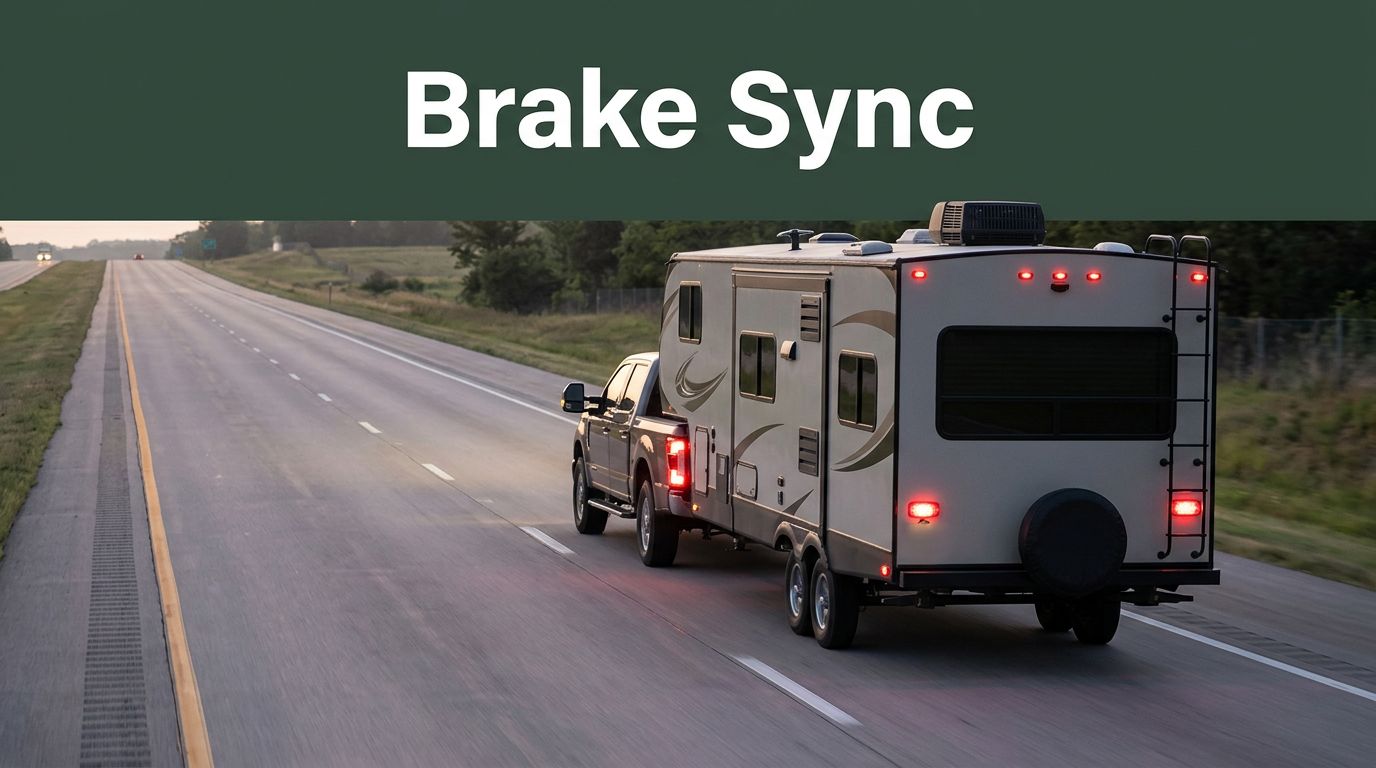
A trailer that pushes your tow vehicle during a stop can turn a calm drive into a white-knuckle moment. Proper RV brake controller settings ensure your trailer brakes react in harmony with your truck or SUV rather than engaging too late, too early, or with too much force. By using an effective trailer brake controller, you can synchronize these systems to ensure a smooth, predictable stop every time you press the pedal. Prioritizing these adjustments is vital for safety whenever you are towing a trailer on the open road.
New trailer owners often assume one setting works for every trip. It does not. Trailer weight, road conditions, controller type, and even a loaded water tank can change the feel at the brake pedal.
A few careful tests before leaving the campground can make every stop more controlled and comfortable.
Key Takeaways
- Set your trailer brake gain with the trailer fully loaded exactly as you plan to tow it.
- Your total load size significantly impacts how much power your brakes need, so adjust your settings whenever your cargo weight changes.
- Start with a moderate gain, then test at low speed in a safe, open area.
- Use boost settings only if your controller has them and your trailer brakes require faster, more aggressive initial stopping power.
- Reduce gain if trailer brakes grab or lock. Increase it if the trailer pushes the tow vehicle.
- Check the breakaway system separately. It is not a substitute for a working brake controller.
What an RV Brake Controller Actually Controls
A trailer brake controller sends power from the tow vehicle to the electric trailer brakes whenever you press the brake pedal. Its purpose is to ensure the trailer shares the work of slowing down the entire rig.
The main setting is usually called the gain setting or trailer brake gain. Higher gain sends more electrical power to the trailer brakes, while lower gain sends less. When shopping for these devices, you will generally choose between a proportional brake controller, which senses the deceleration of the tow vehicle to apply brakes instantly, and a time-delay brake controller, which applies power based on a pre-set delay.
If the gain is too low, the trailer brakes barely help. You may feel the trailer push the tow vehicle at a stop sign or on a downhill grade. Your tow vehicle brakes will work harder, which can lead to heat, fade, and longer stopping distances.
Too much gain has the opposite effect. Trailer tires may skid, especially on gravel, wet pavement, or a steep campground road. A grabbing trailer can tug at the hitch and make the whole rig feel unsettled.
Most newer tow vehicles have a factory-installed controller that appears in the dashboard menu. Popular aftermarket units, including the Tekonsha Prodigy series and REDARC Tow-Pro models, place the controls on a separate display or dial. The labels differ, but the adjustment principles remain the same for every setup.
Your goal is balanced braking. The trailer should help stop the rig without pulling back sharply or sliding its tires.
A brake controller only operates the electric trailer brakes. It does not control the emergency breakaway system, which uses a separate battery and cable. The National Highway Traffic Safety Administration’s trailer safety guidance is a helpful reminder to inspect all towing equipment, not only the controller.
Set Brake Gain Based on Load Size
A nearly empty travel trailer behaves differently from the same trailer loaded for two weeks of camping. Food, clothing, tools, bicycles, propane, and fresh water all add significant weight. Many full time RVers tow close to their normal travel weight, so your brake adjustment should always reflect your actual load size.
Begin with the trailer connected, the electrical plug secured, and the breakaway cable attached to the tow vehicle. Never loop that cable around the hitch ball. If the trailer separates, the cable needs to pull the breakaway pin free.
Then use this simple process to test trailer brakes in an empty parking lot or on a quiet paved road:
- Start at the controller’s recommended middle setting. Your owner’s manual may suggest a starting number or output range for your trailer brake gain.
- Drive straight at about 20 to 25 mph. Avoid testing on loose gravel, wet pavement, or a crowded campground lane.
- Apply the manual override. Using the manual activation lever, the trailer should slow the combination firmly without locking its wheels.
- Increase gain gradually if braking feels weak. Move the setting up in small steps, then repeat the test until you reach the desired stopping power without hitting maximum output.
- Lower gain if the trailer tires experience brake lockup. If you feel the brakes grabbing or hear them locking up, it means the brakes are receiving too much power for the available traction.
The manual override works the trailer brakes without applying the tow vehicle brakes. It is useful for testing, but it is also an essential emergency tool. If trailer sway begins, applying the manual activation lever smoothly can help straighten the rig. Avoid hitting the tow vehicle brakes hard, because that can worsen trailer sway.
After the low-speed test, take a short drive and make several normal stops. Pay attention to the first stop after a long downhill stretch and the first stop with a fully loaded trailer.
| What you feel | Likely adjustment |
|---|---|
| Trailer pushes the tow vehicle | Increase gain slightly |
| Trailer brakes grab at light stops | Reduce gain slightly |
| Trailer wheels skid during a test | Reduce gain and retest |
| Stops feel smooth and straight | Keep the current setting |
A good setting feels almost invisible. You should feel the rig slow as one unit.
Use Boost Settings Only When They Match the Trailer
Many proportional brake controllers offer a boost setting to adjust the braking sensitivity. Boost adds more braking force at the beginning of a stop, before the controller’s normal proportional response builds.
This feature can help when towing a heavier travel trailer or fifth wheel. It may also assist when a lighter tow vehicle pulls a relatively heavy trailer. However, a high sensitivity level can make a light utility trailer or small teardrop trailer feel abrupt.
Controllers may label these options as B1, B2, and B3, or use low, medium, and high. A higher boost does not mean better braking. It means the trailer brakes come on sooner and with more initial force.
Start with boost off or at its lowest setting. Drive at neighborhood speeds and make normal stops. If the trailer lags behind and you consistently need more pedal pressure, try the next level. If the trailer feels as if it tugs backward at the first touch of the brake pedal, lower the boost.
Seniors who prefer a relaxed driving pace often appreciate a setting that feels predictable rather than aggressive. That matters at fuel stations, busy campground entrances, and tight parking areas where small movements count.
Conditions can also call for a temporary adjustment:
- Wet roads or gravel: Reduce gain and use less boost to prevent tire locking up and to avoid brake lockup.
- Long mountain descents: Use a lower gear first, then let properly adjusted trailer brakes share the load.
- A fully loaded departure day: Retest after loading supplies, filling tanks, or adding cargo to the truck bed.
- A mostly empty return trip: Recheck braking if the trailer’s weight has changed significantly.
Do not use the brake controller to hold speed down a grade. Downshift early and use the service brakes in short, controlled applications. You can also test the responsiveness of your setup by using manual activation at low speeds to ensure everything is working correctly. Continuous braking can overheat both the tow vehicle and trailer brake components.
Check the Controller Before Every Travel Day
Brake controller settings are only useful when the electrical connection works. Properly maintaining your trailer brake controller and verifying your connection before leaving takes less time than sorting out a brake warning light on the highway shoulder.
First, look at the controller display after connecting the trailer. Many units show that a trailer is connected. A message such as “No Trailer Connected” can point to a loose plug, damaged wiring, a blown fuse, or corroded terminals.
Next, inspect the seven-pin plug. Dirt, green corrosion, and bent contacts can interrupt the brake signal. Keep the cable off the ground and give it enough slack for turns without allowing it to drag.
Before joining traffic, test trailer brakes by engaging the manual override at a low speed. If the controller indicates a connection but the trailer does not respond, stop towing until you find the problem. Check the trailer brake wiring, the battery charge for the breakaway system, and the overall condition of the brake assemblies.
The electric trailer brakes also need regular mechanical service. Worn brake shoes, contaminated grease seals, and damaged magnets can cause uneven braking that no controller setting can fix. Follow the axle manufacturer’s maintenance intervals and have a qualified RV technician inspect any system that behaves inconsistently.
For more practical towing reminders, campsite planning ideas, and camping tips written with older travelers in mind, RV Life Insider shares regular road-ready guidance. You can View All Our Newsletters before your next trip.
Common Brake Controller Problems and Simple Fixes
A controller setting cannot correct every braking complaint. Some signs point to a wiring or equipment issue instead.
If the trailer brakes experience brake lockup at every setting, inspect the wiring and brake assemblies. A damaged wire can send full power to the brakes. Grease contaminated shoes can also grab unpredictably. You can also test the system by using manual brake activation to see if the trailer responds correctly without using the tow vehicle foot pedal.
When braking feels weak even at high gain, confirm that the trailer plug is fully seated. Then check the trailer battery, fuses, brake magnets, and ground connection. A poor ground can create intermittent or weak braking. If you are troubleshooting your trailer brakes, a solid electrical connection is essential for consistent performance.
A controller that flashes an error code needs attention before departure. Consult the controller manual for that exact code. If your vehicle is equipped with an integrated brake controller, factory systems may also show messages in the tow vehicle instrument cluster.
Van life travelers and weekend campers sometimes move a trailer between different tow vehicles. Each vehicle may need its own gain and boost adjustment. Never assume the same number will feel right on a different truck, SUV, or brake controller.
If you are unsure about a persistent issue, schedule a trailer brake inspection. Safe towing depends on the whole system: hitch, tires, loading, wiring, breakaway battery, and brakes.
Frequently Adapted Questions
Do I need to adjust my brake controller every time I drive?
Yes, you should check your settings whenever your trailer load changes significantly. Since weight impacts how much stopping power is required, driving with a full water tank or extra gear will feel different than driving with an empty trailer.
Why does my trailer feel like it is pushing the truck when I brake?
This sensation usually means your gain setting is too low. Increasing the gain in small increments will help the trailer brakes engage with enough force to help slow the entire rig down effectively.
What should I do if my trailer tires lock up during a test?
If the tires skid, your gain setting is currently too high. You should reduce the gain in small steps until the trailer slows the vehicle smoothly without the tires locking up or grabbing.
Can the manual override lever be used to stop the trailer in an emergency?
Yes, the manual override is an excellent tool for correcting trailer sway. By applying the trailer brakes manually, you can help straighten the rig without immediately locking the wheels of your tow vehicle.
A Safer Start for Every Camping Trip
Fine-tuning your RV brake controller settings is the best way to ensure stopping becomes a shared job between your tow vehicle and trailer. Test the system with your normal load, adjust the gain in small increments, and change the setting whenever road conditions demand more control.
A few minutes of practice in an empty lot can prevent a tense situation later. Keep your brake controller working smoothly, and every mile of camping travel will feel more settled. By taking the time to dial in these adjustments, you ensure that towing a trailer is a much safer experience for you and your passengers.
This post may contain affiliate links. If you make a purchase through these links, I may earn a small commission at no extra cost to you.