How to Judge RV Campsite Size Before You Book
Nothing ruins a calm arrival faster than learning your campsite is too small for your RV.
A reservation may sound roomy, but the posted rv campsite size is only part of the story. Slide-outs, trees, a tow car, and a crooked pad can turn a good fit into a long, tense setup, especially for seniors who want an easy arrival.
Most campsite fit problems are easy to spot before you book. You only need the right measurements, a careful eye, and a few solid camping habits to ensure you stay within park guidelines and respect common rv length limits.
Key Takeaways
- Calculate your total footprint: Don’t just rely on your RV’s brochure length; account for slide-outs, tow vehicles, rear racks, and the total space needed for comfortable living.
- Read listings with caution: Official campsite dimensions often refer only to the gravel pad and may exclude obstacles like picnic tables, trees, or utility hookups that interfere with your setup.
- Inspect the surroundings: Always evaluate the approach path, check for overhead low-hanging branches, and assess the pad’s slope to ensure your specific rig can safely access and occupy the space.
- Verify before you commit: When in doubt, call the campground to discuss your specific rig dimensions or perform a quick site walk-through upon arrival before you unhook or level.
Know your RV’s real footprint
Your RV’s brochure length is a starting point, not the full answer. Campgrounds often ask for rig length, but your actual space needs depend on what sticks out and what must open.
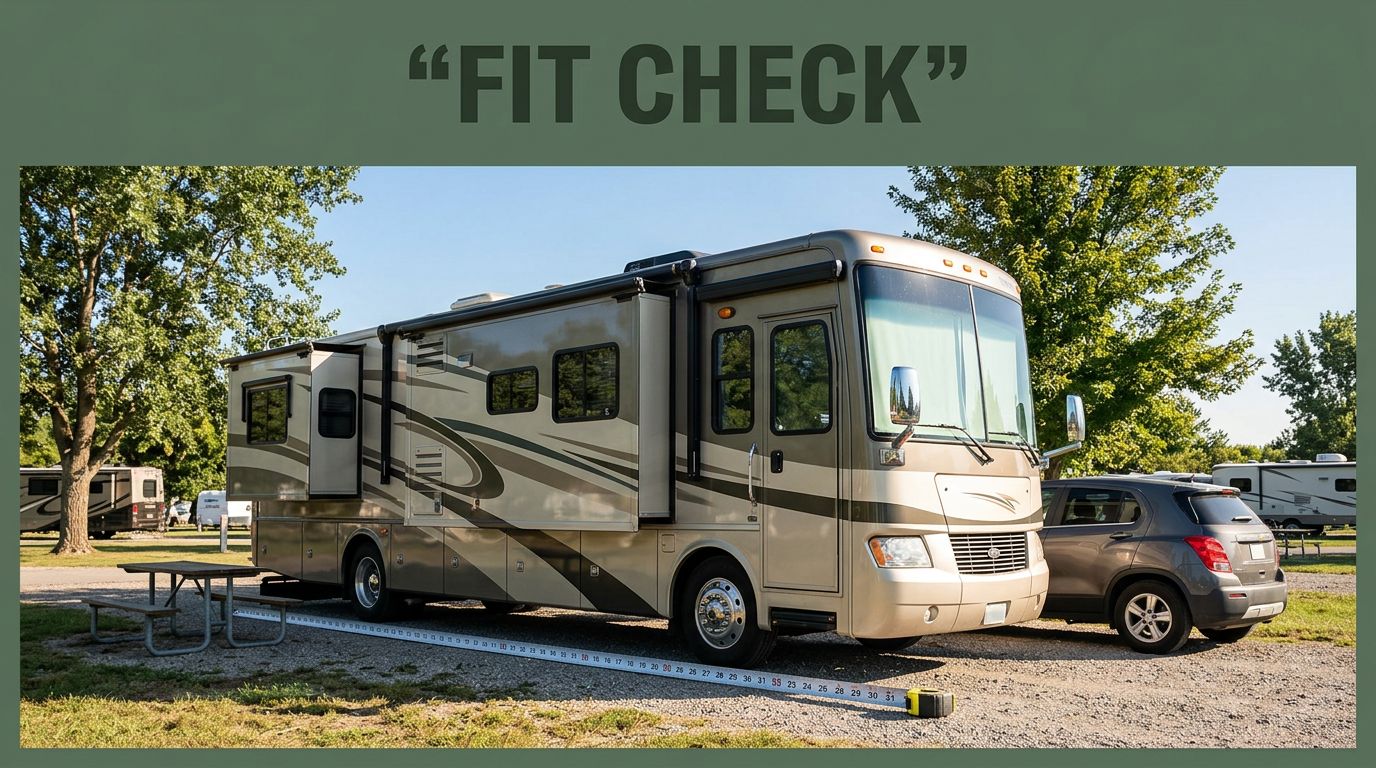
Start with your true travel length. For large Class A motorhomes, measure bumper to bumper, then note mirrors if the road into the site is tight. For fifth wheels and travel trailers, count the full trailer length, then think about where your tow vehicle will park. If the site does not hold both, ask if overflow parking is allowed. Calculating your combined length is essential to ensure you do not block the campground road.
Next, measure your living width. Slide-outs change everything. A campsite that fits your RV while closed may feel cramped once the slide-outs come out. Add room for the door to swing open, the steps to drop, and enough space to walk around safely.
Don’t forget the parts people miss. Rear ladders, bike racks, spare tires, front cargo trays, and tongue jacks all take up room. A van life setup may need less space, but roof racks and side awnings still matter. Full time RV’ers often carry more gear, so their parked footprint is larger than their basic rig size suggests.
Many seniors like to keep three numbers on a note card or phone:
- Total trailer length
- Width with slides open
- Total parked length with tow vehicle, if needed
That short list saves guesswork when you book by phone or online. It also helps when a campground asks, “How big is your rig?” You won’t be estimating from memory.
The main goal is simple. Know the size of your RV when it rolls, when it parks, and when you live in it.
Read the campsite listing like a contract
Campground descriptions can be deceptive. When a park lists an rv campsite size, treat it as a helpful clue rather than a binding promise. This is especially true when booking at state parks or national park campgrounds, where strict rv length limits are enforced to protect the landscape and ensure you do not block narrow roadways.
A site length might refer to the gravel pad only. It may not include the overhang behind the pad, the parking spur for your truck, or the space occupied by a picnic table. Maximum rv length can be even trickier. Some parks base that number on a best-case scenario requiring a skilled driver to back in perfectly, with no slide-outs extended and no extra vehicle parked on-site.
This quick table shows how to interpret common listing terms when you are researching your next trip.
| Listing term | What it may mean | What you should confirm |
|---|---|---|
| Site length | Length of the pad only | Will your full setup fit once parked? |
| Max RV length | Best-case rig length | Does that include slides and tow vehicle space? |
| Pull-through sites | Easier entry, not always wider | Is there room to stay hitched if needed? |
| Big rig friendly | General label, not a measurement | Ask for exact pad length, width, and road access |
The takeaway is clear: friendly marketing language does not replace verified campsite dimensions. Always seek out the actual numbers to ensure your trailer length will not cause issues upon arrival.
Photos help, too. Look for recent site photos, campground maps, and satellite views. A picture may show low branches, a tight turn, or a utility post that blocks your best parking angle. If the listing includes site numbers, compare several options. One loop may fit larger rigs while another feels built strictly for tents and pop-ups.
Phone calls still matter. Ask the office staff about your exact setup, not a general class of RV. Asking “Will my 32-foot Class C fit” gets a much better answer than asking “Do you take motorhomes?” Be sure to mention slide-outs, a towed car, or a long-bed truck, as those specific details change the answer fast.
If you like practical campground planning ideas, RV Life Insider shares more road-tested advice in View All Our Newsletters.
Check the space around the pad, not only the pad
A campsite can match your rig on paper and still be a poor fit. The physical environment surrounding the pad matters just as much as the length itself.
Low-hanging branches are one of the biggest trouble spots. Air conditioners, vent covers, and satellite domes sit high, and many older campgrounds, especially state parks, were built before today’s taller RVs became common. One stray branch can quickly turn a simple pull-in into a costly repair bill.
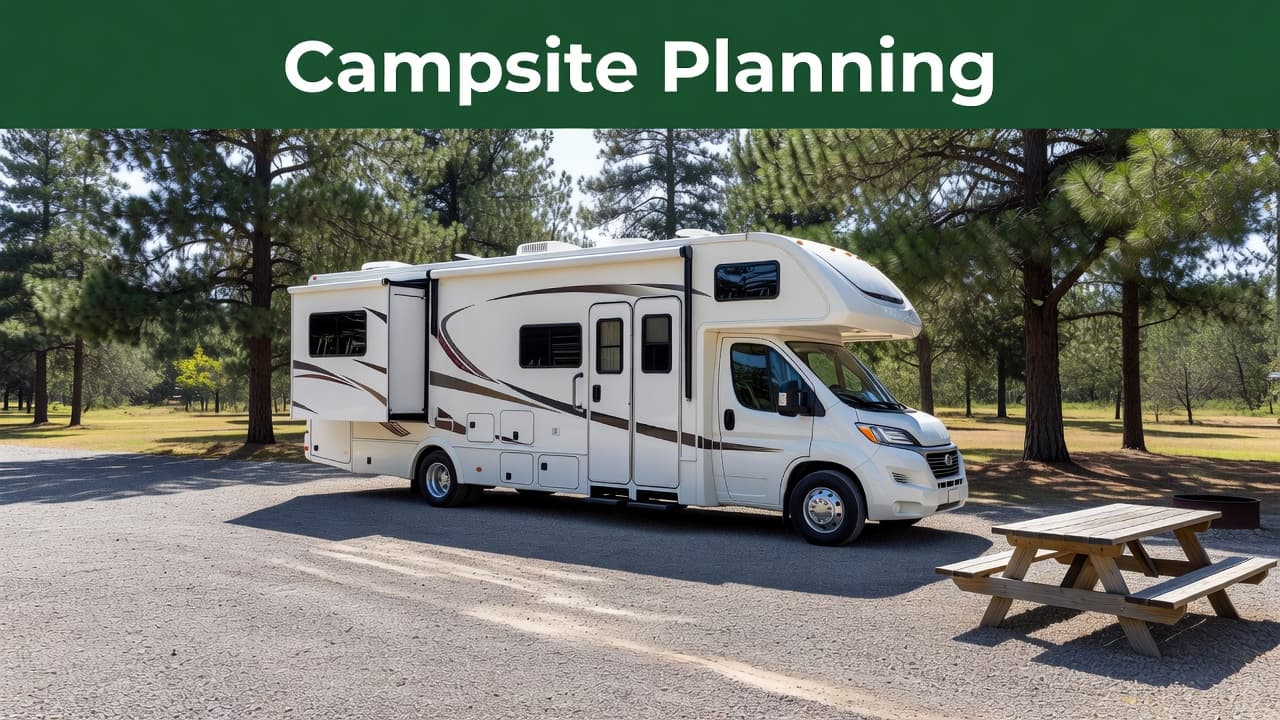
Road access is equally vital. A long motorhome might fit the site dimensions but fail when it comes to the approach. Back-in sites often require a wider turning radius and greater maneuverability than the campground map suggests. Meanwhile, even pull-through sites can feel awkward if the road width is narrow or the exit is blocked by parked cars.
Then, examine what sits beside the pad. Picnic tables, fire rings, utility posts, and boulders often steal the critical clearance your slide-outs need. Utility hookups, including those for full hookups, may sit so far back that you are forced to park in one exact spot. If that positioning forces your entry door over mud or pushes your bedroom slide into a tree, the site is a poor match, regardless of its length.
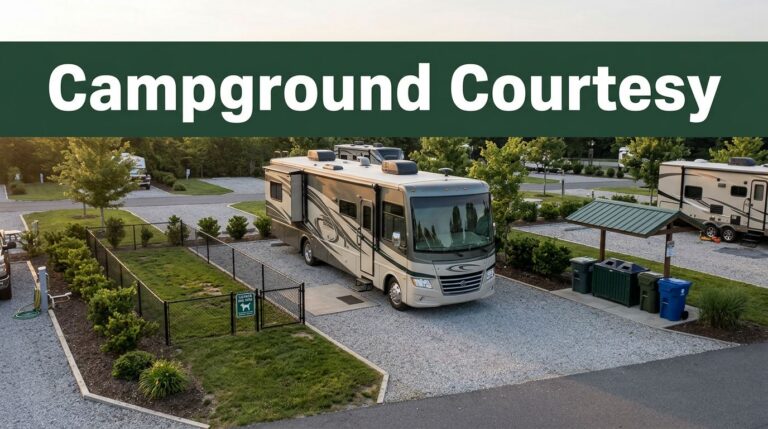
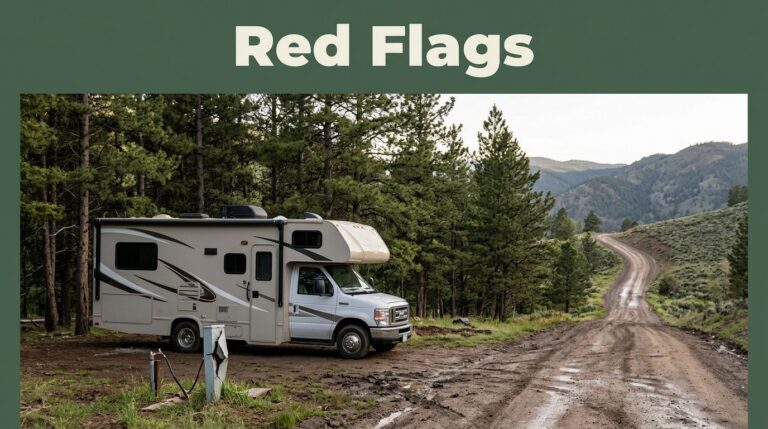
A campsite that fits your rig on paper can still fail because of trees, slope, or fixed obstacles.
Slope is another common hurdle. A sharply tilted site may require more leveling blocks than you want to haul, and it can leave your steps dangerously high off the ground. For many campers, that extra climb matters. Proper site spacing is also key; you want enough room to enjoy your awning space without feeling crowded by your neighbors.
Among the best camping tips is this one: visualize your entire setup in active use. Can you comfortably open your door, walk around the rig, sit under the awning, and access your utility hookups without strain? If the answer is no, you should keep looking for a better fit.
Verify the fit before you commit to the site
Even after doing your homework, perform one final check before arrival. A five-minute review beats a stressful setup at dusk.
Use this short routine:
- Save your confirmation details, including the site number and specific notes on your rig.
- Call a day or two before arrival if you are pushing your trailer length to the limit of the site.
- Stop before entering the site and walk the park layout first, if traffic allows.
- Pace off the pad, identify the location of campground amenities, look up for low-hanging branches, and check for angled parking that might make backing in more difficult.
That quick walk tells you more than any website photo. You can check for soft ground, ruts, excessive slope, and where your entry door will land. You can also spot if your tow vehicle will block the narrow park road.
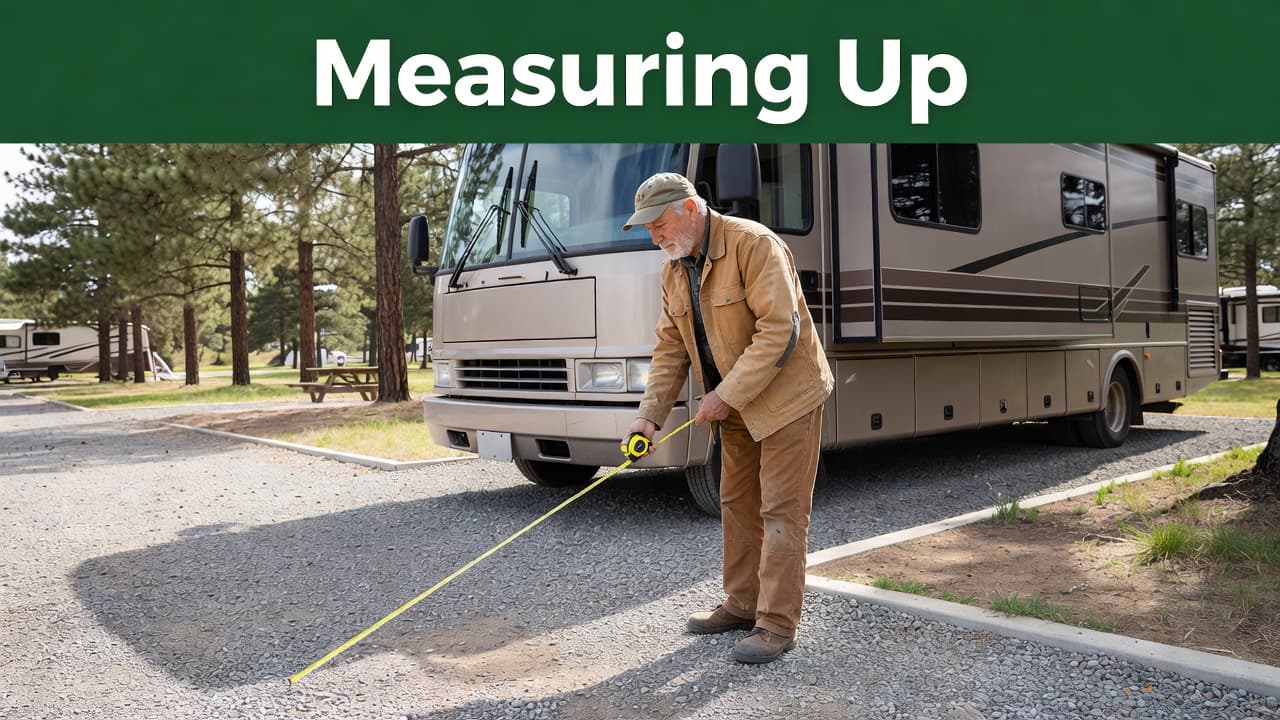
If the site looks wrong, speak up immediately. Whether you are at a private resort or one of the many popular state parks, staff members are far more likely to move you before you have unhooked, leveled, and extended your slides. Be polite, be clear, and explain the issue in simple terms. “My rear slide will hit that tree” works better than “I do not love this spot.” If you have chosen one of the tougher back-in sites, do not hesitate to ask a neighbor or camp host to act as a spotter.
This habit helps every kind of traveler. Weekend campers avoid a rough start. Full time RVers save unnecessary wear on their rig, and van life travelers can decide if a site feels private enough. Most of all, checking against stated RV length limits provides peace of mind before the hard part of the day begins.
RV Life Insider also shares practical help on camping, route planning, gear, community, and life on the road. If you want more ideas beyond this article, you can View Our Website.
Frequently Asked Questions
Should I trust the “Max RV Length” listed on a reservation site?
Not entirely. These numbers are often estimates based on a best-case scenario and may not account for the additional room required to deploy your slide-outs or park your tow vehicle on-site.
What should I look for beyond just the length of the campsite?
Check for vertical clearance to avoid low-hanging branches that could damage your roof or AC units. You should also verify that the location of utility hookups will allow you to park properly without forcing your entry door into an awkward position or over uneven ground.
How can I confirm a site will fit my specific RV before I pay?
Your best method is to call the campground office directly and provide your specific RV length, your need for slide-out clearance, and whether you are bringing a towed vehicle. Additionally, reviewing satellite views and recent user-submitted photos can reveal tight turns or physical obstacles not mentioned in the description.
What should I do if I arrive and realize my RV doesn’t fit the site?
Speak with the campground staff immediately before you unhook, level, or extend your slides. Be specific about the obstruction—such as a tree branch or a utility pole—and ask politely if an alternative, more suitable site is available.
Final thoughts
A campsite does not necessarily accommodate your vehicle just because a listing claims it does. A perfect match only happens when the real RV campsite size, the road access, and the available living space all work in harmony.
Always measure your rig honestly, review the specific campsite dimensions provided in each description, and take the time to inspect the area when you arrive. Investing that small amount of effort turns stressful arrivals into calm, easy setups, which is exactly how your camping experience should feel.
This post may contain affiliate links. If you make a purchase through these links, I may earn a small commission at no extra cost to you.