How to Choose RV Roadside Assistance After Retirement
A breakdown can turn a peaceful campground stay into a long, expensive day, which is why choosing the right RV roadside assistance is a top priority after retirement. You may have more freedom to travel, but you also need a roadside plan that fits your budget, health needs, and the size of your vehicle.
The right coverage provides essential peace of mind when a tire blows, the engine will not start, or your coach needs a tow. Investing in comprehensive emergency roadside assistance ensures you are not paying out of pocket or waiting for service providers that lack the equipment to handle your specific rig.
Start by matching coverage to the way you actually travel.
Key Takeaways
- Choose roadside coverage based on your RV’s weight, length, and how far you travel from home.
- Confirm that the plan covers towing service to an appropriate repair facility, rather than simply dropping your rig at the nearest location.
- Read the fine print to understand the specifics of your coverage for a flat tire, mobile mechanic services, trip interruption, rental cars, and hotel stays.
- Compare specialized RV providers with your current auto insurer or motor club before paying for duplicate protection.
- Keep your membership number, rig measurements, and emergency contacts easily accessible in the cab.
Start With Your Retirement Travel Style
Retired RV travelers do not all need the same type of protection. A couple taking short trips to state parks has different needs than full time RVers crossing several states each month. Whether you drive a Class A motorhome, a travel trailer, or a fifth wheel, your plan should reflect how often you drive, where you stay, and what you can comfortably handle on the road.
First, write down the basics of your rig. Include the motorhome class or trailer type, total length, gross vehicle weight rating, tow vehicle details, and any car you tow behind a motorhome. Dispatchers need accurate information to send the right truck. A provider that cannot accommodate your rig may create a costly delay.
Next, consider your usual routes. Interstate travel often gives you more repair choices. Remote desert highways, mountain roads, and small-town camping areas can be different. You may need a plan with broad dispatch coverage and a towing service that reaches a capable repair shop in the event of a mechanical breakdown.
Health and mobility matter, too. Many seniors can perform a tire change or troubleshoot a battery jump-start. Others should not have to kneel beside traffic or climb under a trailer. Choose coverage that includes 24/7 support for basic roadside tasks you would rather not do yourself.
Roadside assistance is most valuable when it removes a job you should not have to perform beside a busy highway.
Ask yourself a few honest questions before comparing plans:
- How many nights do you spend camping each year?
- Do you travel with pets, medical equipment, or a companion who cannot easily wait in a repair shop?
- Can your vehicle be safely towed by a standard truck, or does it require heavy-duty recovery equipment?
- Would a breakdown far from home create hotel, rental-car, or missed-reservation costs you could not comfortably absorb?
A low-cost membership can look attractive until your 38-foot motorhome needs a heavy wrecker. Coverage limits and vehicle eligibility matter more than a flashy introductory price.
Know What RV Roadside Assistance Actually Covers
It is important to remember that insurance is not the same as RV roadside assistance. While insurance typically covers collision damage, theft, or liability claims, a dedicated roadside plan focuses on getting you back on the road after a mechanical breakdown or travel mishap.
Most plans offer a standard suite of services including towing service, a battery jump-start, fuel delivery, lockout service, and tire change assistance. However, the fine print can vary significantly. A plan might cover the labor required for a flat tire but exclude the cost of the replacement tire itself. Similarly, while a provider might offer fuel delivery, you may still be responsible for the cost of the fuel. Be aware that winching services often apply only when your vehicle is within a specific distance of a paved road.
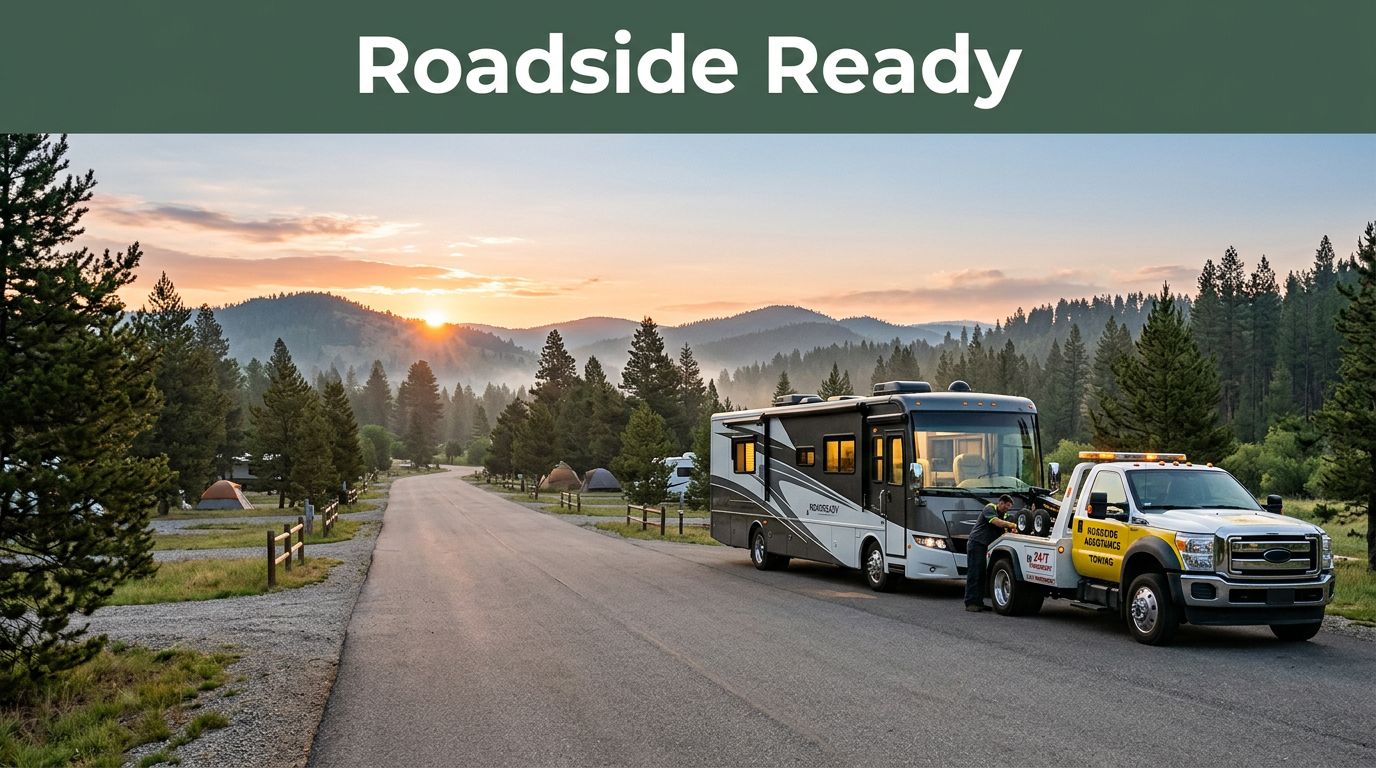
Pay close attention to the specific towing language in your contract. While plans often guarantee transport to the nearest repair facility, this may not mean your preferred RV dealer or a specialized shop capable of working on a diesel pusher. If having a choice matters to you, ask whether the plan allows you to select a repair shop within a stated distance rather than being forced to use the nearest repair facility identified by the dispatcher.
Also, check whether your policy treats your towable RV and your tow vehicle as a single incident. If a trailer tire fails, you want to be sure you receive help for both the trailer and the truck. Motorhome owners should specifically ask about coverage for a towed car, often called a dinghy vehicle.
If a major failure occurs, trip interruption benefits can help soften the financial blow. Some memberships include limited reimbursement for lodging, meals, rental cars, or flights after a covered breakdown. Read these trigger rules carefully, as benefits often only begin when the RV is disabled for a certain period or when you are a required distance from your home.
Many travelers compare industry leaders such as Good Sam, Coach-Net, and AAA RV to find the best fit for their lifestyle. Because plan features and coverage limits change frequently, always review the most current membership agreement rather than relying on outdated forum posts or old brochures.
Compare Plans Beyond the Annual Price
The best choice often comes down to dispatch quality and rig-specific service. When you are stuck on a Sunday afternoon, a few dollars saved at signup will not matter much. A provider that offers reliable RV technical assistance and understands the necessity of unlimited towing for long-haul travel can matter a great deal.
Use this comparison guide when reviewing roadside plans:
| Feature to compare | Why it matters for RV travelers | What to ask |
|---|---|---|
| Towing service | RV repairs require larger bays, lifts, and a qualified RV technician | Is the towing service limited by miles, dollars, or the number of calls? |
| Heavy-duty towing | Large motorhomes may need specialized equipment | Does my weight and length qualify for heavy-duty service? |
| Trailer coverage | A fifth wheel or travel trailer creates a separate recovery issue | Are the trailer and tow vehicle covered in one call? |
| Mobile mechanic | Some problems can be fixed at your campsite | Does the plan send a mobile mechanic when available? |
| Tire assistance | RV tires are large and not every roadside vendor stocks them | Does coverage include mounting a spare, and who pays for a replacement? |
| Trip interruption | A major repair may strand you far from home | What expenses qualify for reimbursement, and what receipts are required? |
| Household coverage | Your spouse may drive another vehicle | Does membership follow the person, the vehicle, or both? |
| Basic roadside aid | Routine issues like a battery jump-start, fuel delivery, or lockout service are common | Are these essential services included in my annual premium? |
After reading the plan, call customer service before buying. Give them your exact RV information and ask direct questions. Take notes with the representative’s name and date. This step can reveal whether the sales description matches the contract.
Be careful with coverage that overlaps. Your auto insurer may already include towing. A new vehicle warranty may provide limited roadside help. Credit cards sometimes offer travel benefits, though they rarely replace RV-specific coverage. Still, a standard passenger-car towing benefit often cannot meet the needs of a large motorhome or a fifth wheel.
Campground memberships also deserve a close look. A membership may offer discounts and travel benefits, but it is not automatically a roadside program. Keep your camping savings separate from your emergency service decision.
Consider Where You Camp and How You Travel
Roadside assistance works best when your RV is accessible. If you pull onto soft ground, get stuck in sand, or slide off a narrow campsite pad, recovery may fall outside normal winching terms. Because of this, it is vital to prioritize plans that offer RV specialized help for those trickier recovery situations. Before entering an unfamiliar site, walk the area first if the space looks tight or muddy.
This is especially important for van life travelers. Vans can reach more remote places, yet forest roads, beach access points, and unpaved boondocking sites can put them beyond a standard service vehicle’s reach. Verify what the plan considers a public roadway and whether off-road recovery is excluded from your coverage.
For seniors who winter in the Sun Belt and summer in higher elevations, nationwide North America coverage matters. Check whether your policy extends into Canada if you plan to cross the border. Also, ask how 24/7 support works in remote areas with weak cell service. A satellite communicator, paper maps, and downloaded campground directions can help when your phone has no signal.
Good camping tips reduce the need for a roadside rescue before problems happen. Check tire pressure when tires are cold, inspect the tread and sidewalls on your travel trailer, test the battery, and watch engine temperatures on steep grades. Keep spare fuses, a tire-pressure gauge, wheel chocks, flashlights, and reflective triangles where you can reach them quickly.
Build a Roadside Folder Before You Need It
An emergency roadside assistance plan cannot help you quickly if you cannot tell the dispatcher where you are or what you drive. Keep a paper folder in the cab of your rig and save the same details on your phone to ensure you have access to 24/7 support at a moment’s notice.
Include your membership number, policy phone number, RV length and height, tire size, vehicle identification number, and the location of your spare tire in case you need a tire change. Add medical contacts, medication details, pet information, and your preferred repair shops. If you travel with a towed car, list its make, model, and key location.
When calling for help, provide your location first. Use mile markers, highway direction, nearby exits, campground names, or GPS coordinates. Then explain your mechanical breakdown in plain language. If you require RV technical assistance, tell the dispatcher if you are blocking traffic, carrying a trailer, or stuck on soft ground so they can send the appropriate equipment.
RV Life Insider shares travel planning ideas, safety reminders, and practical camping tips for older travelers. You can View All Our Newsletters for regular road-life guidance, or View Our Website for travel guides, planning tools, community resources, and RV products.
Frequently Asked Questions
Is standard auto insurance sufficient for RV roadside needs?
No, standard auto insurance primarily covers accidents, theft, and liability rather than mechanical breakdowns. A specialized RV roadside assistance plan is designed to address rig-specific needs like heavy-duty towing, mobile mechanic dispatch, and tire services for larger vehicles.
Does my roadside plan cover my towed vehicle or trailer?
Coverage varies by provider, so you must verify if your plan includes your secondary vehicle or trailer under the same incident. Many specialized RV plans offer combined coverage, but you should confirm if your specific membership treats the motorhome and dinghy vehicle as one unit.
Can I choose which repair facility my RV is towed to?
Some basic plans will only transport your vehicle to the nearest shop, which may not be equipped to handle complex RV repairs. It is important to look for a plan that allows you to select a reputable service center within a reasonable distance to ensure your rig is handled by qualified technicians.
How does retirement travel style influence the type of plan I need?
Full-time travelers or those who frequent remote destinations require broader dispatch coverage and higher towing limits compared to seasonal travelers who stick to major interstates. Your plan should align with your driving frequency, the terrain you navigate, and your comfort level with performing minor roadside maintenance tasks.
Choose Coverage That Lets You Travel With Confidence
The right plan fits your specific rig and retirement travel style. It should provide reliable towing service, clear service limits, and professional support whenever a mechanical issue interrupts your journey.
Take time to read the agreement before you head out, and keep your membership information easily accessible. While even the best coverage cannot prevent every breakdown, a quality RV roadside assistance plan offers peace of mind for the long term, making a challenging day on the road far more manageable.
This post may contain affiliate links. If you make a purchase through these links, I may earn a small commission at no extra cost to you.