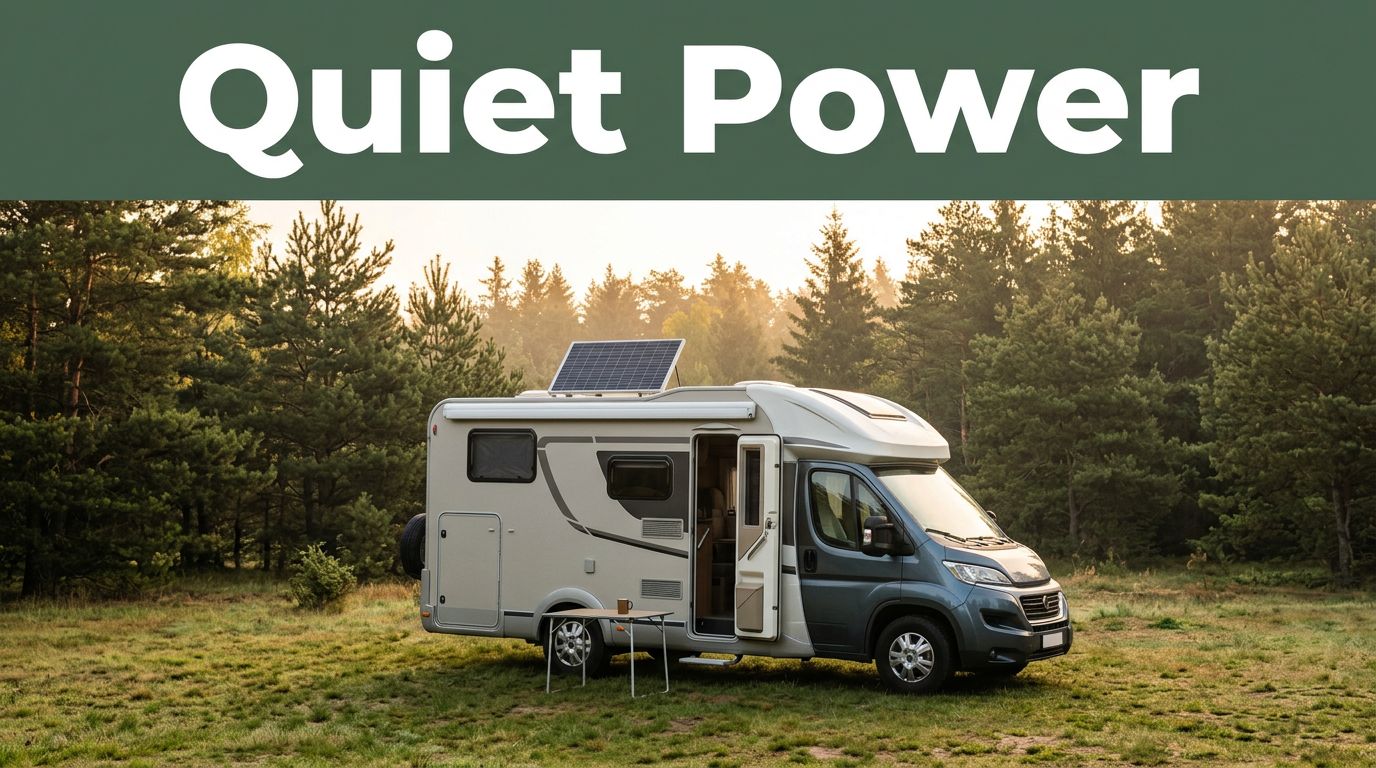
RV Solar Basics for Campers Who Want Quiet Power
The best sound at camp is often no sound at all. When your lights, phone chargers, fan, and coffee setup run from battery power, the whole campsite feels calmer.
That is why rv solar basics matter so much for part-time campers. You do not need a roof full of panels or a huge battery bank to enjoy quiet power for a weekend.
Before you buy anything, it helps to know what solar can do, what it cannot do, and how much system you really need.
Why solar makes sense for part-time RV camping
A small solar setup solves a simple problem. You want electricity without generator noise, fuel cans, or hunting for hookups every night.
For many seniors, that tradeoff feels especially good. Less noise means easier conversation outside, better sleep, and fewer chores once the sun goes down. If you use a CPAP, charge hearing aids, power a vent fan, or keep phones and tablets topped off, solar can cover a lot of daily comfort.
Solar also fits the way many part-time campers travel. You might take a long weekend trip, spend a few nights in a state park, or stop overnight on the way to visit family. In those moments, quiet battery power feels more useful than a big, permanent off-grid system.
Solar works best when you size it for your own habits.
That point gets lost online. Social media often highlights giant builds from the van life crowd or elaborate rigs owned by full time rv’ers. Those systems can be impressive, but they are not the starting point for most people with a travel trailer, fifth wheel, or small motorhome.
A modest setup usually handles lights, water pump, USB charging, fans, and short bursts from small appliances. It usually will not run your rooftop air conditioner for long, and it may not run it at all. That is normal. Even Go RVing’s beginner guide to RV solar starts with the same truth: you need to know your power use before you buy panels.
If your goal is quiet mornings, peaceful evenings, and less generator time, solar makes plenty of sense.
The four parts of a simple RV solar system
Every rv solar setup, large or small, has the same core pieces. Once you understand those parts, the whole subject gets much less intimidating.
- Solar panels collect sunlight and turn it into electricity.
- A charge controller regulates that power before it reaches the battery.
- The battery stores energy for later use.
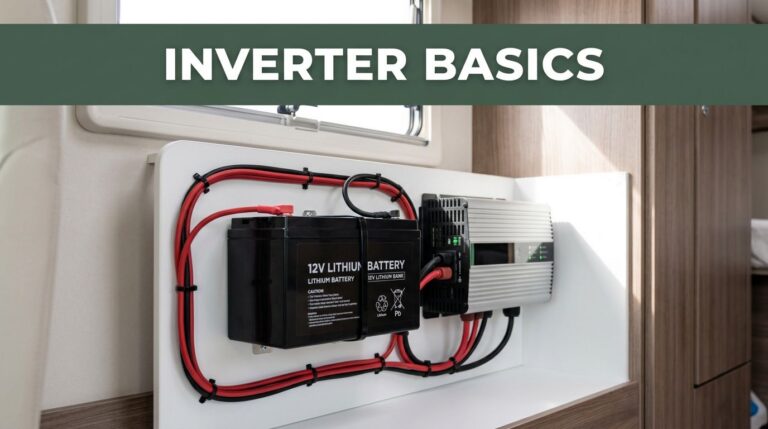
- An inverter changes battery power into household-style power for some appliances.
Panels get most of the attention, but the battery often matters more in real camping. Sunlight comes and goes. Your battery is what lets you turn on a light after dark or run a fan before sunrise.
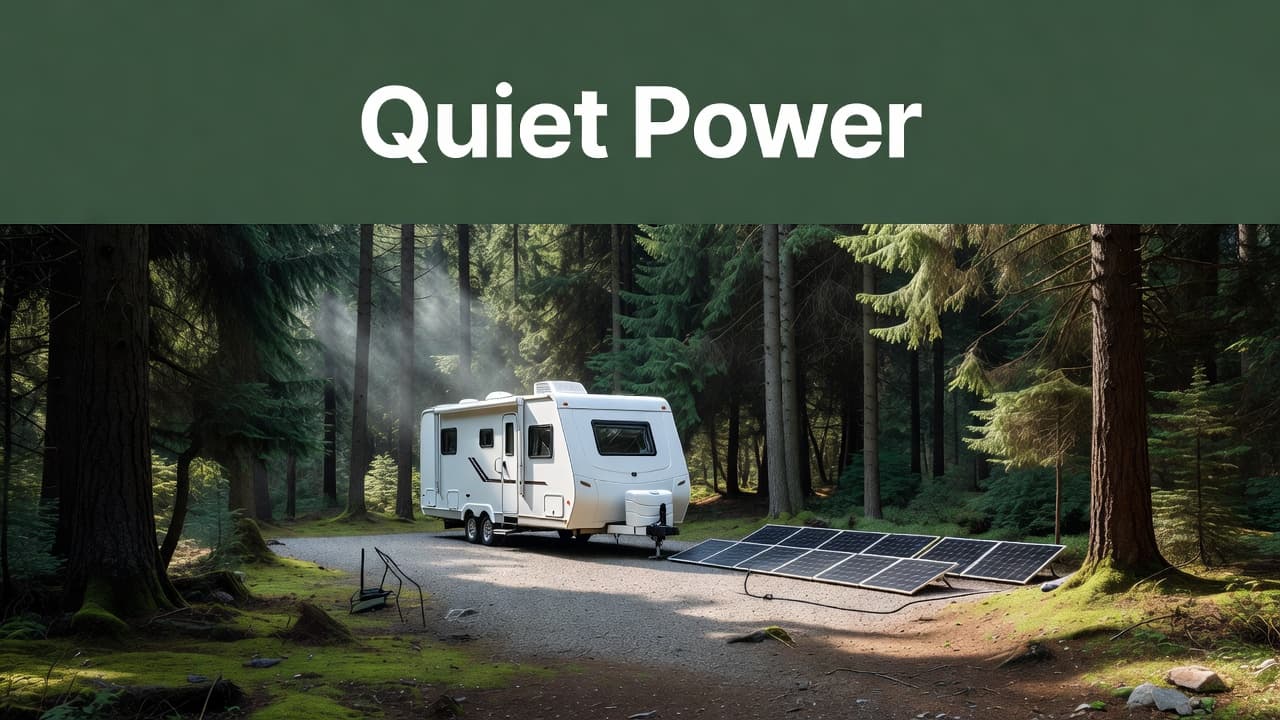
Part-time campers often do best with portable panels. They are easy to store, simple to set up, and they do not require roof drilling. They also give you flexibility. You can park your rv in the shade and place the panels in the sun, which helps a lot in summer.
Roof-mounted panels have their place. They are convenient because they charge whenever the sun is out, even while you drive or stop for lunch. Still, they cost more, and they are harder to expand or move later.
The battery choice matters, too. Traditional lead-acid batteries cost less up front, but they offer less usable power and need more attention. Lithium iron phosphate batteries, often called LiFePO4, cost more, yet they give you more usable capacity, charge faster, and weigh less. For seniors, less weight and less maintenance can make a real difference.
Then there is the inverter. Many beginners buy one too soon and too large. If you mainly charge phones, run lights, and power 12-volt devices, you may not need an inverter right away. Add one when you have a clear reason, such as running a laptop charger, coffee grinder, or small TV.
A battery monitor is not one of the four core parts, but it is close. It tells you how much power you have left, and that makes the whole system easier to trust.
How much RV solar do you actually need?
This is where beginners often overspend. They buy for the dream instead of the trip they really take.
Start with your daily loads. A few LED lights use little power. Charging phones uses little, too. A vent fan, laptop, television, or CPAP uses much more because those items run longer. Coffee makers, microwaves, hair dryers, and space heaters pull heavy loads, even if they run for a short time.
A helpful way to think about solar is watt-hours. If a device draws 50 watts and runs for 4 hours, that is 200 watt-hours. When you add up your typical day, your panel and battery choices become much clearer.
As Renogy’s RV solar panel guide notes, a 200-watt panel setup can often produce about 800 to 1,200 watt-hours per day in good sun. Trees, clouds, winter sun angle, and dirty panels can cut that number fast, so leave yourself some margin.
These starting points work well for many part-time campers:
| Camping style | Common daily use | Good starting point | | | | | | Light weekend camping | LED lights, phones, water pump, occasional fan | 100 to 200 watts of solar, one 100Ah battery | | Moderate boondocking | Add TV, laptop, longer fan use, maybe a CPAP | 200 to 300 watts of solar, 100 to 200Ah lithium battery, small inverter | | Longer quiet stays | Add brief use of kitchen appliances and more device charging | 300 to 400 watts of solar, 200Ah lithium battery, larger inverter if needed |
The takeaway is simple. Many part-time rigs do well with a smaller setup than the internet suggests.
A common mistake is sizing solar for air conditioning. Most rooftop AC units draw too much power for a beginner system, especially overnight. If air conditioning is your priority, hookups or generator time still matter.
Another mistake is ignoring campsite conditions. Shaded forest sites are wonderful for camping, but they are hard on solar harvest. Portable panels help, although they do add one more thing to set out and pack away.
Among the best camping tips for solar users, this one pays off fast: keep a small note on your phone after each trip. Write down what you ran, what worked well, and what drained the battery faster than expected. After two or three weekends, you will know far more than any sales page can tell you.
What to buy first, and what can wait
If you want the easiest path to quiet power, keep the first system simple. A portable panel kit, a good charge controller, and one quality battery can cover a surprising amount of comfort.
For many campers, a 100Ah lithium battery is the best upgrade before adding more solar. That one change usually improves real-world power more than an oversized inverter. Then, if you still need more charging, add another panel or a second battery later.
Controller type matters, although you do not need to obsess over it. PWM controllers cost less and work fine in basic systems. MPPT controllers cost more, but they usually harvest power more efficiently, especially when sunlight is weaker or panel voltage is higher.
Safety and convenience count, too. Check connector quality, cable length, and battery placement. If climbing on the roof is hard on your knees or balance, skip the roof install. Plenty of seniors prefer portable gear because it keeps setup closer to ground level.
For battery basics and system planning, Battle Born’s guide to RV solar panels is a useful reference. Read a few solid guides, then compare that advice with how you actually camp.
If you enjoy practical advice made for rv travelers, RV Life Insider is worth bookmarking. You can View All Our Newsletters for regular camping tips, and you can View Our Website for blogs, travel guides, planning tools, community conversation, and gear ideas.
A quiet solar setup does not need to be perfect. It needs to match your weekends, your comfort level, and your rv.
Final thoughts
Quiet power usually starts with a smaller goal than people expect. If your system covers lights, fans, charging, and a few daily comforts, it is already doing the job most part-time campers need.
The smartest move is to buy for the trips you already take, not the rig you might build someday. Once you understand your own habits, rv solar basics stop feeling technical and start feeling practical.
After your next camping trip, write down what you used and what you missed. That short list is the best solar plan you can make.
This post may contain affiliate links. If you make a purchase through these links, I may earn a small commission at no extra cost to you.