RV Converter Basics for Reliable Charging
If your lights fade after sunset, the battery may not be the real problem. In many cases, the RV converter is the part that keeps your 12-volt system alive and your house battery charging whenever you’re plugged in.
New owners often hear “converter,” “inverter,” and “charger” tossed around like they mean the same thing. They don’t. Once you understand a few RV converter basics, the whole power system feels less mysterious, and your camping trips get a lot less stressful.
Key Takeaways
- An RV converter changes 120-volt AC power into 12-volt DC power for lights, pumps, fans, and battery charging.
- A healthy converter should raise battery voltage above its resting level when the rv is plugged in.
- Weak charging can show up as dim lights, dead batteries, furnace trouble, or batteries that lose water too fast.
- When replacing a converter, match the amp rating and battery type, especially if you use lithium batteries.
What an RV converter actually does
A converter has one main job. It takes 120-volt AC power from shore power or a generator and changes it into 12-volt DC power.
That matters because many parts of your RV run on 12 volts, even when you’re connected to campground power. Your interior lights, water pump, vent fans, slide controls, and furnace control board often depend on that DC side.
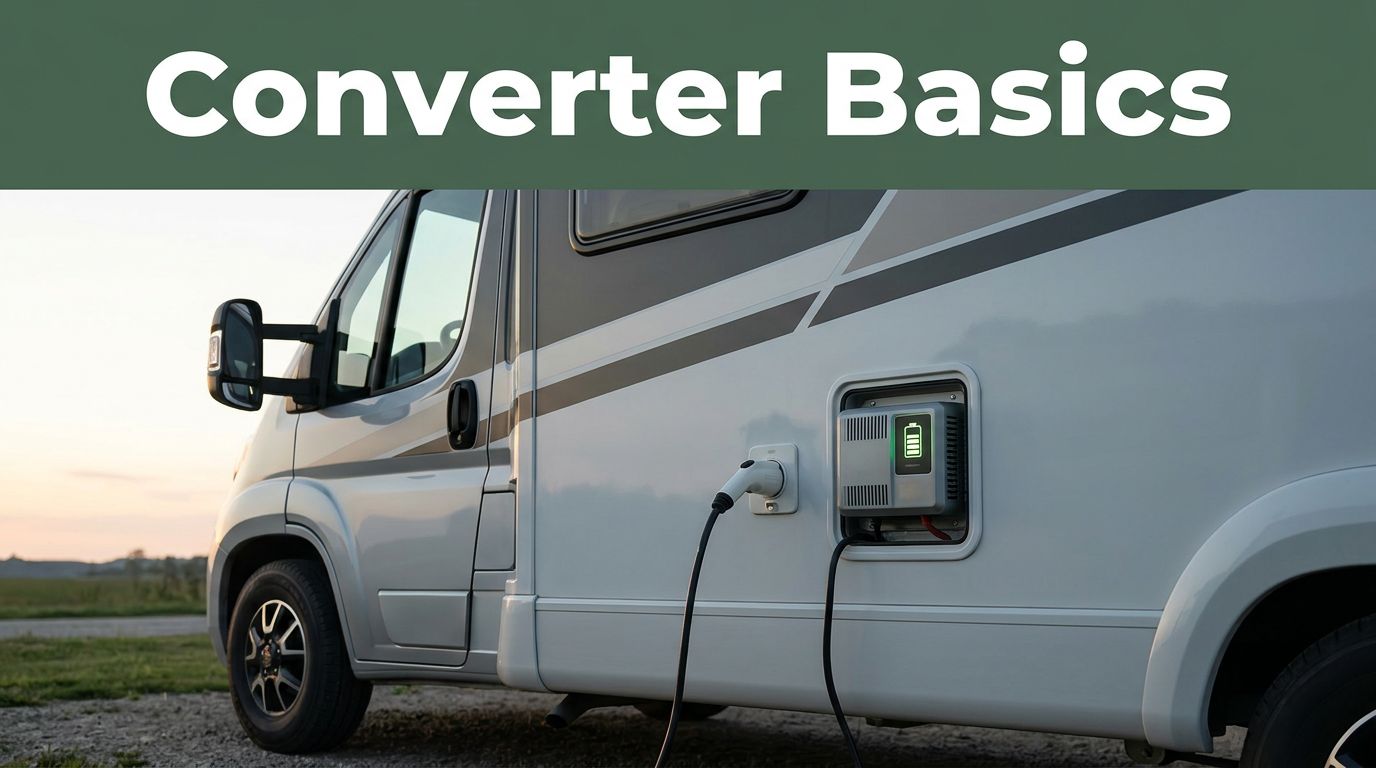
At the same time, the converter charges the house battery. So when you’re plugged in at a campsite, the converter is doing double duty. It powers many 12-volt loads and sends charging current to the battery.
A converter only charges when outside AC power is available, usually from shore power or a generator.
This is also where people mix up the converter and inverter. A converter changes AC to DC. An inverter does the opposite, turning battery power into household-style AC power for outlets or appliances. Some rigs have both. Some small trailers and van life builds only have one.
Once you know that direction of power flow, the name starts to make sense. AC comes in, DC goes out.
If you want a deeper look at how converters fit into the full electrical picture, NRVTA’s guide to RV electrical systems gives a solid overview.
Where the converter fits in your RV power system
In many rigs, the converter sits inside the power center. That’s often the box that also holds your 120-volt breakers and 12-volt fuses. If you’ve opened a panel near the floor and seen breakers on one side and blade fuses on the other, you’re probably looking at it.
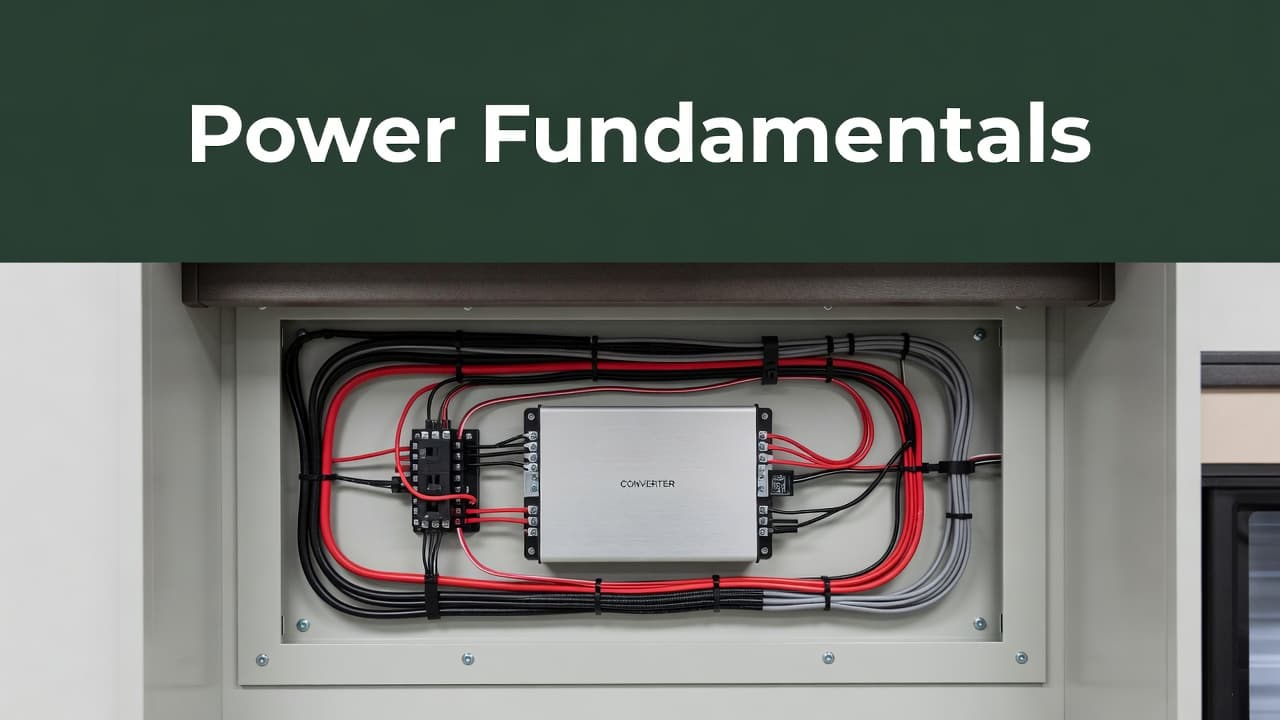
The battery usually lives elsewhere, often on the tongue of a trailer or in a side compartment. Still, the converter and battery work as a pair. The converter feeds 12-volt circuits and charges the battery through cables that run between them.
Most newer converters have a fan. That fan may come on during heavy charging or when the cabin is warm. A brief fan cycle is normal. Constant heat, a burning smell, or unusual noise is not.
Many modern units are also multi-stage chargers. That means they don’t charge at one flat rate all the time. Instead, they move through different voltage ranges to recharge faster at first, then settle into a lower maintenance charge. That’s easier on batteries, especially for owners who keep the RV plugged in for long stretches.
Why reliable charging matters when camping
A weak converter can ruin a peaceful evening faster than rain. The lights dim, the fan slows down, and by morning the battery has fallen farther than it should.
For seniors, steady charging is more than a convenience. It keeps basics dependable, including lighting, water flow, tank monitoring, steps, and furnace controls. If you travel in cooler weather, a low battery can stop the furnace board even when you have plenty of propane.

This matters for weekend campers, but it matters even more for full time rv’ers. If your home rolls on wheels, charging problems become daily problems. The same goes for van life travelers who depend on compact electrical systems with little room for error.
One of the best camping tips is also one of the simplest: pay attention to how your lights and fan sound after you plug in. If nothing improves after a while, the converter may not be doing its job.
RV Life Insider speaks to that everyday side of ownership. If you like practical help for seniors who love camping, you can View Our Website for blogs, planning tools, community posts, and product ideas, or View All Our Newsletters for regular tips in your inbox.
Common converter problems and a few easy checks
Converter trouble often shows up in ordinary ways. Your battery doesn’t recover overnight. Interior lights stay weak while plugged in. A flooded lead-acid battery needs water too often. In some cases, the converter fan runs hard and the battery still won’t charge.
You don’t need to tear into the whole power center on day one. Start with a few basic checks.
- Use a multimeter at the battery terminals. A fully charged lead-acid battery at rest is often around 12.6 volts. When you plug the RV in, charging voltage should rise above that, often into the 13.2 to 14.4 range, depending on the charge stage and battery type.
- Check whether the 12-volt lights brighten after hookup. If they don’t, the converter may not be supplying DC power.
- Inspect the converter area for a tripped breaker, blown fuse, corrosion, heat, or a burnt smell.
- Look at the battery itself. Swelling, heavy corrosion, or repeated low water levels can point to charging trouble.
A bad battery can mimic a bad converter, so test both before buying parts. Many owners replace the battery first, then find the new one won’t charge either.
If you’d like to see meter testing in action, this quick converter testing video is a helpful visual reference.
If battery voltage never rises after hookup, the converter, its fuse, or its incoming AC supply needs attention.
Choosing a replacement and keeping it healthy
When a converter fails, match the replacement to your setup. Start with the existing unit’s amp rating and model number. Then check what type of battery you use, because flooded, AGM, and lithium batteries don’t all want the same charging profile.
A modern three-stage converter is a smart upgrade if your current unit is old. Better charging control helps batteries last longer, and it reduces the chance of chronic undercharging. If you run lithium batteries, confirm that the converter supports lithium charging or has a lithium mode.
Common RV converter brands include Progressive Dynamics, WFCO, and PowerMax. A direct replacement is often the easiest path, especially when the unit fits into an existing power center. If you’re comparing features before you buy, RVshare’s power converter guide gives a useful high-level breakdown.

Good habits help, too. Keep battery terminals clean. Check water levels in flooded batteries. Don’t block the converter’s ventilation. Many full time rv’ers also carry spare fuses and a simple multimeter, because those two items solve a lot of roadside guesswork.
Conclusion
Reliable charging starts with one plain fact: the converter is the bridge between campground power and your 12-volt life. When that bridge works well, your battery charges properly and your RV feels easy to live in.
If your lights keep fading after hookup, don’t stop at the battery. A basic converter check can save money, protect your power system, and make your next camping trip much calmer.
This post may contain affiliate links. If you make a purchase through these links, I may earn a small commission at no extra cost to you.