30-Amp vs 50-Amp RV Service, Clearly Explained
Deciding between 30 amp vs 50 amp RV service should not feel like a pop quiz. Even so, many owners pause at the power pedestal and wonder if the difference between these connections really matters.
It certainly does, because making the wrong assumption about your campground hookups can trip breakers, shut off your air conditioner, or leave you constantly juggling appliances. Once you understand the basics of RV power, making the right choice becomes much easier and a lot less stressful.
Key Takeaways
- Understand the Capacity Difference: A 30-amp service provides 3,600 watts of power, while a 50-amp service delivers a much larger 12,000 watts, allowing for multiple high-load appliances to run simultaneously.
- Adapters Do Not Create Power: Using a “dog bone” adapter allows you to plug your RV into a different pedestal size, but it does not increase the amount of power available; you are still limited by the pedestal’s actual output.
- Tailor Your Choice to Your RV: Use the power service your rig was designed for to ensure optimal performance; 30-amp setups suit smaller trailers with modest needs, while 50-amp is necessary for large coaches with multiple air conditioners and residential appliances.
- Prioritize Power Management: When using a lower-amperage connection or a limited power source, you must carefully monitor your electrical load to avoid tripping breakers by running too many high-wattage devices like heaters, microwaves, and AC units at the same time.
What 30-amp and 50-amp RV service actually mean
If the comparison between 30 amp service and 50 amp service sounds confusing, keep one fundamental concept in mind: the number indicates the maximum amount of electrical current your rig can draw at one time. Understanding this is essential to managing your RV electrical system effectively during your travels.
A 30 amp service connection provides a single 120 volts hot wire that delivers roughly 3600 watts of available power. In contrast, a 50 amp service setup is significantly more robust. It utilizes two 120 volts hot legs, allowing the coach to access up to 12000 watts of total wattage when both circuits are utilized.
This massive gap in capacity explains why these two hookups are not interchangeable. A 50 amp configuration provides far more utility than a 30 amp setup, even though the numbers might suggest only a minor increase in capacity.
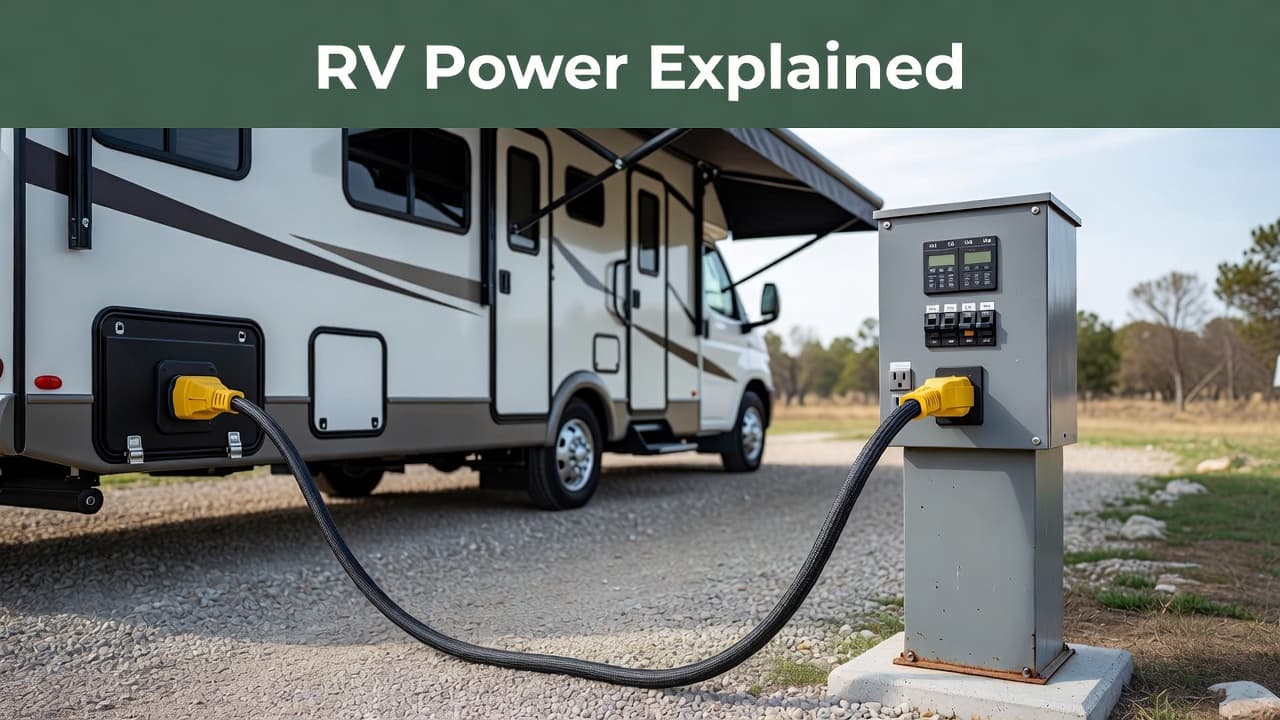
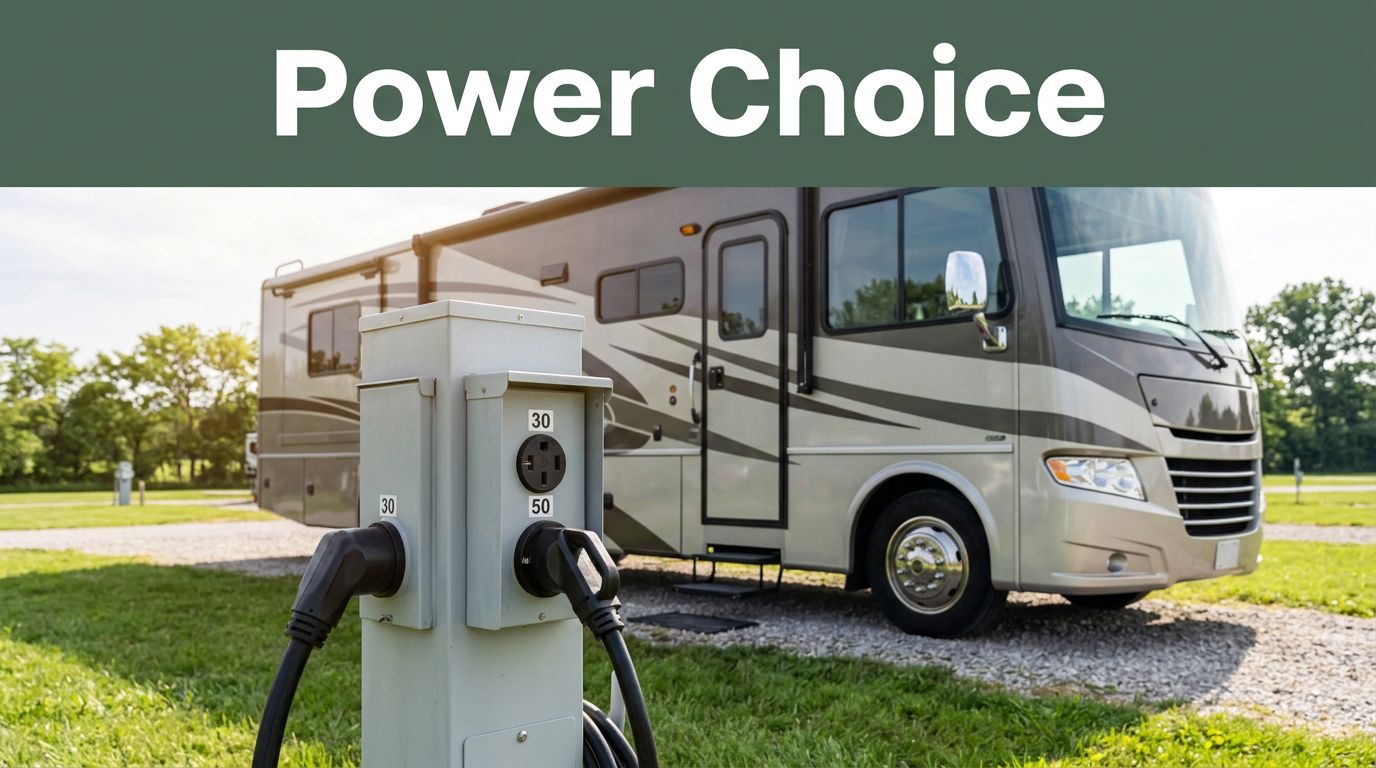
The plugs also look quite different. A 30 amp plug features three prongs, while a 50 amp plug uses four. This physical difference prevents you from plugging into an incompatible receptacle without using a specialized adapter.
This quick comparison makes the difference easier to see:
| Service type | Plug style | Voltage setup | Approx. max power | Common fit |
|---|---|---|---|---|
| 30-amp | 3-prong | One 120-volt leg | 3600 watts | Smaller trailers, older RVs, some Class C rigs |
| 50-amp | 4-prong | Two 120-volt legs | 12000 watts | Large fifth wheels, big travel trailers, Class A coaches |
The main takeaway is simple: 50 amp service is not just a bigger plug, as it provides a significantly larger power supply for your rig.
For many travelers, that capacity matters more than it used to. Appliances like a CPAP machine, space heater, electric kettle, microwave, and air conditioner can consume electricity quickly. The same logic applies to anyone camping through intense heat waves or cold snaps who prefers consistent comfort instead of constant power juggling.
Why the difference matters when you’re camping
At the campsite, power limits show up in everyday moments. You turn on the air conditioner, then someone starts the microwave, and suddenly you trip the breaker. That is the classic 30-amp story.
A 30-amp rig can still handle plenty. You can run an air conditioner, lights, a TV, chargers, and a coffee maker. However, you cannot run every heavy-load appliance at once. A microwave oven, electric water heater, toaster oven, and portable heater are common culprits when managing your total electrical load, as each one pulls a significant amount of power.
A 50-amp RV gives you more breathing room. Two air conditioners are often possible. So are a residential fridge, washer and dryer, or extra kitchen appliances. For full time RVers, that extra room often feels less like luxury and more like day-to-day comfort.
Climate matters, too. Summer camping in the South can push a 30-amp setup to its edge. Winter camping can do the same if you rely on electric heat. Meanwhile, mild-weather trips or weekend stays often make 30-amp service feel perfectly fine.
Your travel style plays a role as well. A smaller trailer used for weekend camping does not need the same capacity as a large fifth wheel used for months at a time. Many van life rigs also live comfortably on lower shore power because they have fewer built-in electric demands.
A few practical camping tips help no matter what service you have:
- Check what is already running before you add another heat-producing appliance.
- Use propane for water heating or the fridge when that option makes sense.
- Let one heavy appliance finish before turning on the next.
- Watch for low voltage on crowded summer weekends, because low voltage can harm motors and electronics.
That last point matters more than many people realize. Even a correctly matched hookup can cause trouble if the campground power is weak or unstable. A surge protector is one of the smartest add-ons you can buy to protect your RV electrical system from unexpected fluctuations.
Adapters help, but they don’t create more power
Many campgrounds offer both 30-amp and 50-amp outlets, but not always in the mix you want. That is why an RV adapter, often referred to as a dog bone, is a common item found in most RV storage bays.
A 50-amp RV can plug into a 30-amp power pedestal with the right RV adapter. Similarly, a 30-amp RV can connect to a 50-amp pedestal with a converter. However, these tools only change the physical plug fit. They do not increase the total amount of power available to your rig.
A 50-amp coach on a 30-amp hookup still has only 30 amps of 30 amp service to work with.
This single point clears up a lot of common campground confusion. If you are using an adapter to connect your large coach to a 30 amp service, you must manage your electrical load carefully. Running one air conditioner is usually fine, but attempting to run two at once will likely trip the breaker.
On the other hand, if a 30-amp RV plugs into a 50 amp service through an adapter, the RV still draws only what its internal system is designed to handle. The larger pedestal does not force extra electricity into the coach, as your main breaker and internal wiring set the limit for your power usage.
Household outlets are a different story. A standard 15-amp or 20-amp home outlet is handy for charging batteries, light prep work, or running the refrigerator. However, it usually isn’t enough for full campground living, especially in hot weather.
That is why a little planning goes a long way. Before a trip, check the campground hookup details. If you are staying at an older park, confirm whether 50-amp sites are limited. If you are visiting friends at home, know that a regular household outlet is sufficient for basic needs but not for full climate control.
RV owners who like road-tested advice often keep learning as they go. RV Life Insider shares practical help for hookups, trip planning, and everyday road issues through its blog, community, and View All Our Newsletters.
How to choose the right service for your RV and travel style
The easiest answer is also the best one: use the service your RV was built for whenever you can. You can confirm your requirements in several places, including the power cord, the owner’s manual, the circuit breaker panel, or the sticker located near the electrical connection.
Still, many shoppers want to know which setup fits them before they buy a rig. In that case, think about your appliances first, then your habits.
A 30 amp service often makes sense if you have a smaller trailer, a compact motorhome, or a simpler setup. It is common for couples who take shorter trips, chase mild weather, or spend lots of time outdoors instead of inside running multiple appliances. It can also be a good fit for budget-minded camping because many smaller campgrounds and older parks handle this power level well.
A 50 amp service makes more sense if you want more home-like comfort. Larger rigs with two air conditioners, a big fridge, or a washer and dryer usually need that extra power. Many seniors also prefer this option because it reduces the hassle of deciding what must stay off when running multiple appliances. If comfort tools like a CPAP, induction cooker, heated blanket, and air conditioner are all part of normal life, increased power capacity helps ensure you can use them all without worry.
There is also a middle ground. Some people own a 50-amp coach but camp happily on 30 amps when the weather is mild. They simply adjust their habits. That flexibility is useful, especially when favorite campgrounds have limited site options.
If you want more articles, travel guides, planning tools, marketplace picks, and community help built around the RV lifestyle, View Our Website. It is especially helpful for seniors who want straight answers without a lot of jargon.
The best choice comes down to one plain question: how much power do you want to use at once? Once you answer that honestly, the right hookup is usually obvious.
Frequently Asked Questions
Can I run my 50-amp RV on a 30-amp campground site?
Yes, you can use a 30-to-50 amp adapter to connect your RV to the power pedestal. However, keep in mind that you will be limited to 30 amps of total power, so you will need to manage your usage carefully to avoid tripping the campground breaker.
Why does my RV breaker keep tripping?
Breakers typically trip when the total electrical load of your active appliances exceeds the available amperage. To prevent this, identify which devices are high-wattage, such as air conditioners, space heaters, or electric water heaters, and avoid running more than one or two at the same time.
Is a surge protector really necessary for my RV?
Yes, a surge protector is a smart investment because it protects your RV’s sensitive electronics from dangerous power surges or low-voltage conditions. Even at well-maintained campgrounds, unexpected fluctuations in power can occur and potentially damage your rig’s electrical system.
Can I use a standard household outlet for my RV?
While you can use a standard 15-amp or 20-amp household outlet with an adapter, it provides very limited power. It is generally sufficient for basic tasks like running the refrigerator, charging batteries, or using interior lights, but it will not support high-demand appliances like air conditioning.
The right outlet depends on how you camp
The real difference between 30 amp service and 50 amp service is capacity, not mystery. One provides enough power for careful energy management, while the other offers significant room for comfort and convenience.
If you remember that adapters change the plug but cannot increase the total power, you will avoid most common electrical mistakes. That one bit of knowledge makes navigating a campground RV electrical system feel much less intimidating.
For many RV owners, especially seniors, the best setup is the one that keeps travel simple and stress free. By understanding the limitations and strengths of your specific RV electrical system, you can enjoy fewer tripped breakers, steadier comfort, and a clear sense of confidence that makes every stop feel more relaxed. Whether you rely on the efficiency of 30 amp service or the expanded capacity of 50 amp service, knowing how to manage your power ensures your rig is always ready for the road.
This post may contain affiliate links. If you make a purchase through these links, I may earn a small commission at no extra cost to you.