RV Lightning Safety Rules for Campground Thunderstorms
A campground can feel peaceful right up to the first sharp crack of thunder. For older travelers, RV lightning safety means making decisions early, before rain, wind, and worry crowd the moment, especially when focusing on overall camping safety during your trip.
Your motorhome or trailer offers more protection than a tent, but motorhome safety does not mean a storm is completely harmless. The safest plan is to watch the forecast, prepare for extreme weather, and treat every rumble of thunder as a reason to get settled.
This post may contain affiliate links. If you make a purchase through these links, I may earn a small commission at no extra cost to you.
Key Takeaways
- Monitor weather forecasts closely and take action at the first sound of thunder, as lightning can strike miles away from the storm.
- Seek safety in a permanent indoor campground building or a fully enclosed metal-topped vehicle with the windows up.
- Secure your campsite early by retracting awnings, bringing in loose gear, closing roof vents, and disconnecting from shore power.
- Avoid touching plumbing fixtures, windows, electrical cords, and metal objects while inside your RV during a thunderstorm.
- Remain sheltered for at least 30 minutes after the final sound of thunder before stepping back outside.
RV Lightning Safety Starts Before the First Thunderclap
Lightning can strike miles from the center of a storm. The National Weather Service’s practical rule is simple: if you hear thunder, lightning is close enough to be dangerous. That means it’s time to stop setting up chairs, walking the dog, fishing, or visiting neighbors.
Check the forecast when you arrive, especially during humid summer afternoons. A weather app helps, but a NOAA weather radio can still be useful when cell coverage is weak or when a sudden thunderstorm warning pops up. Also ask the camp host where guests should go for an indoor shelter during severe storms. Some parks have a restroom building, lodge, office, or storm shelter that is safer than a campsite.
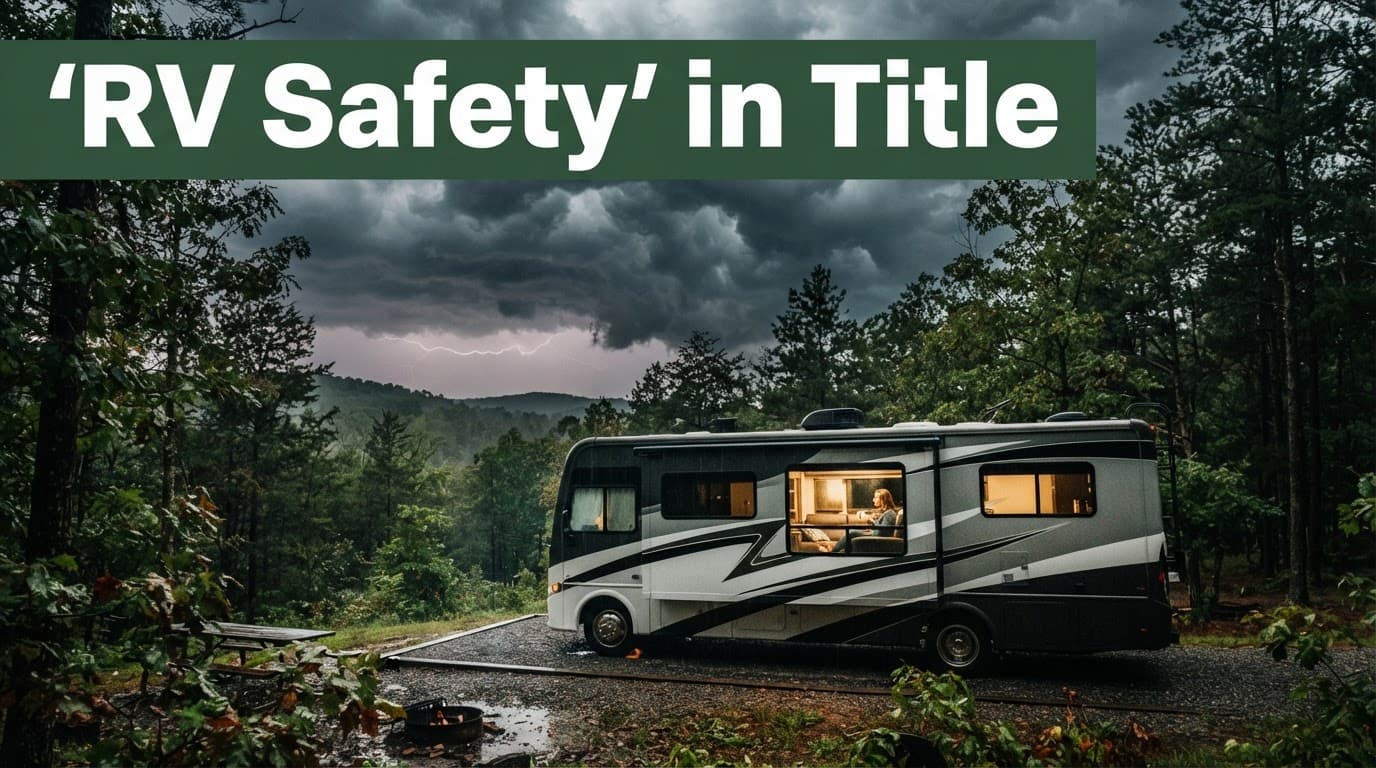
A few minutes of preparation gives you better choices when the sky turns dark. Keep shoes, rain jackets, prescription medicines, flashlights, keys, and phones in predictable places. If you travel with mobility aids, park them where they will not block the door. Taking these safety precautions early ensures you are ready when a thunderstorm warning is issued.
Avoid choosing a site directly beneath a large tree when storms are likely, as falling trees and dropping limbs are often a greater threat to an RV than a direct lightning strike. Likewise, avoid exposed hilltops, open fields, and sites beside lakes or rivers when you have another option.
For more practical perspective on how a rig can protect its occupants, read RV Life’s lightning storm guidance. The basic message is clear: make sure your RV lightning safety plan is ready before severe storms arrive, and use a reliable weather radio to stay informed.
A pavilion, picnic shelter, bathhouse overhang, or open carport may keep you dry, but none is safe lightning shelter.
Choose a Real Shelter, Not a Convenient One
A substantial indoor shelter is the best choice during an electrical storm. Campground restrooms or recreation buildings can work if they are fully enclosed and have permanent wiring and plumbing. Follow any directions from park staff, particularly at state parks and private resorts that have designated storm procedures.
If no building is available, a fully enclosed, metal-topped vehicle with the windows up is the safer fallback. A metal RV acts like a Faraday cage to safely disperse electricity around the outside of the chassis in the event of a direct lightning strike. However, RV construction varies significantly. A motorhome featuring an aluminum exterior offers better conductivity than a model built with a fiberglass roof, which provides less uniform shielding. Never rely on a pop-up camper, canvas-sided trailer, golf cart, screened porch, or open cab vehicle during severe weather.
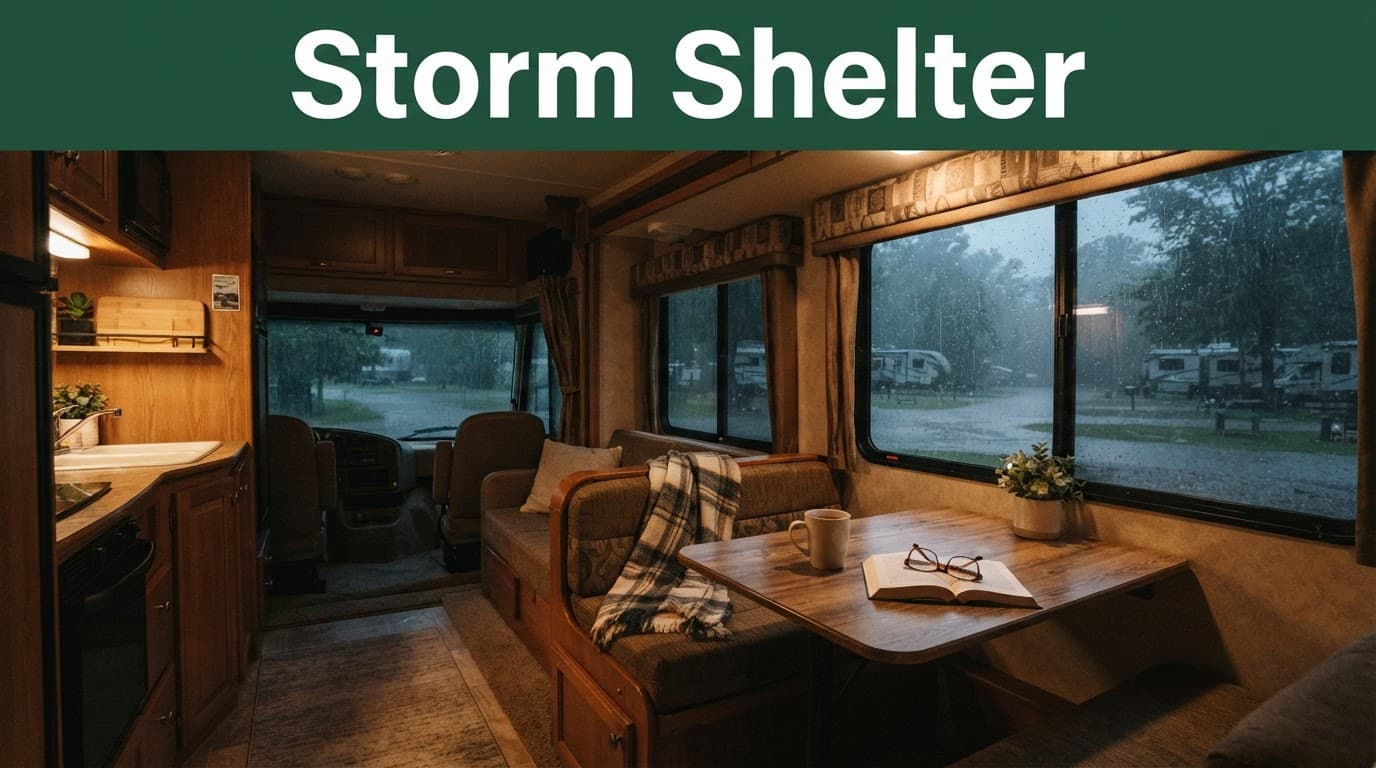
Once you are inside, stay away from windows, exterior doors, plumbing fixtures, and plugged-in electrical equipment. Don’t take a shower, wash dishes, or use a corded phone while a lightning strike risk is active. Water and wiring can carry electrical current farther than many campers realize.
The American Camp Association’s outdoor lightning guidance also warns against sheltering under tall, isolated trees. A tree might seem like cover when rain starts, yet it can draw electricity and shed limbs during strong wind.
For RV lightning safety, waiting matters as much as getting inside an indoor shelter. Stay sheltered for at least 30 minutes after the last sound of thunder during any electrical storm. A patch of blue sky is not a reliable signal that the danger from a potential lightning strike has passed.
Secure the Campsite While Conditions Are Calm
Thunderstorms bring more than lightning. Gusty wind, hail, sudden downpours, and falling branches can damage a campsite quickly. Do the outdoor work early, while thunder is still distant or before a storm is expected.
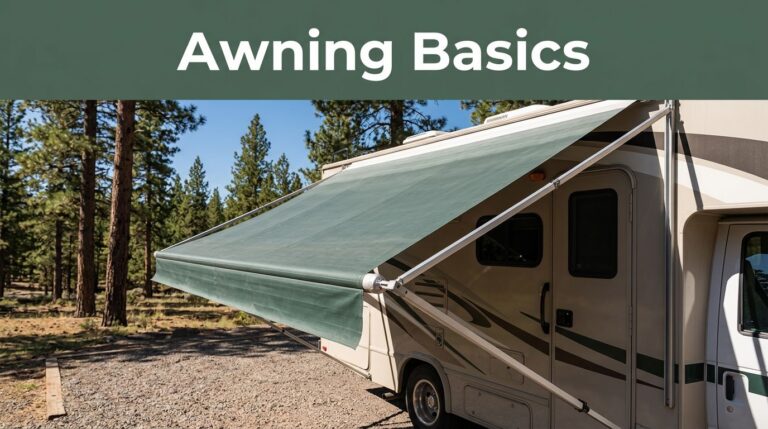
Retract the awning first. Awnings catch wind like sails, and a single strong gust can twist arms, tear fabric, or damage the sidewall of the RV. Bring in flags, folding tables, lightweight chairs, outdoor rugs, and pet gear. Close roof vents and latch windows before rain begins.
If your rig uses slide toppers, look up for loose branches that could drop on them. Do not climb onto the roof once a storm is approaching. A wet roof, metal ladder, and nearby lightning are a bad combination.
Before thunder begins, consider these sensible campsite steps:
- Disconnect from shore power if you can do it safely before the storm arrives, then bring the power cord inside or keep its ends dry and protected.
- Turn off the circuit breaker at the campsite pedestal and unplug nonessential electronics, including televisions, computers, chargers, and countertop appliances to prevent electrical damage from power surges.
- Park your tow vehicle where you can leave without backing through tight trees or muddy ground.
- Keep enough fuel in the motorhome or truck for an unexpected relocation or a delayed departure.
- Put a flashlight near the bed, not buried in a storage compartment.
A portable surge protector can help during an electrical storm with common campground power problems, but a standard surge protector cannot promise protection from a direct lightning strike. Treat it as useful equipment, and make sure your leveling jacks or grounding wire pathway is secure, rather than staying plugged into shore power through an active storm. Unplugging the power cord from the campsite pedestal and flipping the main circuit breaker offers the best physical separation, safeguarding your electrical system from severe power surges and potential electrical damage while you wait out the lightning strike.
Full-time RV’ers often build this routine into their weather checks because they cannot always wait out a forecast at home. However, weekend campers and van life travelers benefit from the same habit. In fact, a short storm plan often prevents the rushed, risky decisions that cause injuries or damage.
If You Are Outside When Lightning Moves In
The first goal is simple: reach an indoor shelter or enclosed vehicle as fast as safely possible. Do not stop to fold chairs, secure fishing gear, or take photos of the clouds. Personal safety comes before equipment, especially when an electrical storm rolls in.
Leave the water immediately. Lakes, pools, rivers, docks, and wet boat ramps are dangerous during a lightning strike. Move away from open fields, ridges, tall fences, utility poles, and isolated trees that attract falling trees or branches during extreme weather. Never lie flat on the ground, because current can travel across the surface after a nearby lightning strike.
If you are hiking and cannot reach shelter, get off higher ground and move away from tall isolated objects. Spread out from others rather than gathering beneath one tree. Keep moving toward a safe building or enclosed vehicle when conditions allow.
Do not touch metal picnic tables, campground water spigots, a campsite pedestal, or guy wires. At a busy campground, remind children and visitors that a tent is not lightning shelter. Rain protection and camping safety are two different things, and basic safety precautions save lives.
For seniors with limited mobility, planning matters even more. Choose campsites reasonably close to facilities when severe weather is expected. Keep a cane, walker, hearing aids, spare batteries, and necessary medications ready to go. A camp host should know if you may need help getting to the designated shelter before a lightning strike occurs or during an electrical storm.
Use Campground Communication to Your Advantage
Campground staff may share severe-weather alerts, including a thunderstorm warning, through text messages, office announcements, a weather radio, or vehicle loudspeakers. Ask at check-in how alerts work and whether power failures affect the system. If severe storms are forecast, avoid taking a long drive or day hike that leaves you far from your campsite without a clear shelter plan.
Keep your phone charged, but do not depend on one device alone. Download local maps before you lose service. A battery-powered weather radio and a basic paper campground map can be welcome backups during a power outage.
RV Life Insider is built around the kind of practical knowledge that makes travel calmer and safer, focusing on motorhome safety and camping safety essentials. You can subscribe to our newsletter for new RV tips, road stories, travel ideas, and useful reminders for life on the road. You can also View All Our Newsletters when you want more inspiration between trips.
These safety precautions are most helpful when they fit real life. Discuss your storm routine with your travel partner before you need it. Decide who brings in the awning, who gathers pets and medicines, and where you will meet if a thunderstorm warning catches you apart.
Frequently Asked Questions
Is an RV completely safe during a lightning storm?
While a metal-topped RV provides significant protection by acting like a Faraday cage, it is not completely immune to electrical hazards. Proper precautions, such as disconnecting from shore power and staying away from metal fixtures, are still essential for your safety.
Should I unplug my RV from shore power during a thunderstorm?
Yes, disconnecting from shore power and turning off the campsite pedestal breaker is highly recommended. This physical separation helps protect your RV’s electrical system from severe power surges caused by nearby lightning strikes.
Can I take a shower or wash dishes inside my RV during a storm?
No, you should avoid using plumbing fixtures and running water during an electrical storm. Water and internal wiring can conduct electricity from a lightning strike, posing a serious shock hazard.
How long should I wait after a storm before going outside?
You should remain safely sheltered for at least 30 minutes after the last heard rumble of thunder. A clear blue sky overhead does not guarantee that the threat of lightning has fully passed.
Keep the Storm Plan Simple
Good RV lightning safety comes down to early action. Watch the weather, choose real shelter, secure the campsite before thunder arrives, and stay inside for 30 minutes after the final rumble. Protecting your rig relies on solid motorhome safety habits, including unplugging your power cord from shore power and flipping the main circuit breaker the moment severe weather approaches.
When an electrical storm hits, safeguarding your investment means disconnecting your power cord from shore power, checking your surge protector against sudden power surges, and keeping your leveling jacks down to prevent electrical damage. A direct lightning strike can send a massive surge through any exposed power cord, so relying on your surge protector and a proper grounding wire helps mitigate severe electrical damage. While your metal frame acts as a natural Faraday cage during a lightning strike, disconnecting your grounding wire and internal power sources provides an extra layer of defense.
Your RV lifestyle should leave room for quiet mornings, familiar campfires, and unhurried roads. A clear thunderstorm routine lets you protect those good days without guessing when the sky turns dark.