How to Find Easy Fuel Stops for Large RVs
A stressful fueling experience can quickly turn a peaceful travel day into a white-knuckle mess. When you are navigating a big rig that is long, tall, or towing a heavy trailer, pulling into the wrong station can result in blocked lanes, sharp curbs, and no clear way to exit. Finding reliable RV friendly gas stations is essential to avoiding these common headaches.
The good news is that large RV fuel stops are easier to manage than they seem. By prioritizing proper planning, using strategic map checks, and developing the right habits, you can keep your camping trip smooth and stress-free from the first mile to the last.
Key Takeaways
- Plan ahead to avoid stress: Start scouting for fuel when your tank hits the halfway mark to avoid being forced into cramped or difficult stations when your options are limited.
- Prioritize space and layout: Look for travel centers and large plazas that offer high canopies, wide turning radii, and pull-through paths to accommodate the size and swing path of your rig.
- Use technology for verification: Combine travel apps with satellite and Street View imagery to inspect potential stops for low clearances, narrow exits, or awkward medians before you commit.
- Maintain a calm, methodical routine: Fuel outside of peak traffic hours whenever possible, and if a station appears too chaotic or tight upon arrival, do not hesitate to move on to the next location.
Plan Fuel Stops Before the Tank Gets Low
The easiest refueling stops are the ones you choose while you are still relaxed. If you wait until the fuel light comes on, your options shrink fast, and stress rises even faster.
A good rule is to start looking for a station when you are around half a tank, especially on long highway days where you need to manage your diesel fuel consumption. For seniors, that extra buffer matters because it cuts down on rushed decisions and last-minute lane changes. It also helps when traffic is heavy, the weather turns, or the first station looks tighter than expected.
If you wait for the fuel light, you are picking from leftovers.
Travel centers and large travel plazas are often the safest first pick for a big rig. Major locations like Pilot Flying J, Love’s, and TA sites usually offer higher canopies, wider turning space, and cleaner exits than a small-town corner station. Even so, not every chain location works the same way. Older sites can still feel cramped, and some city stations are built for passenger cars first. Using loyalty cards at these major chains can also help you track your spending and simplify the payment process during your travels.
That is why route planning matters more than brand names. Using a tool like RV LIFE Trip Wizard helps you visualize your path and choose likely stops before the day gets busy, keeping at least one backup option ahead. This matches what experienced drivers already know about accessing fuel stations with an RV.
Your fuel range also changes more than many people expect. Headwinds, mountain grades, stop-and-go traffic, and towing can all raise your fuel use significantly. A route that felt easy on flat ground can look very different after a steep climb or a long detour.
Some of the best camping tips have nothing to do with campgrounds. They start with a calmer travel day, and that usually starts with a solid fuel plan.
Know the Signs of an RV-Friendly Station
Good fuel stops for large RVs all have the same basic gift: space. You need room to enter, room to line up, room to fuel, and room to leave without crossing your fingers.
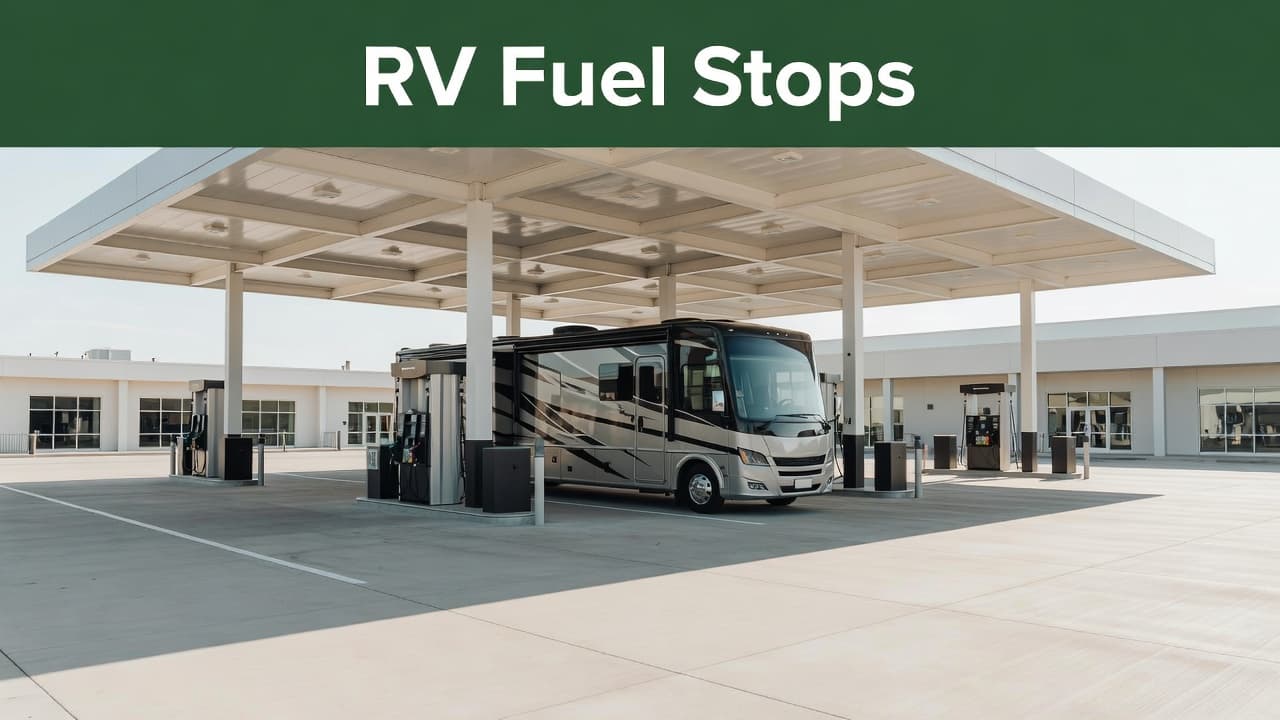
Start by looking for high overhead clearances, but remember that vertical space is not the only factor. You also want a wide entrance, dedicated RV fueling lanes, and an exit that does not force a hard turn around a curb or bollard. If you are towing a fifth-wheel, you must account for the entire swing path and turning radius, not just the pump position.
For a gas motorhome, the layout matters significantly. A Roadtreking community post on RV-friendly fuel stops points out that pumps running parallel to the building often provide better maneuverability than short rows set perpendicular to the store. That specific orientation often creates a straighter pull-through path and a cleaner exit for your rig.
This quick comparison helps sort the good choices from the bad ones:
| Stop type | How it works for big RVs | Main concern |
|---|---|---|
| Travel plazas with RV islands | Usually the easiest option | Can be busy at peak hours |
| Truck stops with diesel lanes | Great for diesel coaches | Follow posted rules, respect truck flow |
| Small-town gas stations | Sometimes workable | Tight turns, low canopies, curb islands |
| Grocery fuel centers | Rarely a good fit | Short lanes and little turning room |
The size of the lot often tells you more than the sign out front. If the station is packed with curbs, parked cars, and short approach lanes, keep moving.
Use Apps, Satellite View, and Street View Together
One app rarely solves the challenge on its own. The best results come from using a combination of tools, because each one answers a different question about your upcoming stop.
Start with an app that shows likely travel centers or major truck stops. Chain apps like the Pilot app or those for Love’s can help you spot specific services, such as dedicated RV lanes, propane refills, and dump stations. While GasBuddy is helpful for checking fuel prices, keep in mind that a low price does not always guarantee easy access. Many motorhome owners also rely on Trucker Path, which is frequently recommended in forums like the My Grand RV discussion about fuel apps because it quickly highlights locations that can accommodate longer setups.
Once you have identified a potential stop, switch to a satellite image to inspect the layout. Look for long entrances, wide pump areas, and a clear path back to the highway. After checking the aerial view, switch to Street View if it is available. Street View helps you spot low-hanging signs, awkward medians, narrow exits, and traffic patterns that satellite images might miss.
Investing that extra minute can save you a significant amount of stress. On iRV2 forum threads dedicated to finding Class A RV friendly gas stations, experienced travelers often recommend keeping a personal list of stations that worked well in the past. Some even use Google Earth measurement tools when a site layout looks particularly tight.
Developing this habit makes trip planning much easier over time. Save a note for each successful stop, including the station name, location, pump layout, and whether the exit felt accessible. After a few trips, you will no longer be starting from scratch.
This approach works for weekend camping, long snowbird migrations, van life travel, and full time RVers alike. Soon, your preferred truck stops and reliable fuel locations will become a natural part of your route, just like your favorite campgrounds and rest areas.
Fuel Up Calmly and Leave Without Drama
Even a good station can go sideways if you arrive rushed or distracted. A calm routine helps more than people think.
Try to fuel outside the busiest windows when you can. Mid-morning and early afternoon are often easier than lunch rush or late commuter hours. If the lot looks chaotic, keep driving unless you are truly low. Another stop a few miles ahead may save you ten minutes of tension.
As you pull in, slow down and read the whole scene. Watch how cars enter, where trucks exit, and whether parked vehicles are blocking the swing you need. If you travel with a partner, use simple hand signals instead of shouting through the window. If you are solo, stop and look before committing to a tight turn.
At the pump, keep things moving. Have your card ready, especially if you are using specific fuel discounts to save on your bill. Fuel first, then move to a parking space before going inside for snacks or coffee, if the station layout allows it. If you are using diesel truck lanes, remember that they often feature a faster flow rate, but keep in mind that you may also need to refill your DEF at these pumps. Do not park in truck-only areas unless signs clearly allow RVs. If you need overnight parking at travel centers, choose a well-lit spot and check the location rules first.
The best habits are simple ones. Buy fuel or something small, follow posted signs, and do not leave your rig unattended while it is fueling. Courtesy matters at busy stops because everyone is trying to get back on the road.
Many of the most useful camping tips come from other travelers who have already made the mistakes. RV Life Insider is a helpful place to keep learning, especially for seniors who want practical road advice without the noise. You can View All Our Newsletters for regular tips from the road, and View Our Website for a comprehensive travel guide, planning tools, blogs, community stories, and more.
Frequently Asked Questions
Why is it important to start looking for fuel at a half-tank instead of waiting longer?
Waiting until your fuel light is on limits your choices and increases pressure, often forcing you into poorly designed or tight stations. By starting your search at the half-tank mark, you maintain the flexibility to skip difficult stations and choose locations that are truly RV-friendly.
Can I always trust that a major chain station will be easy to navigate?
Not necessarily, as even major chains have older locations that were not designed for modern, large RVs or trailers. It is always better to verify the specific layout using satellite imagery or dedicated RV trip planning apps rather than relying on brand names alone.
What should I look for when checking a station on satellite view?
Look for long approach lanes, high overhead clearances, and an exit path that does not require a sharp, tight turn. Ensure there is enough space to pull through or maneuver without clipping curbs, bollards, or other parked vehicles.
Is it okay to use the high-speed diesel truck lanes if I am driving a motorhome?
Yes, many diesel-powered motorhomes can use truck lanes, but it is important to follow the station’s posted rules and respect the flow of professional truck traffic. Always be mindful that these lanes are designed for large commercial vehicles, and move your rig to a parking spot as soon as you finish fueling.
A Better Fuel Stop Makes the Whole Day Easier
Stress-free fuel stops are rarely a matter of luck. They are the result of planning ahead, verifying the station layout, and maintaining a fuel range that allows you to bypass difficult locations. By seeking out reliable RV friendly gas stations, you remove the guesswork from your journey and keep your focus on the road.
Once you begin saving the locations that offer easy access and plenty of room, each trip becomes significantly simpler. Mastering the art of finding large RV fuel stops is the ultimate win for any traveler, providing less strain, fewer surprises, and more energy left over for the part you actually set out for, which is camping.
This post may contain affiliate links. If you make a purchase through these links, I may earn a small commission at no extra cost to you.