RV Emergency Exit Window Checks Before Every Trip
A locked-up egress window can turn a small emergency into a dangerous trap, making it vital to prioritize RV safety throughout your vehicle. Before you pull out of the driveway, give every RV emergency exit window a quick, hands-on check to ensure it operates smoothly.
This habit matters for weekend camping, long-haul travel, van life, and full-time RV living alike. Spending a few minutes inspecting these escape routes can reveal a stuck gasket, a blocked path, or a latch you might struggle to operate under pressure.
Start every trip knowing exactly how you and your passengers will evacuate if the need arises.
Key Takeaways
- Find every marked emergency exit and ensure all egress windows are clear, confirming that nobody has blocked them with furniture, gear, or bedding.
- Test the latch by hand and check the screen, seal, hinge, and opening path before leaving.
- Develop and practice a personal emergency exit plan while the RV is parked, with a helper outside for support.
- Pay close attention to reach height and the potential ground drop, as some egress windows may present a significant challenge for seniors and full time RVers.
- Clean and maintain rubber seals so the window does not bond to its frame over time.
Why Every RV Exit Window Deserves Attention
While your entry door serves as the primary exit, the escape window acts as a critical secondary means of escape. In compliance with NFPA 1192 standards, these windows are mandatory features designed for your protection. If a fire starts near the galley, or if a collision leaves your main door jammed, having a clear emergency escape route is essential. Backups only provide safety if they function exactly as intended during a crisis.
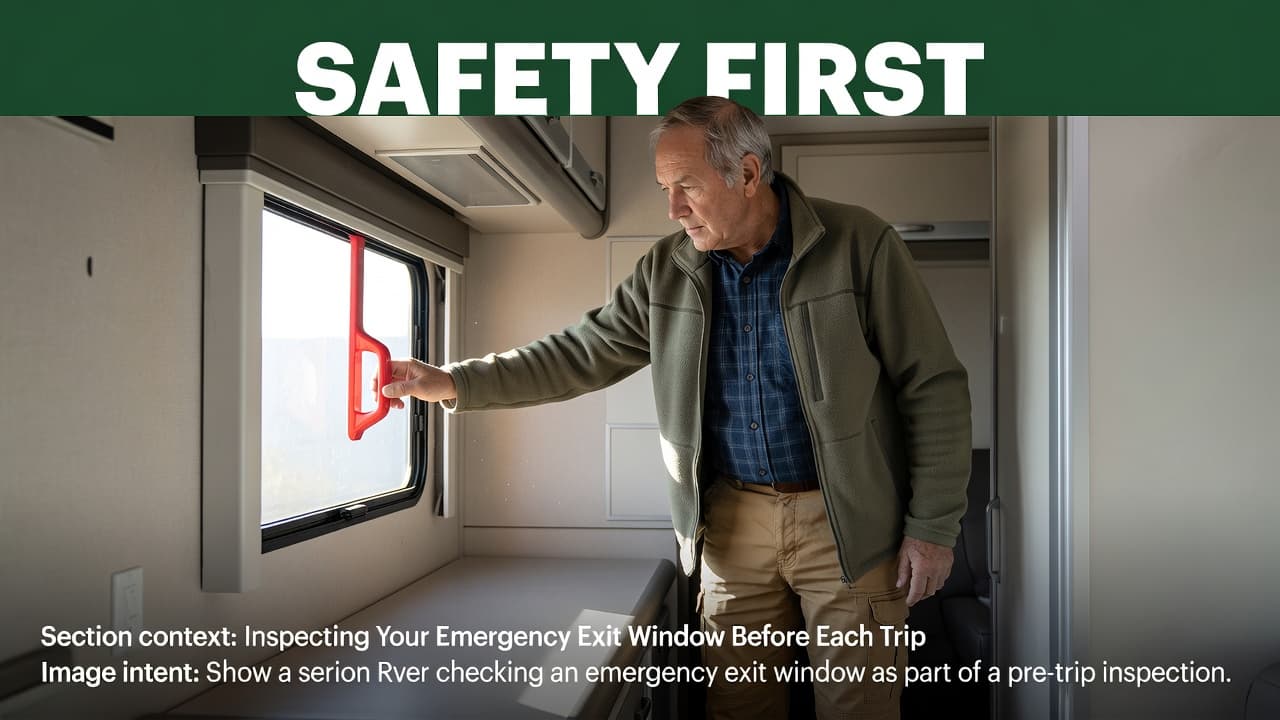
Most RV emergency windows are easily identified by their prominent red latches, red handles, or specific exit labels. You will typically find them located near rear beds, bunk areas, or main living spaces. Depending on your specific floor plan, your coach may feature multiple windows, or even an RV roof escape hatch to provide an additional point of egress. Before you hit the road, walk through your coach and point out every single exit point to ensure everyone on board knows where they are.
The Keystone RV guide to egress windows recommends locating all escape windows and practicing their use. That advice applies to any make or model. A guest who has never camped in an RV may not immediately recognize an emergency window or understand how the release mechanism functions.
For seniors, the priority goes beyond simply locating the window. You must also determine if you can comfortably reach the latch, clear the opening of obstacles, and exit the vehicle without suffering a serious fall. Be honest about those physical limits before an emergency requires you to move quickly.
An emergency exit window that sticks, hides behind stored gear, or requires strength you do not have is not ready for the road.
Check the Escape Window Before You Pack Up
A thorough inspection takes only a few minutes. Do it while the RV is level, daylight is available, and you aren’t rushing to meet a checkout time.
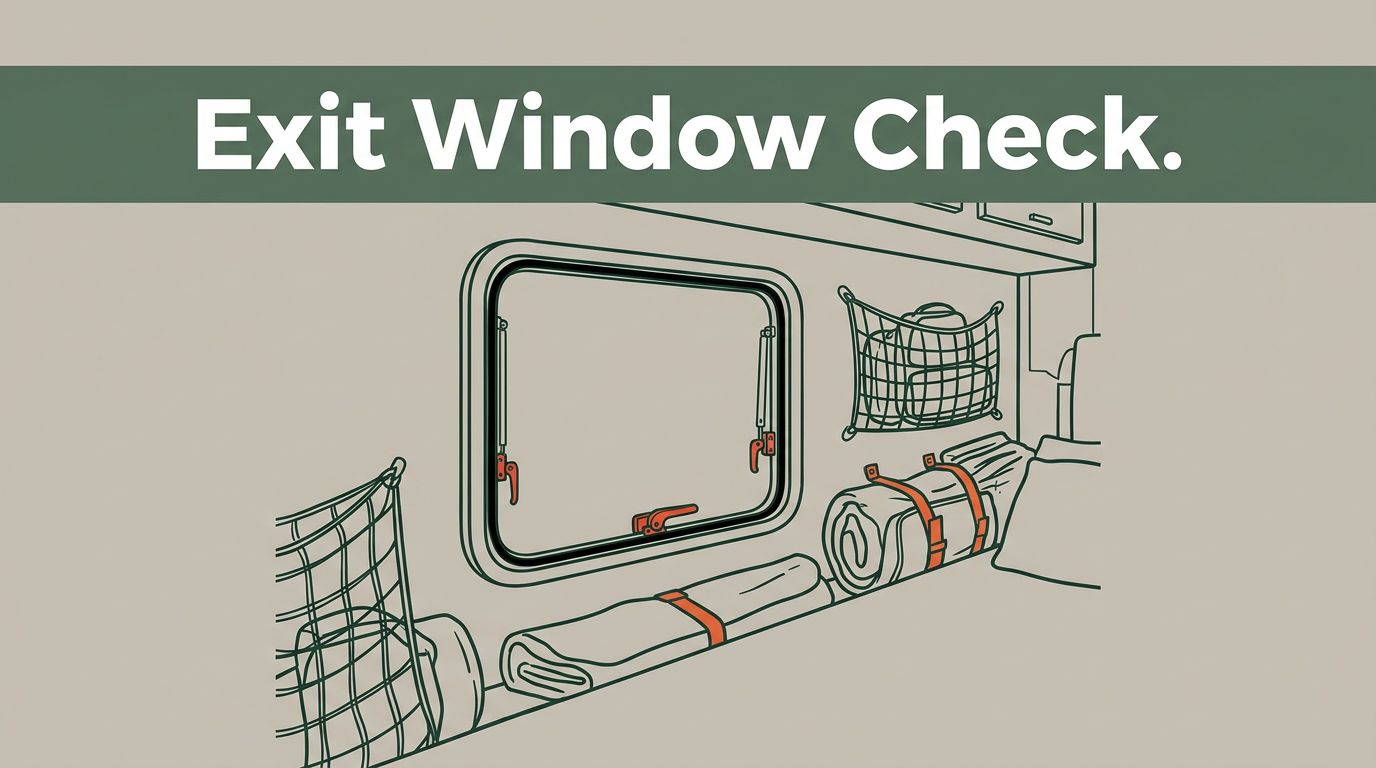
Begin inside the RV. Move pillows, folded blankets, portable fans, chairs, pet crates, and other camping gear away from the exit area. A rear bedroom window is often covered by a bedspread, and a dinette exit can disappear behind bags or jackets.
Then work through this short routine:
- Find the release. Confirm that the operating handles, whether they are levers, cords, or red knobs, are visible and easy to grasp. Remove any decorative curtain tieback or aftermarket shade that interferes with them.
- Operate the latch. Activate the emergency release by hand, following the specific instructions in your owner’s manual. It should not need a key, screwdriver, or hard twist, even if you have swing-out egress windows or scissor latch egress windows.
- Check the screen. Learn how it releases. Many screens have tabs, clips, or a red pull point. If the screen or sliding glass panels won’t come out easily, clean them and inspect the clips for obstruction.
- Open the window. With a helper standing outside, push the camper window open far enough to confirm the gasket releases and the hinge holds. Don’t climb through during every check.
- Look outside. A tree limb, picnic table, campsite utility pedestal, or stored bicycle can block the landing area. Clear anything you control before leaving.
- Close and secure it. Reset the latch fully. Some large exit windows need one person outside to press the frame inward while another locks it from inside.
A window that opens normally in mild weather may stick after winter storage or a humid week at the lake. Therefore, don’t rely on a visual glance. Test the actual release.
Keep Seals, Latches, and Screens from Sticking Through Regular Window Maintenance
Rubber weather seals are designed to keep the elements out, but they can cling tightly to the window frame after long periods of inactivity. Dust, tree sap, insect residue, and intense heat often make the problem worse. Proper window maintenance is essential to ensure these exits function exactly when you need them.
Start by wiping the gasket and frame with a clean cloth. As you work, inspect the tempered glass for any chips or stress cracks that could compromise its integrity. Check for brittle rubber, loose trim, damaged hinges, and torn screens. It is also important to inspect the latch screws and the surrounding wall material. If the latch feels loose, won’t line up with its catch, or shows signs of failure, look into an egress latch replacement before your next trip. If your RV uses jalousie windows for ventilation while parked, ensure those mechanisms operate smoothly and do not interfere with the emergency release.
Use only a rubber seal conditioner that your RV or window manufacturer explicitly approves. Petroleum-heavy products can damage certain rubber compounds, and the wrong spray can actually attract grit. A light application is usually sufficient; always wipe away any excess so it does not collect dust.
Open each escape window at least several times a year, even if the RV stays parked. Regular movement keeps you familiar with the release mechanism and helps you identify sticking points early. As noted in owner discussions about stubborn emergency window seals, addressing a tight gasket is vital before it becomes a roadside problem.
Never use a pry bar, screwdriver, or sharp tool during a practice check. You could crack the glass, damage the frame, or cut a seal. If the window remains stuck after basic cleaning, have an RV service technician inspect it. A professional repair is far cheaper than discovering a fault when smoke is filling the coach.
Make the Exit Plan Work for Your Body
A window can meet standard RV safety requirements and still be difficult for one person to use. That does not mean you should ignore it. It means your emergency exit plan needs to account for your personal mobility, balance, shoulder strength, and the distance to the ground.
Practice with your travel partner when everyone is calm to ensure your RV safety measures are effective. One person should stand outside to steady the window and help assess the drop. Inside, rehearse unlatching the window, removing the screen, and positioning yourself to exit. For many egress windows, going feet first and face down gives you better control than trying to jump outward, which is helpful when gauging the distance to the ground.
Do not complete a full drop during a casual drill if it risks injury. Instead, measure the distance and decide what support makes sense. A low, stable step may help during a planned practice, but never store anything where it blocks the window or creates a tripping hazard.
Seniors traveling alone should make this assessment before every season, especially after surgery, a new arthritis flare, or a change in mobility. If you cannot safely use an emergency escape route through a rear window, identify the most realistic alternate route and tell companions exactly what help you need.
The concern is common. In a Roadtreking discussion about senior RV escape options, owners share worries about clearing a fifth-wheel emergency window. Your best answer is a practiced, personal plan rather than an assumption.
Include Guests, Pets, and the Tow Vehicle
An exit route only helps if everyone knows it. Before a trip, show visiting family members where the front door and emergency windows are located. Explain your emergency exit plan, including where you will meet outside, safely away from the RV and tow vehicle.
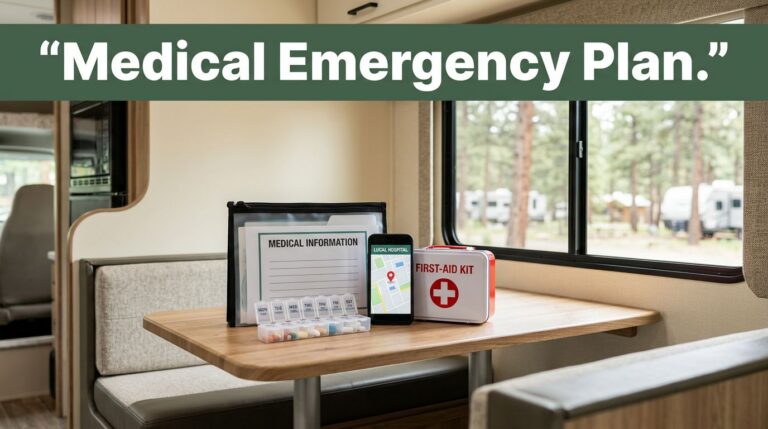
If you travel with grandchildren, practice the release of the camper window with them while parked. Adults should decide in advance who helps children or pets. Keep leashes, carriers, medications, hearing aids, glasses, and phones easy to locate, but never delay an escape to gather possessions.
Smoke can remove visibility quickly. For that reason, keep a clear walkway to the door and all exit windows. To boost overall RV safety, check your smoke alarms and carbon monoxide alarms as part of the same pre-trip routine. A working alarm gives you the necessary time to react, but it does not replace the need for knowing exactly where to go.
RV Life Insider shares practical safety reminders alongside travel ideas, maintenance help, and camping tips for older travelers. You can View Our Website for more resources that support safer, more comfortable travel.
Frequently Asked Questions
How often should I test my RV emergency exit windows?
You should perform a visual inspection before every trip to ensure the path is clear. It is also recommended to fully open and test the latch mechanism at least once every few months or before the first trip of the camping season.
What should I do if my emergency window is stuck?
First, clean any dust or debris from the gasket and frame using a manufacturer-approved rubber seal conditioner. If the window still refuses to open, do not force it with tools, as this can cause damage; instead, consult a professional RV technician to inspect the hinges and latch.
Can I install aftermarket window shades on my egress windows?
While you can use shades, they must not interfere with the emergency release handle or the window’s ability to swing open fully. Ensure that any window treatment can be moved or removed instantly without needing special tools or excessive force during an emergency.
Turn the Check Into a Departure Habit
The best time for an exit-window check is before loading the last cooler or hitching up. Add it to the same routine as checking tire pressure, lights, propane levels, and hitch connections. A printed departure list near the door can help, particularly when travel day feels busy.
Full-time RVers may want to perform a quick visual check before each move and a complete open-and-close test every few months. Weekend campers should test their egress windows before their first trip of the season and before any long journey. After an RV has been in storage, test these windows sooner rather than later.
If a latch feels tight or a screen is difficult to remove, keep notes for your records. Small problems are easy to forget after the trip, yet those notes give an RV technician a clearer starting point. If cleaning and lubrication do not resolve the issue, an exit window replacement might be necessary to meet current safety standards. When shopping for upgrades or repairs, always ensure your new parts are DOT approved to guarantee they meet the required regulations for emergency exits.
For regular safety reminders, practical road advice, and stories from fellow campers, View All Our Newsletters. You can also subscribe to the RV Life Insider newsletter for new posts delivered to your inbox.
A Clear Exit Is Part of a Safe Trip
Every pre-trip check protects your freedom to enjoy the road with more confidence. Clear the path, test the latch, inspect the seal, and make sure each traveler understands the plan.
Prioritizing your egress windows is a fundamental part of overall RV safety that every owner should embrace. A working RV emergency exit window is easy to overlook on a calm morning, but checking it before you leave ensures it stays ready for the moment it matters most.
This post may contain affiliate links. If you make a purchase through these links, I may earn a small commission at no extra cost to you.