RV Rain Driving Tips for Clearer Views and Safer Stops
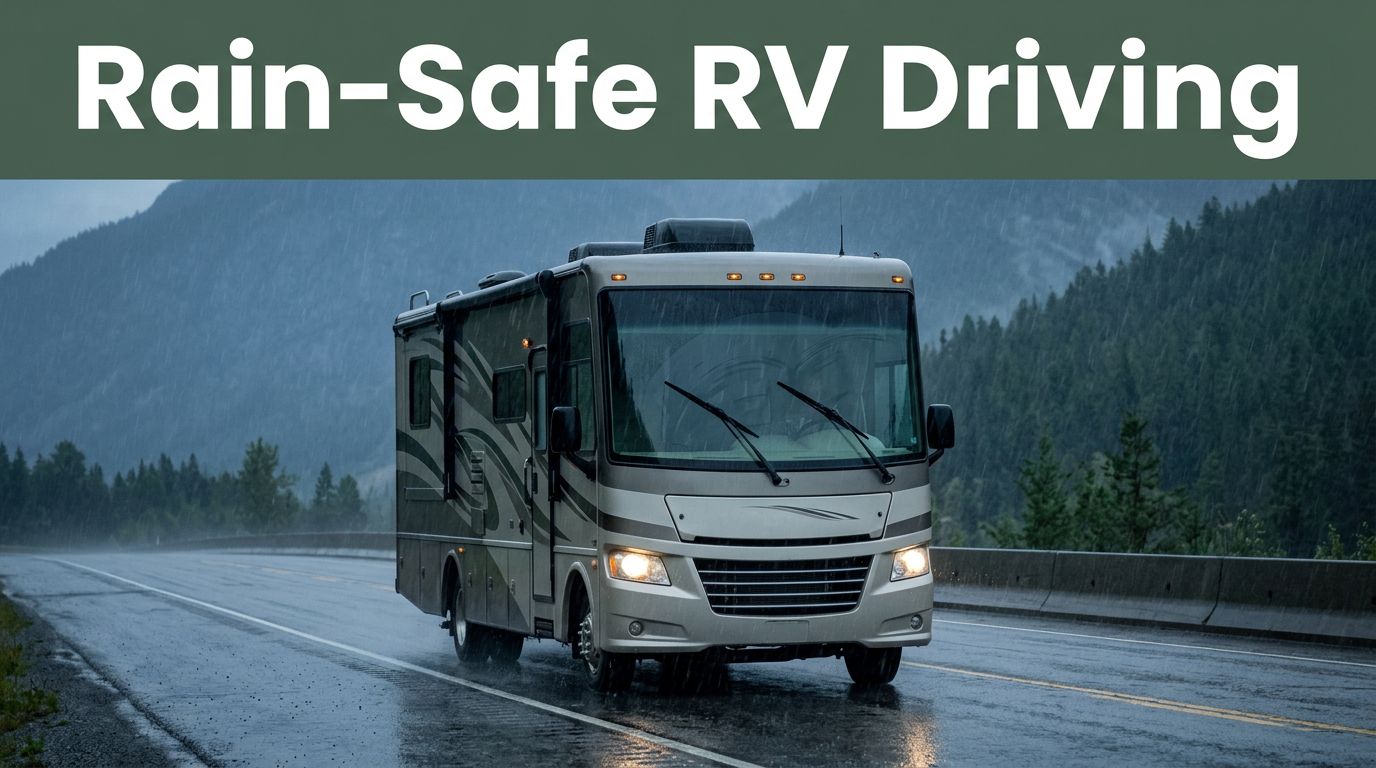
Rain changes the way your vehicle handles long before the road begins to look dangerous. Whether you are operating a motorhome, travel trailer, or camper van, you need significantly more room to stop safely, and water on the windshield can quickly obscure the visibility you need to navigate changing road conditions.
These RV rain driving tips are designed to help you maintain better visibility, keep reliable traction, and make calmer, more calculated decisions when your original dry-road travel plan no longer fits the weather. These strategies provide essential guidance for weekend camping trips, those living the van life, and full time RVers alike.
Key Takeaways
- Slow down on wet roads before the rain becomes heavy, as slick pavement reduces tire grip and significantly increases your stopping distance.
- Perform a pre-trip check to ensure your windshield wipers, headlights, mirrors, and defroster are fully functional before leaving camp.
- Maintain a safe distance from the vehicle in front of you and always brake early with steady, consistent pressure.
- Never use cruise control on wet roads, and avoid abrupt steering or sudden movements that could lead to a loss of traction.
- Pull over to a safe location when heavy rain, low visibility, high winds, or driver fatigue makes navigating the road difficult.
Prepare Your RV Before the First Drop Falls
The safest rain drive begins while the pavement is still dry. Before pulling out of a campground, check the weather forecast along the full route, not only at your destination. A sunny morning can become a stormy afternoon on a mountain pass or open stretch of interstate.
Pay close attention to tires. Your RV’s tires are the only contact points between thousands of pounds of vehicle and the road. Check tire pressure when tires are cold, using the pressure listed on the RV manufacturer’s placard or your tire and load guidance. Look for cracking, uneven wear, embedded objects, and shallow tread.
Tire tread channels move water away from the tire. Hydroplaning becomes more likely when those channels wear down, allowing water to remain between rubber and pavement. A tire that appears acceptable in a campground can behave poorly during heavy rain.
Also test the small items that matter most during rain:
- Run the windshield wipers through every speed setting and replace blades that streak, chatter, or leave missed areas.
- Fill washer fluid, then clean the inside and outside of the windshield.
- Confirm that headlights, brake lights, turn signals, and marker lights work.
- Check that the dash defroster and roof air system can clear fogged glass.
- Secure loose gear and close roof vents before travel.
For seniors who wear glasses, a clean windshield matters even more. Glare can bounce between wet pavement, lenses, and the glass in front of you. Keep a microfiber cloth within reach, but pull over before cleaning any glass.
A pre-departure routine is one of those camping tips that pays off every travel day, not only in storms. You can find more road-readiness ideas through the RV Life Insider website, including travel planning tools and practical RV resources.
Improve Visibility When Rain and Glare Build
Rain makes the road visually busy. Spray from trucks, standing water, reflections from headlights, and fogged windows all compete for your attention. Prioritizing visibility is essential, and you should always be prepared to slow down if your view becomes obscured, even if your tires feel secure.
Turn on your headlights whenever wipers are needed. Many daytime running lights do not activate your RV’s rear lights, but switching to full headlights helps drivers behind you recognize the width and length of your rig through heavy rain spray.
Always use low beams in rain and fog. High beams reflect off water droplets and can create a blinding wall of light in front of the windshield. While high beams are useful in clear, dark conditions, they only hinder your visibility during storms. Fog lights can help you see the road edge at low speeds, but they do not make heavy rain safe for faster travel.
Keep a steady flow of fresh air across the glass. If the windshield begins to fog, use the defroster early rather than waiting for a milky film to form. Air conditioning can help remove moisture, even when the cabin feels cool. Set the system to outside air when possible, since recirculated air may hold humidity inside.
Mirrors need attention, too. Side windows can fog, while raindrops blur convex mirrors. If your RV has heated mirrors, use them to maintain clear visibility. Otherwise, stop at a safe location to wipe them clean. Never lean across the cab or fumble with a towel while moving.
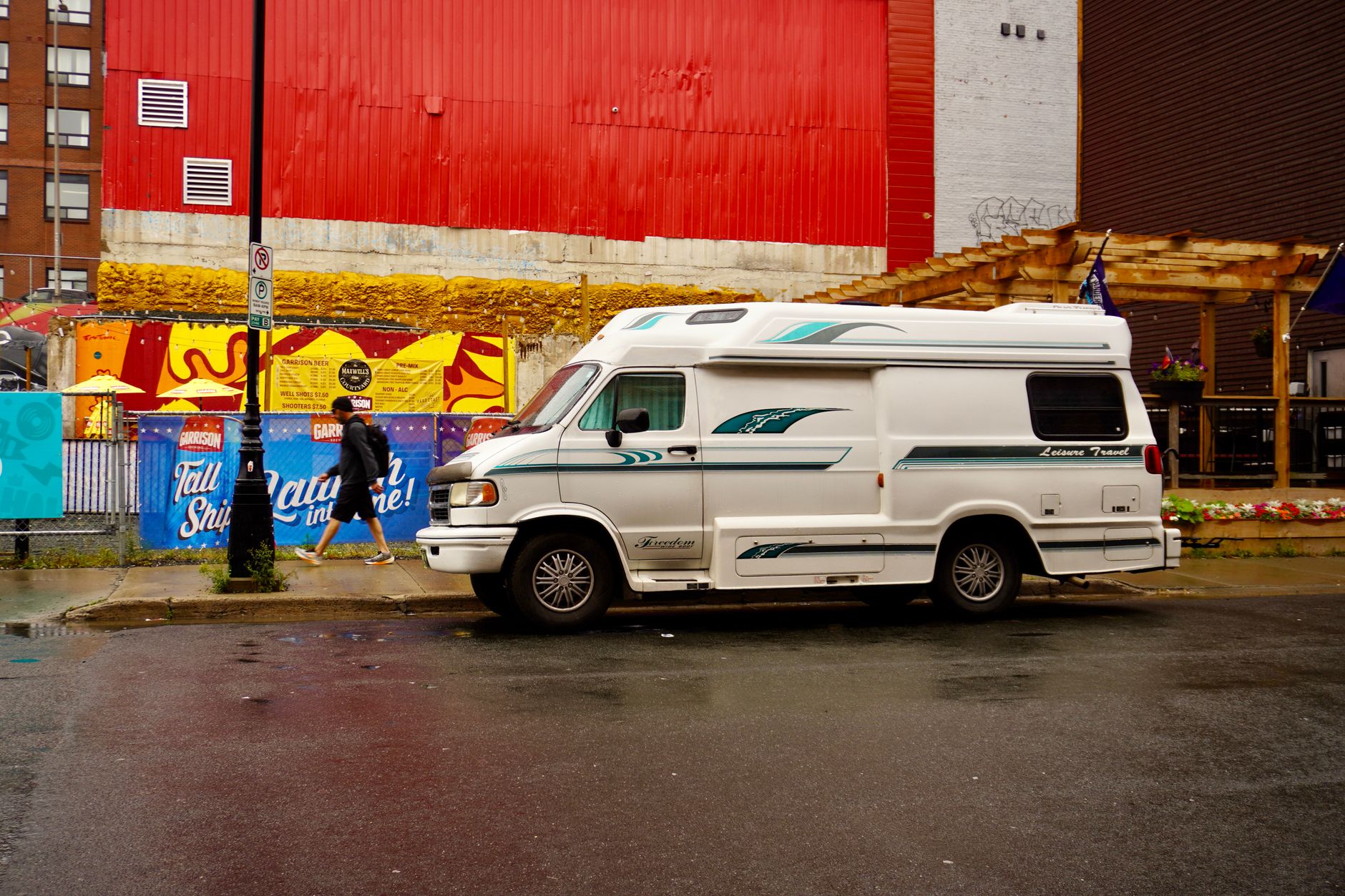
Photo by Abdel Achkouk
At dusk, wet pavement can hide lane lines and potholes. Follow the right-side edge line when it is visible, but do not fixate on it. Scan far ahead, check mirrors often, and look for brake lights several vehicles up the line to monitor changing road conditions. This gives you time to react without sudden braking.
If you cannot clearly see the road surface and the vehicle ahead, your speed is too high for current conditions.
Brake Earlier and More Gently on Wet Pavement
An RV carries significant momentum. Water reduces the grip available for steering, acceleration, and braking, meaning every control input requires more from your tires. The key to safe operation is not a hard stomp on the brake pedal, but rather earlier, smoother action. Mastering these defensive driving techniques is essential for maintaining control during your journey.
Start by significantly increasing your following distance. A gap that feels comfortable on dry pavement may leave little room to manage a safe distance when a car ahead stops suddenly. Increase your following distance by several extra seconds behind traffic, especially when you are operating a motorhome or pulling a travel trailer. This extra space allows you to ease off the accelerator early and initiate a gradual stop. Because of the weight involved, your stopping distance is much longer than that of a passenger car, so give yourself plenty of room to react.
Press the brake pedal smoothly and maintain straight wheels whenever possible. If your rig is equipped with anti-lock brakes, hold firm and consistent pressure during a true emergency. The system may pulse through the pedal; this feeling is normal, and pumping the brakes can actually interfere with the system. Remember, on wet roads, your stopping distance is naturally extended, so planning ahead is your best defense.
Long downhill grades require extra preparation. Select a lower gear before you begin the descent, allowing engine braking to help manage your speed. Brakes that heat up on a long wet downhill can suffer from fade, while a sudden application of the brakes may unsettle the vehicle. If you tow a trailer with a brake controller, make adjustments only according to the specific instructions provided by the controller and trailer manufacturer.
Avoid using cruise control in rain. Cruise control can automatically apply throttle when it senses a speed drop, which is the exact opposite of what you want if your tires have started to lose grip. Keeping your foot on the accelerator allows for quicker manual control.
The same principles apply near intersections. Painted arrows, crosswalks, metal utility covers, bridge joints, and oil-slicked pavement are often much more slippery than the surrounding asphalt. Begin slowing down well before you reach these hazards. Braking while crossing a shiny or painted surface can lead to skidding, so prioritize smooth, early adjustments to keep your vehicle stable.
Manage Hydroplaning, Curves, and Truck Spray
Hydroplaning occurs when a tire rides on water instead of gripping the pavement. This often happens due to standing water in wheel tracks or when your tire tread is too worn to channel moisture effectively. If you are traveling too fast, you may experience a momentary light feeling in the steering, which serves as a warning to stay calm.
Ease off the accelerator gradually. Hold the wheel steady and keep your steering pointed in your intended direction. Avoid sudden movements, such as slamming the brakes or jerking the wheel, as these actions can lead to skidding. As the tires reconnect with the pavement, the RV should settle back under control.
Road ruts often collect water. If practical, choose a lane position that avoids the deepest tracks, but do not weave across lanes to chase dry-looking pavement. A slow, predictable line is safer for you and the traffic around you.
Curves require extra patience in heavy rain. Because wet roads compromise your traction, reduce speed before entering the turn, then use a light throttle through the curve if conditions allow. Braking hard while turning forces the front tires to steer and stop at the same time, which is risky. A tall motorhome also transfers weight more noticeably, particularly when it carries full tanks or roof cargo.
Large trucks create another challenge. Passing one during a downpour can bring a sudden curtain of spray. Give the truck room, check that the left lane is open well ahead, and pass only when you can maintain a safe, steady pace. If spray eliminates your view, drop back instead of driving beside the trailer.
Wind makes driving in difficult road conditions even harder. A gust can push a high-profile RV toward a lane line, while wet pavement limits how aggressively you can correct your path. If you are towing, be especially mindful of trailer sway. Hold the wheel with both hands, reduce your speed, and resist the urge to make up lost time.
Know When Pulling Over Is the Smart Call
Safe RV travel includes knowing exactly when to stop. During periods of heavy rain, even the best windshield wipers can struggle to clear your view, and your headlights may become insufficient for other drivers to spot you. When road conditions deteriorate to the point where your visibility is compromised, prioritize finding a rest area, fuel stop, or large parking lot rather than pulling onto the shoulder of a busy highway. While searching for a spot, maintain a safe distance from other vehicles and continue to drive with caution.
Avoid parking beneath low branches, in dry washes, or beside creeks during storms. Floodwater can rise much faster than it appears, especially near hills or on desert roads. Always look for paved, well-drained ground situated far away from moving water.
Do not drive through standing water if you cannot accurately judge its depth. Such hazards can conceal washouts, broken pavement, and debris. Beyond the risk of getting stuck, water can also damage your brakes, wheel bearings, electrical components, and low-mounted engine parts. If you encounter deep water, the safest choice is to turn around and select an alternate route.
Fatigue deserves equal respect, as navigating wet roads requires significant cognitive energy and focus. Seniors or those driving long distances may find that night glare and changing light conditions accelerate exhaustion. If you notice your shoulders tensing or your attention narrowing, it is time to take a break. Remember to slow down, get a hot drink, take a short walk under cover, and perform a quick weather check to reset for the rest of the day.
For regular reminders about safer travel, seasonal maintenance, and thoughtful camping tips, View All Our Newsletters. RV Life Insider brings practical road advice to a community that values slower travel and good company.
Frequently Asked Questions
Should I use cruise control when driving my RV in the rain?
No, you should never use cruise control on wet roads. Cruise control can cause the vehicle to accelerate unexpectedly when it senses a loss of traction, making it much harder to regain control if your tires begin to hydroplane.
Why is it important to turn on my headlights during a rainstorm?
Turning on your headlights, even during daylight hours, makes your RV more visible to other drivers through heavy rain and road spray. It also ensures your rear lights are active, which helps traffic behind you identify the size and position of your rig.
How should I adjust my driving when approaching curves on a wet road?
You should reduce your speed well before entering a curve rather than braking while turning. Braking during a turn forces your tires to manage both steering and stopping simultaneously, which significantly increases the risk of a skid on slick pavement.
Is it safe to drive through standing water on the road?
You should avoid driving through standing water whenever possible, especially if you cannot clearly determine its depth. Hidden hazards like washouts or debris can damage your RV’s undercarriage, and standing water poses a severe risk of hydroplaning.
Final Thoughts on Rainy RV Travel
Rain does not have to end a trip, but it should change the way you drive. Maintaining clear visibility, monitoring your stopping distance, and practicing smooth braking are essential when navigating wet roads. By keeping your equipment in top shape to ensure maximum traction, you can stay confident behind the wheel even when the weather turns.
The best approach is simple: give yourself extra time. A later arrival is always better than forcing your vehicle through conditions that compromise your control. Incorporating these RV rain driving tips into your travel routine will help you navigate storms safely and reach your destination with peace of mind.
This post may contain affiliate links. If you make a purchase through these links, I may earn a small commission at no extra cost to you.