RV Breakdown Highway Safety: What to Do First
A mechanical problem can turn a calm travel day into an RV breakdown highway emergency in seconds. Whether you are dealing with a sudden motorhome breakdown or a blown tire, an overheating engine, or a failed tow vehicle, the situation feels even more urgent when semis are passing close by during a roadside emergency.
Your first job isn’t diagnosing the problem. It’s getting your RV and everyone inside it out of danger. These steps can help seniors, weekend campers, and full-time RVers respond without panic.
Key Takeaways
- Turn on hazard lights, reduce speed gradually, and get as far from moving traffic as possible.
- If your vehicle creates a roadside emergency by blocking a lane or showing signs of smoke or fuel leaks, call 911 immediately.
- Stay buckled inside when the shoulder is unsafe, then follow directions from police or roadside assistance.
- Give the dispatcher your highway, direction of travel, mile marker, RV size, and towing details.
- Pack warning triangles, medical supplies, charged phones, medication, water, and an emergency roadside kit alongside a reliable roadside assistance plan.
What to Do During an RV Breakdown Highway Emergency
The moment you notice trouble, turn on your hazard lights. Keep both hands on the wheel and ease off the accelerator. Sudden braking can cause a motorhome to sway, while a travel trailer can push the tow vehicle.
Look ahead for an exit ramp, rest area, wide shoulder, truck stop, or parking lot. If the RV still moves safely, reaching one of those locations beats stopping beside fast traffic. Don’t keep driving with a smoke-filled engine bay, engine overheating, tire blowouts, or brake problems.
If you must stop on the shoulder, pull as far right as the ground allows. Turn on your hazard lights again as you park. Leave room between the RV and traffic, but avoid soft ground, steep drop-offs, and ditches. Straighten the wheels, set the parking brake, and put the transmission in park to ensure proper vehicle safety.
Maryland’s roadside emergency guidance also stresses getting out of travel lanes whenever possible during a roadside emergency. That advice matters even more with a long RV, where a rear corner may still sit close to traffic.
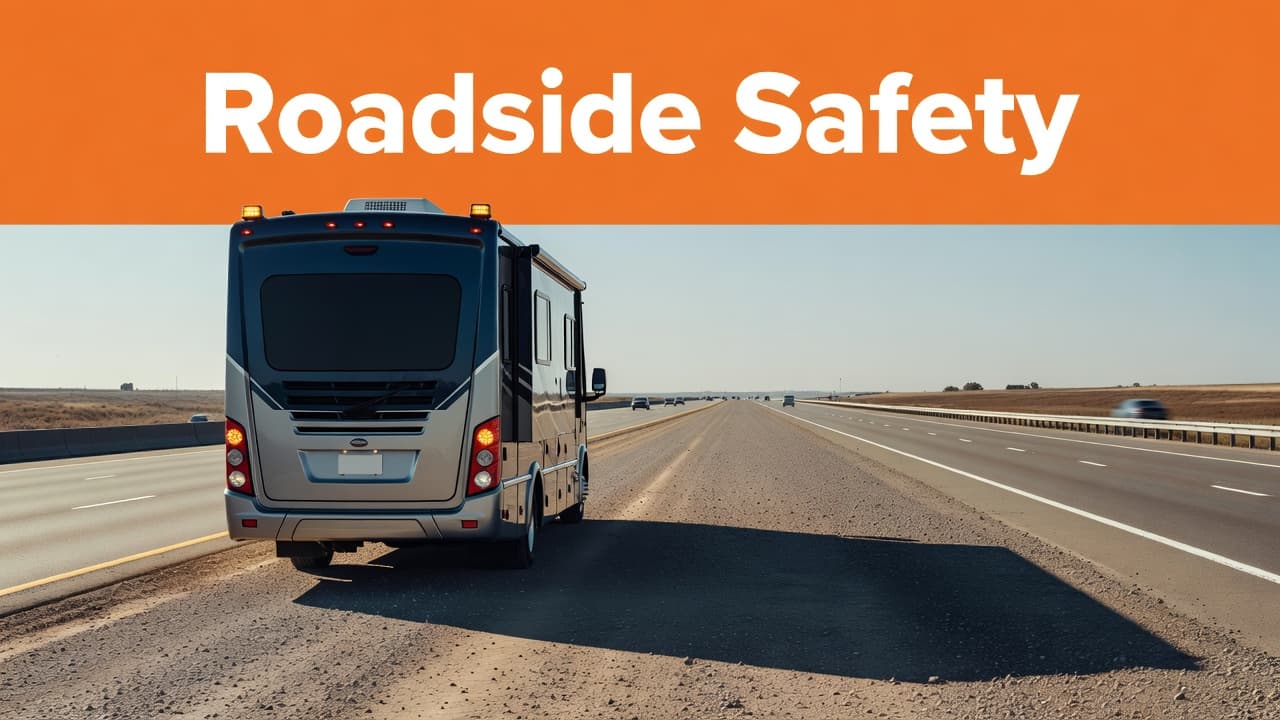
A breakdown on an interstate is not the place to prove you can repair anything. Once you’re stopped safely, take a breath and assess the situation from inside the coach.
If traffic is close and your RV is stable, staying inside with seat belts fastened is often safer than standing on a narrow shoulder.
Decide Whether to Stay Inside or Get Out
A stopped RV can feel like a shelter, but the right choice depends on the hazard. Traffic speed, shoulder width, weather, fire risk, and your physical mobility all matter. A sudden motorhome breakdown on a narrow shoulder creates immediate risks that require careful evaluation of your surroundings.
Stay inside with belts fastened if your RV is well off the lane, there is no smoke or fuel smell, and vehicles are passing nearby. Prioritizing vehicle safety means keeping children, pets, and passengers away from the entry door while you wait. On a crowded highway, people outside are hard for distracted drivers to see.
However, get everyone out right away if you smell propane or gasoline, see smoke, spot flames, or suspect an electrical fire. If you are towing a travel trailer, make sure all occupants clear the area immediately. For those towing a large fifth wheel, standard evacuation steps apply just as quickly. Use the passenger-side door if that side faces away from traffic. Move well away from the RV and traffic, preferably behind a guardrail if one is available.
Never re-enter a burning RV for prescriptions, pets, phones, or sentimental items. The National Park Service’s RV fire guidance is blunt: get out and stay out. A fire extinguisher is only appropriate for a small, contained fire when you have a clear escape route.
If an older traveler uses a cane, walker, oxygen equipment, or mobility scooter, plan for that reality before the trip. Keep shoes, a flashlight, keys, a phone, and essential medications close to the front exit. Those small habits matter during an RV breakdown highway situation.
Make Your Roadside Position Easier to See
Once help is on the way and conditions are safe, make the RV visible. Keep hazard lights flashing, even in daylight. At night, turn on interior lights only if they don’t distract you or drain a weak battery.
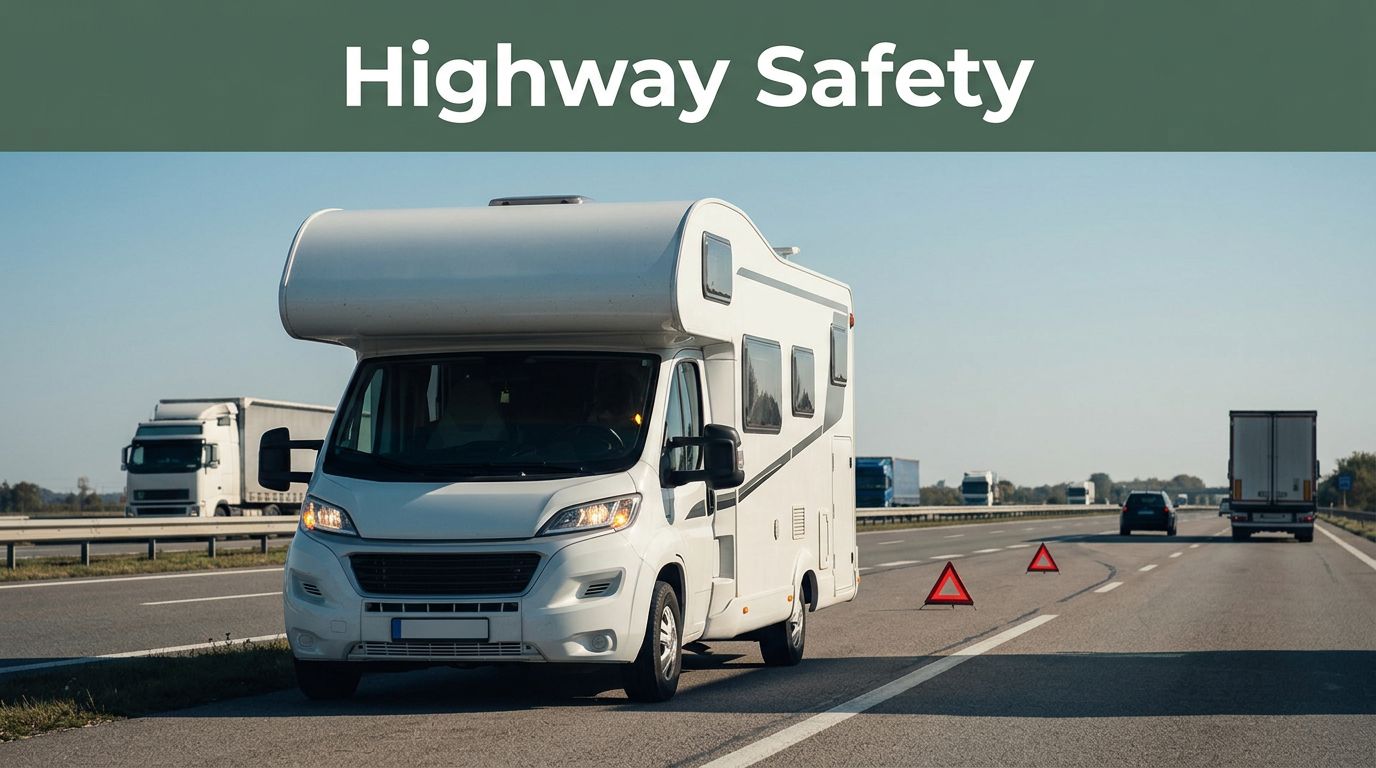
Reflective triangles are more dependable than flares because they don’t create an ignition source near leaked fuel. Carry three DOT-compliant reflective triangles in an emergency roadside kit stored in an easy-to-reach compartment, not buried behind camping chairs and bins.
Only place them if you can do so without walking near traffic. Follow the directions that came with your triangle set and local rules. On a wide, safe shoulder, place the warnings behind the RV where approaching drivers can see them early. Skip this step if the shoulder is narrow, visibility is poor, or you would need to cross a traffic lane.
Avoid setting out triangles or cones if you see oil, gasoline, or another flammable leak. Stay inside or move to a safe location instead. A roadside repair can wait. A passing vehicle has no room for error.
Virginia travelers dealing with a roadside emergency may also find help from the state’s Safety Service Patrol, which assists with incidents on selected congested corridors. Check your route before departure because availability varies by region and highway.
Call for Help With the Details They Need
Call 911 first if the RV blocks a travel lane, someone is injured, traffic can’t avoid you, weather limits visibility, or there is fire, smoke, or a propane smell. Tell the dispatcher what makes the scene dangerous and follow their instructions.
For a non-emergency mechanical breakdown, call your roadside assistance plan. Good Sam, Coach-Net, and FMCA Roadside Rescue are examples of plans built for large RVs. Standard auto coverage may not have the right tow equipment, distance allowance, or service network for your rig, making a dedicated roadside assistance plan essential when you need specialized towing services. If you require major fixes after a severe mechanical breakdown, your roadside assistance plan can often direct you to a trusted repair shop and help arrange a trip interruption benefit that covers alternative accommodations.
Give the operator clear information:
- State the highway name, direction of travel, nearest mile marker, exit number, or GPS coordinates. Mention the last exit you passed if you can’t see a marker.
- Describe the RV as a motorhome, fifth wheel, travel trailer, or camper van. Include its length, height, weight, and whether you are towing a car.
- Explain the problem in plain words, such as a flat tire repair, emergency fuel delivery, battery jump start, engine overheating, transmission failure, or a mechanical breakdown.
- Tell them whether you are safely on the shoulder, in a lane, or at an exit. Also report pets, mobility needs, and any medical concern.
Take photos of visible damage when it is safe. A quick picture of a shredded tire, warning light, fluid leak, or damaged hitch can help the service provider send the correct tow truck and dispatch professional towing services. When speaking with your roadside assistance plan, confirm that the arriving tow truck can safely handle your specific vehicle class before it heads to your location. Eventually, that heavy duty tow truck will transport your home on wheels to a qualified repair shop for comprehensive evaluation. Don’t crawl under the RV or attempt an electrical repair beside fast-moving traffic.
A paper card with policy numbers and emergency contacts is worth carrying. Phones lose signal, batteries die, and a stressed mind can forget a familiar number.
Prepare Before Your Next Camping Trip
Most stressful roadside events become more manageable with a few prepared supplies. Keep an emergency roadside kit near the passenger seat or entry door, rather than in an exterior bay you can’t reach safely.
Include high-visibility vests, warning triangles, a headlamp, batteries, a power bank, first-aid supplies, drinking water, blankets, medications, and a printed roadside assistance plan. A tire pressure monitoring system can also warn you about a developing tire problem before a potential flat tire repair becomes necessary, helping you avoid unexpected tire blowouts.
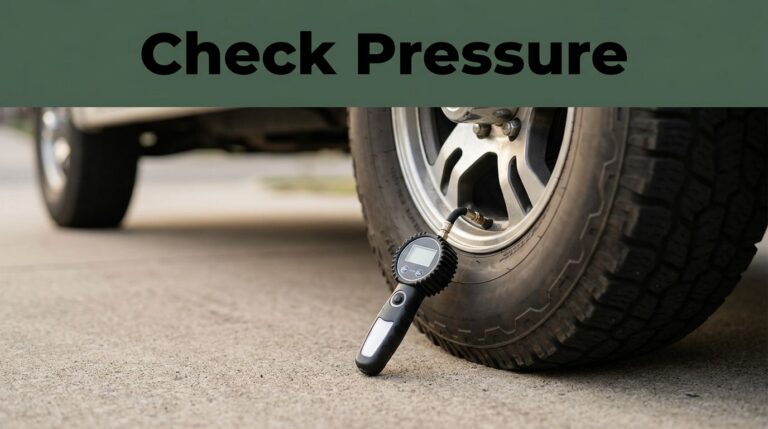
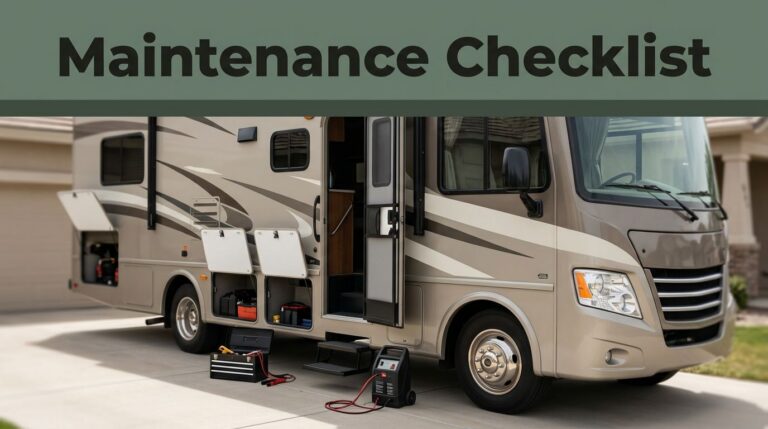
Before each travel day, a thorough pre-trip inspection helps ensure vehicle safety during any roadside emergency. Check tire pressure when tires are cold, inspect sidewalls, test lights, confirm hitch connections, and look under the engine or trailer for leaks. Proper scheduled maintenance and preventative maintenance protect your investment, whether you drive a motorhome breakdown prone rig or a travel trailer. These camping tips take minutes and can prevent a bad surprise miles from the next exit.
Whether you need emergency fuel, a battery jump start, or a reliable roadside assistance plan, proper preventative maintenance reduces the chance of a mechanical breakdown. A comprehensive extended service plan can also cover the cost of a tow truck when local towing services are required to reach a qualified repair shop. If you experience a sudden mechanical breakdown, having a trusted contact for a battery jump start or a nearby repair shop makes dealing with a dispatched tow truck much easier.
For van life travelers, the same rules apply even in a smaller rig. A compact van is easier to move, but it still needs a safe shoulder, clear location details, and a plan for leaving the vehicle if fire develops.
RV Life Insider shares practical road preparation, campground ideas, and advice for older travelers. You can get RV Life updates in your inbox before your next trip, browse View All Our Newsletters, or View Our Website for travel guides, community resources, and RV products.
Frequently Asked Questions
When should I call 911 instead of my roadside assistance plan?
Call 911 immediately if your RV is blocking a travel lane, someone is injured, or you notice smoke, flames, or a gas smell. For non-emergency mechanical issues where you are safely parked, contact your specialized roadside assistance provider instead.
Should I stay inside the RV or get out on the highway shoulder?
Stay inside with your seat belts fastened if you are well off the moving lanes and there is no fire or smoke hazard, as standing outside near fast traffic is dangerous. However, evacuate immediately if you smell fuel or see smoke, and move far away from the roadway behind a guardrail if possible.
What specific information do I need when calling for roadside help?
Provide the dispatcher with your current highway name, direction of travel, and nearest mile marker or GPS coordinates. You should also describe your exact RV type, dimensions, towing status, and whether you have any passengers, pets, or specific mobility needs.
Keep the Next Decision Small
An RV failure beside highway traffic can make every choice feel urgent during a mechanical breakdown. Focus on the next safe action: slow down, pull over, protect passengers, report your location, and wait for qualified help through your roadside assistance plan.
Good preparation gives you options, but safety comes before the schedule. The campground reservation, the scenic route, and waiting for a tow truck whether you drive a motorhome breakdown or a travel trailer can wait until everyone is out of harm’s way.
This post may contain affiliate links. If you make a purchase through these links, I may earn a small commission at no extra cost to you.