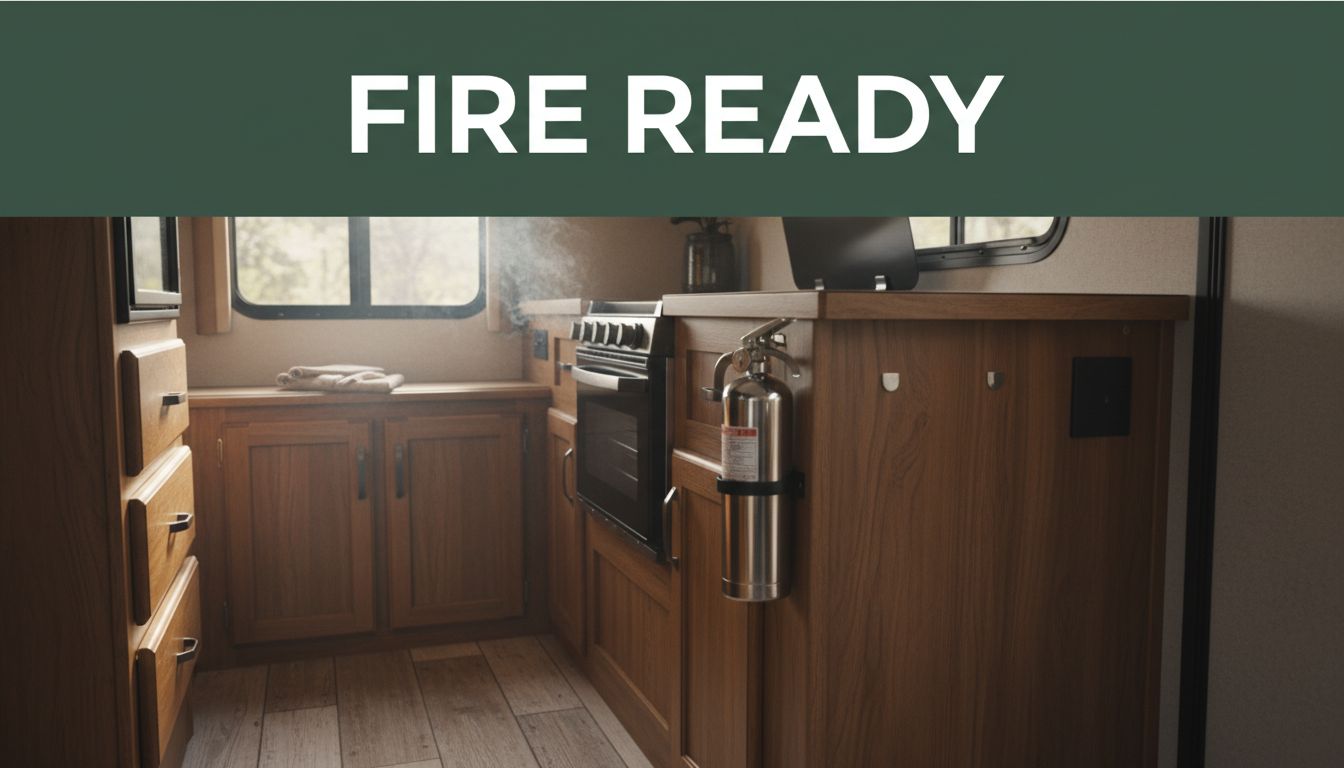
RV Fire Extinguisher Basics for Safer Travel
A kitchen flare-up in an RV can turn serious in seconds. In a small rolling home, smoke spreads fast, exits are limited, and the right RV fire extinguisher can buy you the time you need to get out safely when dealing with unexpected kitchen fires.
That matters even more when you love camping far from town. For seniors, weekend travelers, van life fans, and many full time RVers, having a reliable method of fire suppression matters more than fancy gear. It starts with the extinguisher you carry and where you keep it.
Key Takeaways
- Every RV fire extinguisher should be specifically rated to handle the fires most likely to occur in your coach, such as electrical fires, fuel-related incidents, and common kitchen fires.
- Strategic placement is just as critical as the extinguisher itself, because a unit buried in a storage compartment will be inaccessible during an emergency.
- Regularly inspect the gauge, safety pin, mounting bracket, and label, and always replace any unit that has been partially or fully discharged.
- Creating a simple fire escape plan for travel days helps seniors and camping partners react with confidence and speed when under stress.
What your RV fire extinguisher needs to handle
Not every device is built for the same hazards. In an RV, you must understand different fire classes, which include risks like cooking oil fires, electrical equipment, flammable liquids, upholstery, and paper goods. Because of this complex mix, the label on your portable fire extinguisher matters more than the color of the canister.
A helpful starting point is the RV extinguisher requirement summary, which notes that industry standards often call for a B:C-rated unit. That rating covers flammable liquids and energized electrical equipment. Still, many owners choose an ABC rated model because it also handles Class A B C fires, which include ordinary combustibles like wood, fabric, and paper. If you are specifically concerned about the kitchen, some travelers look into Class K fires to ensure they have the right protection for high-heat grease incidents.
This quick comparison makes the choice easier:
| Rating type | What it handles | Good fit in an RV | Main tradeoff |
|---|---|---|---|
| B:C | Flammable liquids and electrical fires | Minimum coach protection | Doesn’t cover paper, wood, or bedding well |
| ABC | Class A B C combustibles, liquids, and electrical fires | Best all-around choice for most rigs | Dry chemical residue is messy |
| Clean-agent or specialty units | Varies by product, often electronics and liquids | Good near electronics if ratings fit | Costs more, and ratings vary by model |
For most travelers, an ABC rated unit is the easiest answer. It covers the widest range of everyday coach fires and is easy to find at hardware stores. While a traditional fire extinguisher using dry chemical agents is highly effective, it can leave behind a difficult, powdery residue. On the other hand, a non-toxic and eco-friendly clean-agent unit may appeal if you worry about cleaning up electronics, but you must read the label closely to ensure it handles the specific hazards present in your rig, including modern concerns like lithium-ion batteries.
Size also matters when selecting your RV fire extinguisher. A small compact fire extinguisher weighing 2.5 pounds is common in many rigs, yet it empties quickly. If you have room and can handle the weight, a 5-pound RV fire extinguisher usually gives you more discharge time. For seniors, that is a practical point to consider. The best unit is not necessarily the biggest one on the shelf, but rather the one you can lift, aim, and squeeze without a struggle.
Where to mount it so you can reach it fast
An RV fire extinguisher does no good in a rear storage bay when flames start at the stove. Placement has to match the way you move through the coach. In most rigs, the best first location is near the main door, where you can grab it and keep an exit at your back.
That means avoiding a few common mistakes. Don’t hide it under the dinette. Don’t wedge it behind coats or dog gear. Also skip mounting it right above the cooktop, because you may not be able to reach through heat or flame to get it.
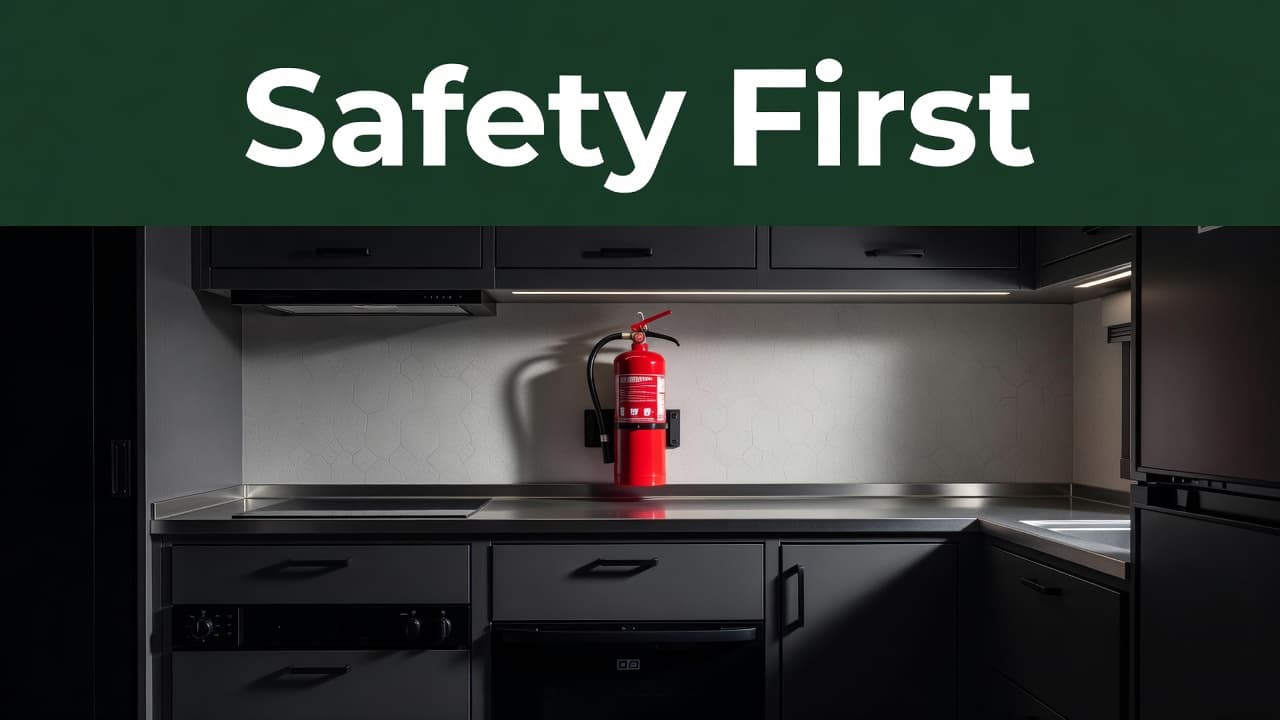
If you travel in a larger motorhome or fifth wheel, one unit often isn’t enough. Many full time RVers carry a second unit near the bedroom and, in some setups, a third near the cab or outside kitchen. Van life rigs need the same thinking, even though space is tighter. A compact fire extinguisher near the side door can make more sense than a larger one buried under a bench. In smaller spaces, a lightweight fire extinguishing spray is also a highly effective alternative that is easier to store and deploy.
Mounting height deserves more attention than people give it. For seniors, a low bracket can be hard on knees and hips, while a high bracket may strain shoulders. Chest height, near an exit, is usually a comfortable compromise. The bracket should feature a quick release handle to ensure you can pull the bottle free instantly, even on rough roads.
Accessibility beats neatness every time. Can you pull the bottle out with one hand? Can your spouse reach it at night? Can you get to it if the galley is blocked? Those are better questions than brand loyalty.
If you are comparing a traditional fire extinguisher with these newer compact options, Element’s RV extinguisher tips are a useful reminder to check the actual fire rating and access point, not only the shape or size of the device.
How to inspect, replace, and practice with it
A portable fire extinguisher is not a “buy it and forget it” item. Road vibration, temperature swings, and long storage periods can all take a toll. That is why a quick monthly look matters, especially before a long camping trip. While you are checking your equipment, take a moment to test your smoke alarm as well, ensuring both safety devices are ready for the road.
Check the green gauge first, if your unit has one. Then look at the pin and tamper seal. After that, inspect the hose or nozzle for cracks and make sure the bracket still holds the bottle tight. Rust, dents, oily residue, or a missing label all mean it is time for closer inspection or replacement.
Windsor Fire’s RV fire safety guidance also points out a detail many owners miss: if an extinguisher has been even partly discharged, treat it as empty until it has been refilled or replaced. That small burst used to calm a campfire flare-up may leave you with far less agent than you think.
Use an extinguisher only on a small fire, and only when you still have a clear path to the exit.
Practice matters, too, because fine motor skills get clumsy when adrenaline hits. Pull your RV fire extinguisher from its bracket once in a while while the vehicle is parked. Read the label and memorize the PASS method: pull the pin, aim low, squeeze the handle, and sweep side to side. If arthritis or grip weakness makes the pin hard to handle, test different models in person before you commit to one.
Most consumer dry chemical extinguishers come with service and replacement instructions right on the label. Follow them carefully. Many small disposable models are replaced rather than recharged, while some larger units can be professionally serviced. Either way, the date on the cylinder matters. An old RV fire extinguisher with a faded label and a shaky bracket does not provide peace of mind; it is simply clutter that could fail when you need it most.
Build a simple fire escape plan for travel days
An extinguisher is only one part of overall RV fire safety. You also need a comprehensive fire escape plan for those critical first 10 seconds of an emergency. Travel days bring their own unique risks, because you are dealing with hot brakes, electrical loads, propane, potential grease fires while cooking, and quick turnarounds at fuel stations or campgrounds.
Keep the plan short enough to remember:
- Know your exits, including windows and bedroom escape routes.
- Decide who grabs the RV fire extinguisher, who opens the door, and who handles pets or phones.
- Shut off the engine and propane only if it is safe to do so.
- Fight only a small fire, then get out and call 911.
That plan should fit your real mobility, not an ideal version of it. For seniors, that may mean keeping shoes, glasses, keys, and a phone in the same overnight spot every time. If you camp with grandchildren, make the exit rule simple and repeat it often. If you travel solo, tell a nearby camper what happened as soon as you are safely out.
Among all the camping tips people trade around the picnic table, this one stays useful year after year: rehearse the boring safety steps before you need them. A few calm minutes in the driveway beat confusion on the shoulder of the highway.
If you like practical reminders, RV Life Insider is worth keeping close. You can View All Our Newsletters for regular safety notes and camping ideas, or View Our Website for travel guides, community advice, blog posts, and gear suggestions built around the rv lifestyle.
Frequently Asked Questions
Can I use a household fire extinguisher in my RV?
You can, provided it carries the correct UL rating like an ABC or B:C, but you must ensure it fits your storage space and is easy to mount securely. Household units are often larger and may not have the vibration-resistant brackets necessary to keep them safe on rough roads. It is best to choose a compact, certified model designed specifically for the confined space of a vehicle.
How often should I replace my RV fire extinguisher?
Most disposable extinguishers have a lifespan of 10 to 12 years, but you should check the manufacturer’s expiration date printed on the canister. Regardless of age, you must replace the unit immediately if the gauge shows low pressure, the seal is broken, or if it has ever been partially discharged. Regular inspections are the only way to ensure it remains reliable for your next trip.
What is the PASS method for using an extinguisher?
PASS stands for Pull, Aim, Squeeze, and Sweep, which is the standard technique for operating most portable extinguishers. You pull the pin to break the seal, aim the nozzle at the base of the fire, squeeze the handle to release the agent, and sweep back and forth until the flames are extinguished. Practice this motion while the RV is parked to ensure you can perform it quickly under stress.
Do I need more than one fire extinguisher in my RV?
In larger motorhomes, fifth wheels, or longer travel trailers, having a second unit is highly recommended for safety. A second extinguisher should be placed near the bedroom or the rear of the rig so that you have a backup if the kitchen or main exit is blocked by fire. Even in smaller vans, knowing exactly where your primary unit is located is far more important than having multiple hard-to-reach backups.
Conclusion
A small fire in an RV can grow faster than most people expect because the space is tight and the materials are close together. That is why having quick access matters just as much as the rating of your device.
Pick an RV fire extinguisher you can handle, mount it where you can reach it quickly, and check it often. For seniors, simple habits and a clear plan make travel days safer. Whether you are heading out for a weekend of camping or living on the road full-time, prioritizing effective fire suppression is a vital part of your overall safety routine.
This post may contain affiliate links. If you make a purchase through these links, I may earn a small commission at no extra cost to you.