
RV Packing List for Retirees Who Want Easier Travel
Packing an RV after retirement should feel freeing, not like moving house all over again. A smart rv packing list helps you travel lighter, stay comfortable, and avoid those small problems that can sour a good trip.
For many seniors, the challenge isn’t forgetting everything. It’s bringing too much, storing it badly, and then digging for what matters when you need it most. Mastering your rv camping essentials begins with your daily life, then builds outward from there.
Key Takeaways
- Prioritize Health and Safety: Always pack essential medical supplies, legal documents, and emergency kits first, keeping them in a designated, easy-to-access “grab-and-go” zone.
- Tailor to Your Travel Style: Adjust your packing inventory based on whether you are a weekend camper or a long-term traveler, focusing on what you use in your daily routine at home.
- Master Storage Strategy: Organize items by frequency of use, keeping daily essentials between knee and shoulder height and placing heavier items low to ensure safety and comfort.
- Embrace Minimalism: Avoid the temptation to overpack by bringing enough for one week and planning to do laundry; adopt a “one-in, one-out” policy to keep weight and clutter under control.
Build your list around how you travel
The best packing plan depends on your travel style. A weekend camper needs one setup. A snowbird needs another. Retirees taking month-long loops across several states will pack differently than full time rv’ers who rotate gear by season.
Start with three questions. How long will you be gone? What weather will you face? Which items do you use every single day at home?
Those answers shape everything else. For example, if you move often, keep your navigation tools handy and your rv utility connections simple and easy to reach. If you stay put for weeks, you can justify a better camp chair, a grill, or a few extra pantry staples. Meanwhile, if your trips include medical appointments, family visits, or national park stops, paperwork and medications need a fixed home near the door.
Many retirees overpack for what if situations. That habit fills cabinets fast. It also adds weight and makes basic tasks harder. Instead, sort items into three groups: daily use, weekly use, and rare use. Daily items stay at waist level. Weekly items go in upper cabinets. Rare items can ride in exterior storage.
That same rule works in van life, small trailers, and large motorhomes. Space is always tighter than it looks on day one.
If downsizing still feels hard, this RV retirement planning checklist offers a helpful way to decide what to keep, store, or donate before your first long trip. The goal isn’t to pack more cleverly. The goal is to bring less, with more purpose.
Pack health, safety, and paperwork before anything else
Most packing lists start with kitchen gear and bedding. For retirees, that is backward. Health items, legal documents, and your emergency roadside kit come first because they are the hardest to replace while you are on the road.
Keep those items together in one grab-and-go zone. A small tote, file pouch, or shallow drawer works well. You do not want prescription bottles scattered in three places or insurance cards lost in a coat pocket.
This quick table keeps the priority clear:
| Pack first | Examples | Why it matters |
|---|---|---|
| Medications and health aids | Prescriptions, pill organizer, backup glasses, hearing aid batteries, CPAP supplies | These are hard to replace quickly |
| Important documents | ID, insurance cards, registration, campground confirmations, roadside numbers | You need them during check-in and emergencies |
| Safety items | Flashlights, first aid kit, tire gauge, gloves, fire extinguisher check | Small problems stay small when gear is close |
| Daily comfort items | Cane, neck pillow, seat cushion, sunscreen, water bottle | Comfort keeps travel days manageable |
A few age-specific items often get missed. Bring a printed medication list that includes your dosages, allergies, pharmacy contact details, and doctor phone numbers. Pack a small folder with copies of your ID, insurance cards, and vehicle documents. Keep originals secure, but easy to reach. Additionally, keep a well-stocked first aid kit in a central location. If you use a walker, cane, CPAP, compression socks, or a back support pillow at home, pack these items first. Do not assume you will simply make do for a week without them.
Pack the items that protect your health before the items that entertain you.
For another age-focused reference, this senior van life packing checklist puts medical and legal items near the top, and that order makes sense for RV travel too.
Comfort matters, but weight matters too
A comfortable RV feels like a small home. An overloaded one feels cramped, messy, and harder to drive. That is why a good packing list balances comfort with weight, storage, and setup effort.
Clothes are a common trouble spot. Pack for one week, even on longer trips, then do laundry. Remember to include essential cleaning supplies to keep your travel wardrobe fresh. Choose layers over bulky single-use outfits. A light rain jacket, fleece, two pairs of walking shoes, and quick-dry basics will cover most weather. Add one nicer outfit if you enjoy dinners out or church on the road.

Photo by Kampus Production
Kitchen gear can spiral out of control fast. You do not need your whole house on wheels. Pack one good skillet, one saucepan, a sharp knife, a cutting board, durable plates, and mugs you like using. When organizing your kitchen utensils, prioritize versatile tools and consider compact food storage containers instead of bulky gadgets that perform only one job. A collapsible colander earns its space, whereas a bread maker usually does not.
Outdoor gear should match how you camp. If you spend evenings outside, pack comfortable camping chairs, a durable outdoor rug, bug spray, and a small side table. If you prefer to stay active with outdoor recreation equipment, ensure those items align with your actual travel plans. If you mostly sightsee and return to the RV at night, keep the patio setup lean.
Some of the best camping tips are boring, and they work. Buy locally instead of hauling heavy drinks and canned goods across three states. Refill toiletries into smaller bottles. Store off-season clothes at home. Many full time RVers use a one-in, one-out rule because every extra mug, towel, or sweatshirt steals room from something you use more.
Check your RV’s weight limits before loading. Your cabinets do not care, but your tires, brakes, and suspension do.
Store things where your body works best
Where you pack matters as much as what you pack. A smart storage plan saves steps, protects your back, and makes daily life calmer.
Put the things you reach for most between knee and shoulder height. That usually includes meds, coffee supplies, dishes, toiletries, chargers, and pet gear. Heavy items belong low. Rarely used gear can go up high or outside. This one change makes an RV easier to live in, especially on long trips.
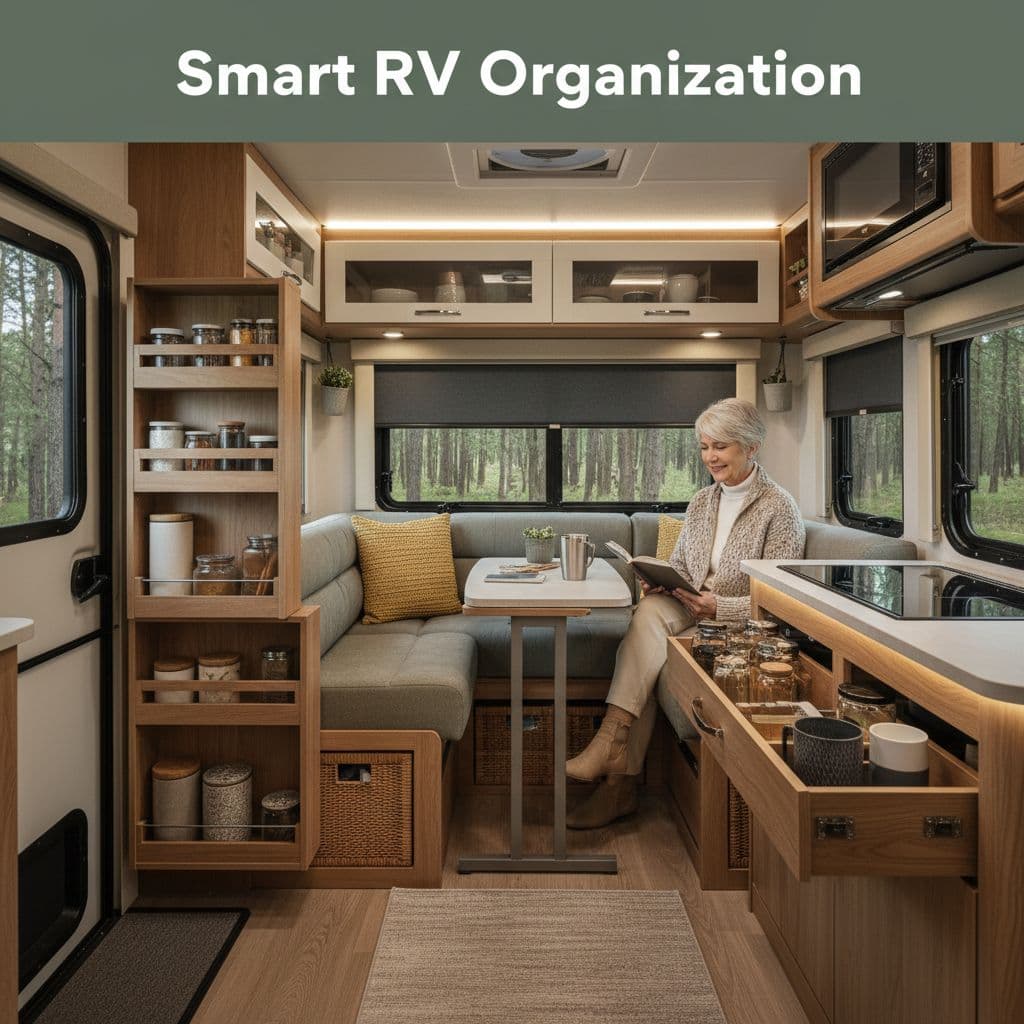
Soft bins and clear pouches help because they fit odd spaces. Drawer dividers help too. However, don’t organize so much that you create work for yourself. You need simple homes for things, not a system that takes 20 minutes to reset.
This rule keeps clutter under control:
If you have to move three things to reach one thing, that item is in the wrong spot.
Create a small landing zone near the door. Use it for keys, sunglasses, insect repellent, your pet equipment, and campground cards. Set up a night basket for medications, water, glasses, and a flashlight. In the bathroom, keep only what you use every day. The rest, including your stock of RV-friendly toilet paper, can stay in a labeled bin below.
Most of all, re-pack after the first trip. Your first version won’t be perfect, and that’s normal. Keep a short note on your phone called “wish we had” and another called “never used.”
If you like practical reminders like that, you can get retirement travel tips via email. A short newsletter is often easier to use than one giant master list.
Use a short departure routine before every trip
Even the best RV packing list falls apart without a simple, repeatable routine. A short pre-departure check saves stress because it catches the easy-to-miss items before you are on the highway.
Use the same order every time:
- Check medications, documents, wallets, glasses, and phone chargers first.
- Load cold food last, then confirm the fridge latch and freezer door.
- Walk through the RV and secure loose items, shower doors, drawers, and counters.
- Test your lights, tire pressure monitoring system, propane level, battery status, and ensure your basic tool kit is tucked away before you pull out.
- Do one final outside loop to stow your sewer hose kit, drinking water hose, leveling blocks, and wheel chocks. Verify that your water pressure regulator, surge protector, and electrical adapters are packed, and double check that your steps, jacks, and storage doors are fully retracted or locked.
That routine takes minutes once it becomes habit. It also lowers the chance of leaving something important behind.
A printed backup list still helps, especially if two people share packing duties. This complete RV packing list with printable PDF is a useful model if you want a broader template to trim down for your own rig.
Keep your personal version short. One page is enough. The list should prompt your memory, not bury it.
Frequently Asked Questions
How can I decide what to pack versus what to leave behind?
Start by identifying the items you use daily at home and build your list around those necessities. If you find yourself holding onto “what if” items, consider donating or storing them, as extra gear only adds weight and makes it harder to find what you actually need.
What is the best way to organize kitchen items in an RV?
Focus on versatility by packing multi-use tools and compact storage containers rather than bulky, single-purpose gadgets. Prioritize keeping your most frequently used items like a primary skillet and essential utensils within easy reach to avoid digging through cabinets.
Why is a pre-departure routine important?
A consistent routine ensures you never leave essential documents, medications, or safety equipment behind when you start your journey. Following the same steps every time helps you verify secure attachments and tire pressure, turning stressful tasks into second nature.
Should I use a master packing list for every trip?
While a template is helpful, it is best to refine your own short, personalized list after your first few trips. Use a mobile note to track items you consistently “wish you had” and those you “never used” to continuously optimize your gear.
Final thoughts
A well-organized rv packing list for retirees is not about squeezing every possible item into your storage compartments. Instead, it is about carefully choosing the essential gear that makes your retirement adventures safer, easier, and more comfortable.
As you gain more experience on the road, your packing list should ideally get shorter. Embracing a minimalist approach is often a clear sign that you are mastering the lifestyle. For more helpful tips, travel updates, and expert advice on planning your next getaway, you can browse View All Our Newsletters or visit the RV Life Insider hub at View Our Website.
This post may contain affiliate links. If you make a purchase through these links, I may earn a small commission at no extra cost to you.