Trailer Sway Recovery Steps for Calm, Safe RV Towing
A gentle pull at the hitch can become a hard side-to-side swing in only a few seconds. When a trailer begins to fishtail, fast reactions often make the situation worse.
Knowing what to do when trailer sway starts gives you a calm sequence to follow when your heart is racing. For seniors who enjoy RV travel, camping weekends, or full-time RV life, that confidence makes every mile more comfortable.
A stable rig also needs proper tongue weight for balanced handling. The safest response starts with slowing the entire rig without panic or sudden inputs.
This post may contain affiliate links. If you make a purchase through these links, I may earn a small commission at no extra cost to you.
Key Takeaways
- Hold the steering wheel steady, ease off the accelerator, and avoid sudden braking or steering when trailer sway starts.
- Let the entire rig slow down before changing lanes or pulling over, then stop and identify the cause before continuing.
- Load the trailer carefully and aim for approximately 10 to 15 percent of total trailer weight on the tongue, while staying within all manufacturer ratings.
- Check hitch setup, tire pressure, trailer brakes, cargo placement, and electrical connections before every drive.
- Reduce speed and use extra caution in crosswinds, near passing trucks, on uneven pavement, and on downhill sections.
Trailer Sway Recovery: What to Do in the First Minute
Trailer sway usually starts as a light push from one side, followed by a pull the other way. If trailer sway grows with each swing, act early. Keep your eyes well ahead, leave room for the rig to settle, and adapt to driving conditions without sudden movements.
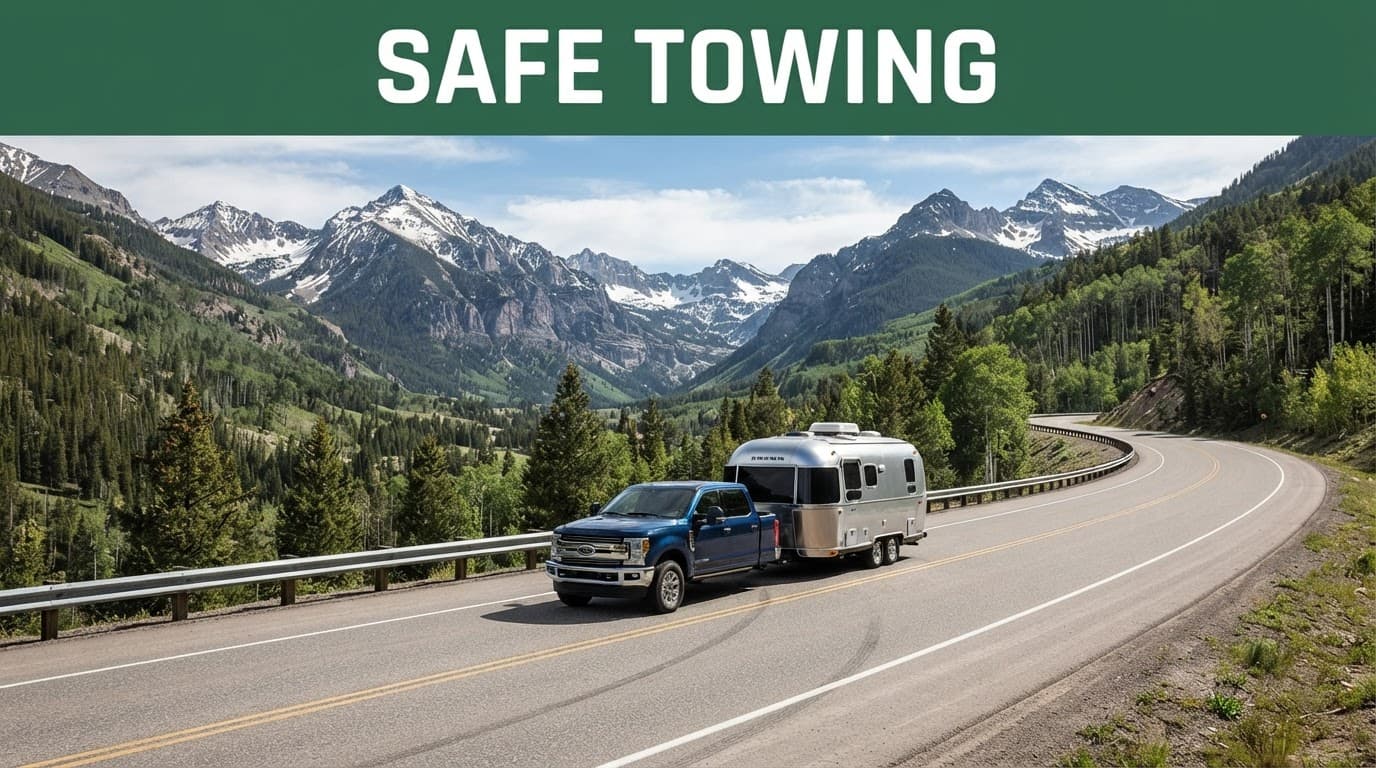
Follow these steps in order:
- Hold the steering wheel steady with both hands. Keep the tow vehicle pointed straight ahead, within your lane. Don’t overcorrect the steering to match the trailer’s movement.
- Ease completely off the gas pedal. Let road resistance reduce your speed naturally. Don’t lift suddenly or stab at the brakes.
- Avoid the vehicle’s brake pedal. Braking suddenly shifts weight forward and may worsen the push-and-pull motion at the hitch.
- Use the manual trailer-brake control only if you know it well. With an electric-brake system and correctly configured controller, gradual manual activation of the trailer brakes can pull the rig back into line. Never experiment with the controller during an emergency.
- Allow the rig to slow before changing lanes or pulling over. Once trailer sway stops, signal and move to the first safe turnout, rest area, or wide shoulder.
Blue Ox’s active-sway guidance also stresses reducing speed and avoiding abrupt steering. After you stop, don’t continue until you find the cause.
The goal is not to snap the trailer straight. The goal is to remove speed and let the oscillation fade out.
Why Braking and Sharp Steering Corrections Make Sway Worse
A trailer has momentum of its own. When trailer sway starts, it may swing left, and your instinct may be to steer right. That correction can cause trailer sway to compound as it swings back left, while sudden movements at the wheel amplify the oscillation and may lead to fishtailing out of control.
Hard braking creates a similar problem. Weight transfers toward the front of the vehicle, reducing the load on the rear axle of the tow vehicle. Meanwhile, the trailer continues pushing forward against the hitch. In a severe event, that angle can develop into a jackknife scenario and cause loss of control.
Some older towing advice suggests accelerating to pull the trailer straight, but avoid that move. Excessive speed leaves less room for error, especially with a loaded RV, descending grade, or crosswind. A controlled response works best when you steadily take energy out of the system.
After trailer sway settles, inspect the rig and consider the current driving conditions before moving again. Don’t continue until you’ve identified a flat tire, loose hitch hardware, broken suspension part, or loading problem.
Load Your Trailer for Stable Weight Distribution
Most trailer sway begins before the wheels start rolling. Poor loading can leave a trailer too heavy at the rear, creating too little tongue weight. That light hitch load lets the trailer steer itself after a gust, bump, or passing truck.

A loaded scale weight matters more than a visual guess. As a general starting point, a safe range for tongue weight is usually 10 to 15 percent of total trailer weight. Treat that percentage as guidance, not a guarantee. Confirm it stays within the manufacturer’s limits for the trailer, hitch, axles, and vehicle. For example, a 6,000-pound trailer needs roughly 600 to 900 pounds of tongue weight on the hitch.
Use deliberate cargo placement by putting about 60 percent of cargo weight at the front of the trailer or ahead of the axle group. Then confirm the measured tongue weight with a tongue scale. Heavy items such as toolboxes, canned goods, generators, grills, and cases of bottled water can change the balance quickly.
Fresh-water, gray-water, and black-water tanks also affect handling because every RV floor plan places tanks differently. Recheck tongue weight after major packing or tank changes, and before a long trip.
A single-axle trailer reacts sharply to rear-loaded cargo, making trailer sway more likely because its balance point is small. Multi-axle trailers are often steadier, yet they can still sway when cargo sits behind the rear axle. A long trailer with a light truck also has less margin than a shorter, lighter camper.
Your truck’s towing capacity is only one number. Check the tow vehicle’s payload, rear-axle rating, hitch rating, and the loaded weight of passengers, pets, and cargo. A sagging rear end or light-feeling front end calls for a setup correction, not another highway run.
Let Your Hitch, Tires, and Brakes Do Their Jobs
A weight distribution hitch transfers part of the tongue weight toward the tow vehicle’s front axle and the trailer axles. Proper weight distribution helps restore steering response and braking control. That can reduce trailer sway when the load stays within the vehicle’s ratings.
For a clear description of how this setup redistributes load, see Weigh Safe’s weight-distribution hitch explanation. A weight distribution hitch can include integrated sway control, such as SwayPro by Blue Ox. These systems can add useful resistance to trailer movement.
Still, the hitch system can’t cure trailer sway caused by rear-heavy loading, worn tires, or mismatched or undersized equipment. Have a qualified installer set the hitch head angle and spring-bar tension. Verify the rig sits level, then confirm tongue weight after adjustment.
Tire pressure matters just as much. Check trailer and tow vehicle tires cold, using the pressure listed on the trailer placard or tire manufacturer’s guidance. Look for uneven wear, sidewall cracks, bulges, and nails, and inspect trailer brakes for proper operation and even adjustment. A soft trailer tire can start a sway event without warning.
Lippert’s overview of weight distribution hitches is a helpful reference when comparing hitch types. Match every hitch component to the lowest-rated part of your towing system.
Wind, Road Conditions, and Speed Can Trigger Sway
Wind gusts don’t need to feel extreme to trigger trailer sway in a tall travel trailer. A crosswind, the bow wave from a passing semi, or a sudden opening between trees can push against the trailer’s broad side.
Slow down before you reach exposed bridges, long open valleys, and downhill sections. Adapt to changing driving conditions, avoid excessive speed, and leave extra following distance so you won’t need sudden braking. If trailer sway starts or wind makes it hard to hold a steady lane position, find a safe place to wait it out.
Rutted pavement, uneven lane edges, and abrupt downhill curves can also start a side-to-side motion. The same rules apply to van life travelers towing a small camper and to full-time RVers with larger fifth wheels: reduce speed before conditions force your hand.
There is no universal safe range for crosswind speed. Trailer length, height, weight, tow vehicle size, tire condition, and road surface all change how easily trailer sway develops.
Use a Pre-Trip Sway Check Before Every Drive
Good camping tips often come down to small habits repeated before departure. A five-minute walk-around catches common trailer sway causes while you’re still parked.
- Confirm the coupler is latched and pinned, safety chains are crossed, and the breakaway cable attaches independently to the tow vehicle.
- Check the weight distribution hitch, spring bars, sway-control parts, hitch pins, and electrical connections.
- Inspect all tires and verify cold tire pressure before the sun warms the rubber.
- Look inside the RV for loose cargo, then move it forward if the rear storage area is overloaded.
- Check that awnings, steps, stabilizers, and slide-outs are fully secured before leaving.
- Confirm the trailer brakes engage evenly, especially before a long trip.
- After a major loading change, weigh the trailer and tongue weight rather than relying on how level it looks.
Before a long trip, make a low-speed test in a safe, open area with driving conditions similar to your planned route. Check for trailer sway, a level ride, normal steering, and predictable braking. Stop and adjust anything that feels wrong.
RV Life Insider shares practical safety reminders, route ideas, and road-tested advice in View All Our Newsletters. You can also find travel planning tools, community resources, and more RV guidance at View Our Website. This routine supports a safe towing setup.
Frequently Asked Questions
What should I do first when trailer sway starts?
Hold the steering wheel steady and keep the tow vehicle pointed straight ahead. Ease completely off the accelerator and avoid sudden braking or sharp steering corrections.
Should I use the vehicle’s brakes during trailer sway?
Avoid sudden use of the tow vehicle’s brake pedal because it can shift weight forward and worsen the motion. If you are familiar with the system, gradual manual activation of the trailer brakes may help, but do not experiment during an emergency.
How much tongue weight helps prevent trailer sway?
A general starting range is 10 to 15 percent of the loaded trailer’s total weight. Confirm the actual tongue weight with a scale and keep it within the ratings for the trailer, hitch, axles, and tow vehicle.
Can a weight distribution hitch stop trailer sway?
A properly adjusted weight distribution hitch can improve steering and braking control, and some systems include sway resistance. It cannot correct rear-heavy loading, worn tires, or equipment that is mismatched or undersized.
When is it safe to continue driving after sway stops?
Allow the rig to slow down, then pull into the first safe turnout, rest area, or wide shoulder. Inspect for problems such as a flat tire, loose hitch hardware, a suspension issue, or poor loading before moving again.
Keep Calm and Let the Rig Slow Down
Trailer sway is frightening because it demands restraint when every instinct tells you to react fast. Hold a steady course, ease off the accelerator, avoid sharp steering and braking, then let speed fall.
Reliable towing begins with correct loading, sound equipment, and a careful pre-trip check. A balanced trailer gives you a better chance of preventing repeat trailer sway.