RV Laundry Tips for Long Trips and Full-Time Travel
Laundry can become a road-day headache when your dirty laundry fills faster than the fresh clothes dry. Good RV laundry tips help you pack less, spend less time in laundromats, and avoid turning a beautiful camping stop into an afternoon of chores.
For seniors, a simple system also means fewer heavy bags, fewer last-minute supply runs, and more energy for the places you came to see. Following these RV laundry tips makes laundry day one routine that does not control your travel calendar.
This post may contain affiliate links. If you make a purchase through these links, I may earn a small commission at no extra cost to you.
Key Takeaways
- Pack quick-drying layers and enough underwear and socks for seven to 10 days.
- Use campground laundry early in the day or during the middle of the week.
- A portable washing machine works best for small loads when your water, drainage, and full hookups setup support it.
- Keep detergent, quarters, stain treatment, and a folding drying rack in one grab-and-go laundry tote.
- Wash before your clothes supply becomes urgent, especially before moving to a remote campground.
RV Laundry Tips That Keep Travel Days Easy
The best routine starts before the first load. Decide how often you want to wash, then pack around that schedule. Many full-time travelers use helpful RV laundry tips to manage their time, often washing every seven to 10 days. That interval works well when you carry lightweight clothing that can be worn more than once.
Choose fabrics that dry quickly and don’t hold odors. Polyester blends, merino wool socks, performance shirts, and thin cotton layers all take less space than bulky sweatshirts and heavy jeans. Bring one warmer layer for chilly evenings, but don’t stock the closet as if you were staying home for a month.
Separate your dirty laundry into two small bags: one for everyday clothes and one for towels, bedding, or outdoor gear. This simple division keeps dust and damp items away from your clean shirts. A zippered wet bag is helpful after rain, beach days, or a muddy walk with the dog.
Keep a compact tote by the door or in a pass-through compartment. Include laundry bags along with these essentials:
- Laundry sheets or eco-friendly laundry detergent strips that save space
- A reliable stain remover, color catcher sheets, and a few dryer sheets
- Roll-up drying clips, a drying rack, a mesh delicates bag, and a fold-flat hamper
- Quarters, a card for app-based machines, and a small trash bag for lint
Laundry detergent sheets are especially tidy in a moving RV because they can’t spill. If you prefer liquid laundry detergent, use only high-efficiency soap in an HE machine and store it upright inside a sealed bin.
Don’t wait until every sock is dirty. A successful laundry day planned around your route is far easier than an emergency wash at a crowded park on move-out morning.
Build Laundry Stops Into Your Travel Plan
Laundry is part of trip planning, much like fuel and groceries. Before reserving a campground, check the amenities list and recent guest comments. A listing may say it has a campground laundry facility, yet reviews can reveal broken dryers, limited machines, or a cash-only payment setup in the laundry room.
State parks and older private parks may have a small laundry room with only two washers, requiring you to visit a local coin laundromat instead. In contrast, larger RV resorts often have several machines, folding tables, and card readers. If you boondock for several days without full hookups, schedule a laundry stop before you run low on water and clean clothing.
For practical road stories and comparisons between onboard machines and laundromats, this guide to laundry on the road offers useful perspective. Fellow travelers also share candid notes about their routines in an RVLiving laundry discussion, though park conditions and machine availability always vary.
Time your visit well. Monday morning can be busy after weekend campers leave. Late afternoon often fills up with families returning from activities. Mid-morning on a weekday is usually calmer, and you can use the wait to read, call family, or plan the next stop.
When transitioning away from full hookups after a long trip, you might need to wash bulky gear like a sleeping bag alongside your regular clothes. Packing items into a mesh laundry bag makes sorting much easier when you finally reach a campground laundry room or a nearby coin laundromat.
Before you leave the rig, take only what you need. Carry one load at a time if lifting a full basket strains your back. A wheeled folding cart can make a long walk across a campground much easier.
Use Campground Machines Without Wasting Money
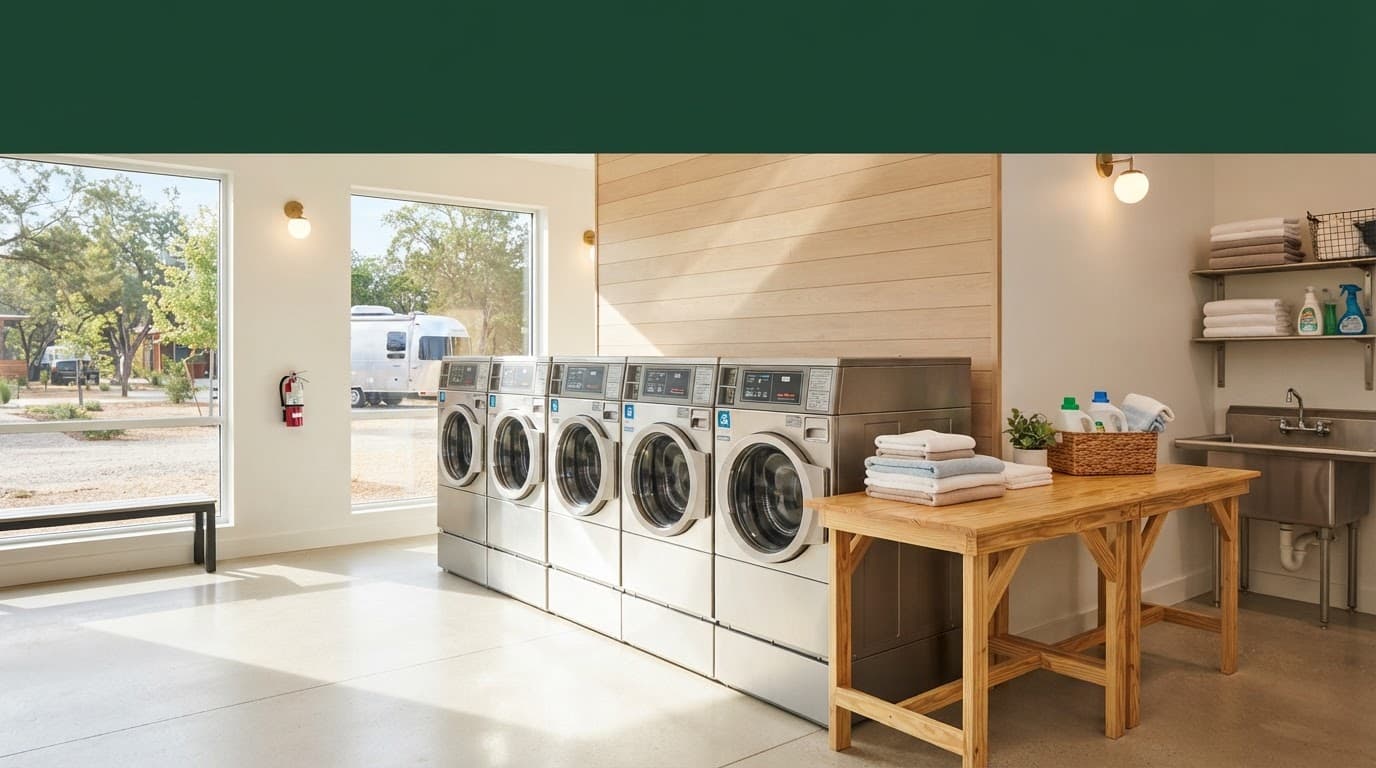
Start by checking the washer drum and detergent drawer in the campground laundry room. Leave the door open briefly if the machine smells musty, then choose another unit when possible. A quick wipe with a paper towel is sensible if you see laundry detergent residue around the rim.
Sort by fabric weight rather than by a complicated color system. Lightweight shirts and undergarments can share a cold-water load using measured laundry detergent. Towels, denim, and bedding need a separate wash because they hold more water and take longer to dry.
Don’t overload the washer. Clothes need room to move, and a packed drum often comes out with laundry detergent trapped in folds. Apply eco-friendly laundry practices and a dab of stain remover to spots beforehand so you don’t need excessive soap. In addition, overstuffed dryers make you pay for a second cycle. Give bulky items extra room, then shake out each piece before placing it in the dryer.
If a dryer has weak heat, dry the light items first and hang the heavier pieces inside your RV. A small fan can speed up drying, but keep wet fabrics away from walls and cabinets. Moisture left inside a closed coach can lead to stale smells and condensation.
A coin laundromat outside the campground can be a better choice when you have a sleeping bag, heavy bedding, or several loads. Look for a clean laundry room location with seating, good lighting, and larger front-loading machines. Use the time wisely by washing small loads or a bulky sleeping bag together in a commercial machine sized for heavy items. Find a local coin laundromat with reliable high-heat dryers to finish those large loads efficiently.
Choosing a Portable Washer for an RV
An onboard RV washer and dryer can cut down on laundry room visits, but it isn’t a fit for every rig. A washer dryer combo, a stackable washer, or a small portable washer takes space, water, electricity, and patience. Dry cycles in a washer dryer combo often run much longer than expected, especially in humid weather.
First, confirm your RV specifications. Check the portable washing machine amperage, water connection, drain location, cargo capacity, and venting requirements. Never assume an existing closet can support a loaded washer dryer combo or stackable washer weight. If you rent your site with full hookups, ask the park before draining any portable washing machine outdoors or into an unapproved connection.
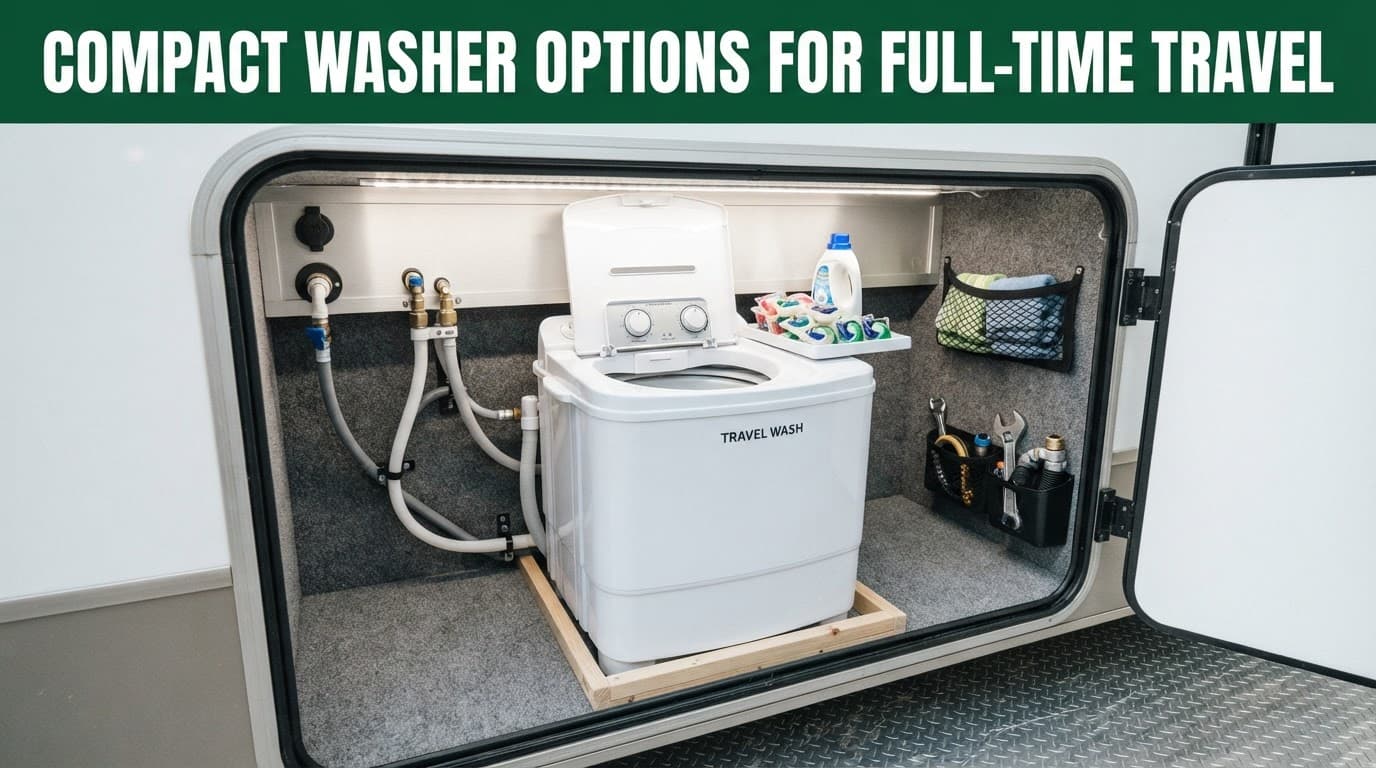
A small portable washing machine works well for underwear, socks, T-shirts, and light workout clothing. It won’t replace a commercial machine for queen-size sheets, thick bath towels, or blankets. Many van life travelers pair a compact portable washer with a drying rack and use laundromats for bigger loads, saving time when hand washing is impractical.
For a quick comparison, consider what each option asks from you:
| Laundry option | Best for | Main limitation |
|---|---|---|
| Campground laundry room | Regular full loads and bedding | Availability and machine condition |
| Town laundromat | Large loads and fast drying | Requires a drive and waiting time |
| RV washer-dryer combo | Frequent small loads | Long dry cycles and installation needs |
| Portable washer | Light clothing while off-grid | Small capacity and careful drainage |
| Hand washing | One or two urgent items | Slow drying in humid weather |
Your chosen portable washing machine also needs a secure travel location, particularly if you rely on hand washing for delicates while traveling. Empty the portable washing machine fully before moving, secure hoses, and keep the RV washer and dryer units from shifting in a storage bay. The compact portable washer setup below shows how storage bins and hose management can keep the area orderly.
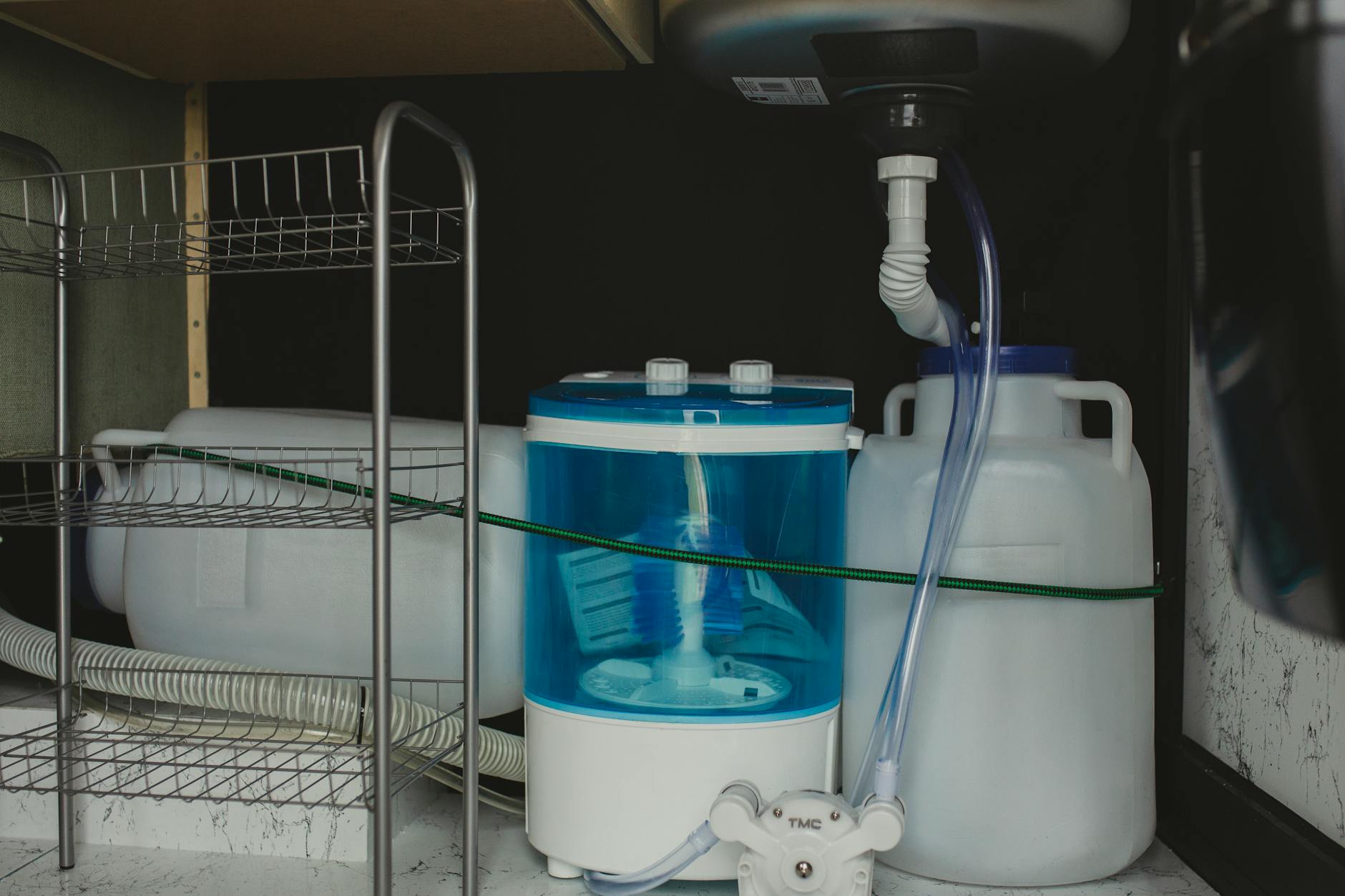
Photo by Melike B
Dry Clothes Without Filling the RV With Damp Air
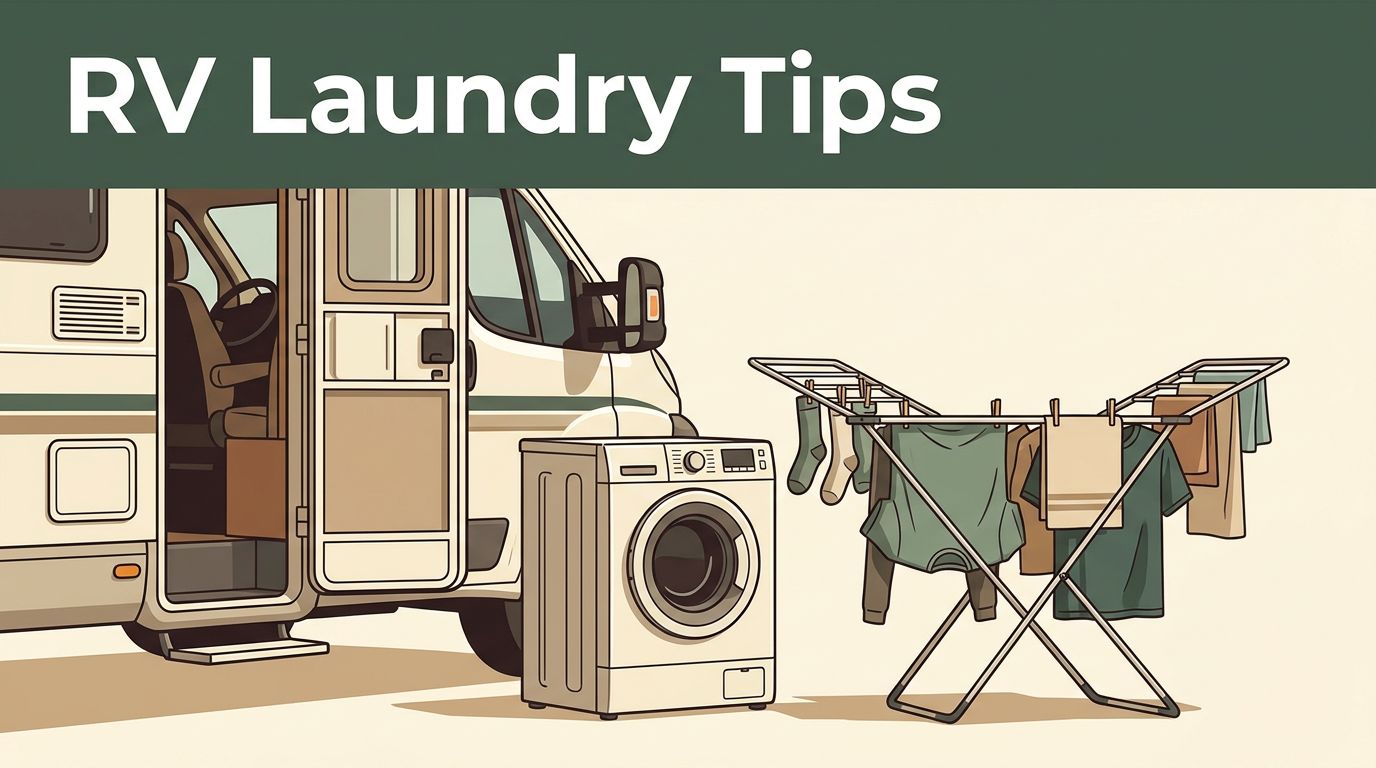
Drying is often harder than washing. When the weather cooperates, use an approved clothesline, a freestanding drying rack, or clips under your RV awning to line dry your garments outside. Check campground rules first, because some parks prohibit a clothesline between trees or attached to utility pedestals. If you prefer using an RV washer and dryer, ensure the built in exhaust vents properly to prevent excess moisture.
Inside the coach, place a compact drying rack in the shower after use. Run the bathroom vent fan and open a window slightly if conditions allow. A dehumidifier can help during long rainy stretches, although it adds another appliance to manage. When dealing with heavy items like a sleeping bag or delicate fabrics that require hand washing, a dedicated drying rack keeps moisture localized away from your main living areas.
Microfiber towels and quick dry bath towels are worth the swap because they dry much faster than thick terry cloth. For sheets, consider two lightweight sets. Wash one set in the morning, then make the bed with the spare instead of waiting on an energy consuming washer dryer combo cycle. You can easily line dry these lighter items on a small indoor clothesline or collapsible drying rack during your morning routine.
Avoid hanging wet clothes over cabinet doors, dashboard areas, or upholstery. Those surfaces trap moisture and can leave marks. If your washer dryer combo or portable unit struggles with heavy loads, rely on hand washing for small items and use your outdoor clothesline whenever weather permits. Keep the drying area contained, and empty the rack before travel day.
Keep Laundry Manageable on Long Trips
A calm laundry routine comes from small habits. Treat stains as soon as they happen with a reliable stain remover, especially for grease, berry juice, and campground dust. A simple stain stick in the kitchen drawer is more useful than discovering a dirty laundry spot a week later.
Also, air out clothes that aren’t truly dirty. Hang a shirt after a short wear, let it dry, then fold it back into rotation. This works best for light layers, pajamas, and outerwear, though sometimes quick hand washing helps freshen items before they go back into your laundry bags. Undergarments, socks, and workout clothes should go straight into the dirty bag.
Keep a concentrated eco-friendly laundry liquid and measuring cap nearby so you can manage small batches or emergency hand washing without hassle. Sorting your dirty laundry into mesh laundry bags ahead of time makes your weekly routine much smoother.
Laundry day is a good reason to take a slower day. Park for two or three nights when you can, then wash during the middle day. You won’t have to rush folding, hunt for an open machine, wash bulky items like a sleeping bag, or prepare the RV for departure at the same time.
RV Life Insider shares practical ideas for a comfortable life on the road. You can subscribe to RV Life Insider for fresh advice sent to your inbox, or View All Our Newsletters when you’re planning your next trip.
Frequently Asked Questions
How often should I do laundry while traveling in an RV?
Most full-time travelers find that washing every seven to 10 days works best. This interval keeps your clothing rotation manageable while ensuring you do not need to pack an excessive amount of heavy garments.
Can I use a regular liquid detergent in my RV washer?
If you are using an onboard high-efficiency machine, you must use high-efficiency (HE) soap and store it upright inside a sealed bin. For hand washing or portable units, concentrated eco-friendly laundry sheets or liquid detergents are ideal because they prevent spills and save precious space.
What is the best way to dry clothes without adding moisture to the RV?
When weather permits, use an outdoor clothesline, an awning drying rack, or rollout clips outside. If you must dry indoors, place a compact rack in the shower with the bathroom vent fan running to keep humidity away from your living areas.
A Lighter Load Makes the Road Feel Longer
The most useful RV laundry tips are the ones that fit your actual travel style. Pack lighter fabrics, set a realistic wash schedule, and choose the laundry option that matches your water supply, physical comfort, and available time, whether you prefer using a coin laundromat, installing an RV washer and dryer, or relying on a portable washing machine.
For seniors who enjoy camping, fewer oversized loads mean less lifting and less time indoors. Keep your laundry bags together, plan a campground laundry stop before dealing with overwhelming dirty laundry, and let clean clothes stay a simple part of a good day on the road.
Find more travel guides, practical tools, community resources, and RV lifestyle ideas when you View Our Website.