Simple Camp Setup for Seniors Who Love RV Camping
A complicated camp setup for seniors can turn a relaxing trip into hard work. For many, the best campsite is the one that feels completely ready within 20 minutes of arrival.
Less lifting, less bending, and fewer decisions mean more time for coffee, fresh air, and the part of the journey you actually came for. An efficient camp setup for senior campers begins before you even put the vehicle in park, and it becomes much easier when every item you carry has a clear, dedicated job.
Key Takeaways
- Prioritize Site Selection: Choosing a level site with accessible hookups and clear paths prevents physical strain before you even begin to unload your gear.
- Adopt a Minimalist Gear Strategy: Keep your equipment to the essentials and ensure daily-use items are stored at waist height to minimize bending, reaching, and heavy lifting.
- Follow a Repeatable Routine: Use a consistent, step-by-step arrival process to reduce decision fatigue and ensure you can relax shortly after parking.
- Focus on Accessibility and Safety: Enhance your campsite with mobility-friendly additions like sturdy chairs, adequate lighting, and reliable handrails to ensure a secure environment throughout your stay.
Choose a Campsite That Does Half the Work
The easiest setup starts with the right site. If the pad is level, the hookups are close, and the path to the picnic table is clear, you save energy before unloading a single chair.
When you book, ask a few direct questions. Whether you are exploring national parks, staying at 55 and older campgrounds, or enjoying a trip in a smaller rig, a good park will tell you if the site is pull-through, how level it is, and whether the bathhouse is a long walk. This level of preparation is helpful for traditional RV travelers, those who prefer car camping, and anyone planning their next adventure. If you are visiting federal lands, remember to carry your senior pass to save on entry fees and site costs.
A few details are worth checking before you arrive:
- Is the site fairly level?
- Are power and water easy to reach, or will you be boondocking?
- Is there room to open the awning and place two chairs?
- Are the paths paved or smooth enough for steady footing?
Many older campers also do better when they arrive before dark. You can spot low branches, soft ground, and uneven steps while the light is still good. According to site-selection advice for older campers, simple details like walking distance, shade, and site length can shape the whole stay.
Detailed planning and a small paper checklist help, too. They keep you from standing there, tired, trying to remember what comes first. For more comfort-first planning, these checklist ideas for senior campers line up well with a lighter routine.

Photo by Kampus Production
The point is simple. A smart site cuts work. When the campsite fits your needs, setup feels calm instead of rushed, and your body notices the difference by evening.
Pack Less, and Put Every Item Within Easy Reach
Most setup problems come from having too much stuff. Extra bins, backup gadgets, and low storage compartments all add unnecessary steps, and those steps pile up quickly. Whether you are enjoying RV camping or prefer tent camping for seniors, keeping your gear minimal is the secret to a stress-free experience.
Start with the gear you use every trip and keep that equipment in the same place every time. Because of common physical challenges like arthritic knees or limited mobility, you should prioritize putting daily items at waist height whenever possible. This is particularly important for coffee supplies, your medicine kit, flashlights, paper towels, and your first-night meal. If your RV has deep basement storage, reserve it only for items you will not need to touch right away.
Many of the best camping tips for seniors are simple common sense. Choose gear that opens fast, folds flat, and is easy to handle. Advice for older RV travelers often points to auto-leveling systems, power awnings, and accessible layouts because those features reduce strain at the exact moment you feel it most.
This quick gear guide shows what earns its place:
| Item | Why it helps |
|---|---|
| Lightweight camping chair | Easy to move without twisting or dragging |
| Roll-up outdoor mat | Cuts dirt and gives a softer step outside |
| Small side table | Keeps drinks, glasses, and meds close by |
| Step stool with a handle | Safer reach into storage areas |
| Portable toilet or commode | Provides convenience and stability at night |
That does not mean you need a fancy, high-end rig. A small camper, towable, or compact RV can still be easy to manage if you prioritize comfort. For a better night of sleep, consider a comfortable cot, a memory foam mattress, or a self-inflating sleeping pad if an air mattress feels too unstable or difficult to inflate. What truly matters is minimizing how often you bend, reach, and carry heavy items.
Try a one-touch rule for your gear. If an item takes more than one awkward move to use, rethink its location. For example, keep the grill tool set in the outside kitchen, not under the bed. Store the lantern near the door, not in a rear bin behind three other tubs. Small changes like that turn setup into a short, manageable routine instead of a difficult scavenger hunt.
Build an Outdoor Space That Feels Safe and Easy
The best campsite is the one you actually use. When you are looking to elevate your campsite into a comfortable glamping experience, it starts with the basics: two supportive chairs, reliable shade, a small table, and a clear path in and out of your rig.
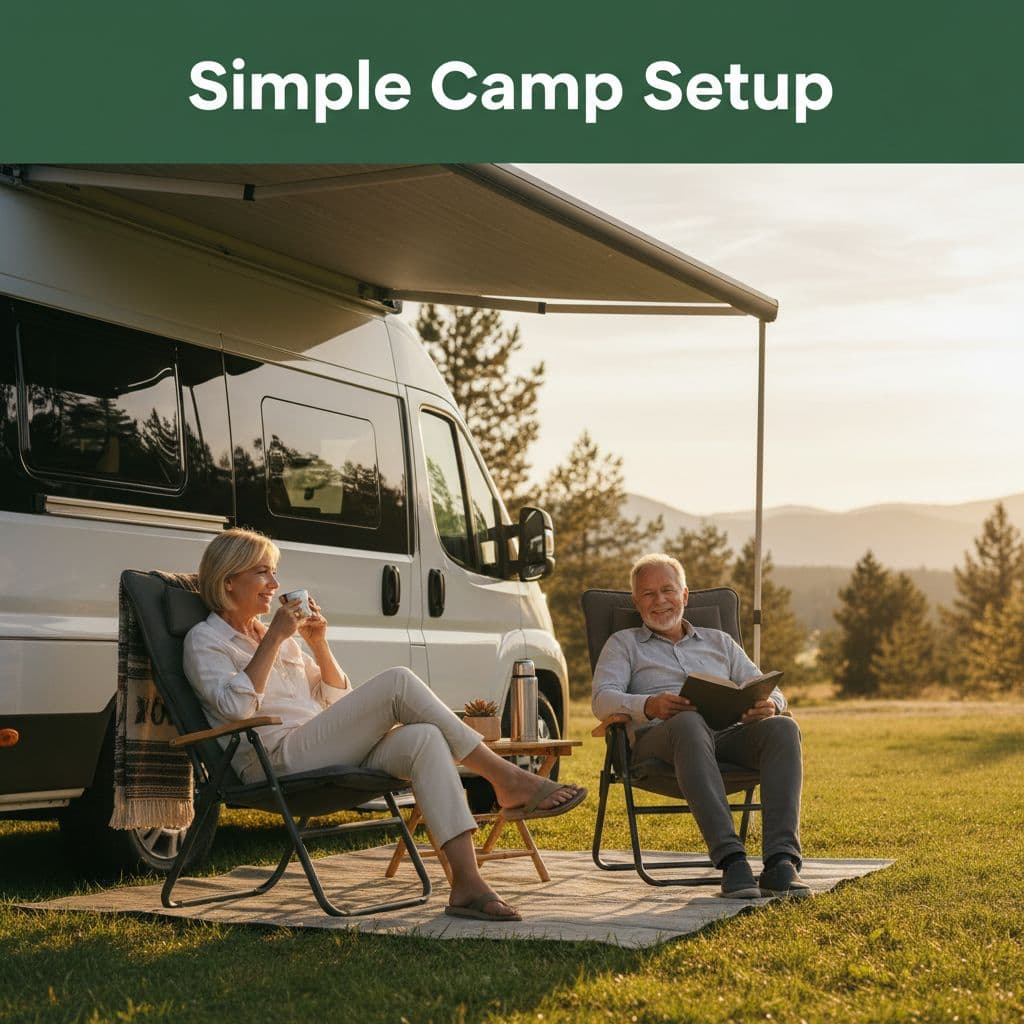
Start with your chairs. Pick ones that are easy to stand up from, as these provide better support than low beach chairs that sink into the ground. If you prefer to lounge for a nap, adding a comfortable cot or a high-quality air mattress can make your outdoor space feel like a true bedroom under the stars. For those who enjoy extra protection from the elements, a tall tent provides the necessary standing room to change clothes or move around without hunching over. If you are not using an RV, an instant tent can be a game changer, allowing you to establish your site in minutes rather than fighting with complex poles.
The easiest outdoor setup is the one you can sit down in right away.
This philosophy is essential for a stress-free trip. If you have to move bins, cords, or heavy coolers before you can relax, the space is doing too much. True camping comfort comes from accessibility, not clutter.
Safety is equally important in your outdoor design. Keep electrical cords tight to the edge of the site to prevent trips, and place a battery-operated light with bright LED bulbs near the steps for evening access. If your entry feels shaky, a sturdy handrail can provide much-needed support. These tips for senior RVers over 55 highlight how much easier camp life becomes when your entry and exit points feel steady and secure.
The same rule applies to van life. A smaller footprint does not mean you have to sacrifice comfort; it just means every piece of gear must earn its place. One chair that supports your back is better than two trendy seats you avoid. By sunset, a simple, well-organized space feels more welcoming because everything you need is ready, and nothing is in your way.
Use the Same Arrival Routine Every Trip
A repeatable routine saves energy because your brain stops making fresh decisions at every stop. Many full time RVers rely on this approach. They do not build a new system each weekend. Instead, they use the same order until the process feels automatic.
Keep your arrival routine short and realistic:
- Park and level the rig.
- Connect electricity, water, and sewage, if you are using them.
- Set the entry area, steps, handrail, mat, and light.
- Open chairs and place the table.
- Stop there unless you truly need more.
That last step matters. You do not need to decorate the site on day one. You need a safe path, a place to sit, and what you need for dinner and sleep. Everything else can wait until morning.
A first-night tote helps a lot. Keep one bin or basket near the door with easy meals, chargers, medicine, paper plates, extra bedding, and a flashlight. Then if you are tired, you can settle in without opening every compartment.
This is also where good habits beat more gear. Drink water after arrival. Sit down before starting the next task. Trade jobs with your travel partner if one task bothers your knees or shoulders. Seniors who keep setup simple often camp longer because they finish the day with some energy left.
If you enjoy practical help like this, RV Life Insider is worth keeping close. You can View All Our Newsletters for fresh camping ideas and route planning notes. You can also View Our Website for travel guides, planning tools, blogs, products, and community advice built for RV travelers.
Simple routines do not remove the joy from camping. They protect it. Whether you are hitting the road in a traditional RV, setting up a rooftop tent, planning cozy cabin stays, booking tent-cabins, or opting for a hotel room, having a consistent system makes the trip start sooner. When setup gets easier, you can spend more time enjoying the destination.
Frequently Asked Questions
How can I make site setup easier if I have limited mobility?
Focus on choosing level, pull-through sites that require minimal maneuvering of your rig or gear. Keep daily essentials in a dedicated ‘first-night’ tote so you don’t have to search through deep storage compartments immediately upon arrival.
What are the best seating options for seniors while camping?
Look for folding chairs with higher seats and sturdy armrests, which make it much easier to stand up compared to low-profile beach chairs. Ensuring your seating is supportive prevents back strain and makes your outdoor space more inviting for long-term comfort.
How do I store gear efficiently to avoid unnecessary reaching?
The ‘waist-height rule’ is essential: store frequently used items like coffee supplies, flashlights, and medicine in cabinets or bins that you can reach without bending or kneeling. Reserve deep basement storage only for equipment that you rarely use or only need during long-term stays.
Is it necessary to have a large RV to camp comfortably?
Not at all; a smaller camper or van can be just as comfortable if you prioritize smart organization and high-quality basics like a supportive mattress or cot. The goal is to build a setup that fits your needs rather than filling your space with extra gadgets that require more maintenance.
Final Thoughts
Camping should feel like a refreshing break rather than a long list of chores. The simplest setup for senior campers comes down to three things: pick a better site, carry less gear, and follow the same calm routine every time.
You do not need the largest RV or the newest gadgets to enjoy life on the road. Instead, you need a setup that matches your body, your pace, and your unique style of travel. When you prioritize accessibility and ease, your campsite becomes a space for true relaxation from the moment you open your first chair. By streamlining your approach, you can ensure that camping remains an enjoyable hobby for years to come, allowing senior campers to focus entirely on the memories they make along the way.
RV Life Insider
https://rvlifeinsider.com/
This post may contain affiliate links. If you make a purchase through these links, I may earn a small commission at no extra cost to you.