RV Maintenance Schedule for Part-Time Travelers
Your RV can wear out faster in the driveway than it does on the road. That surprises many owners, especially when the rig only sees a few trips each season.
A smart RV maintenance schedule matters even more for part-time travelers because storage creates its own problems. If you’re one of the many seniors who love weekend camping, snowbird escapes, or summer road trips, a simple routine keeps small issues from wrecking a good trip.
Why part-time travel changes the maintenance routine
A part-time RV doesn’t live the same life as a coach used every day. Your needs are different from full time rv’ers, because parked time creates a different kind of wear.
Seals dry out when the sun bakes them. Batteries lose charge while hidden draws keep pulling power. Tires age even when the tread looks fine. Water can creep into places you don’t see until a soft wall or stained ceiling shows up.
Sitting still is hard on an RV. That’s when rubber dries, batteries drain, and leaks start quietly.
Many seniors prefer shorter seasonal trips and longer breaks at home. That pattern is easy on your schedule, but it can be rough on the RV if you only react when something fails. A loose sealant line or low tire pressure won’t announce itself. It waits for the first hot highway run or the first hard rain.
Because of that, mileage isn’t the only thing to track. Time matters too. A good maintenance habit follows both the calendar and the travel season.
Among the best camping tips, this one stays at the top: check the rig before you leave, and reset it after you return. That rhythm keeps the RV ready for the next trip and lowers the odds of surprise repairs at the campground.
A practical RV maintenance schedule that fits real life
This simple calendar works well for part-time owners.
| When | What to check | Why it matters |
|---|---|---|
| Before every trip | Tires, lights, fluid leaks, hitch or tow gear, battery charge, propane, water connections | Catches safety issues before you drive |
| Monthly while stored | Tire pressure, battery status, roof scan, pests, moisture, slide seals | Storage damage starts slowly and builds |
| Start and end of each season | Wash roof, inspect sealant, sanitize or winterize water system, test appliances | Prepares the coach for use or storage |
| Once a year | Service bearings or brakes as needed, generator service, HVAC check, smoke and CO alarm test | Covers larger wear items and safety gear |
The takeaway is simple. Part-time travel needs short, repeatable checks, not one giant workday in the spring.
Before each trip, do a full walk-around. Look at the roofline from the ground, check tire pressure when the tires are cold, test brake lights and turn signals, and confirm the steps, jacks, and awning work right. If you tow, inspect the coupler, chains, breakaway cable, and plug.
During storage months, visit the RV on purpose. Open the door, smell the air, and look for damp spots, droppings, or a weak battery. If you store it off-site, put a reminder on your phone so a whole month doesn’t slip by.
At the start and end of the camping season, go deeper. Clean the roof, inspect all lap sealant, run every appliance, and flush the water system if the coach sat a long time. If freezing weather is part of your year, winterize early. Waiting for the first cold snap turns a simple job into a risky one.
For seasonal reminders and travel ideas, you can join our RV Life Insider newsletter.
Exterior checks that prevent expensive repairs
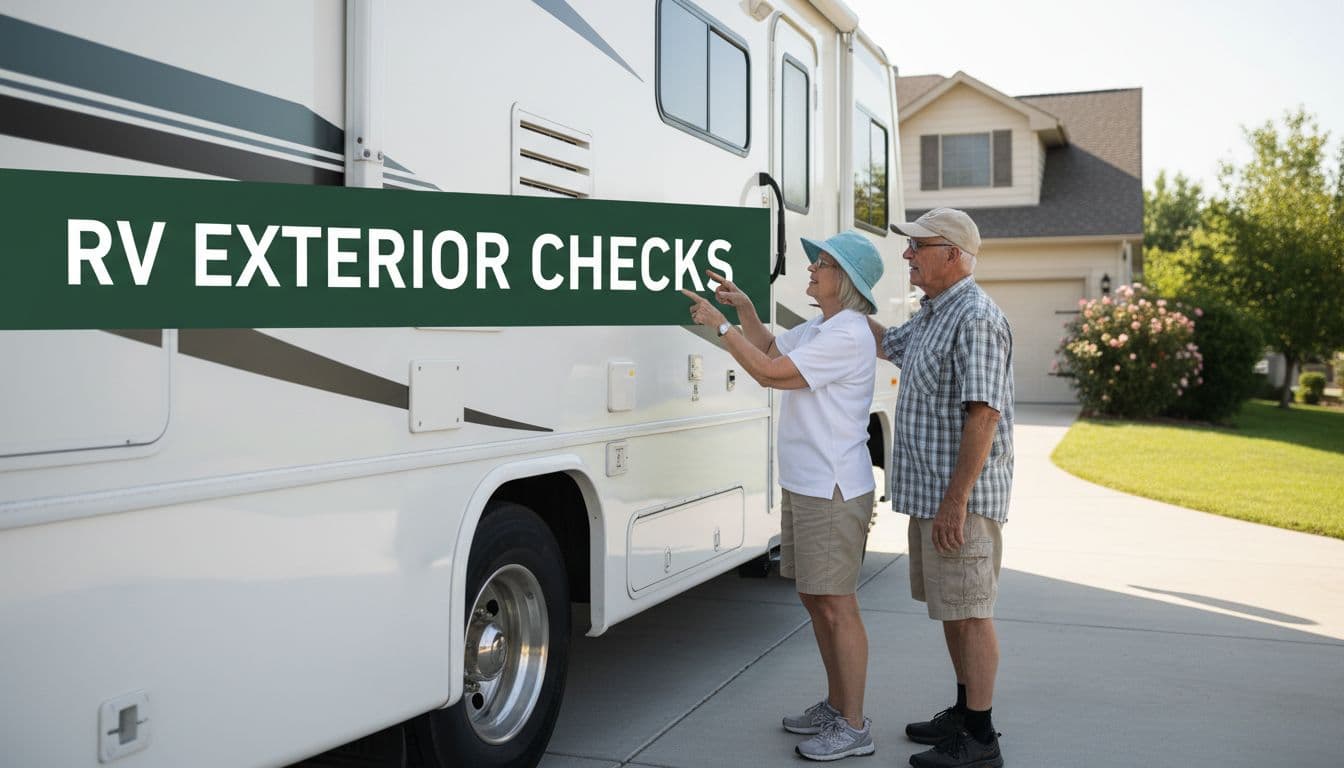
The outside of your RV tells you a lot if you slow down and look. A five-minute walk-around can save a five-figure repair.
Roof, seams, and slide seals
Water is the enemy most owners fear, and for good reason. Roof sealant shrinks, cracks, or lifts over time. That happens faster in strong sun and after long storage.
At least every season, inspect around vents, skylights, antennas, front caps, rear caps, and ladder mounts. Press gently with your eyes more than your hands. You’re looking for gaps, peeling edges, bubbles, or staining. Clean off leaves and grime so water can drain instead of pooling.
Slides need attention too. Wipe the seals, look for tears, and check that nothing binds when the room moves. A little dirt can chew up a seal faster than most people expect.
If you see missing or cracked sealant, use the product type recommended for your roof material. Rubber, fiberglass, and metal roofs don’t all want the same repair products.
Tires, wheels, and what aging looks like
Tires carry the whole trip, yet they often get ignored because they “still have tread.” Tread is only part of the story. Sun, heat, storage, and underinflation age RV tires from the sidewall inward.
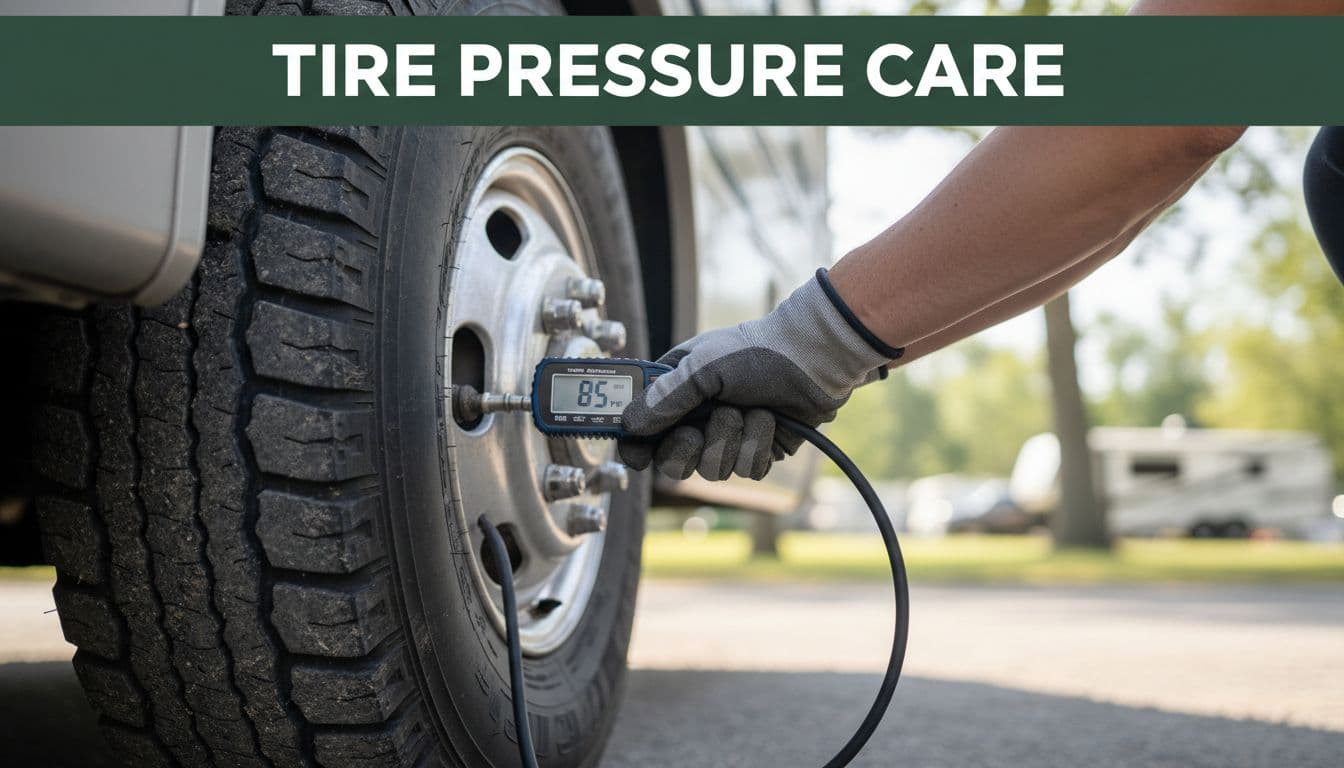
Check pressure before each trip and once a month in storage. Look for cracks, bulges, uneven wear, and valve stem damage. If the RV has sat for weeks, roll it a short distance now and then if storage rules allow. That helps reduce flat spots.
Also inspect lug nuts for rust streaks or movement and look under the coach for grease around the hubs. Those signs can point to wheel or bearing trouble. When in doubt, have a shop inspect the running gear before a longer camping trip.
Batteries, water lines, and appliances during storage
Inside systems often fail after sitting, not after driving. That’s why storage care matters as much as road care.
Battery health is easier than battery replacement
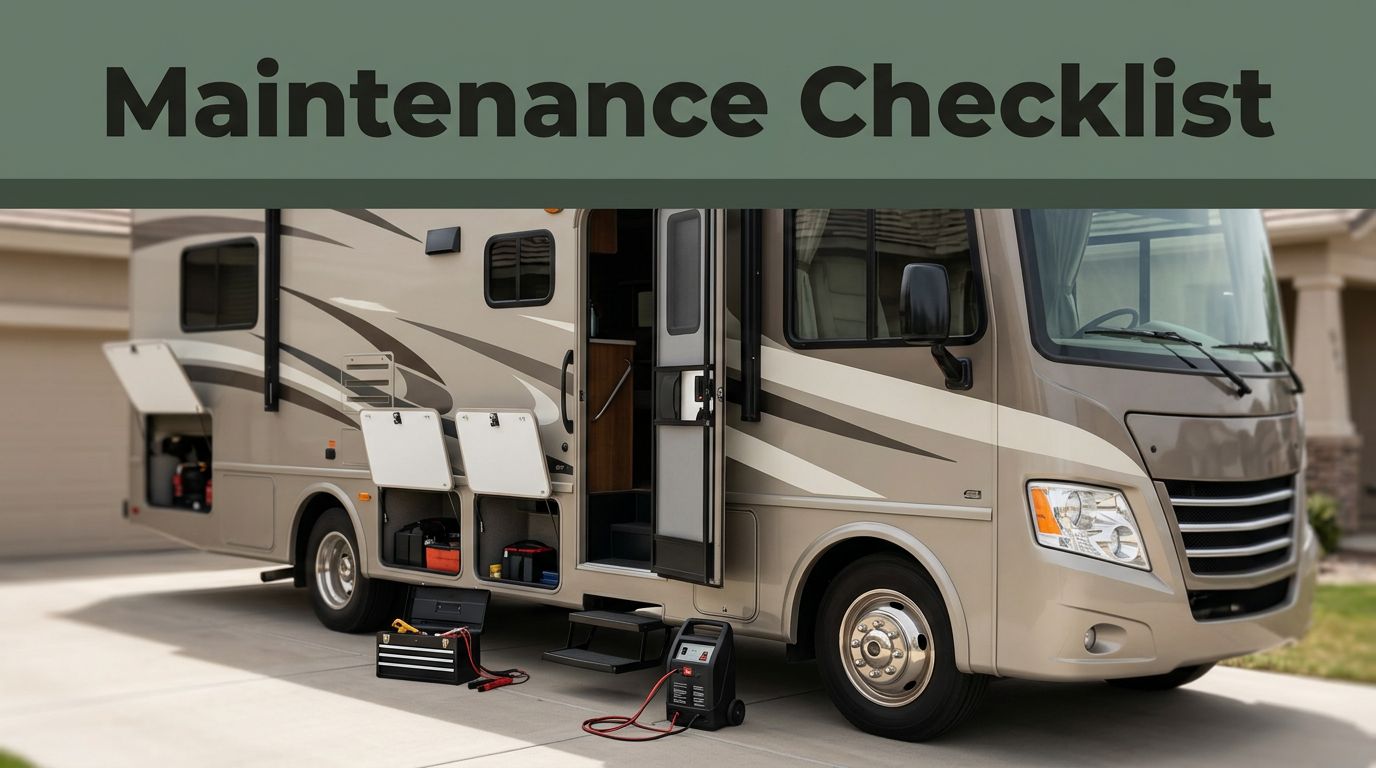
A neglected battery can ruin departure day fast. Test voltage regularly, keep terminals clean, and use the right charging method for your battery type. Lead-acid batteries may need water checks, while lithium systems need proper charging and storage settings.
If your RV stays parked for weeks, don’t assume the disconnect switch solves everything. Some rigs still have small parasitic draws. A quality charger or maintainer helps, but only if it’s set up correctly.
Generator owners should run the unit under load on a regular schedule, based on the maker’s guidance. Fuel left sitting too long can gum things up, and a generator that never runs often quits when you need air conditioning most.
Water system care saves headaches at the campground
Water lines, pumps, and water heaters don’t like neglect. Before the season starts, inspect hoses and fittings, fill the fresh tank, and check for leaks under sinks and around the pump. Then sanitize the fresh water system if it has been sitting.
At season’s end, winterize on time if freezing is possible. Don’t guess. A split fitting behind a cabinet can stay hidden until your next trip.
Refrigerators, furnaces, and air conditioners also deserve a test run before travel day. Start them at home, not at the campsite. If something sounds off, smells odd, or cycles poorly, deal with it before you pack food and head out.
Make the schedule easy to follow
The best maintenance plan is the one you’ll keep. That usually means simple notes, clear dates, and a short routine you can finish without turning the whole day into shop time.
Keep a small log in the RV or on your phone. Write down tire dates, battery service, roof inspections, sealant touch-ups, filter changes, and winterizing dates. When you can see the last service at a glance, you stop guessing.
This habit works for every style of travel, from a large fifth wheel to a compact rig with van life roots. It also helps couples share the work. One person can handle the inside check while the other does the walk-around.
If you like having ideas, reminders, and trip inspiration in one place, View All Our Newsletters for updates you can scan quickly. You can also View Our Website for travel guides, planning tools, blogs, products, and community resources that support life on the road.
Final thoughts
A part-time RV needs consistency more than complexity. Short checks done on time beat a big repair after months of storage.
The road is more fun when you trust your tires, seals, battery, and water system. A few steady habits keep camping simple, safer, and far less expensive.
When your next trip is on the calendar, start with the walk-around, not the packing list.
This post may contain affiliate links. If you make a purchase through these links, I may earn a small commission at no extra cost to you.