Stop RV Cabinet Doors From Opening While Driving
A cabinet door that flies open on a curve can turn a peaceful travel day into a noisy mess. Broken dishes, spilled pantry items, and loose hardware are common results when RV cabinet doors do not stay shut. Installing high-quality RV cabinet door latches is the most reliable way to prevent contents from spilling.
The fix usually is not complicated, but the right latch depends on the door, the cabinet frame, and what you store inside. A few small upgrades can keep your interior secure through rough pavement, mountain grades, and campground access roads.
Key Takeaways
- RV cabinet door latches must be compatible with the door style, the cabinet frame, and the weight of the contents inside.
- Loose hinges, worn catches, and overloaded cabinets often cause doors to open while driving.
- Magnetic catches and RV drawer latches work for light doors, while positive latches and push-button locks handle heavier loads.
- Secure loose items inside cabinets before travel, even when the doors have reliable latches.
- Check every cabinet before pulling out of a campsite, especially after a long stay.
Why RV Cabinet Doors Pop Open on the Road
An RV flexes and vibrates far more than a house. Every pothole sends movement through the walls, cabinetry, hinges, and door catches. Because standard hardware often fails under constant stress, many owners upgrade to motion-proof latches designed to remain locked even on the roughest roads. A latch that seems fine in a driveway may release after a few miles on uneven pavement.
Many factory-installed catches are basic plastic roller systems or small magnetic catches used in both upper and lower cabinets. While they work well for a light medicine cabinet, they often struggle with a pantry door loaded with canned goods, glass jars, or heavy cookware.
A door may also open because the cabinet has shifted slightly. Over time, screws loosen, hinges sag, and the latch no longer meets its strike plate squarely. Even a small gap can keep a catch from gripping properly.
Before buying new RV cabinet door latches, inspect the basics. Close the door slowly and watch how the latch meets the cabinet frame. If the door rubs, hangs crooked, or needs a hard push to close, adjust the hinges first. A new latch will not perform well if the cabinet frame is misaligned or if the door is not hanging straight.
A cabinet latch is only as strong as the screws, frame, and door behind it.
Choose a Latch That Fits Your Cabinet and Cargo
The best latch for your RV is not always the strongest one available. Instead, it must suit the specific use of the cabinet. A latch requiring two hands can be frustrating on a frequently used kitchen cabinet, while a small magnetic catch might be too weak for a door holding a heavy pantry.
These common options make it easier to match the hardware to your RV storage needs:
| Latch type | Best for | Strength | What to know |
|---|---|---|---|
| Magnetic catch | Light cabinet doors | Light | Easy to install, but magnets may release on rough roads |
| Magnetic drawer catches | Drawers | Light to Medium | Keeps slides from creeping open during transit |
| Roller catch | Lightweight interior doors | Light to medium | Common in older RVs, but rollers wear out over time |
| Brass ball catch | Closet doors | Medium | Provides a classic look with adjustable tension |
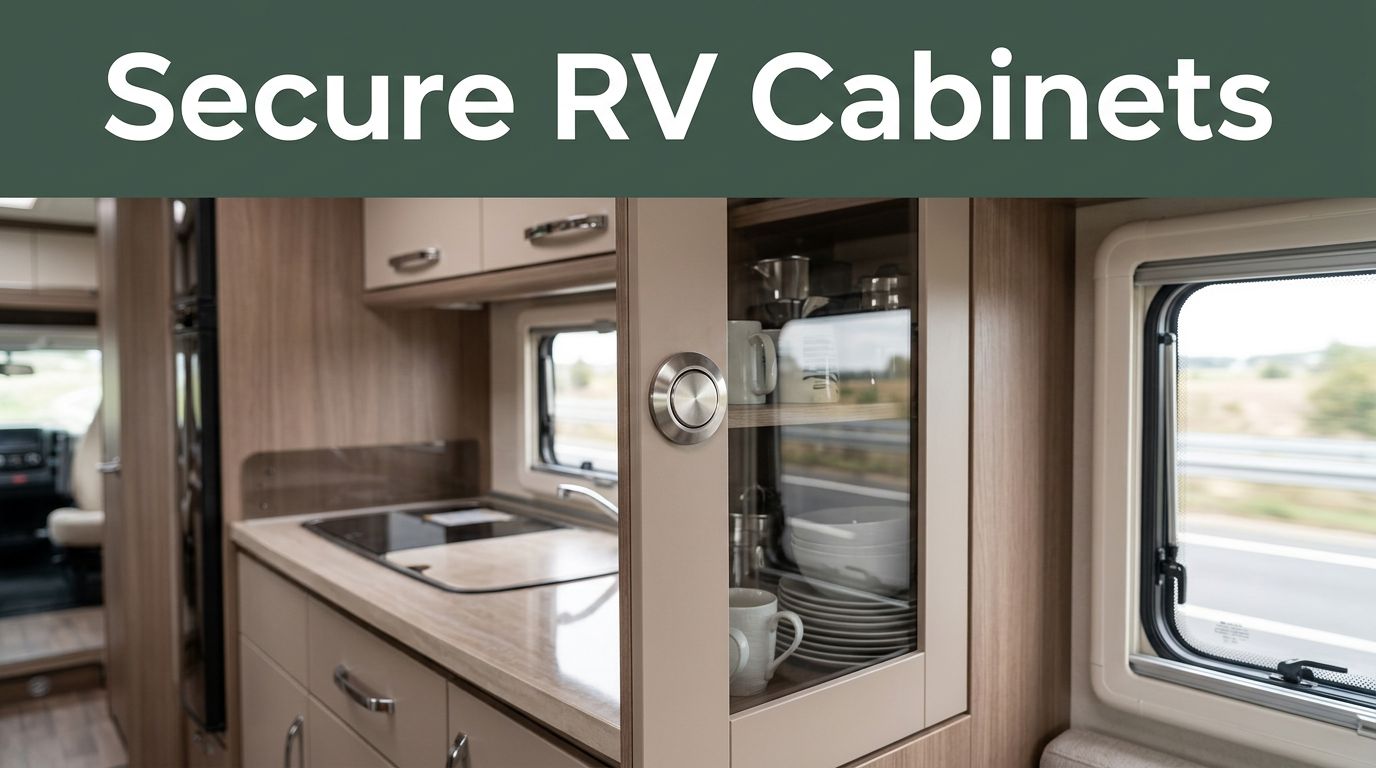
| Push button knobs | Overhead cabinets | Medium | Locks securely when the button is pushed flush |
| Grabber catches | Cabinet doors | Medium | Offers a satisfying click and a firm hold |
| Positive latch | Pantry doors | Heavy | Requires a deliberate release; excellent for travel |
| Compression latch | High-vibration areas | Heavy | Pulls the door tight against the frame to prevent rattling |
| Closet door latches | Larger storage areas | Medium | Designed to keep wide swinging doors secure |
| Toggle latch | Exterior storage | Heavy | Strong and visible, but can look industrial indoors |
For most overhead kitchen cabinets, push button knobs are a practical choice. The button stays flush when locked, so the door cannot swing open until you press it again. Many RV owners upgrade to marine-grade hardware, such as products from Southco or Sugatsune, because boats endure vibration and motion profiles similar to those found on the road.
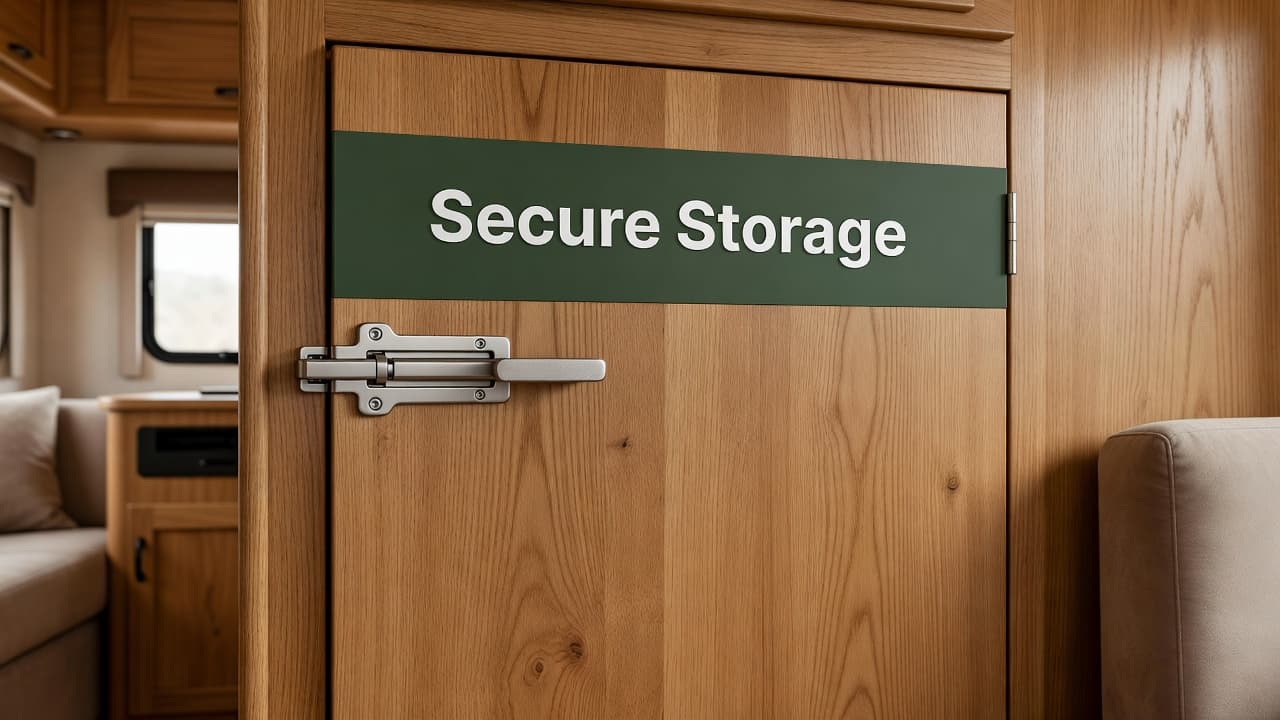
Positive latches are another strong option for larger doors. They feature a hooked or spring-loaded mechanism that holds the door shut until you pull or press the release. These work effectively on tall pantry doors or cabinets containing a heavy fridge slider, where the weight inside puts steady pressure on the hardware.
If you are dealing with smaller items, magnetic drawer catches provide a simple way to keep your storage organized while moving. For bedroom or hallway storage, a brass ball catch or specialized closet door latches can maintain a refined aesthetic while ensuring the doors remain closed. If you notice rattling in high-vibration zones, a compression latch is often the superior choice because it pulls the door tightly against the frame to eliminate movement.
Magnetic catches still have a place in an RV for light bathroom cabinets or small doors that do not carry much weight. Choose a catch with a metal strike plate and mount it carefully so the magnet meets the plate squarely.
Full-time RV travelers often prefer hardware that handles daily use without looking like a workshop fix. Seniors may also appreciate push button knobs because they are easy to operate without needing significant grip strength. When selecting your hardware, try to avoid tiny catches or stiff clasps that pinch fingers or require uncomfortable twisting motions.
Inspect the Door Before Replacing the Hardware
A latch replacement takes less time when you identify the actual problem first. Start with the door open and gently lift its outer edge. Noticeable upward movement often means loose hinge screws.
Tighten every hinge screw with a hand screwdriver. Power drivers can strip the thin wood or composite material used in many RV cabinets. Since modern RVs often utilize hardware with metal construction, it is important to ensure these components are seated properly to prevent future vibration issues. If a screw spins without tightening, remove it and fill the hole with a wooden toothpick and wood glue. Let the glue dry, trim the excess, then reinstall the screw.
Next, look at the latch and strike plate. They should meet in the center when the door closes. If they are off by a fraction of an inch, loosen the mounting screws and move the plate into position. Small adjustments can make an old latch work again.
Heavy doors may need more than one catch. A tall pantry door can flex enough for a single top-mounted latch to release. Install one latch near the top and another near the bottom, or choose a larger positive latch at the center point.
Also, inspect the cabinet face frame. Cracked wood, loose trim, or a weakened mounting surface will not hold screws for long. In the case of frameless cabinets, you may need to ensure the mounting plate is flush against the inner side panel, whereas traditional cabinets with face frames may require a thin wood backing plate inside the cabinet to provide extra support before attaching new hardware.
How to Install RV Cabinet Door Latches Securely
Read the latch manufacturer’s instructions before drilling, as mounting measurements vary significantly, especially with push-button and marine-style latches. Fortunately, most modern hardware is easy to install if you take your time. Hold each piece in place with painter’s tape first, then open and close the door several times to check the alignment.
Follow this simple process for a clean installation:
- Empty the cabinet completely. You need room to work, and loose items can hide screws or damage the floor.
- Mark the latch location with a pencil. Keep the latch clear of shelves, drawer slides, and cabinet contents.
- Drill small pilot holes. A pilot hole reduces the chance of splitting thin cabinet wood.
- Use screws that fit the cabinet depth. Long screws can poke through the cabinet wall or door face, causing visible damage.
- Install the latch body first. Then, close the door and mark the exact position of the strike plate.
- Test the door repeatedly. It should self-latch automatically and stay shut when you pull gently. Many high-quality models offer adjustable tension, allowing you to create a custom fit that holds firm even on bumpy roads.
Avoid placing a latch too close to the edge of a thin cabinet door, as the material may split, especially in lightweight RV cabinetry. If the door has a narrow frame, select compact hardware designed specifically for small spaces.
After installation, take a short test drive on a familiar route. Stop safely and check every upgraded cabinet. Road testing exposes issues that a driveway test cannot reveal, ensuring your hardware remains secure while you travel.
Pack Cabinets So Latches Can Do Their Job
Even the strongest latch has limits. A heavy skillet or stack of cans can shift forward and push against a door every time you brake. Reducing that pressure helps the hardware last longer.
Store dense items low and near the back of the cabinet. Use non-slip shelf liner to keep dishes from sliding. Interlocking plate holders, padded dish dividers, and small storage bins keep individual items from gaining momentum inside the cabinet.
Glass jars deserve extra attention. Place them in a bin or wrap them in a towel before travel. A broken jar can spread food and glass through an entire cabinet, even if the door never opens.
A short departure routine prevents most surprises. Walk through the RV after retracting slides and before releasing the parking brake. As you check overhead cabinets, pantry doors, and the bathroom medicine cabinet, make it a priority to keep drawers closed while driving to ensure everything remains secure. Verifying your refrigerator locks are engaged is also an essential part of this process.
For more practical maintenance reminders and road-ready camping tips, you can View All Our Newsletters. RV Life Insider also shares travel guides, products, community stories, and helpful resources for people enjoying camping, van life, and slower-paced travel. You can View Our Website for more ideas before your next trip.
Temporary Fixes When a Door Won’t Stay Closed
Sometimes a latch fails when you are far from a hardware store. A temporary solution can keep the door shut until you reach a safe place for permanent repairs.
Reusable hook and loop straps work well around paired cabinet handles. Many travelers also use babyproof RV door latches as a reliable emergency fix. These babyproofing cabinet lock straps are popular because they secure many doors without requiring permanent changes to your cabinetry. For a single door without a handle, a model featuring strong adhesive backing provides short term support, provided the surface is clean and dry before application. These drill free solutions are ideal for when you need a quick way to secure gear without damaging your RV interior.
Painter’s tape is another emergency option, especially for a light cabinet door. It removes more cleanly than duct tape, but do not depend on it for a heavy pantry door. Heat, dust, and road vibration weaken adhesive quickly.
Bungee cords can secure larger doors, yet keep them away from walking paths. A stretched cord can snap back if it comes loose. Use it only when you can anchor it safely and remember to inspect the tension at each stop.
When the Door Still Opens After a Latch Upgrade
If your new hardware still releases during transit, look beyond the cabinet door itself. An overloaded cabinet may be the primary culprit. Try removing some weight and distributing heavy pantry items among lower storage areas to reduce stress on the latch.
A bent door can also defeat a well-installed latch. Lay a straightedge across the door face to check for warping, as moisture, heat, or years of vibration can easily change the shape of lightweight RV cabinet materials.
If you have exhausted these options, consider installing magnetic drawer locks. These advanced solutions provide a robust hold that keeps doors firmly closed during travel. Because these locks require a magnetic key for access, they also provide an extra layer of security for your belongings while on the road.
Finally, remember to inspect your RV suspension and tire pressure. Excessive bouncing affects every cabinet in the coach, regardless of the hardware used. Always ensure your tire pressure follows the recommendations provided by your RV and tire manufacturer, based on the actual loaded weight of your rig.
Frequently Asked Questions
How do I know if my RV cabinet door needs a new latch or just an adjustment?
Start by checking the hinge alignment and closing the door slowly to see if the latch meets the strike plate correctly. If the door hangs crooked or the latch is just slightly off-center, you can often fix the issue by tightening hinge screws or repositioning the strike plate rather than replacing the hardware entirely.
What are the best latches for heavy pantry doors?
Positive latches are ideal for heavy pantry doors because they provide a secure hold that requires a deliberate release mechanism. These are much more reliable than standard magnetic or roller catches, which are generally designed for lighter doors and may vibrate open under the weight of canned goods or glassware.
Can I install new latches on my own without professional tools?
Yes, most RV cabinet latches can be installed with basic tools like a screwdriver, a pencil, and a drill for pilot holes. It is important to measure twice, mark your positions carefully, and use appropriately sized screws to avoid damaging the thin wood or composite materials typically found in RV cabinetry.
Are magnetic catches strong enough for road travel?
Magnetic catches work well for lightweight doors in low-vibration areas, such as a medicine cabinet, but they are often too weak for heavy kitchen or pantry doors. For most storage areas, you should opt for mechanical options like push-button knobs or positive latches to ensure the doors remain shut when navigating rough roads.
A Quieter, Safer Ride Starts With One Secure Door
RV cabinet doors swinging open while you are driving are more than just a minor annoyance. These unexpected mishaps can damage your belongings, create safety hazards underfoot, and add unnecessary stress to an otherwise pleasant travel day.
To ensure a smooth journey, you should start by checking your hinge alignment, choosing the right RV cabinet door latches suited to the weight of your cargo, and packing heavy items where they will not press against the doors. Investing in high-quality RV cabinet door latches is one of the most effective ways to make every mile feel calmer. By taking these simple steps to keep your home on wheels in order, you can enjoy a quieter, safer ride knowing your gear will stay exactly where you left it.
This post may contain affiliate links. If you make a purchase through these links, I may earn a small commission at no extra cost to you.