RV Tire Blowout Safety Steps for Trailer Owners
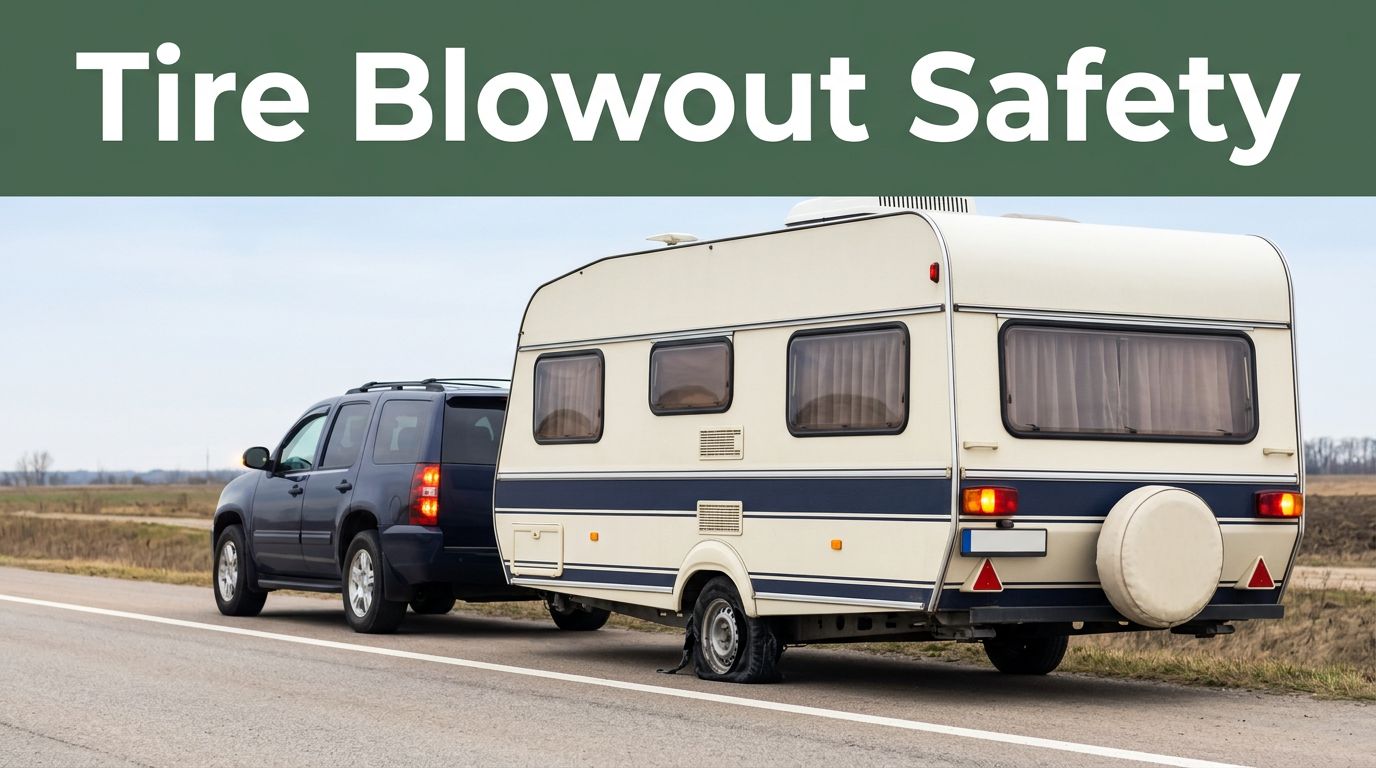
A trailer tire blowout can turn a peaceful travel day into a tense few minutes on the shoulder. RV tire blowout safety starts before the trip, but your response in the first seconds also matters when you experience an unexpected RV tire blowout.
For seniors, full time rv’ers, and anyone who enjoys relaxed camping trips, the goal is to reduce surprises. A steady driving routine, sound tires, and a simple emergency plan give you more control when a tire fails.
Key Takeaways
- Keep both hands on the wheel, ease off the accelerator, and avoid hard braking if a trailer tire fails.
- Pull over only after the trailer and tow vehicle feel stable, then turn on your hazard lights and choose a location away from traffic.
- Check cold tire pressure, tire age, load ratings, and the sidewall before every travel day.
- A reliable TPMS can warn you about a slow leak or heat buildup before it becomes a roadside emergency.
- Carry a rated spare, the right lug wrench, and reliable roadside-assistance contact information.
RV Tire Blowout Safety in the First Seconds
A loud bang, flapping sound, sudden pull, or vibration may mean an RV tire blowout has occurred. The noise can be startling, especially when a travel trailer is behind you. Still, your first job is to keep the rig traveling straight.
Grip the steering wheel firmly with both hands. Keep your eyes far ahead instead of looking in the mirrors right away. Then ease off the accelerator and let the tow vehicle slow gradually.
Do not slam on the brakes. Abrupt braking can shift weight forward and upset the trailer, particularly on a downhill grade or wet pavement. Small steering corrections work better than quick turns.
Follow this order when you suspect a blowout:
- Hold a straight line and maintain a firm, calm grip on the wheel.
- Ease off the accelerator without abruptly lifting your foot.
- Keep the trailer behind the tow vehicle with gentle steering inputs.
- Turn on your signal when you have control and see a safe place to exit traffic.
- Move onto a wide shoulder, rest area, or parking lot at a slow, steady pace to execute a controlled stop.
- Stop as far from moving traffic as conditions allow, then turn on the hazard lights.
A trailer tire failure may not pull the steering wheel as sharply as a front tire failure in a motorhome. However, the damaged tire can shred, damage the wheel well, and create trailer sway. Don’t keep driving several miles to reach a better exit if the tire is flat or disintegrating.
A blown trailer tire can ruin more than the tire itself. Continuing to roll on it can damage the fender, wiring, flooring, and suspension components near that wheel.
Get Yourself and Your Trailer Out of Danger
Once stopped, take a breath before opening the door. Traffic is often the greatest hazard, not the damaged tire. If the shoulder is narrow, a curve limits visibility, or vehicles pass at highway speed, stay inside with seat belts fastened until help arrives.
If you can safely leave the tow vehicle, exit through the passenger-side door. Stand well away from traffic and never crouch beside the trailer with your back to the roadway. At night or in poor weather, reflective vests and warning triangles give approaching drivers more time to see you.
Walk around the trailer only when conditions allow. Look for loose tire tread wrapped around the axle, torn wiring, damaged brake lines, bent fender metal, or a broken valve stem. Take a few photos before removing debris or changing the tire. They can help with insurance claims and repair discussions later.
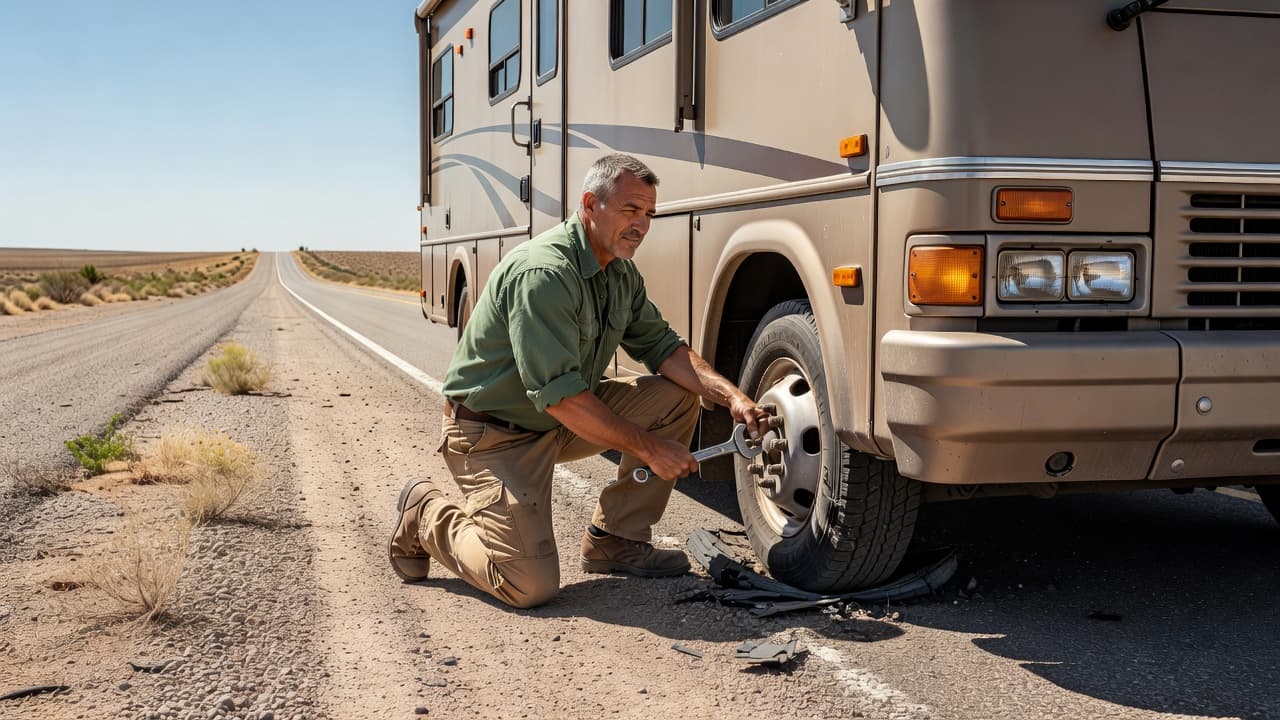
Do not crawl beneath a trailer supported only by a jack. If the wheel must come off, chock the wheels that remain on the ground and use a jack point approved in the trailer manual. Utilizing professional roadside assistance is often the wiser choice on a busy road, especially for seniors traveling alone.
Your spare tire also needs attention. It must have adequate load capacity, proper inflation, and no dry rot. A neglected spare is little comfort when you are miles from the next tire shop.
Prevent Blowouts Before the Camping Trip Begins
Most RV tire trouble gives some warning before the tire fails. Low pressure causes heat, and underinflation combined with excessive heat creates dangerous conditions on the road. Overloading also creates heat, while improper weight distribution adds more stress. On a summer highway, that heat can build quickly.
Check tire pressure before every travel day, while tires are cold and out of direct sun. Use the pressure specified for your trailer’s tires and load application, not a number guessed from appearance. A tire can look fine and still suffer from hidden underinflation.
Also inspect each tire’s tread and sidewall. Cracks, bulges, uneven tread wear, cuts, and exposed cords are reasons to stop using that tire. If you strike a pothole or curb, inspect the sidewalls at the next safe stop. Internal damage may show up later as a raised spot.
Photo by YoItsCapture
The trailer’s weight matters as much as tire condition. Load it as you travel, including water, propane, groceries, tools, bikes, and camping gear. Then weigh the rig at a certified scale. Compare the numbers with the trailer’s gross vehicle weight and axle weight rating. Weight can be uneven from side to side, so avoid storing dense supplies all on one side to prevent severe overloading.
The practical RV tire blowout prevention advice from RV Life also stresses proper inflation and avoiding overloads. Those basics are simple, but they are where many tire failures begin.
Tire age deserves equal attention. Sunlight, UV exposure, and long RV storage periods weaken rubber even when the tread looks healthy. Check the DOT date code on every tire, including the spare. Many RV owners prioritize tire maintenance and schedule timely tire replacement around five to seven years old, depending on condition and manufacturer guidance. Do not stretch that decision just because the tread looks unused, as invisible tire degradation can still compromise safety.
Use tire covers during storage, park on a clean dry surface, and inspect tires after a long stay. Before heading out, remove tire covers and look closely. A quick walk-around is one of the most useful camping tips you can build into departure day.
Use Tools That Give You Earlier Warning
A tire pressure monitoring system, or TPMS, watches pressure and temperature while you drive. It can’t prevent every sudden failure, but it can alert you to a slow leak or overheating tire before it becomes a blowout.
Place sensors on every trailer tire and set the monitor to alert at pressure and temperature limits appropriate for your setup. Check the system’s batteries and signal before a long trip. If it alarms, slow down and stop at the first safe location. Don’t silence it and hope the reading corrects itself.
An infrared thermometer can also help during fuel stops. Compare temperatures across the tires and hubs after driving, making thorough tire inspection a part of every stop. One tire that is much hotter than the others deserves a closer look. Excessive heat in hubs can point to a bearing or brake problem, while a hot tire can reveal underinflation, overload, or internal damage.
Carry a basic tire kit that fits your travel trailer:
- A properly inflated, load-rated spare tire and a way to lower it.
- A lug wrench, torque wrench, wheel chocks, and approved jack equipment.
- A portable air compressor and accurate tire pressure gauge.
- Reflective triangles, a safety vest, gloves, flashlight, and roadside-assistance details.
If you replace a wheel yourself, tighten lug nuts to the trailer manufacturer’s torque specification. Recheck the torque after the distance stated in your manual. Travel trailer blowout guidance from SuperSprings also points to tread inspection and respecting weight limits as key safeguards.
Build a Routine That Works for Seniors
A dependable routine takes pressure off when you are tired, rushed, or leaving a favorite campground early. Before rolling out, check tire pressure, walk around the trailer, test lights and brakes, and confirm the hitch connection. During long travel days, stop every couple of hours to stretch, inspect the tires, and let them cool.
Moderate speed helps you avoid the severe heat buildup caused by driving at high speeds, and it also gives you more time to respond to road hazards like debris, sharp pavement edges, and sudden traffic changes. That slower pace often suits van life travelers and seniors who prefer shorter drives anyway.
Keep your emergency plan somewhere easy to find. Include your RV insurance number, roadside-assistance membership, trailer tire size, and current location tools. A phone charger and paper campground directory are useful when cell service is weak.
RV Life Insider shares practical road-readiness ideas for older campers, including maintenance reminders and travel planning. You can subscribe to RV Life Insider for free RV tips in your inbox, or View All Our Newsletters when you want more advice from fellow travelers.
Frequently Asked Questions
What should I do immediately if a trailer tire blows out at highway speed?
Keep a firm grip on the steering wheel with both hands and ease off the accelerator gradually. Avoid slamming on the brakes, as abrupt braking can cause the trailer to sway and lose stability.
How often should I check my RV and trailer tire pressure?
Check your tire pressure before every single travel day while the tires are completely cold and out of direct sunlight. Never guess the pressure based on appearance, and always use the manufacturer’s specified rating.
Why is tire age important even if the tread looks healthy?
Sunlight, ultraviolet exposure, and long periods in storage weaken the rubber compound over time. Invisible internal degradation can still lead to a failure, which is why most owners replace tires every five to seven years.
Final Thoughts
Mastering RV tire blowout safety comes down to calm driving and consistent tire maintenance. Hold the wheel steady, avoid hard braking, pull over safely, and inspect the damage before deciding what happens next.
A few minutes spent checking pressure, age, weight, and tire condition can protect the peaceful days you planned for the road. Prepared travel leaves more room for the camping memories that matter.
This post may contain affiliate links. If you make a purchase through these links, I may earn a small commission at no extra cost to you.