RV Campground Etiquette That Makes Every Stay Better
A peaceful campground can change quickly when one camper treats shared spaces like a private backyard. Good RV campground etiquette keeps the roads safer, the nights quieter, and the welcome warmer for everyone nearby.
For seniors, weekend campers, and full-time RVers alike, courtesy often matters more than having the newest rig. A few thoughtful habits help you settle in and enjoy a great camping trip while being a good neighbor to everyone nearby.
Key Takeaways
- Arrive prepared, follow the park rules, and keep your rig within your assigned campsite.
- Respect quiet hours, site boundaries, and the personal space of neighboring campers.
- Control pets, children, lights, generators, and outdoor noise.
- Handle trash, wastewater, and shared facilities with care.
- Offer friendly help when asked, but give fellow campers room to enjoy their own stay.
RV Campground Etiquette Begins Before You Park
The first good impression happens at check-in. Read the site map, ask about quiet hours, confirm where overflow parking belongs, and learn the campground rules for fires, pets, and trash. Every RV park is different, especially when you compare a private resort, a state park, and a small family campground.
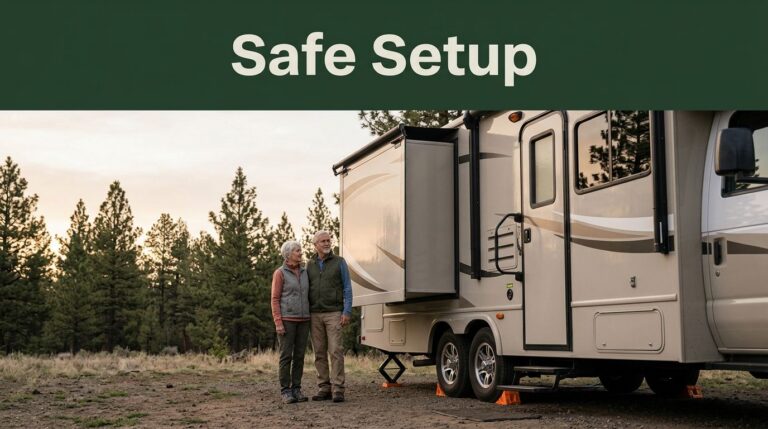
If you arrive after dark, keep headlights low when possible and avoid idling beside occupied sites. Set up only what you need that evening. Level the RV, connect power and water, and save chairs, rugs, lights, and other extras for morning.
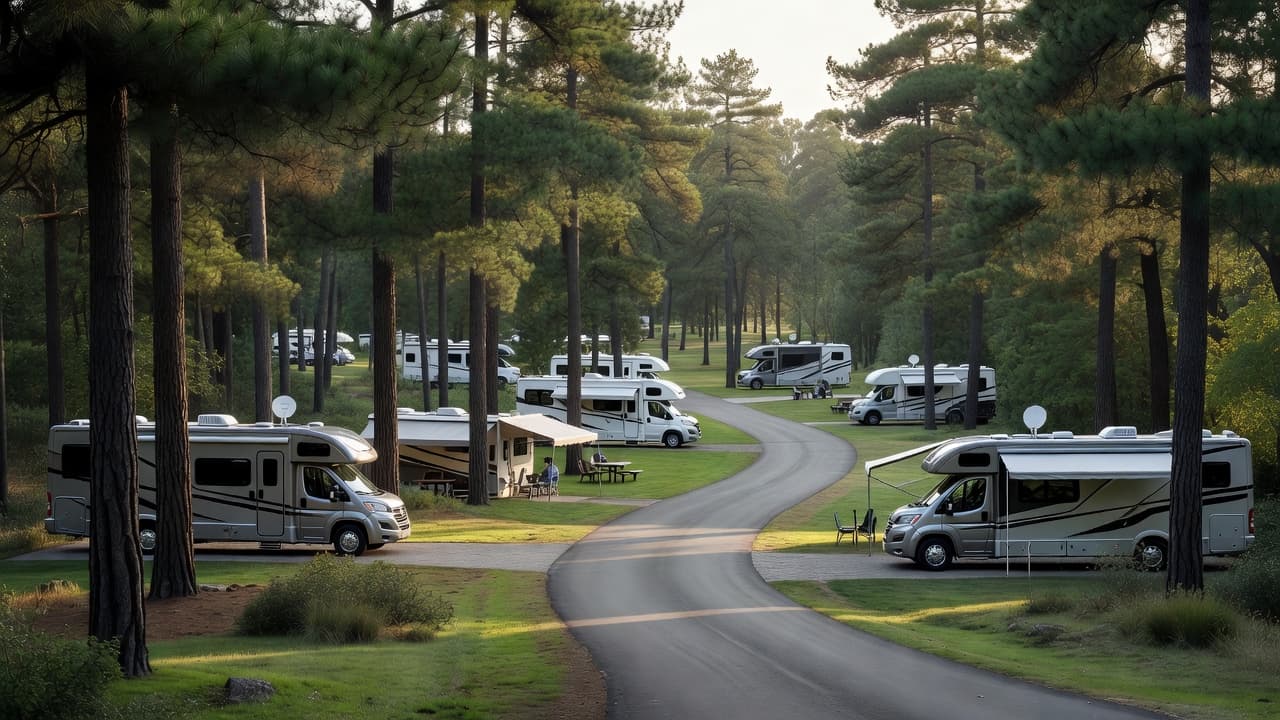
A site may look roomy, but its boundaries still matter. Avoid walking through campsites or cutting across a neighbor’s patio area to reach the bathhouse, dog run, lake, or trail. Use the campground roads and marked paths, even when the shortcut seems harmless.
Likewise, respect campsite boundaries by keeping your car, golf cart, bikes, and tow vehicle inside your assigned space. A vehicle sticking into the lane can make it hard for a large fifth wheel or motorhome to pass safely. Pay attention to posted speed limits, as this is one of those RV campground etiquette basics that protects both property and people.
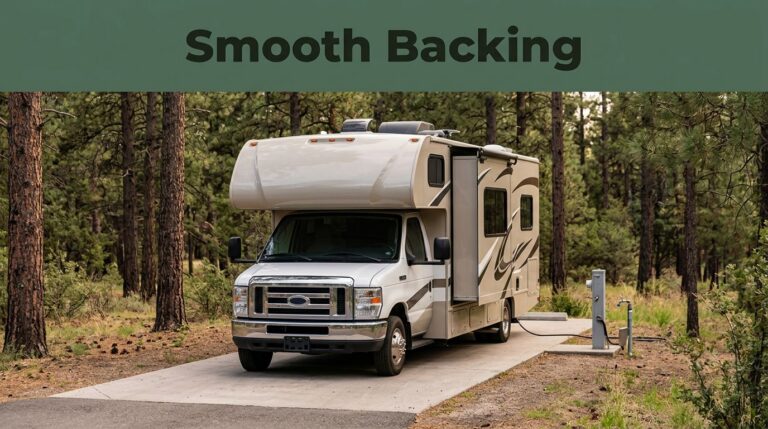
Before pulling in, walk the site if you can. Check for low branches, water spigots, utility pedestals, fire rings, and uneven ground. A slow arrival is kinder than a rushed one that damages a hookup or blocks traffic.
Give Neighbors Quiet, Privacy, and a Clear Path
Campground life is social, but nobody has to be social every hour. A friendly wave and a brief hello are usually welcome. However, a closed door, drawn shades, or a family eating dinner often means they want private time away from fellow campers.
Keep conversations at a normal volume, especially outside. Sound travels farther than most campers expect, bouncing off RV walls and hard-packed sites. When you are visiting with friends, keeping a moderate noise level ensures you do not accidentally disturb a neighbor inside their bedroom.
Many parks set quiet hours around 10 p.m. to 8 a.m., though you should always follow the posted schedule. Common campground courtesy rules also call out the importance of staying off other campers’ sites and keeping late-night noise down.
Quiet hours apply to generators, TV volume, outdoor conversations, and vehicle doors, not only music.
Early risers should take the same care during quiet time. If you are leaving before sunrise, pack most items the day before. Close storage bays gently, avoid revving the engine, and use a small flashlight instead of turning on bright exterior lights that can wake up the whole loop.
Privacy includes cameras and photos. Don’t post a photo that clearly shows another camper’s family, license plate, or campsite without permission. That small pause is part of respectful camping.
Keep Your Setup Tidy and Your Lights Low
A lived-in campsite is normal. Folding chairs, a mat, and a grill make an RV feel like home. Still, loose gear can spill into walking areas and make the campsite look neglected. Put away tools, cords, toys, and supplies after using them.
Run electrical cords and hoses so people won’t trip. Never route a power cord across a road or through a neighbor’s site. Keep the sewer hose supported and secured, use clean sewer hookups properly, and then disconnect and rinse everything promptly when you leave.
Outdoor lights deserve more thought than they get. Rope lights, porch lights, and bright exterior lights can shine through a neighbor’s windows long after sunset. Aim fixtures downward and turn off unneeded lights before bed. Motion lights should not flash repeatedly into another site.
Generator use requires extra care. Follow the campground’s generator hours, and don’t assume a quiet portable unit is welcome at any time. When you run generators, national park and public-land rules may be stricter than private RV parks. If you need extended power time for medical equipment, speak with the camp host or office when you arrive.
These practical camping tips are especially helpful in close-packed parks, where a few feet can separate bedrooms. A tidy site also makes it easier for staff to reach utilities or respond if there is an emergency.
Manage Pets, Kids, and Campfire Smoke
Dogs bring joy to campground life, but they also require close attention. Keep your pets on a leash unless you are inside a designated off-leash area. Don’t let a dog wander into another site, bark outside for long stretches, or use a neighbor’s patio as a shortcut.
Pick up waste immediately and place it in the proper bin. It is not acceptable to leave bagged waste beside a trail, campsite, or trash can. Every proper pet policy consistently comes back to the same idea: control your animal, watch for local wildlife, and clean up after them. Campground pet and shared-space guidance consistently comes back to the same idea: control your pet and clean up after it.
Children need the same clear boundaries. Campground roads are active travel lanes, even when they look quiet. Teach kids to watch for backing RVs, bicycles, and golf carts. They should not climb on empty sites, utility pedestals, or other campers’ equipment.
Campfires deserve courtesy, too. Build campfires using only the provided fire rings unless the park says otherwise. Keep flames modest, especially in tight sites, and burn local firewood to prevent the spread of invasive pests. Wind can push smoke straight into an open window, so consider waiting until conditions improve rather than lighting a smoky fire beside a neighbor’s dinner.
Always obey current fire restrictions. In dry weather, a propane fire pit may also be prohibited. Ask before lighting anything if the rules are unclear.
Treat Dump Stations and Shared Areas With Respect
Every dump station can test anyone’s patience on a busy departure morning. Pull forward only when you are ready to use the station. Have gloves, a sewer hose, rinse hose, and sanitizer accessible before your turn so you can empty your holding tanks efficiently.
Once connected, finish the job without taking over the lane for cleanup, laundry sorting, or a long phone call. Apply Leave No Trace principles by rinsing the area if you spill, securing your caps, and pulling away to finish packing elsewhere. Never use the potable-water spigot to rinse a sewer hose.
The same rule applies in laundry rooms, showers, picnic shelters, and dishwashing stations. Clean up after yourself and leave the space ready for the next person. Don’t reserve a washing machine or a shower by leaving belongings behind.
Proper trash disposal is another easy test of RV campground etiquette. Use designated bins, flatten boxes when possible, and don’t place household furniture, broken appliances, or large bags beside an already full dumpster. Ask the office where to dispose of unusual items.
Be Neighborly Without Overstepping
The friendliest campgrounds have an easy rhythm. People greet each other, share a useful tip, and respect a polite “no, thank you.” Offer help when a neighbor asks, particularly if someone needs a spotter while backing in or has a simple question about hookups, as being a good neighbor makes every stay better.
Avoid giving unsolicited advice about their driving, leveling, pets, or equipment. Even experienced full-time RVers can have a rough arrival day. A calm wave or extra space may help fellow campers more than commentary from across the road.
For those considering van life or boondocking, the same manners apply in a smaller footprint. Keep doors from slamming, contain your gear, and don’t treat a shared campground water source or picnic table as private property.
RV Life Insider is built around the practical knowledge campers pass along with kindness. You can View Our Website for travel guides, planning tools, road stories, and everyday RV advice. For fresh ideas sent to your inbox, View All Our Newsletters or subscribe to RV Life Insider.
Frequently Asked Questions
What are the standard quiet hours at most RV campgrounds?
Most campgrounds set quiet hours between 10 p.m. and 8 a.m. During this time, campers must keep television volumes low, turn off generators, avoid loud conversations outside, and shut vehicle doors gently.
Can I let my dog off leash if it is friendly?
No, pets should always remain on a leash unless you are inside a designated off-leash dog park. Uncontrolled pets can wander into neighboring sites, disturb other campers, and cause safety concerns.
Is it okay to walk through an empty campsite as a shortcut?
Always avoid walking through vacant campsites to reach amenities like bathhouses or trails. Treating site boundaries with respect ensures personal privacy for everyone and prevents conflicts with arriving guests.
A Better Campground Starts With Small Choices
Good RV campground etiquette comes down to noticing how your choices affect the people parked nearby. A quiet arrival, a contained pet, a clean dump station, and a respectful wave all help a campground feel safe and welcoming.
The best campers leave a campsite clean, keep the peace after dark, and make room for others to enjoy the same freedom. Those simple habits turn a row of RVs into a community.
This post may contain affiliate links. If you make a purchase through these links, I may earn a small commission at no extra cost to you.