Quiet RV Campgrounds: Escape Highway Noise
A beautiful view loses some of its charm when interstate highway noise rolls through your bedroom at 2 a.m. Finding quiet RV campgrounds takes more than choosing a park with pretty photos. You need to look beyond the reservation page and spot the roads, site layout, and activity areas that create noise.
A few minutes of road trip planning can separate a restful stop from a long night beside a truck route. Start with the map, then confirm what the listing doesn’t say.
Key Takeaways
- Look for campgrounds set well back from major highways, utilizing good campground site spacing and natural buffers like trees, hills, or ridges between your RV and the road.
- Use satellite view and campsite selection tools on a park map to avoid entrance roads, pull-through lanes, dump stations, bathrooms, and playgrounds.
- Read recent reviews for words such as highway, campground traffic, generator, music, and quiet hours.
- Ask the campground host for a perimeter or end site away from common areas.
- Travel midweek or in shoulder season when arrivals, departures, and family activity are lighter.
Quiet RV Campgrounds Start With Road Distance
Highway sound doesn’t stop at the property line. Tires on wet pavement, engine brakes, motorcycles, and interstate highway noise can carry farther than expected, especially across open ground or water. A campground may be listed as “near” an interstate, yet that convenience can follow you into the night.
Before booking, open a map and zoom out. Note every interstate, state highway, railroad line, airport approach, and busy commercial road within a few miles. Then switch to satellite view. A quarter-mile through dense woods can feel far calmer than the same distance across a bare field.
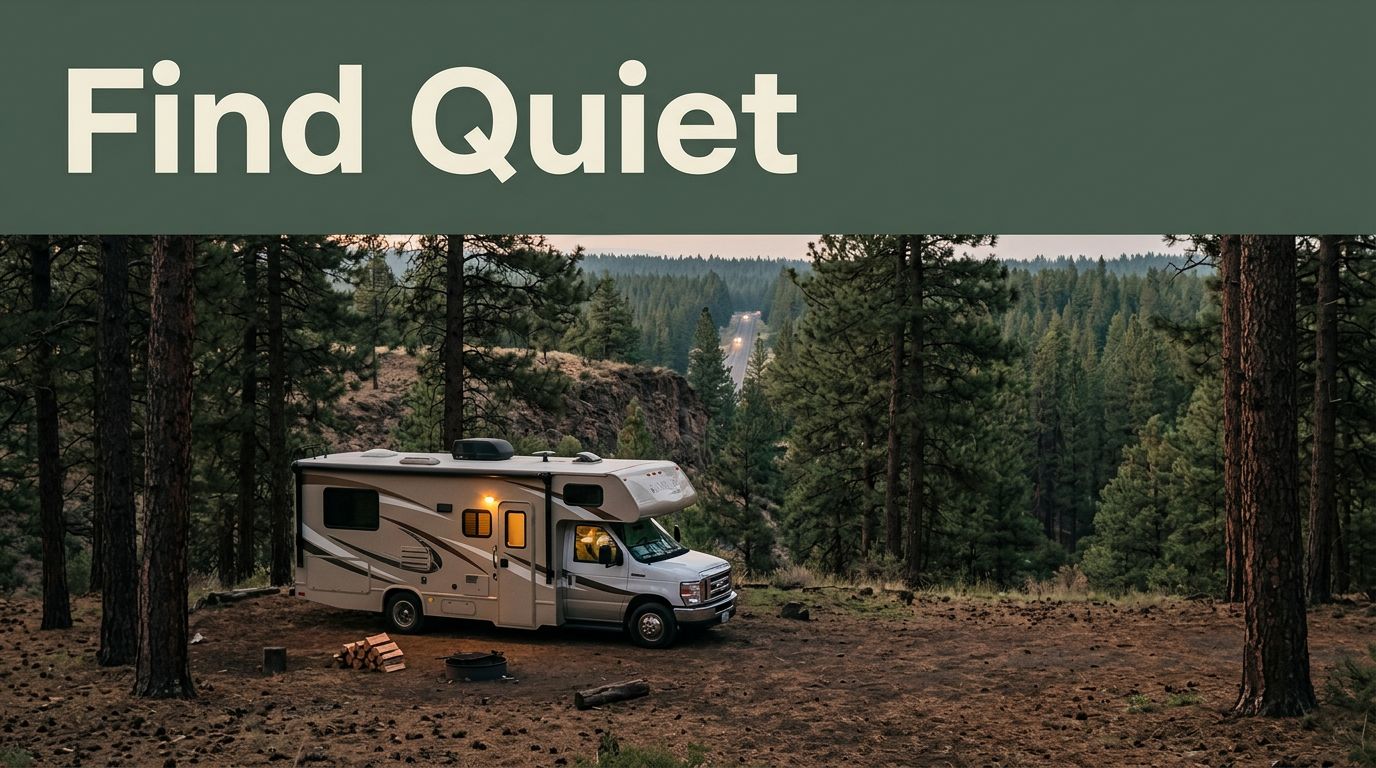
Natural barriers matter. A low ridge, thick stand of pine trees, or rock outcrop can soften traffic noise. However, don’t assume a row of young trees will do much. Look for substantial terrain or a wide wooded buffer between the campground and the road.
Many RV parks sit near exits because easy access fills sites. That can work for overnight RV stops, but it rarely suits travelers who want a slow morning outside. If road noise catches you by surprise, RV LIFE’s highway-noise suggestions include practical ways to make the interior more comfortable. Still, choosing a better location beats trying to mask a poor one.
A site can be miles from a highway entrance but still sit beside the campground’s busiest internal road. Check both the outside road network and the park’s own traffic flow.
Use Maps Before You Reserve a Campsite
A campground’s official map is often more useful than its gallery. Photos show the prettiest angle. Maps reveal whether Site 42 backs up to a playground, sits beside the bathhouse, or faces a parade of rigs arriving after dark.
Start with Google Maps satellite view, then compare it with the park map to study the rv site layout before you book. Search for quiet RV campgrounds that have these features:
- A perimeter loop with sites facing woods, water, or open public land rather than another row of RVs.
- End sites and corner sites, which usually have fewer vehicles passing the front door.
- Roads that stop at the campground instead of running through it as a shortcut.
- Space between loops, ideally with vegetation or a slope separating them.
- Restrooms, laundry rooms, dump stations, dog runs, and playgrounds located well away from your chosen site.
Pull-thru RV sites deserve extra attention. They are easy to use, which makes them popular with overnight guests and late arrivals. In many parks, these spots are often listed as big rig friendly along high-traffic internal roads. Back-in sites on a quieter outer loop may take a little more patience, yet the trade can be well worth it.
When the reservation system lets you choose a site, pick a number before you call. Then ask the office, “Is this site away from road noise and campground traffic?” Staff members know which sites sit near a noisy neighbor, a steep shortcut, or a gathering spot. If the answer is vague, ask which sites they would choose for someone who goes to bed early.
This map-first habit is one of the most useful camping tips for seniors who prefer an unhurried trip. It also helps full time RV’ers avoid spending several weeks in a place that sounds different after the first sunset.
Read Reviews for the Details Listings Skip
Reviews are the campground’s after-hours report. Search within them for “noise,” “highway,” “traffic,” “trains,” “generator,” “music,” “kids,” and “quiet,” paying attention to how campground amenities like bathhouses or dog parks might introduce unexpected sounds. One complaint may reflect an unusual weekend. Repeated comments across several months point to a pattern.
Pay close attention to dates. A peaceful review from three years ago may not reflect a new road, an expanded RV loop, or new event programming. On the other hand, a single complaint during a holiday weekend shouldn’t outweigh dozens of consistent reports.
Use more than one source. Campendium, Recreation.gov, RV LIFE Campgrounds, The Dyrt, Hipcamp, and Google Reviews can each reveal a different part of the picture. A reviewer who mentions Site 18 beside the dog park gives you far more useful information than a five-star rating with no details.
Park rules also offer clues. Clear quiet hours, limits on generators, and an on-site host usually mean management takes guest comfort seriously during overnight stays. Read the rules before you pay a deposit, then look for comments about whether they are enforced. These quiet camping recommendations also point to the value of site orientation and simple tools such as earplugs or a white-noise machine.
For van life travelers, reviews can reveal another issue: late-night door slams and idling engines in compact overnight areas. If you need sleep before a driving day, choose a peaceful RV retreat built for longer stays instead of a busy stop beside an interchange.
Choose the Calmest Site After Arrival
Even a well-chosen park has a noisy side. Arrive early when possible, especially if the campground assigns sites on arrival. You can see where families are gathering, which roads carry traffic, and whether a nearby site runs a generator.
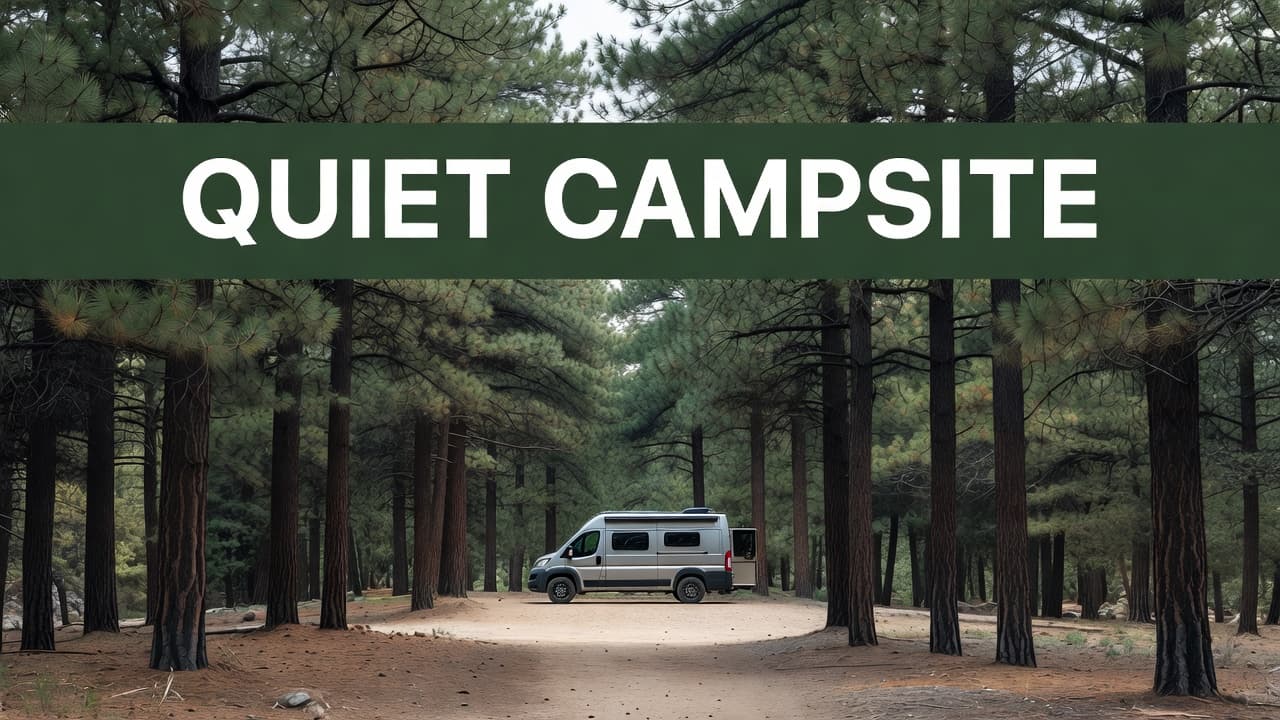
Walk or drive the loop before setting up if the office allows it. Listen for more than traffic. A distant waterfall may be pleasant, while a nearby hand dryer, basketball court, pool pump, or propane delivery route can become tiring over several days.
Once you park, orient your RV with care. Put the bedroom and entry door on the side facing trees or open space when possible to enhance your solitude and tranquility. Even when your site comes with full hookups, you can still position your rig strategically to keep the less-used side toward neighbors. Close roof vents near the loudest direction at night, while keeping safe ventilation elsewhere.
Respect also travels both ways. Keep your own conversations low after dark, leave outdoor speakers off, and run a generator only during approved hours. These campground etiquette reminders are a useful prompt that everyone shares the same thin walls and open windows.
A small fan or white-noise machine can cover sudden sounds without turning your bedroom into a sealed box. Soft foam earplugs help many people, although try them at home first. You should still be able to hear smoke alarms, your phone, and any urgent knock at the door.
Pick Campground Types That Favor Peace
The park type shapes the noise level as much as the individual site. Crowded RV resorts can be fun, but pools, activities, golf carts, events, and packed weekend loops bring more sound. If quiet is the priority, focus on smaller RV parks, long-stay destinations, and 55-plus communities with firm rules. When you want to escape crowded RV resorts entirely, state parks and Army Corps of Engineers campgrounds often provide a more peaceful atmosphere.
Public land can offer the most space. National Forest and Bureau of Land Management areas sometimes allow dispersed camping, where your nearest neighbor may be far away. Exploring public national lands gives you the solitude that standard RV parks rarely match. Check local rules, road conditions, fire restrictions, stay limits, and cell coverage before heading out. You also need enough water, power, and waste capacity for your planned stay. Private land camping through specialized networks is another great way to secure a quiet spot away from highway traffic.

Photo by Geert Rozendom
Timing has equal weight. Midweek stays avoid the Friday arrival rush and Saturday evening activity. Off-season camping and shoulder seasons can be especially pleasant for seniors, with quieter loops and easier access to popular parks. Avoid holiday weekends if silence matters more than planned events.
RV Life Insider shares practical travel ideas for people who want comfort without rushing. Browse View Our Website for road planning resources, community stories, and helpful gear guidance. You can also View All Our Newsletters for regular ideas suited to a calmer life on the road.
Frequently Asked Questions
How can I find out if a campground is affected by highway noise?
Start by checking satellite views on a map to see how close the park is to interstates, state highways, and railroads. Reading recent campground reviews for keywords like highway, traffic, and noise will also reveal if previous guests experienced unwanted sounds.
Are pull-through RV sites louder than back-in sites?
Yes, pull-through sites are often located along main internal park roads to accommodate large rigs and late arrivals. Choosing a back-in site on an outer perimeter loop usually provides a much quieter and more private experience.
What types of campgrounds are best for avoiding noise?
Smaller RV parks, 55-plus communities, state parks, and Army Corps of Engineers campgrounds typically offer a more peaceful atmosphere than large commercial resorts. Dispersed camping on public lands like National Forests provides the ultimate solitude with few or no neighbors.
A Restful Stop Begins Before You Drive
The best quiet RV campgrounds rarely announce their peaceful side in bold type. You find it by checking the road distance, reading current reviews, studying site maps, and asking clear questions before you reserve a spot for your overnight stays, whether you need basic dry camping or full hookups.
A wooded perimeter site on a Tuesday can feel worlds apart from a pull-through beside an exit road on a holiday Friday. A little planning protects the part of camping that matters most: a good night’s rest under an open sky.
This post may contain affiliate links. If you make a purchase through these links, I may earn a small commission at no extra cost to you.