Planning Your First RV Trip After Retirement Without the Stress
Embracing rv retirement opens the calendar, but it can also make your first journey feel more overwhelming than it needs to be. With the open road calling and so many places to explore, the smartest move is often the smallest one.
A calm plan gives you time to learn your recreational vehicle, settle into camping, and discover what travel pace feels good for your lifestyle. If this is your rv trip after retirement, start with comfort, not ambition.
Key Takeaways
- Start with a manageable trip: For your first RV outing, keep the drive time under three hours and stay for only two to three nights to build confidence without feeling rushed.
- Prioritize comfort over ambition: Choose campsites with full hookups and pull-through spots to minimize stress during setup, and focus on maintaining your daily health and sleep routines.
- Establish clear routines: Practice your arrival and departure procedures at home or use a printed checklist to simplify setup tasks and prevent memory-related stress.
- Pack for functionality: Focus on the essentials that support your daily life, such as medications, comfortable bedding, and easy-access tools, rather than overpacking for every unlikely scenario.
Start with a trip that’s short, close, and easy
The first mistake many new RV travelers make is turning one trip into a grand tour. That sounds fun on paper, but it creates pressure fast. A short route, a simple campground, and two or three nights away will teach you more than a rushed week on the road.
For most seniors, the best first outing is within one to three hours of home. That leaves room for slower loading, a fuel stop, and a calm campground arrival. It also gives you an easy exit if weather changes, a medical issue comes up, or the RV throws you a small surprise.
This quick comparison helps keep the first plan realistic:
| Trip choice | Better for your first outing | Better for later |
|---|---|---|
| Drive time | 1 to 3 hours | Full-day drives |
| Length of stay | 2 to 3 nights | Week-long loops |
| Campsite type | RV parks with full hookups | Dry camping |
| Route style | One destination | Multiple stops |
If you want a beginner-friendly reality check, the first-trip checklist from RV Lifestyle makes the same case. Keep the first drive short, practice basic rv maintenance, and give yourself room to learn.
That advice matters even more during your rv retirement because your routine may include medications, mobility gear, pets, or a preferred sleep schedule. Whether you are driving a class c motorhome, towing a travel trailer, or navigating a 5th wheel, a short route is best. A first trip should fit your life, not push against it. You want enough time to enjoy the campsite, cook one easy meal, take a walk, and sleep well.
A good first destination often has full hookups, wide sites, and easy park access. Pull-through sites help if backing feels stressful. Quiet state parks or a well-rated private campground can both work. What matters most is low friction.
Some people dream about full-time rv living on day one. Others get inspired by videos of minimalist living and want to see it all at once. Slow down. Your first trip is not a test of how adventurous you are. It is a chance to build a routine you can trust.
Map the route around comfort, not mileage
A good retirement RV trip plan starts before the engine turns over. Sit down with a paper map, your phone, or both, and look at the whole day, not only the destination. Where will you stop to manage fuel expenses? Where will you pull over for lunch? Is there a steep pass, city traffic, or a road under construction? While many dream of visiting national parks on their first outing, it is often wiser to start with shorter, more manageable routes.
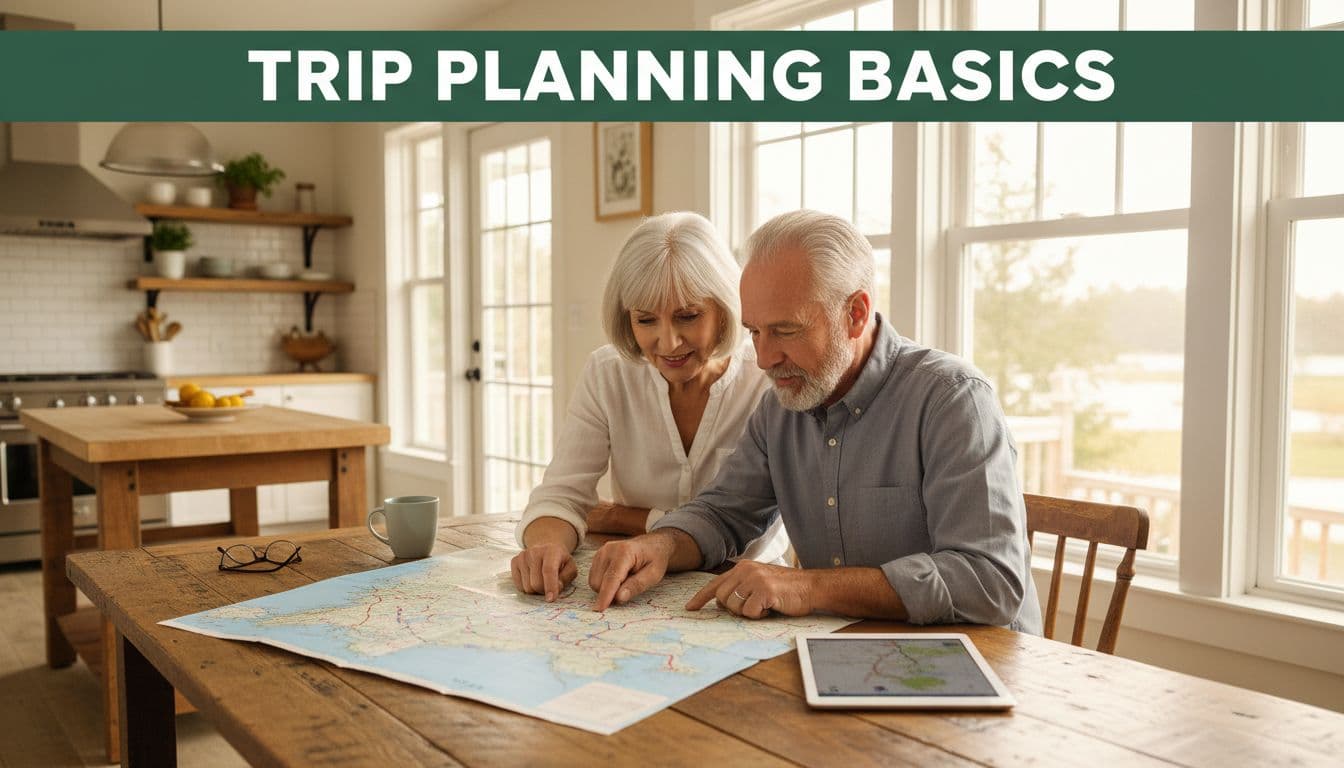
For a first trip, driving less is usually the better move. A scenic route loses its charm if you arrive worn out and set up in the dark. Many new RV owners are happiest with a short morning drive and a check-in before mid-afternoon.
It helps to build your route around a few comfort points:
- A fuel stop you can enter and exit without tight turns, which is especially important if you are maneuvering a Class A motorhome or a large rig with a toad car in tow.
- A lunch break where you can stretch your legs.
- A backup campground or overnight option, whether that is a well-rated list of RV parks or a quiet spot for boondocking.
- A weather check the night before and the morning of.
- A firm stop driving time.
That last point matters. Set a cutoff and keep it. If you tell yourself you will stop by 3 p.m., you are more likely to arrive with energy left for setup and dinner.
If you are still choosing where to go, this guide on planning your first RV route has useful ideas on picking the kind of setting you enjoy most, whether that is woods, water, mountains, or open desert.
Try not to plan a route that demands perfect timing. Retirement gives you more freedom, so use it. Add buffer time between departure and arrival. If you like local travel ideas, trip-planning tools, blogs, and community resources from RV Life Insider, View Our Website.
The best route also respects how you like to travel. Some seniors love a full sightseeing day. Others want a slow breakfast, a modest drive, and a long quiet evening outdoors. Both styles work. What matters is picking one on purpose.
Pack for comfort and routine, not for every possible problem
Packing for your first trip can make even experienced campers second-guess themselves. That happens because RV storage feels both expansive and limited. Much like the process of downsizing from a traditional home, you have the space to bring plenty of items, but if you pack too much, every cabinet quickly becomes a junk drawer on wheels.
Start by prioritizing items that support your daily life. Focus on your medications, chargers, glasses, and weather-appropriate clothing. Since rv retirement often involves managing specific health care needs, verify that your medicare coverage is clear and that you have all necessary prescriptions accounted for. Then, pack the gear that makes camping more comfortable, such as quality chairs, a mat for outside the door, and a flashlight that is easy to find at night.
A simple first-trip packing list usually includes:
- Daily medications and a written list of doses
- Easy meals for the first two days
- Leveling blocks, gloves, and a basic toolkit
- Extension cords, a fresh water hose, and the necessary equipment to empty your black tank
- Slip-resistant shoes and a step stool if needed
- Camp chairs, bug spray, and one warm extra layer
Those might not be flashy items, but they make the trip significantly smoother. While you should ensure you have adequate rv insurance in place before hitting the road, avoid over-packing spare parts or specialized storage systems that simply do not matter on a three-night outing. While full-time rv living might require an extensive inventory of supplies, retirement travel often works best with a focus on comfort and a reduction in guesswork.
This is also the time to think about your physical comfort rather than just filling bags. If bending is difficult, pack tools where you can reach them easily. If balance is an issue, bring a stable step and excellent lighting. If quality sleep matters more than scenery, bring your own pillow and the bedding you already know and love.
RV Life Insider is a good fit if you want more than a one-time checklist. You can View All Our Newsletters for regular ideas, and Miller Creek’s RV retirement planning checklist is also a useful reference for thinking through budget, pace, and lifestyle choices.
The best camping tips are often the most practical ones. Pack less than you think you need, but prioritize the items that support your daily routine. Comfort builds confidence much faster than novelty.
Practice your campground routine before arrival day
A smooth campground setup feels easy only after you have done it a few times. Before your first trip, spend an hour at home walking through the basics of your recreational vehicle. Hook up the power cord, find the water hose, and learn where your leveling blocks live. Open the storage bays in daylight and label the ones you tend to forget. Knowing these components well helps keep your utility expenses manageable compared to the costs of maintaining a stationary home base.
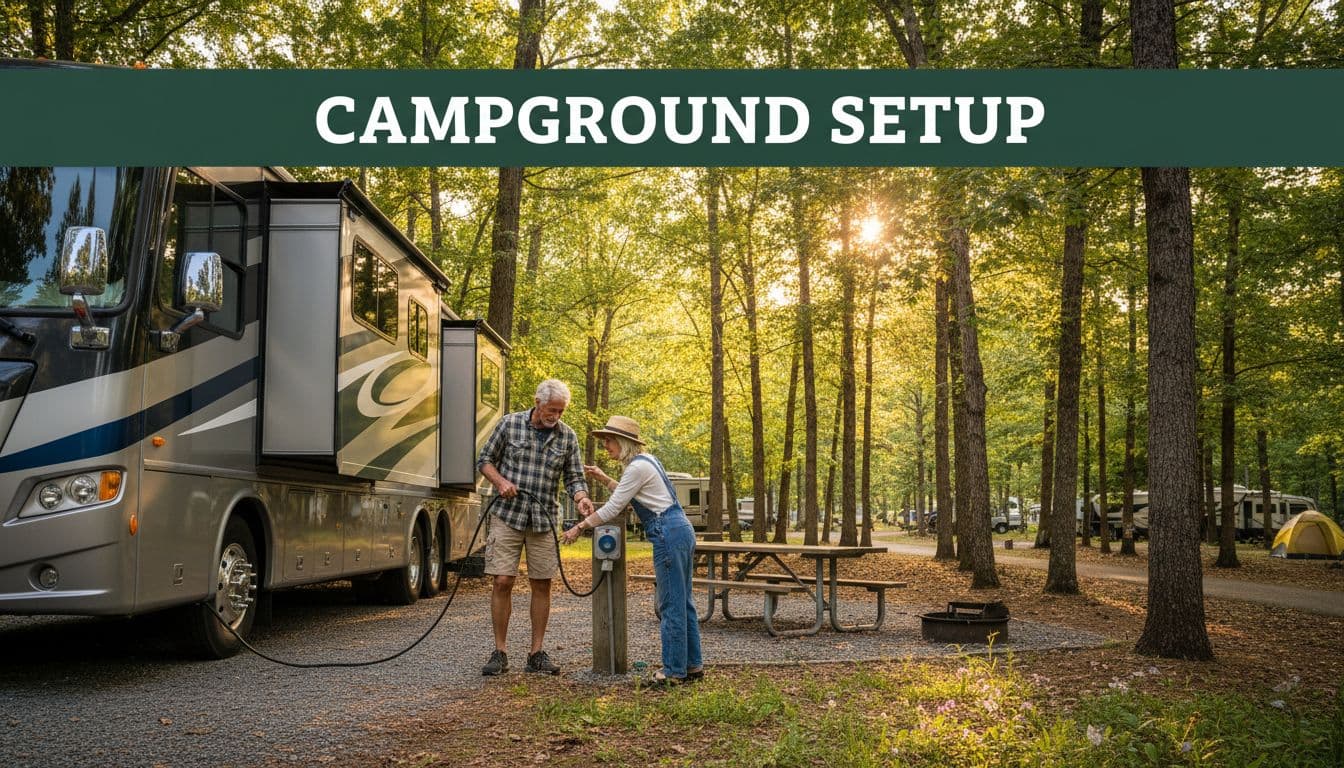
When you arrive at the campground, slow the whole process down. Check the site first, then park, level, connect power, and connect water. Save optional tasks for later. You do not need the perfect patio setup before you can sit down and breathe.
Arrive early on your first day, and setup becomes part of the fun.
It also helps to divide jobs. One person can guide the parking process while the other handles chocks or the power pedestal. Couples who camp often settle into these roles over time, and seniors benefit from that rhythm because it cuts down on repeated movement and confusion. Once you gain confidence in these routines, many retirees enjoy volunteering at various state parks to stay active and meet new friends.
If you are worried about missing a step, keep a printed arrival checklist in the cab. Another one near the door helps on departure morning. These small systems matter because memory gets crowded when you are tired or excited.
Campground life gets much better once the chores end. That is when you notice the birds, the evening air, and the relief of not needing to be anywhere else. If you enjoy steady updates, seasonal ideas, and practical camping tips, you can receive RV travel advice in your inbox.
Frequently Asked Questions
How far should I drive on my very first RV trip?
It is recommended that you keep your first trip within one to three hours of your home. This short distance allows for a relaxed departure and gives you an easy way to return home if you encounter unexpected issues or weather changes.
Should I reserve a specific type of campground for my first outing?
Yes, look for RV parks that offer full hookups and pull-through sites. These amenities reduce the friction of setup and allow you to focus on learning your vehicle’s systems in a low-stress environment.
How can I make the setup process less stressful?
Practice your setup routine at home before your trip and utilize a written checklist to guide you through each step. Dividing tasks between traveling partners also helps create a smooth rhythm and reduces the physical effort required upon arrival.
Should I attempt dry camping right away?
It is generally better to avoid dry camping on your first journey. Start with established parks that provide electricity and water so you can focus on adjusting to your new travel lifestyle rather than managing limited resources.
Final thoughts
Your first RV trip after retirement does not need to cover huge miles or prove anything. It needs to feel manageable, restful, and worth doing again. Moving away from your traditional sticks and bricks house can feel like a major shift, but your RV retirement should be about freedom, not stress.
A smaller first trip usually leads to a better second one because you come home with real knowledge. You learn how your RV fits your body, your routine, and your style of camping. Whether you own a large coach or a nimble class b motorhome, remember that vehicles suffer from depreciation when they sit idle, so the best way to protect your investment is to get out and enjoy the journey.
You do not have to worry about complex logistics like mail forwarding or the nuances of workamping just yet. Those are steps for those who eventually transition into full-time rv living. For now, focus on the joy of exploration, perhaps visiting nearby national parks to test your setup. Confidence grows one calm campground at a time, and every mile you travel brings you closer to the lifestyle you envisioned.
This post may contain affiliate links. If you make a purchase through these links, I may earn a small commission at no extra cost to you.