RV Propane System Basics for Safer Travel and Camping
A small propane problem can turn a good camping trip into a long, stressful day. The good news is that most issues in an RV propane system start with a few parts you can learn to recognize in one afternoon.
When you know what the tank, regulator, hoses, and detector do, strange smells and weak flames stop feeling mysterious. That matters whether you take short weekend trips, enjoy van life, or travel as full-time RV’ers.
Start with the parts you can see, then build a simple habit around checking them.
Know the parts before you leave
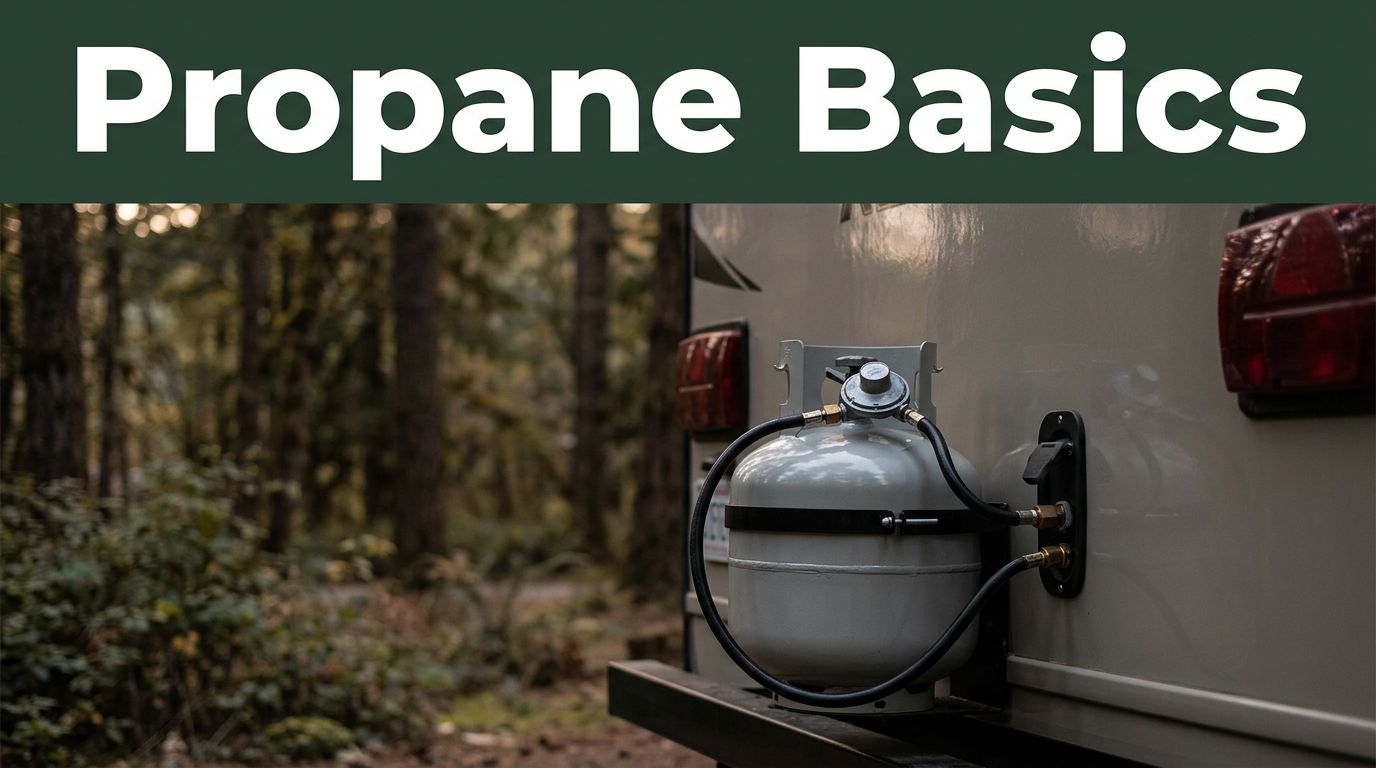
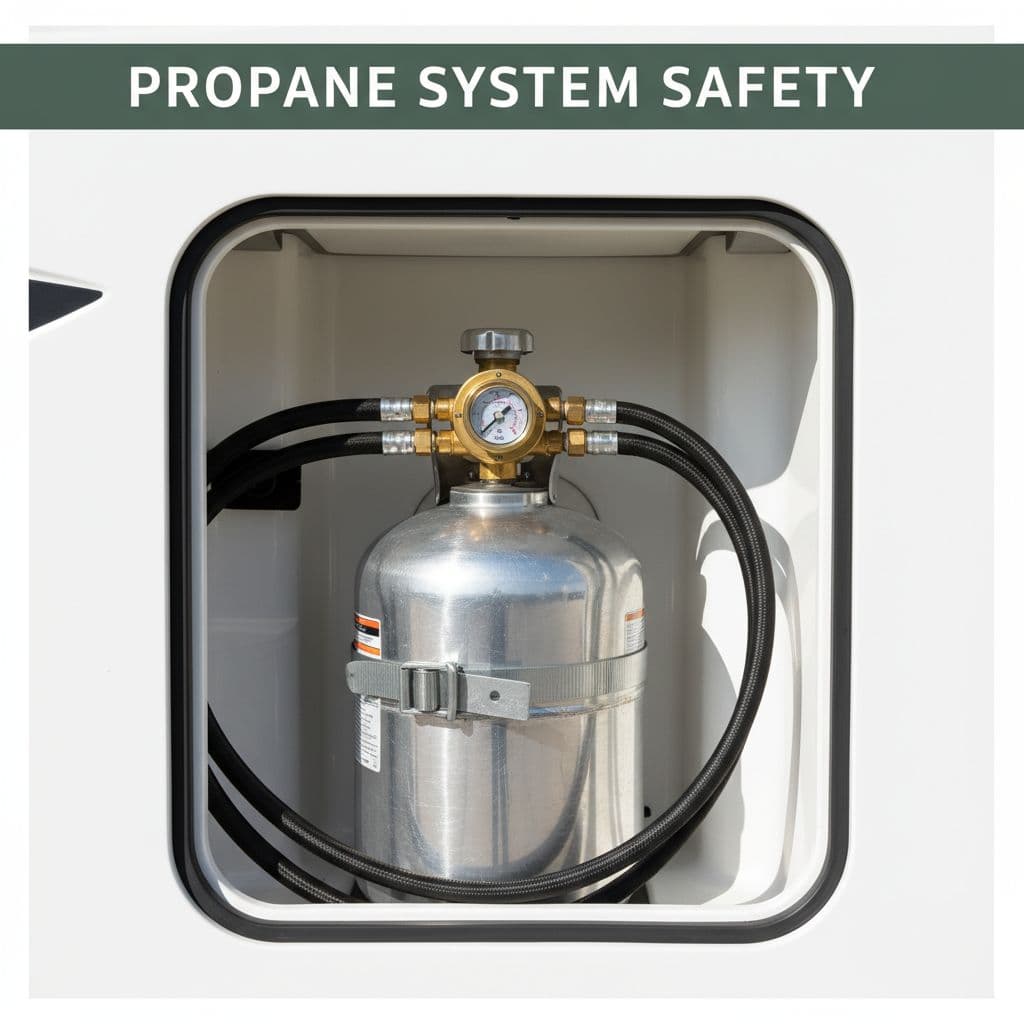
Your propane setup starts at the tank. On many towable RVs, that means one or two removable cylinders on the tongue. On many motorhomes, it means a fixed tank mounted to the frame.
From there, propane moves through a regulator, then into hoses or hard lines that feed appliances. Your stove, oven, water heater, furnace, and sometimes refrigerator may all use that same fuel source. A leak in one place can affect the whole system, so the layout matters.
One more part deserves special attention, your propane detector. Because propane vapor is heavier than air, it can settle low inside the coach. That’s why detectors are often mounted near the floor and powered by your RV’s 12-volt system.
This quick reference helps you spot what belongs where:
| Part | What it does | What to watch |
|---|---|---|
| Tank or cylinder | Stores propane under pressure | Rust, dents, loose mounting, old valves |
| Regulator | Lowers pressure for safe appliance use | Corrosion, dirt, strong gas smell, poor flame |
| Pigtail hose | Connects cylinder to regulator | Cracks, rubbing, loose fittings |
| Shutoff valve | Stops fuel flow at the source | Hard turning, damage, blocked access |
| Propane detector | Warns of leaking gas inside | Dead battery issues, chirping, expired unit |
Once you know these basics, the rest of the RV propane system gets easier to read. A clean tank bay, a stable regulator, and an active detector tell you a lot before you ever light a burner.
How propane flows and why pressure matters
Propane sits in the tank under pressure. The regulator lowers that pressure so your appliances can burn the fuel at a steady rate. Without the regulator, the gas flow would be too strong and unsafe.
That steady flow is why one weak appliance can hint at a larger problem. If the stove flame is small, the furnace may struggle too. Sometimes the cause is simple, such as a nearly empty tank. Other times, a failing regulator or restricted hose is the issue.
Cold weather can also change what you notice. Propane still works in winter, but a low tank may feel “weaker” on a cold morning because less vapor is available. Many full-time RV’ers learn this fast during shoulder-season travel and winter camping.
Dual-cylinder setups add one more layer. Some RVs use an automatic changeover regulator that pulls from one tank, then switches to the other. That’s handy, but it can also hide a near-empty backup tank if you don’t look at it often.
Even smaller rigs follow the same rules. In van life conversions, the tank may be tucked into a tight locker, yet the same basics apply: safe storage, a sound regulator, and clear access to the shutoff.
If you smell propane, treat it like a leak until you prove otherwise.
That mindset keeps small problems small.
Leak checks and maintenance that belong on every trip
Among all camping tips, this one belongs near the top: check propane connections before a long drive and after any tank change. You don’t need fancy gear for a basic inspection. You need good light, a calm pace, and the habit of paying attention.
Start with your eyes. Look for cracked rubber hoses, rubbed spots, green or white buildup on brass fittings, and anything that seems loose. Then use your nose. Propane has a strong rotten-egg odor added to help you notice leaks fast.
A simple soap test works well on fittings and hose connections:
- Turn off flames and pilot sources, then open the tank valve.
- Brush or spray a mix of dish soap and water on the connections.
- Watch for bubbles that grow or keep forming.
- Close the valve if you see bubbles, then repair the issue or call a qualified RV tech.
Never use a lighter or match to look for a leak. That sounds obvious, yet people still take shortcuts when they’re in a hurry.
Inside the coach, test the propane detector on its regular schedule. Keep its area free of dust, pet hair, and blocked airflow. If the detector chirps or reaches its replacement date, deal with it before your next trip.
Routine checks matter even more for seniors because good habits reduce awkward scrambling later. A flashlight in the propane bay, a pair of gloves, and a one-page checklist can make inspections easier on the knees and back. Many seasoned RV owners keep that checklist with their departure notes.
RV Life Insider shares practical advice in both its website and newsletter. For more plain-English maintenance help, trip planning ideas, and camping tips, you can View Our Website or View All Our Newsletters.
Safe travel day and campground habits
Travel days are when people miss small details. A repeatable routine fixes that. Many seniors and full-time RV’ers treat propane checks the same way they treat hitch checks or mirror checks, as part of leaving, not an extra task.
These habits make a real difference:
- Turn off propane at the tank before you fuel up, and follow posted tunnel or ferry rules.
- Keep cylinders upright and secured, never loose in a vehicle interior.
- Make sure the tank compartment stays clear of oily rags, bags, or gear.
- Learn the shutoff location before you need it in a hurry.
- Watch stove flames after setup, because a weak or yellow flame can warn you early.
At the campsite, keep outside cooking connections clean and capped when not in use. If you use a portable grill or fire pit that connects to the RV’s propane supply, check that hose before each hookup. Dirt, insects, and worn O-rings cause more trouble than most people expect.
Appliance use matters too. Don’t run the stove for heat. Use the furnace as designed, because it vents safely. Also, keep burner areas clean so grease doesn’t distort the flame or create extra smoke.
If you store the RV between trips, close the tank valve and inspect the compartment before the next outing. Mice, mud daubers, and road grime don’t care how careful you were last month.
Trouble signs that call for service
Some propane problems are easy to spot. A rotten-egg smell, hissing near a fitting, or a detector alarm means stop and act. Shut off the supply if it’s safe, get people outside, and air out the RV before touching switches or trying to relight anything.
Other signs are less dramatic, but still matter. A burner flame should look steady and mostly blue. If it turns yellow, leaves soot, or lifts off the burner, the mix isn’t right. That can point to a dirty burner, bad regulator pressure, or another fuel-flow issue.
Pay attention to changes in appliance behavior. A water heater that won’t stay lit, a furnace that cycles oddly, or a fridge that quits on gas mode can all trace back to propane delivery. One failing part can show up in several appliances at once.
There is also a point where do-it-yourself checks should stop. If a regulator is failing, a line is damaged, or the source of a leak isn’t obvious, professional service is the smart move. Propane rewards caution, not guesswork.
Final thoughts
A safer trip starts with familiarity. When you know your tank, regulator, hoses, shutoff, and detector, your RV propane system stops feeling complicated.
That confidence pays off every time you break camp, set up at a new site, or notice something that seems off. Small checks, done often, help you travel farther with less worry and more time for the part you came for, camping well.
This post may contain affiliate links. If you make a purchase through these links, I may earn a small commission at no extra cost to you.