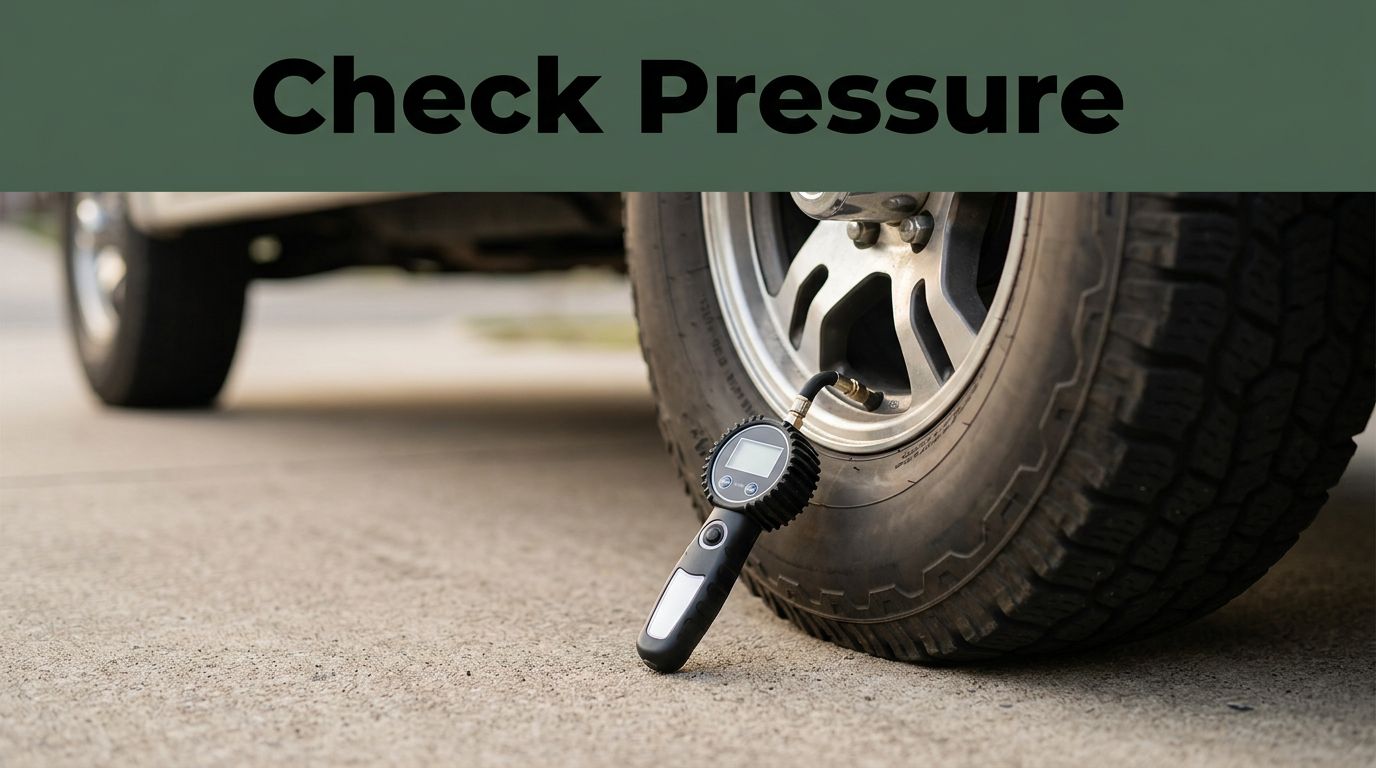
RV Tire Pressure: How to Check It Before Every Trip
A soft RV tire can turn a calm travel day into a long stop on the shoulder. Before you hitch up or pull out, a quick pressure check gives you better handling, safer braking, and less tire wear.
That matters on a weekend camping run and even more on long routes taken by seniors, van life travelers, and full time rv’ers. Among the best RV tire pressure habits, checking before every trip is the one that pays off every time. The key is doing it the right way, while the tires are cold.
Why cold tire pressure matters more than most RV owners think
Pressure changes with temperature. A tire that looks fine after breakfast can still be low on air if it sat overnight or the weather shifted. On any rv, low pressure creates more heat, and heat is what ruins tires fast.
Check RV tire pressure before you drive, not after the rig has rolled down the road.
When pressure is off, the RV doesn’t feel settled. Steering can wander, braking distances can grow, and the tire shoulders wear faster. On a tall, heavy coach, that extra movement also wears on the driver.
The number on the tire sidewall can confuse people. That figure is the tire’s maximum pressure, not always the pressure your rig needs for daily travel. Start with the placard on the rv, the owner’s material, or the tire maker’s load chart for your actual weight.
This matters because every coach carries weight differently. A lightly loaded trailer and a packed motorhome won’t need the same pressure, even on similar tires. If you haven’t weighed your setup lately, put that on your list before camping season gets busy.
Low pressure can also hide in plain sight. The coach may still roll straight, yet the tire flexes more with every mile. By the time you feel a problem, damage may already be building inside the tire.
Among common camping tips, this one often gets skipped because tires look “about right.” They don’t tell the truth by sight, especially on larger sidewalls. If you want more trip planning and upkeep ideas before you leave, you can View Our Website for guides, blogs, tools, and community help.
How to check RV tire pressure in a few minutes
You don’t need a shop visit for this job. You need a good gauge, access to air, and a habit you follow every time.
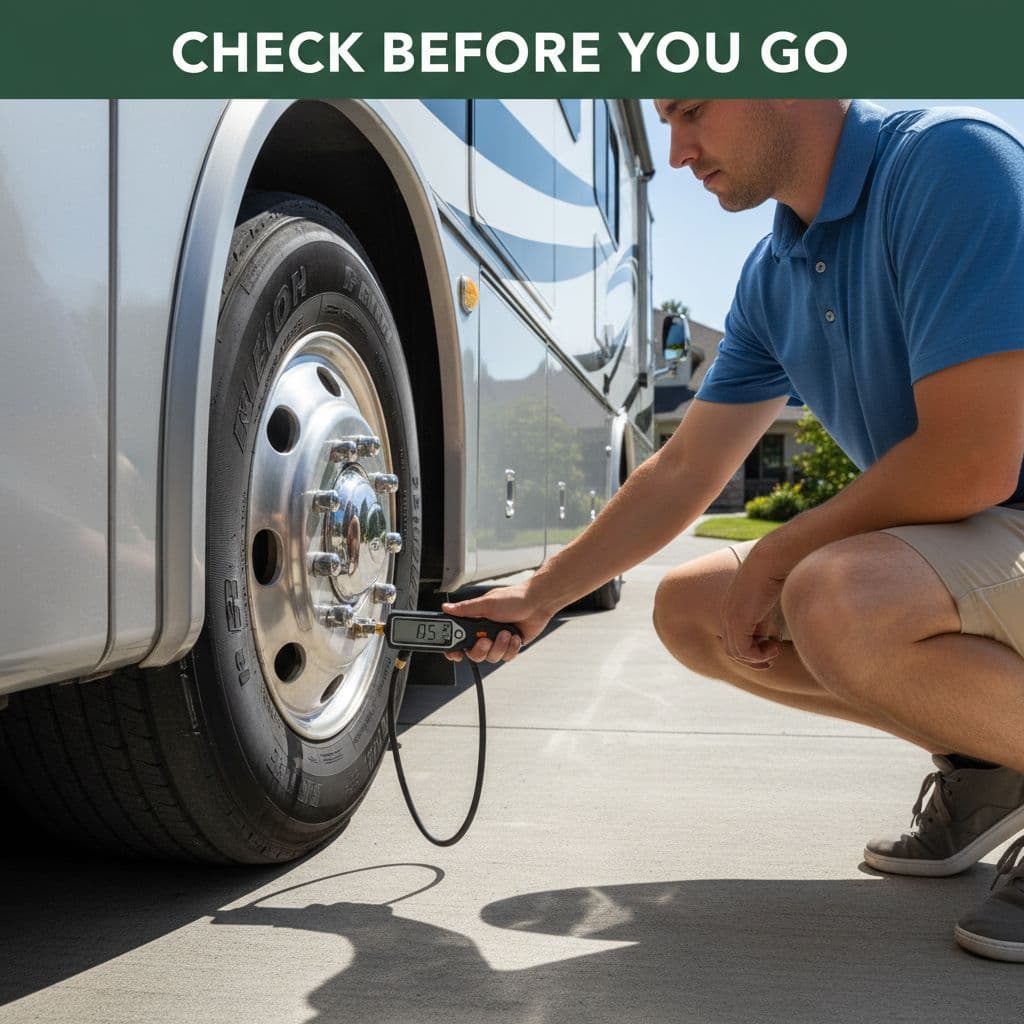
- Park on level ground and check the tires cold. Morning is best. If the rv has been sitting for a few hours, your reading will be more accurate.
- Find the target pressure before you touch the valve. Use the rv placard or your tire load chart. Write the psi down if you tend to forget it, especially before an early departure.
- Use a gauge you trust. A digital gauge is easy to read, and many seniors like the larger numbers. For rear duals, a dual-head chuck or hose makes the job much less awkward.
- Check every tire, including the inside duals and the spare if you carry one. Remove the valve cap, press the gauge straight on, and listen for leaks. If a tire is low, add air in short bursts and recheck.
- Compare left to right. One tire that keeps losing pressure often points to a slow leak, a bad valve stem, or a wheel problem. Don’t brush that off before a trip.
After the readings, put the caps back on and take one more walk around the rig. Look for cracks, bulges, nails, or uneven wear. Pressure is only part of tire health, but it’s the part most drivers can control in five minutes.
A tire pressure monitoring system helps once you’re moving, yet it doesn’t replace a manual cold check. Sensors can alert you to a change on the road. They can’t tell you that you started the day 10 psi low.
If you top off with a campground compressor, work slowly. Small portable units can get hot, and some built-in gauges are not exact. Finish with your hand gauge, not the compressor dial.
On towables, don’t forget the truck or tow vehicle tires. The trailer may be ready, but a soft rear truck tire can still hurt stability and braking.
Mistakes that lead to bad readings and early tire wear
The biggest mistake is checking after fuel, coffee, or a short drive. Even a few miles warms the tire and raises the reading. Then you bleed air to match your cold target, and the tire ends up low the next morning.
Another common slip is using the same pressure year-round without looking at the weather or the load. Spring camping often starts with cool mornings. By midsummer, the coach may also carry more food, water, and gear. Pressure should match the real load, not last month’s habit.
Small tools also matter. A bargain gauge can be off enough to matter on a heavy rig. If yours gets dropped, compare it with a second gauge. For people in van life setups or smaller trailers, the routine is the same, even if the tires are easier to reach.
Storage can fool you too. Tires lose air over time, so the first trip after a few weeks parked deserves extra attention. Check them at home, then look again the morning you leave.
Campground surfaces add another wrinkle. Gravel and dirt can hide nails, screws, and sharp debris that cause a slow leak overnight. That’s why a morning check at the campsite matters before you head to the next stop.
Don’t ignore tire age, either. A tire can have good tread and still be old enough to worry you. If the rubber looks dry or the sidewall shows fine cracking, get it inspected before a long haul.
A repeatable routine helps. Check pressure, inspect tread, look at the valve stems, and glance under the rig for anything out of place. If you like seasonal reminders and practical upkeep notes, View All Our Newsletters before your next trip.
Final thoughts
A five-minute pressure check is one of the simplest ways to protect your rv, your trip, and your peace of mind. The habit works because it catches trouble early, before heat and highway speed turn a small problem into a ruined day.
For seniors, weekend campers, and full time rv’ers, the best routine is the one you’ll keep. Check the tires cold, use the right psi for your load, and make it part of every departure. It’s a small job, but it can save a tire, a tow bill, and a day of camping.
This post may contain affiliate links. If you make a purchase through these links, I may earn a small commission at no extra cost to you.