Backing an RV Into a Campsite With Confidence
Nothing turns a calm arrival tense faster than a tight campsite and a line of watching neighbors. The good news is that confidence does not come from bravery; it comes from a repeatable routine you trust. Mastering the art of backing an RV into a campsite is a skill that eliminates the stress of the arrival process.
Most parking mistakes happen before the vehicle even starts to move. If you read the site, set your angle, and move slowly, you can park with far less anxiety. These fundamentals are essential for RVing for beginners, providing a stable foundation for those new to the lifestyle, weekend travelers, and full-time nomads alike.
Key Takeaways
- Perform a thorough site survey: Always walk the campsite on foot before driving to identify potential obstacles like low branches, hookups, or uneven ground.
- Establish a consistent routine: Using a repeatable, step-by-step parking sequence minimizes errors and keeps stress levels low regardless of the site type.
- Prioritize slow, deliberate movements: Creeping at idle speed gives you more time to think and react, whereas rushing often leads to excessive steering corrections and mistakes.
- Communicate clearly with one spotter: Agree on simple hand signals beforehand and ensure only one person is guiding the driver to avoid confusion and mixed signals.
- Practice in a low-stakes environment: Use empty parking lots and cones to build muscle memory and confidence before you face the pressure of a busy campground.
Read the Campsite Before You Touch the Wheel
Backing starts on foot, not in the driver’s seat. Before you attempt to maneuver, perform a thorough site survey by getting out and walking the area. Look for low branches, fire rings, hookups, picnic tables, soft ground, and the slope under your tires. Once you have assessed the campsite boundaries, decide where you want the rig to end up rather than where it needs to start.
This quick guide helps you spot potential problems sooner.
| Campsite type | First thing to check |
|---|---|
| Narrow back-in site | Trees and table placement |
| Angled site | Where the rear corner will swing |
| Gravel pad with hookups | Pedestal location and tire path |
| Uneven ground | Low spots that can twist the coach |
While you walk, pick a target. For many drivers, that target is the side of the pad where the rear wheel should land. Others use the utility post or the edge of the concrete. The point is to choose one clear reference.
Stand at the road edge and picture the rear axle entering the site. Then picture your slide-out side, awning side, and front steps after you are parked. A site can look open from the road and still leave you boxed in once the slide-outs go out.
Many camping tips skip this part because it looks simple, but it is actually critical. A one-minute walk saves five minutes of correction. It also keeps you from clipping a post, parking too far from the hookups, or squeezing the entry door against a tree.
If you are towing a travel trailer, study the whole swing path. The trailer pivots, but the tow vehicle still needs room to arc. If you are in a motorhome, watch the rear overhang. That back corner can sweep wider than you think.
When you know the site, your hands relax. Then the rest of the job feels smaller.
Set Up a Wider, Calmer Approach
The best way to master a back-in site starts with a clean setup as you navigate the campground loop road. While pull-through sites are undeniably easier, back-in sites offer better privacy if you know how to position your rig. Pull past the campsite far enough so your rear wheels clear the front edge of the pad. Aim for a starting position that allows for a perpendicular angle when approaching the pad, giving you plenty of space to turn toward the site rather than forcing a sharp entry.
A rushed approach often leads to excessive steering corrections. A wider setup allows for smaller, more manageable inputs, which are much easier to track in your mirrors.
Before you start backing, roll down the window and turn off the radio. This lets you hear your spotter, nearby traffic, and any external noises around the site, helping to keep the entire process calm.
If the road is narrow, pull forward and reset your alignment before attempting to back up again. There is no prize for fixing a bad angle in one move. Most experienced drivers perform several adjustments when necessary, and many full-time RVers do this without a second thought.
Try to keep the campsite on the driver’s side when possible. Visibility is better, and your brain has less to juggle. If you are backing into a site on the passenger side, slow down even more and rely heavily on your spotter and mirrors.
Arrival time matters too. If possible, check in before dark or during periods of lighter traffic. Many seniors find that parking feels much easier when they are not tired, rushed, or fighting dusk shadows. Remember that good parking always starts with good timing.
Use Mirrors and a Spotter Without Mixed Signals
Your mirrors tell the story, but only if you know what you are watching. Before backing, adjust both side mirrors so you can see the lower rear corners of the RV and part of the lane behind you. Pay special attention to your driver side mirror, as it provides the most critical perspective when you are navigating into a tight spot. Then, keep scanning the left mirror, the right mirror, the front corner, and back again. That rhythm helps you catch trouble early.
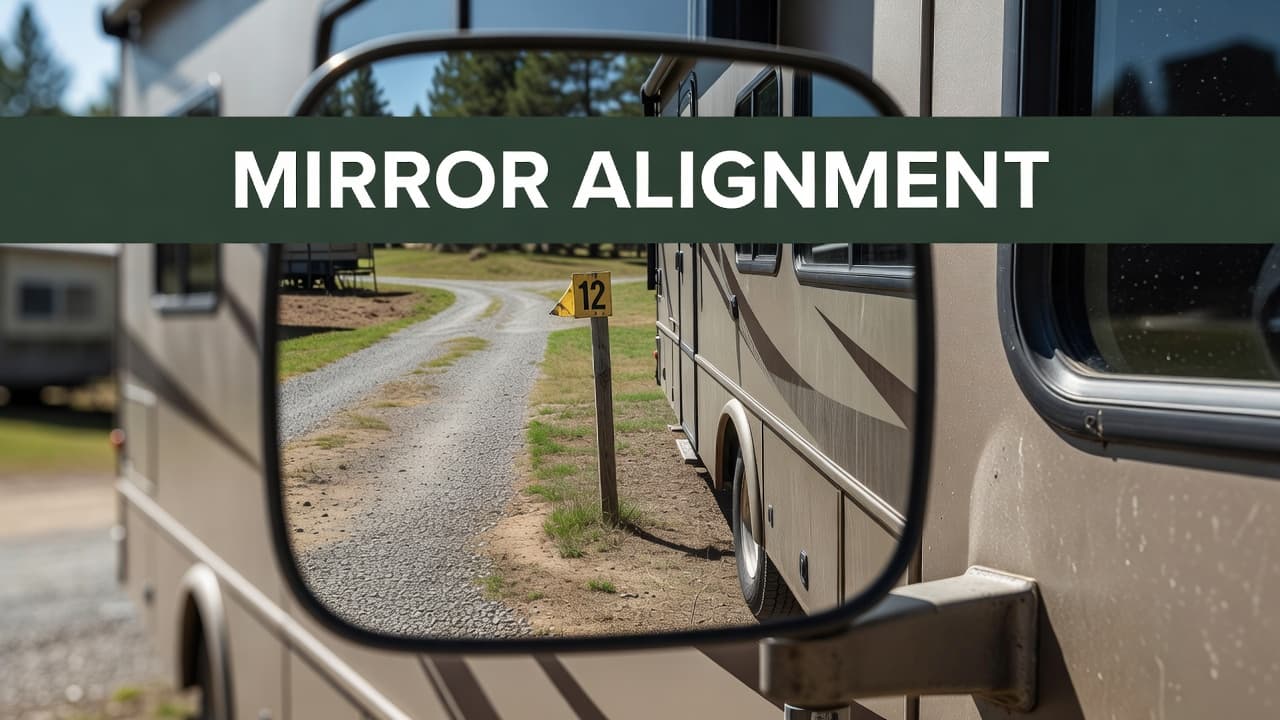
Watch the rear tire path, not only the back bumper. Tires tell you where the rig is truly going. The bumper can make a turn look better or worse than it is. While a backup camera can be a helpful secondary tool to see what is directly behind you, never rely on it to replace the eyes of an experienced spotter.
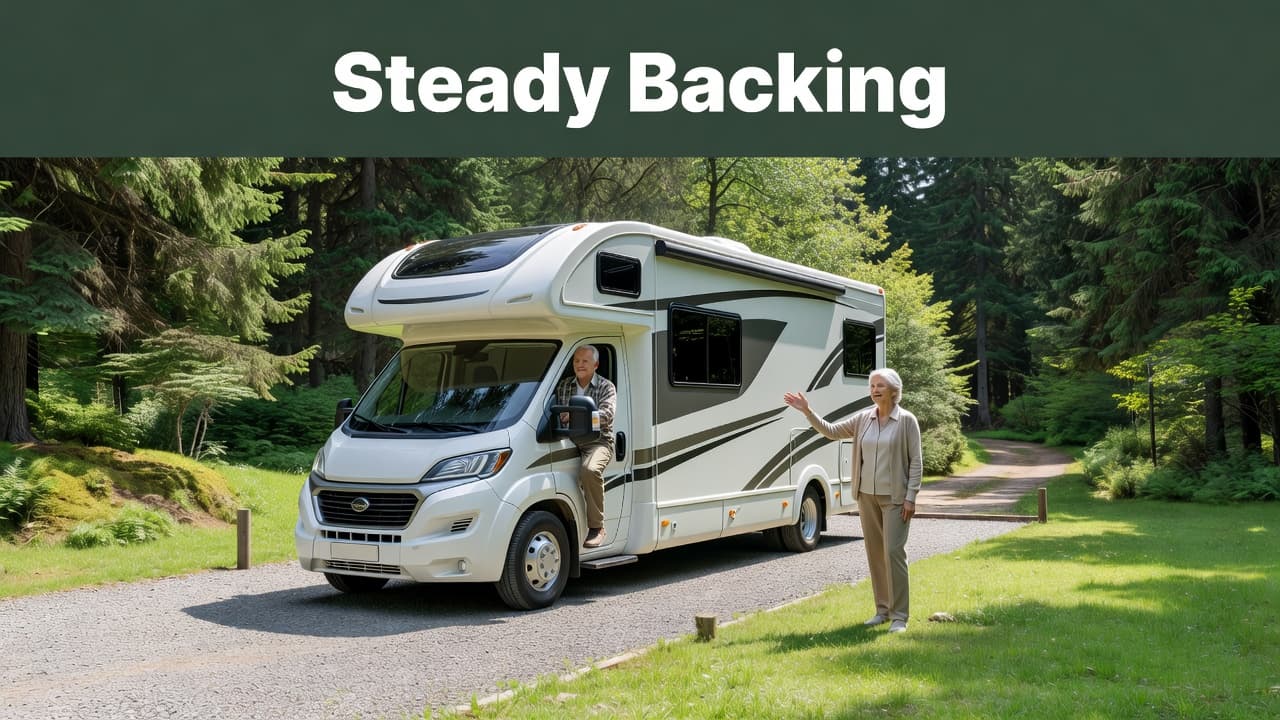
A spotter helps most when the rules are clear before the RV moves. Agree on where the spotter will stand, what each hand signal means, and which side matters most. One person should guide. Five helpers from neighboring campsites only add noise.
If your spotter disappears from view, stop at once. Move again only when you can see each other.
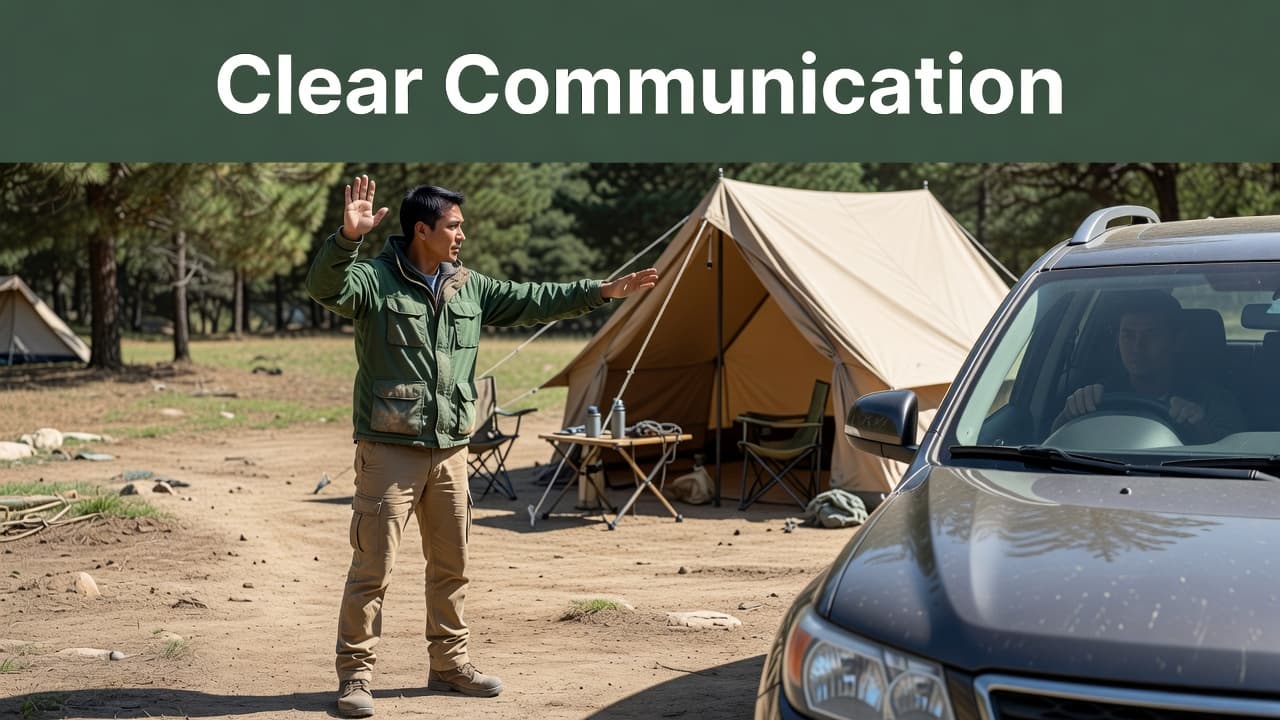
Good spotters stay where the driver can see them, never behind the rig. They use big, simple motions. For example, palms moving inward can mean “come straight back,” while one arm sweeping can mean “turn toward me.” Pick signals you both remember under stress.
Some couples like walkie-talkies. They can help, but the rules stay the same. One person speaks, the other listens, and nobody fills the air with nervous chatter.
This is where partners often struggle. One person talks too much, the other keeps moving. Instead, use short words, clear gestures, and frequent stops. Calm communication beats fast communication every time.
A Simple Routine for Backing Into a Campsite
When it is time for backing into a campsite, a repeatable routine keeps you from guessing. Use the same sequence at every campground, even when the site looks easy. Repetition builds calm.
- Pull past the site and stop.
- Get out, walk the pad, and pick your target.
- Set your spotter where you can see them in your mirrors.
- Back slowly until the rear wheels begin to enter the site.
- Turn the steering wheel slightly to initiate your cut-back turn, then pause and check both mirrors.
- Straighten the wheel as the rig follows the arc.
- Stop early, pull forward if needed, and make minor corrections.
- Finish with room for slides, hookups, and walking space.
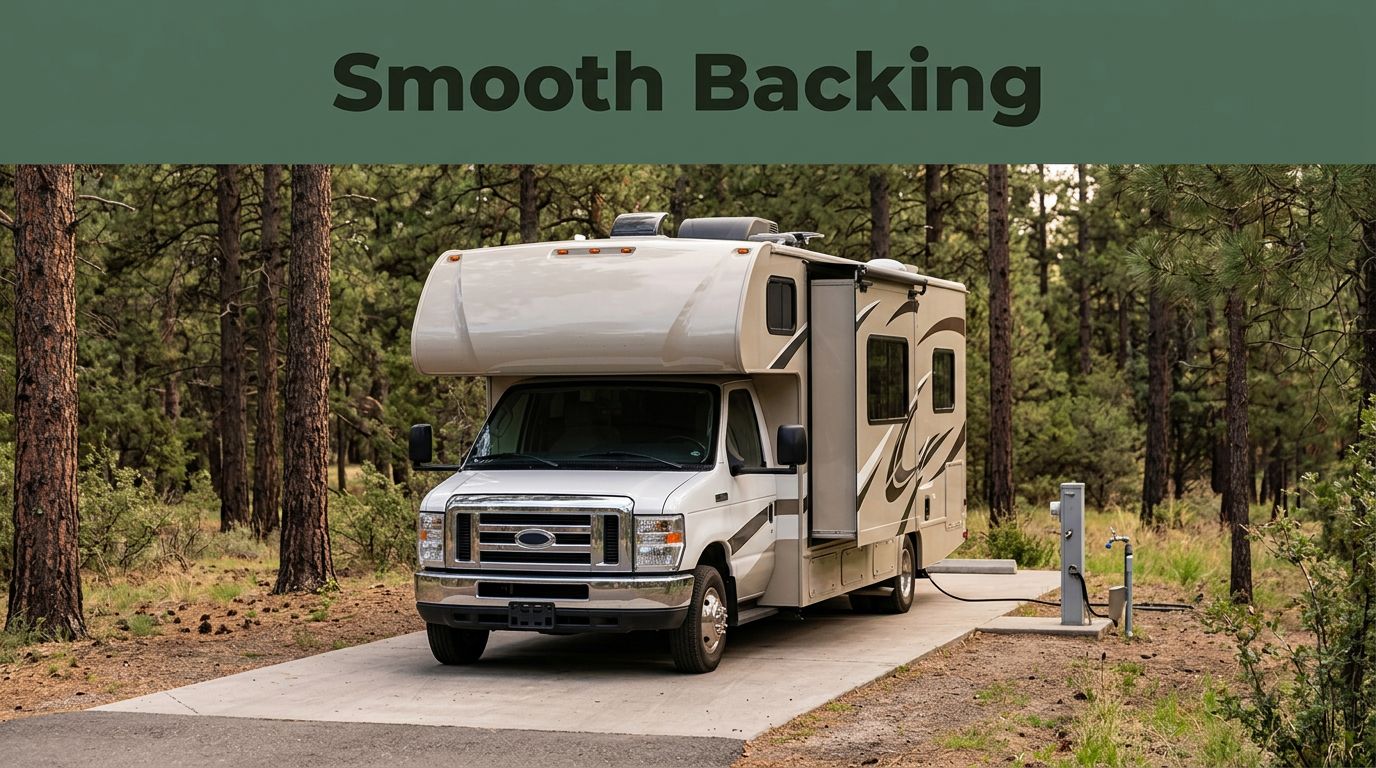
The slow part matters most. A moving RV gives you less time to think, while a creeping RV gives you choices. Idle speed is often enough. Some drivers lightly cover the brake the whole time.
Small adjustments work better than hard cranks of the wheel. Turn, watch, wait, and see what the rig does. New drivers often steer twice before the first turn has even taken effect. Then the trailer or coach starts weaving, and stress jumps fast.
If you are towing a travel trailer, remember that your weight distribution hitch can affect the pivot point between the tow vehicle and the trailer. One hand at the bottom of the steering wheel can help. Move that hand toward the side you want the trailer to go, then pause and watch. For motorhomes, keep both hands light and avoid sawing at the wheel.
If you miss the line or need to move in the reverse direction to adjust your angle, pull forward and reset. That is not failure. It is clean driving. In fact, the safest back-ins often include one or two resets because the driver never lets the mistake grow.
People coming from van life sometimes need a short adjustment period. A longer wheelbase reacts later, and a trailer reacts sooner. Because the timing changes, old instincts may need a few practice sessions in an empty lot.
Stop when the rear tires are where you want them. You can straighten the rest in small moves. Once parked, step outside before leveling and check your slide clearance, step clearance, and utility reach. A good finish makes setup easier.
Confidence Grows With Practice, Not Pride
A bad parking moment can stick with you. Maybe you jackknifed near a tree, or perhaps a crowd watched while you reset three times. That memory feels loud, but it does not define your next arrival.
Confidence grows when you practice on purpose. Find an empty church lot, fairground, or large parking area to hone your skills. Set out cones or buckets and rehearse the same back-in maneuver with your travel trailer and tow vehicle from both sides. Ten quiet practice rounds teach more than one stressful campground arrival.
This approach helps seniors because timing, neck strain, and depth judgment can change over time. Still, skill often improves with patience. Many older drivers maneuver their rigs better than younger ones because they do not rush the process.
After each session, take 30 seconds to evaluate your performance. Which mirror gave the clearest view? Where did the turn need to start? Those small notes build a personal system that works specifically for your rig.
RV Life Insider is a great resource to keep sharpening those habits. You can View Our Website for blogs, travel guides, planning tools, community conversations, and product ideas that fit real road life. For regular reminders and camping tips, subscribe to the RV Life Insider newsletter. If you want more road stories and updates, View All Our Newsletters.
When the process becomes routine, your entire trip starts better. You pull in calmer, set up faster, and enjoy the evening more once you master backing into a campsite.
Frequently Asked Questions
Should I always keep the campsite on my driver’s side?
Whenever possible, yes. Backing in with the site on your driver’s side offers significantly better visibility through your mirrors and reduces the amount of guesswork involved, making it a much safer option for beginners.
What should I do if I lose sight of my spotter?
If you lose sight of your spotter at any point, stop the vehicle immediately. Only resume moving once you have re-established eye contact or a clear line of sight, as the primary rule for spotting is that the driver must always be able to see the guide.
Is it okay to pull forward and reset my position?
Absolutely. Experienced RVers frequently pull forward to reset their angle, as it is far better to take an extra minute to reposition than to risk hitting an obstacle or forcing a difficult parking job. There is no penalty for taking multiple attempts to get the alignment right.
Do I really need a spotter if I have a backup camera?
While backup cameras are useful for seeing what is directly behind you, they should never replace an experienced spotter. A person on the ground can see angles, height clearances, and potential hazards off to the sides that a camera lens simply cannot capture.
Confidence Comes From a Repeatable Routine
Consistently backing into a campsite relies on following the same sequence of movements every time you park. Mastering these reliable steps makes navigating narrow roads and tight campground spaces significantly easier, turning a high-pressure task into a manageable chore. Once you slow down, assess your surroundings, and utilize a consistent process, the experience stops feeling like a stressful test and starts feeling like a practical skill.
A clean setup, clear mirrors, and one steady spotter will do more for your confidence than raw nerve ever will. The next time neighbors are watching, you will still have the one thing that matters most, which is a routine you trust.
This post may contain affiliate links. If you make a purchase through these links, I may earn a small commission at no extra cost to you.