RV Inverter Basics for New Owners
One dead battery can quickly turn a peaceful morning off-grid into a major headache. A basic grasp of your RV inverter basics can prevent a lot of that trouble and help you better manage your battery bank.
Many new owners assume every outlet works anytime. Then the coffee maker stalls, the TV shuts off, or the batteries drop faster than expected. Once you understand a few key concepts, the rest of your electrical system starts to feel much less mysterious.
Key Takeaways
- Inverters bridge power gaps: An inverter converts 12V DC battery power into 120V AC power, allowing you to use standard household appliances when disconnected from shore power.
- Mind your wattage: Every inverter has a continuous wattage rating and a surge rating; exceeding these limits can trip your system or cause appliance failure.
- Avoid high-heat appliances: Devices like hair dryers, space heaters, and coffee makers drain battery banks extremely fast; prioritize using propane or shore power for these high-draw items.
- Prevent idle drain: Inverters consume a small amount of energy even when no appliances are plugged in, so always turn the unit off when not in active use to preserve your battery life.
- Choose the right wave: Use a pure sine wave inverter for sensitive electronics like laptops and medical equipment to prevent performance issues and potential damage.
What an RV inverter actually does
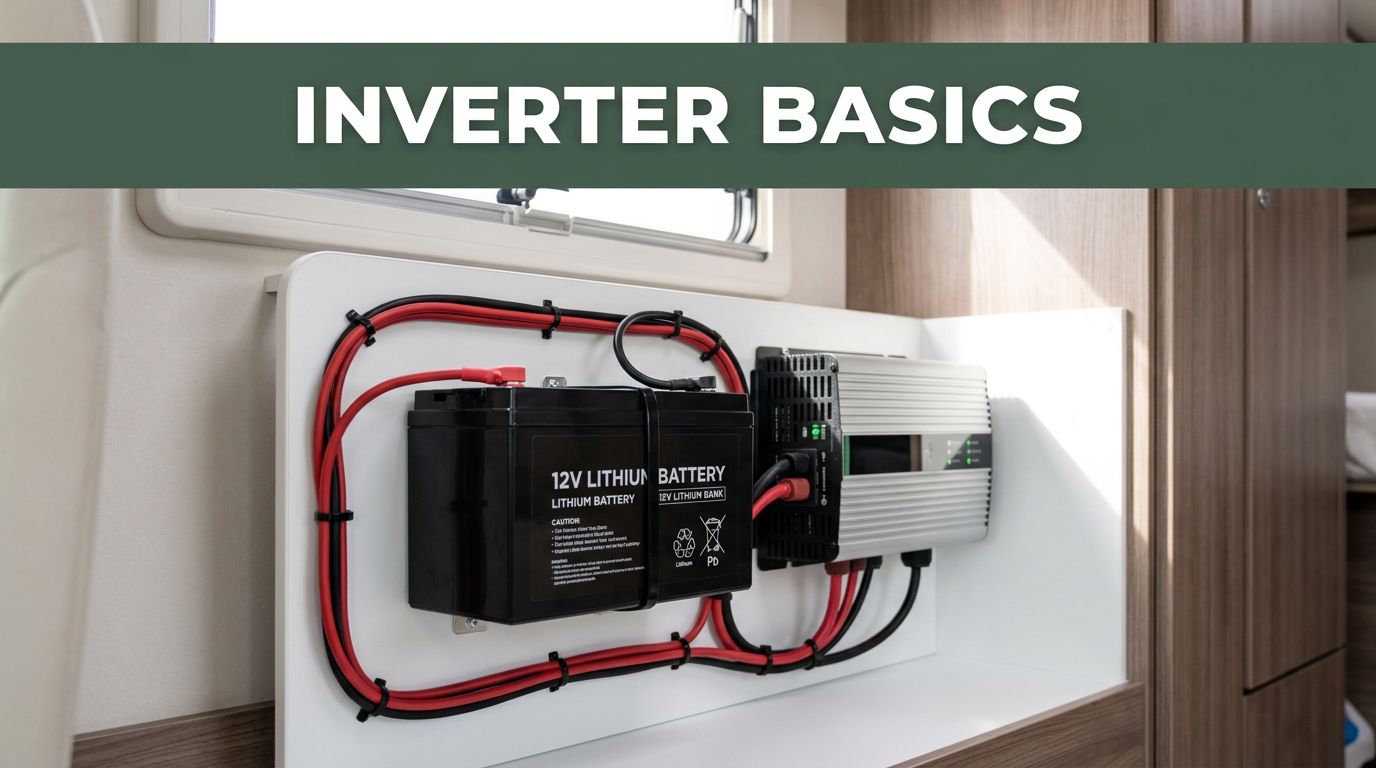
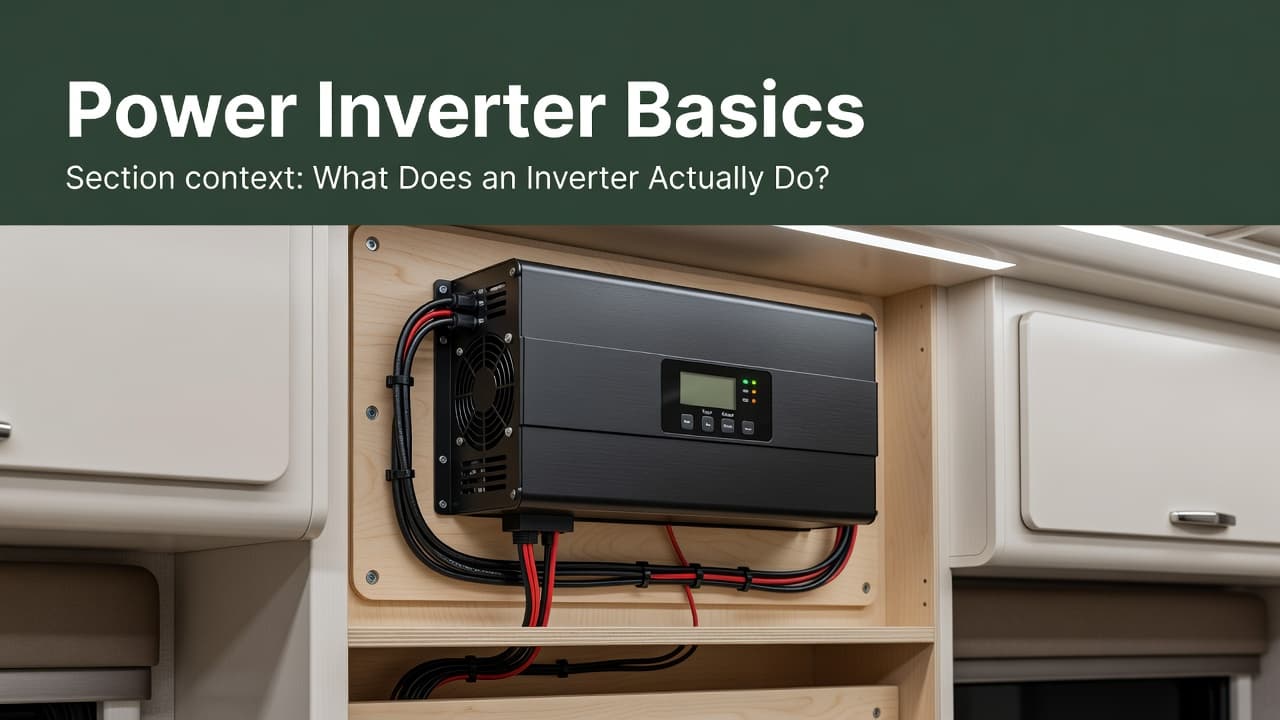
Your inverter takes 12V DC power from your battery bank and changes it into 120V AC power for your household appliances. This conversion of direct current into alternating current allows you to run devices that require standard wall plugs when you are not connected to shore power or using a generator.
Understanding this matters because your RV electrical system relies on two distinct types of energy. Lights, water pumps, and control boards typically run on 12V DC power. Meanwhile, your TV, laptop chargers, and kitchen electronics like the microwave require 120V AC power. The inverter acts as the bridge between these two systems.
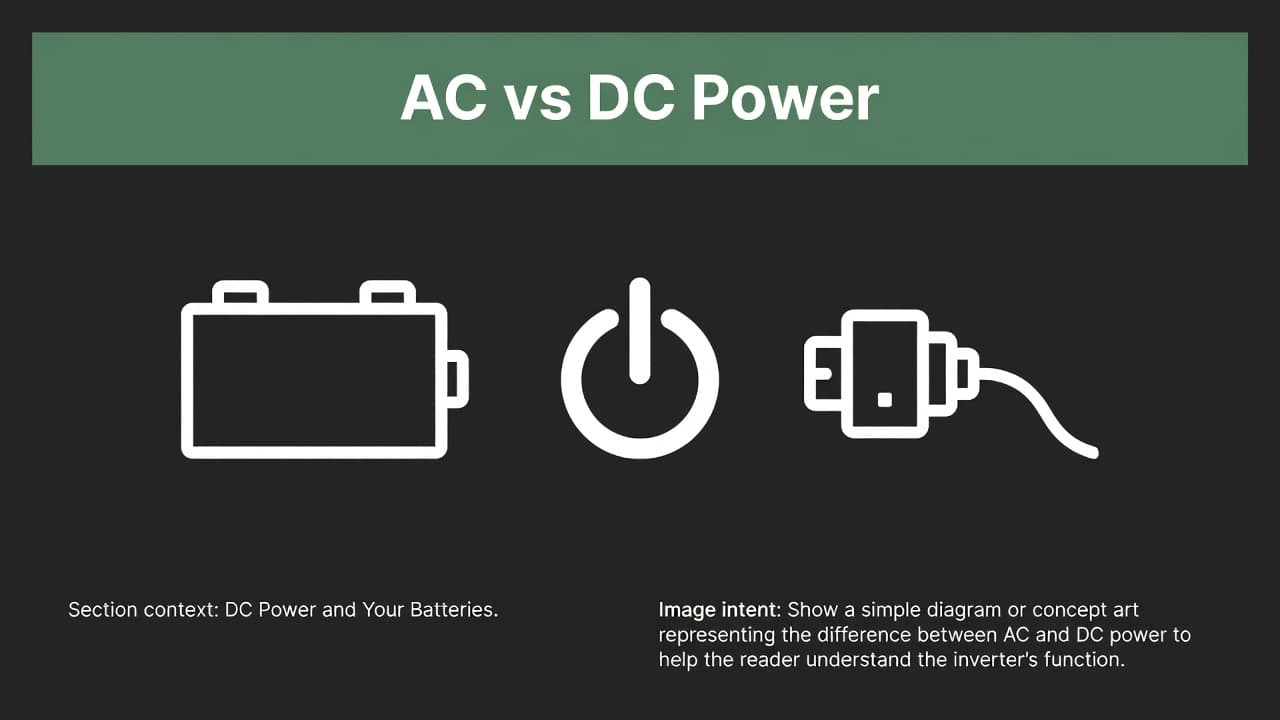
It is common for beginners to confuse an inverter with an RV converter, but they perform opposite tasks. While an inverter changes battery power for your outlets, an RV converter takes incoming shore power or generator electricity and transforms it into 12V power to charge your batteries and run your internal lights.
Some rigs come with a built-in inverter, while others have none at all. Furthermore, some models only provide power to specific outlets near the TV or kitchen. Because of this, do not assume every plug in your rig is live when running on batteries. Test your outlets and check your owner’s manual to see which ones are wired to your system.
An inverter does not create power. Your batteries still supply every watt.
This point is crucial for avoiding frustration. If your batteries are low, the inverter cannot generate extra energy; it only changes the form of the power already available. In more advanced setups, a transfer switch is often used to automatically toggle between shore power and inverter output without you needing to flip a manual breaker.
Many modern units are classified as an inverter charger. These devices can handle both the conversion of power and the replenishment of your battery bank when you connect to a main power source. This setup is popular in larger motorhomes and among full time RVers who want a more automated electrical routine. Even with these advanced features, the basic principle remains the same: the inverter is a powerful tool, but it is not magic.
The numbers that matter most
The first number to learn is watts. Every appliance needs a certain amount of power to run, and your inverter has a specific wattage rating, such as 1,000, 2,000, or 3,000 watts. If your appliances exceed the continuous watts your system can supply, the inverter will not run them well or may trip the system. When choosing a model, verify its wattage rating to ensure it meets your needs.
The second number is surge watts. Some appliances need an extra burst when they first start, meaning they require higher surge watts than their steady running load. A residential fridge, small microwave, or power tool can pull significantly more at startup than during normal use. Always check your appliances to ensure your inverter wattage rating can handle these spikes.
This quick reference helps put common power consumption in perspective.
| Appliance | Typical power use | Battery-friendly on an inverter? |
|---|---|---|
| Phone charger | 5 to 20 watts | Yes |
| Laptop | 45 to 100 watts | Usually |
| TV | 60 to 150 watts | Usually |
| CPAP machine | 30 to 90 watts, more with humidifier | Often, but check your setup |
| Coffee maker | 700 to 1,200+ watts | Short use only, heavy drain |
| Hair dryer or space heater | 1,200 to 1,800+ watts | Usually no |
The big takeaway is simple. Small electronics are easy. Heat-making appliances drain batteries fast.
The conversion process is where battery draw surprises people most. An inverter pulls 12V DC power from your batteries and converts it into 120V AC power for your appliances. Because of this conversion from direct current to alternating current, a 1,000-watt load on a 12V DC power system can pull roughly 100 amps from your battery bank, plus additional energy lost during the process. You must ensure your total amp hours are sufficient to support this load.
Because of that, inverter size and battery bank capacity should match how you camp. Weekend camping with hookups calls for a different setup than dry camping or long van life travel. Lithium batteries also behave differently than lead-acid batteries, especially under heavier loads.
If you are shopping for an inverter, a pure sine wave inverter is the safer choice for most electronics. It provides cleaner power that sensitive electronics, such as laptops and CPAP machines, prefer. While a modified sine wave inverter is a common alternative, it can cause noise, heat, or poor performance with delicate gear. Remember that while the inverter handles power for your appliances, your RV converter is the component responsible for recharging your batteries when you are plugged into shore power.
When to use the inverter, and when to switch it off
An inverter shines when you need quiet, quick power during off-grid adventures. It is ideal for charging phones, running a laptop, powering a TV, or using a CPAP overnight without the noise of a generator. Because many modern devices are sensitive electronics, using a pure sine wave inverter ensures they run safely and efficiently. For seniors, that kind of comfort matters, as a calm campsite feels much better when the basics work without any extra fuss.
Those are the moments when an inverter earns its keep. You can enjoy a movie, make a video call, or keep a medical device powered while the woods stay quiet around you.

The inverter is a poor choice for household appliances that generate heat. Electric space heaters, hair dryers, air conditioners, and high-wattage coffee makers or a microwave burn through battery power very fast. You can run some of them with a massive battery bank, but the cost is steep in stored power. Many new owners learn this after one chilly morning and a low-battery alarm.
One of the best camping tips for boondocking or general dry camping is to save your battery power for the loads that truly matter. Use propane where you can. Brew coffee on the stove if that fits your rig. When you are connected to shore power, the RV converter takes over, allowing you to run high-draw items easily. You should also run these high-draw appliances when you are plugged into shore power or while the generator is already on for another reason.
Also, remember to turn the inverter off when you do not need it. Many units suffer from idle draw, which means they consume a small amount of power even when nothing is plugged in. That drain may seem minor, yet over several hours or overnight, it adds up. If you spend time off-grid, that habit becomes a vital part of a smart energy efficiency routine, especially when paired with solar panels to keep your batteries topped off.
The same rule helps in small towables, big diesel pushers, and compact van life layouts. The gear may change, but the math behind your battery bank does not.
If you like plain-English advice for life on the road, the RV Life Insider newsletter is worth a look. You can View All Our Newsletters for more camping tips and road-tested lessons from real travelers.
Easy habits that prevent dead batteries and surprises
Most inverter trouble starts with simple habits rather than failed equipment. A few checks before each trip will save you time and stress. To keep your electrical system running smoothly, perform a routine inspection of your RV converter and ensure all connections are tight. Using a multimeter can help you verify voltage levels across your battery bank and troubleshoot potential connection issues before you head out.
- Learn which outlets are powered by the inverter and label them if needed.
- Watch your battery monitor rather than relying on guesswork, especially when you are monitoring your remaining amp hours.
- Keep inverter vents clear to maintain energy efficiency and allow the unit to shed heat effectively.
- Turn the inverter off when it is not in use, especially during long-term storage.
It also helps to know your battery bank size in plain terms. If you have two small lead-acid batteries, your power window is limited. A larger set of lithium batteries gives you more room, but even then, heavy loads still require careful management. Because of that, match your power consumption habits to the system you actually have.
When you are boondocking or planning an off-grid stay, you must manage your power sources carefully. Balance your inverter use with energy captured from solar panels, the reliability of your generator, or the convenience of shore power when it is available. Always remember to disconnect the inverter when you are connected to shore power to prevent system conflicts.
Another smart step is to carry the manual on your phone or in a folder. If a fault light appears, you will not be guessing. Many owners also keep a simple note with their common loads, such as a TV, CPAP machine, laptop, or coffee maker. That one-page reminder is handy when you are tired, setting up in the rain, or trying to troubleshoot before breakfast.
RV Life Insider is also a helpful website for seniors who want practical road advice without the clutter. The site includes blogs, travel guides, community conversation, and marketplace ideas built around real RV travel. When you want more than electrical help, you can View Our Website and keep building confidence trip by trip.
Frequently Asked Questions
What is the difference between an inverter and a converter?
An inverter changes 12V DC power from your batteries into 120V AC power for your wall outlets. Conversely, a converter takes 120V AC power from shore or generator sources and transforms it into 12V DC power to charge your batteries and run your interior lights.
Can I run my air conditioner on an inverter?
Generally, no. Air conditioners require a massive amount of power that would drain even a large battery bank in a very short time and would likely exceed the wattage capacity of most standard RV inverters.
Why does my inverter make a noise or cause my electronics to act up?
You may be using a modified sine wave inverter, which produces a less clean power signal than a pure sine wave model. Sensitive electronics like laptops and CPAP machines perform best with the clean power provided by a pure sine wave inverter.
How do I know which outlets are powered by my inverter?
Not all outlets in an RV are necessarily wired to the inverter. You should test each outlet while on battery power with the inverter turned on, or consult your owner’s manual for a specific wiring diagram of your rig’s interior.
Final thoughts
A quiet campsite can feel a lot less calm when the batteries drop before sunrise. Once you have mastered these RV inverter basics, including how your unit converts 12V DC power from direct current into the 120V AC power needed for your appliances as alternating current, your RV becomes much easier to manage.
Gaining a solid understanding of your battery bank and the specific wattage rating of your devices provides the confidence you need for successful off-grid travel. Whether you are planning weekend camping trips or long-haul adventures, keeping a close eye on your total wattage rating ensures you never push your system beyond its limits. Good habits will not make the road glamorous, but they will make your travels smoother, and that is what every new owner wants.
This post may contain affiliate links. If you make a purchase through these links, I may earn a small commission at no extra cost to you.