RV Fuse Box Basics for Common Power Problems
A dead light or silent water pump can make your RV fuse box feel more important than the entire campsite. When power stops in one small part of the coach, the cause is often simple, and a blown fuse is high on the list of culprits.
That matters even more when you are out camping, far from a repair shop, or settling in for the night. If you know what the fuse box does, how your RV electrical system functions, what the warning signs look like, and how to swap a fuse safely, many small power problems stop feeling stressful.
Key Takeaways
- Know Your Panel: Familiarize yourself with your RV’s fuse panel location and layout before you encounter a power issue to reduce stress during emergencies.
- Isolated vs. System-Wide: A blown fuse typically affects a single 12V DC circuit; if your entire RV loses power, the issue likely resides in your battery, converter, or main breakers.
- Use Correct Ratings: Always replace a blown fuse with one of the exact same amperage rating to prevent wiring damage or potential fire hazards.
- Troubleshoot Persistent Shorts: If a replacement fuse blows immediately, do not replace it again; this indicates an underlying short circuit or a failing component that requires professional inspection.
What the RV fuse box actually does
In most RVs, the fuse box (often referred to as the distribution panel) protects the 12V DC system of your electrical setup. That includes things like interior lights, fans, the water pump, vent hood, control boards, and many USB outlets. If one of those circuits pulls too much power, the fuse sacrifices itself so the wiring remains intact.
This distribution panel is distinct from your circuit breaker panel. Circuit breakers handle 120V AC power, which manages heavy appliances like your air conditioner, wall outlets, and microwave when you are connected to shore power or using generator power. Meanwhile, the fuses in your 12V DC system protect the various components that run directly from your 12-volt battery.
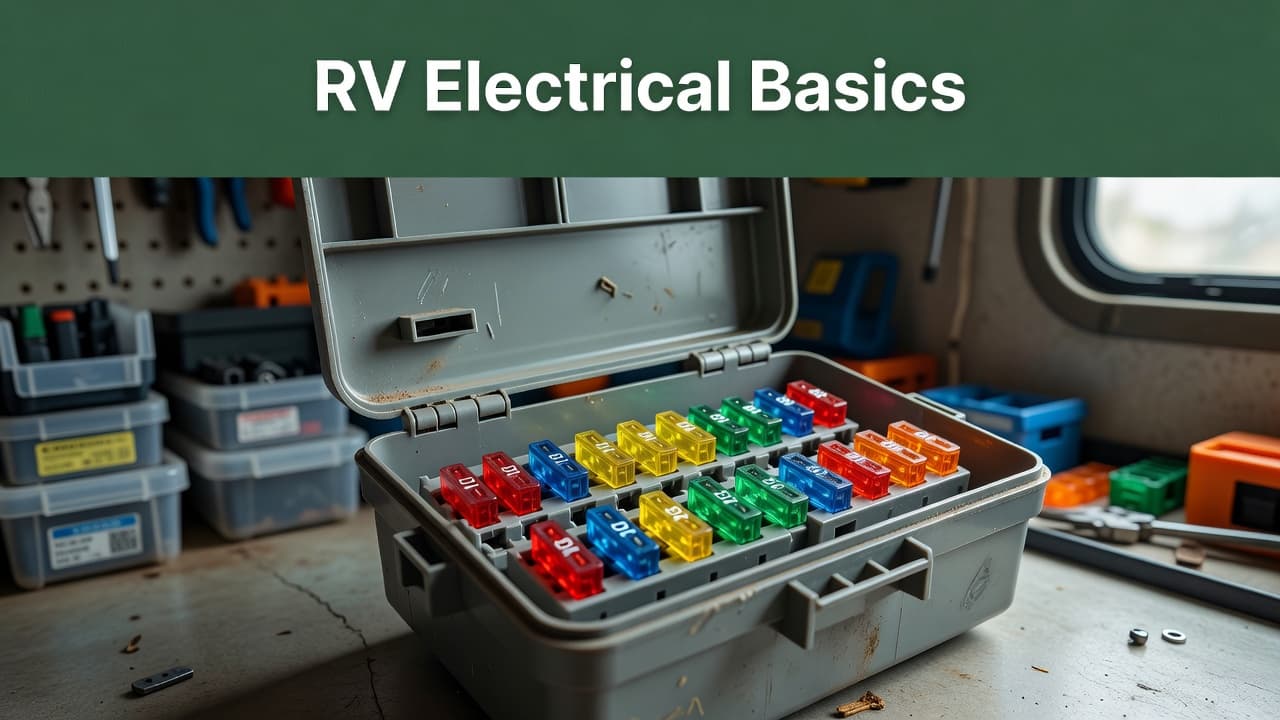
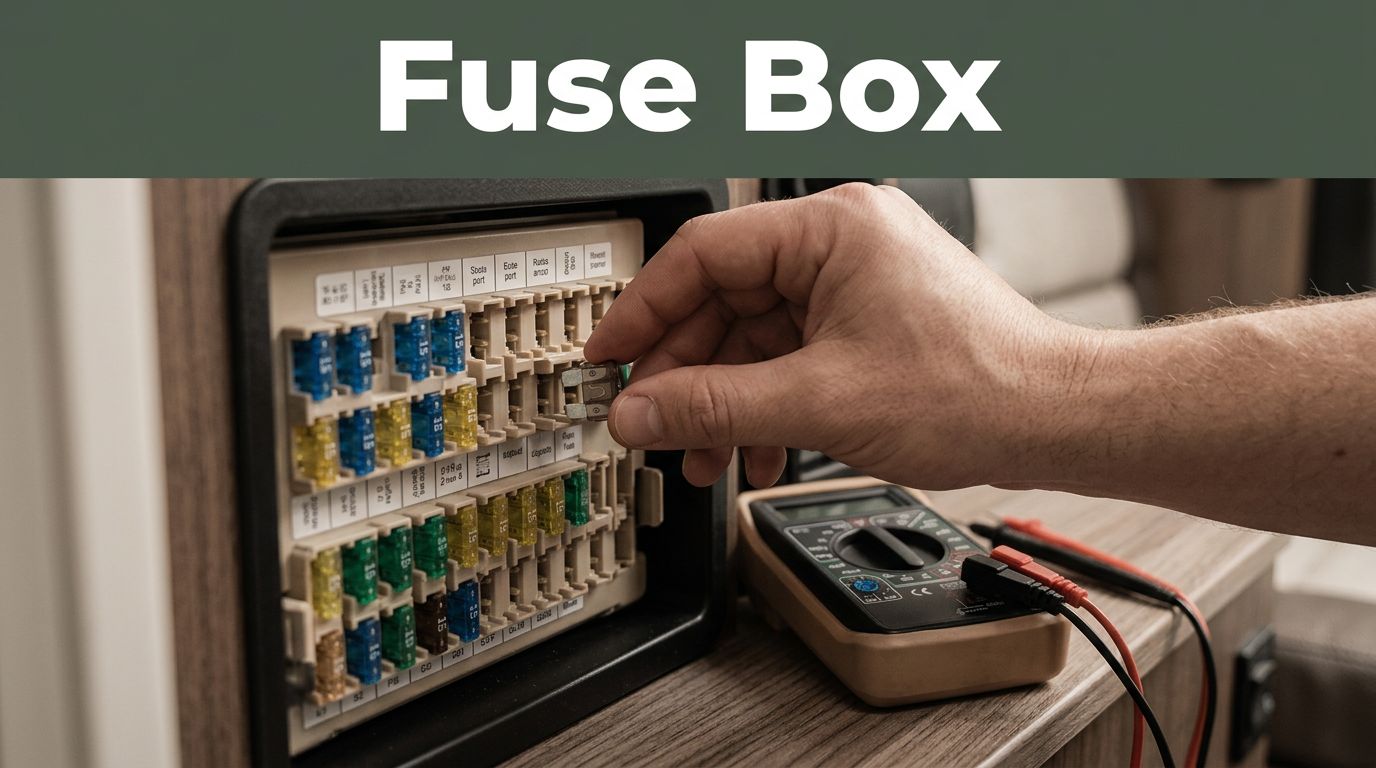
Most rigs use blade-style automotive fuses. You will usually find the panel under the bed, near the converter, inside a cabinet, below the refrigerator, or close to the entry area. A printed label may tell you which fuse feeds each circuit, although some labels are vague or faded.
That little panel matters because it narrows the search when troubleshooting. If only one item quits, the fuse box is often the first place to check. If the whole coach loses 12V DC power, the problem may be elsewhere, such as the battery disconnect, converter, or the battery itself.
Many full-time RVers keep spare blade fuses in several sizes because these failures often happen at inconvenient times. Since your 12V DC system powers many of your daily essentials, the same advice fits weekend campers, seniors, and anyone living the van life. A few dollars in spare fuses can save a cold, dark evening.
One of the best camping tips is to find your fuse panel before anything goes wrong. Open it in daylight, read the labels, and keep a flashlight nearby. Later, when a light won’t turn on or the pump goes quiet, you will already know where to start.
Common power problems that point to a blown fuse
A blown fuse usually affects one isolated part of your 12V DC system rather than the entire RV. That pattern is your first clue. If the bathroom light dies but the kitchen light still works, or the water pump stops because of an overloaded circuit, a fuse is a reasonable suspect.
On the other hand, if all 12-volt devices go dead at once, do not stop at the fuse panel. A tripped breaker, a tripped battery disconnect, a loose battery cable, or a failed converter can cause a much wider outage. Context matters when troubleshooting your power.
This quick chart helps sort out the most common clues.
| Symptom | What it suggests | Check first |
|---|---|---|
| One light group is dead | RV appliances and single circuit issue | Lighting fuse in the panel |
| Water pump won’t run | Pump fuse or pump wiring problem | Pump fuse, then pump switch |
| Refrigerator control panel is blank | Loss of 12-volt supply to fridge controls | Refrigerator fuse |
| USB ports or radio stop working | Accessory circuit failure | Accessory or entertainment fuse |
The biggest hint is partial power loss. Fuses protect branches of the system, so one problem area often points to one fuse. That is why a dead fan, step light, or tank monitor can share a simple cause.
Still, not every bad fuse looks burned. Some fail in a way that is hard to spot with the naked eye. The metal strip inside may crack with only a small mark, or no obvious mark at all. If a circuit stops working and the fuse looks fine, test it anyway.
Weather and storage time also play a role. During humid camping trips, corrosion can creep into fuse contacts. After long storage, a weak battery may make electronics act odd enough to look like a blown fuse. Low voltage and a bad fuse can mimic each other, so ensure your battery is charged before assuming the fuse is the culprit.
For seniors who enjoy slower travel, this is good news. You do not need to guess wildly or start taking panels apart. A calm, step by step check often finds the issue fast.
How to check and replace a fuse safely
Start by turning off the device that stopped working. If it is a pump, fan, or light, shut its switch off first. Then disconnect your RV from the campground pedestal or shore power if you want an added layer of safety, especially if your fuse panel sits near the converter and breaker box where you might be handling 30 amp service connections.
A flashlight, fuse puller, and spare fuses make the job easier. Many RV fuse block units have a small plastic puller clipped inside the cover. If yours does not, needle-nose pliers can help, but use a gentle touch to avoid damaging the housing.
Use this order when checking a fuse:
- Find the fuse for the dead circuit by reading the panel label.
- Pull the fuse straight out and inspect the metal strip inside.
- If the strip is broken, replace the fuse with the same amperage rating.
- If it looks intact, test it with a multimeter or continuity tester.
- Turn the circuit back on and see if the device works.
Replace a fuse only with the same amperage printed on the old one.
That step matters more than color. Blade fuse colors often match amperage ratings, but the number on top is what counts. A larger fuse may not blow soon enough, and that can let wires overheat. A smaller fuse may pop right away, even when nothing else is wrong.
If you use a multimeter, check continuity with the fuse removed, or check for voltage on both small test points on top of the installed fuse. Power on one side but not the other often means the fuse has failed.
Take your time with older labels. In many coaches, the circuit breaker panel map does not match every change made over the years. A previous owner may have added lights, a phone charger, or a small inverter, potentially complicating the area near the 120V AC power converter. If the printed chart seems off, test nearby fuses one by one instead of forcing a guess.
Many seniors prefer to keep a written note inside the panel door after they confirm each circuit. That small habit pays off later, especially during evening arrivals or rainy travel days.
When a new fuse blows again
If you replace a fuse and it blows right away, the component wasn’t the root problem. The fuse simply did its job by preventing a fire. Now you need to find the underlying short circuit that caused the overload.
Wires can rub through behind a drawer, under a dinette, or near a moving slide. A pinched wire may touch metal only when the coach twists on rough roads. That makes the problem feel random, but it usually isn’t.
A failing device can do the same thing. Water pumps, vent fans, and power steps sometimes draw too much current as they wear out. In those cases, the fuse keeps sacrificing itself because the motor is struggling.
Loose or corroded connections also cause trouble. Heat builds up at bad contacts, and voltage drops can confuse control boards. If your fuse keeps blowing on a refrigerator, furnace, or slide circuit, inspect the connectors as well as the fuse slot. Keep in mind that some systems, especially those controlling an air conditioner or other heavy loads, may require resetting breakers instead of simply replacing a fuse.
Battery condition matters too. Low voltage does not usually blow a fuse by itself, but it can create strange behavior. Electronics may reset, fans may slow down, and control panels may flicker. Check your battery voltage before you assume every issue belongs to the fuse box.
If you aren’t comfortable tracing wires, stop before the repair gets frustrating. A qualified RV technician can test current draw, inspect your 50 amp hookup, and find shorts much faster. That is often the smart move for seniors who want to prioritize electrical maintenance, stay safe, and keep the trip enjoyable.
For steady how-to help, road-tested maintenance notes, and practical camping tips, RV Life Insider keeps useful advice in one place. You can View All Our Newsletters for updates, and you can View Our Website for blogs, travel guides, planning tools, community conversation, and more support for life on the road.
Frequently Asked Questions
How can I tell if a fuse is actually blown?
Often, you can see the metal strip inside the plastic casing is broken or charred. If the fuse looks fine but the device still won’t work, use a multimeter to test for continuity or voltage to confirm the internal failure.
Is it safe to use a higher-amperage fuse if I don’t have the right one?
No, you should never install a higher-amperage fuse than the circuit is designed for. Doing so allows too much current to flow, which can cause the wires to overheat and potentially start a fire.
Why does my fuse keep blowing after I replace it?
A repeating fuse failure usually points to a short circuit in the wiring or a component, like a water pump, that is drawing too much power due to wear. You will need to inspect the wires for damage or test the device’s current draw before using that circuit again.
What should I do if my entire RV loses 12-volt power?
If all your 12V lights and appliances go dark at once, it is likely not a single fuse issue. Check your battery disconnect switch, the health of your house batteries, and your converter to ensure they are providing power to the distribution panel.
Conclusion
Small power problems can feel overwhelming when you are at a campground after dark, but the solution is often close at hand. In most cases, a quick inspection of the RV fuse box is the best way to determine if you are dealing with a simple blown fuse or a more complex electrical issue.
Once you understand how to navigate the RV fuse box and identify the signs of a power failure, you can troubleshoot your RV electrical system with confidence. Developing these basic skills not only saves you time and protects your wiring, but it also ensures that you can handle common campground maintenance issues with ease.
This post may contain affiliate links. If you make a purchase through these links, I may earn a small commission at no extra cost to you.