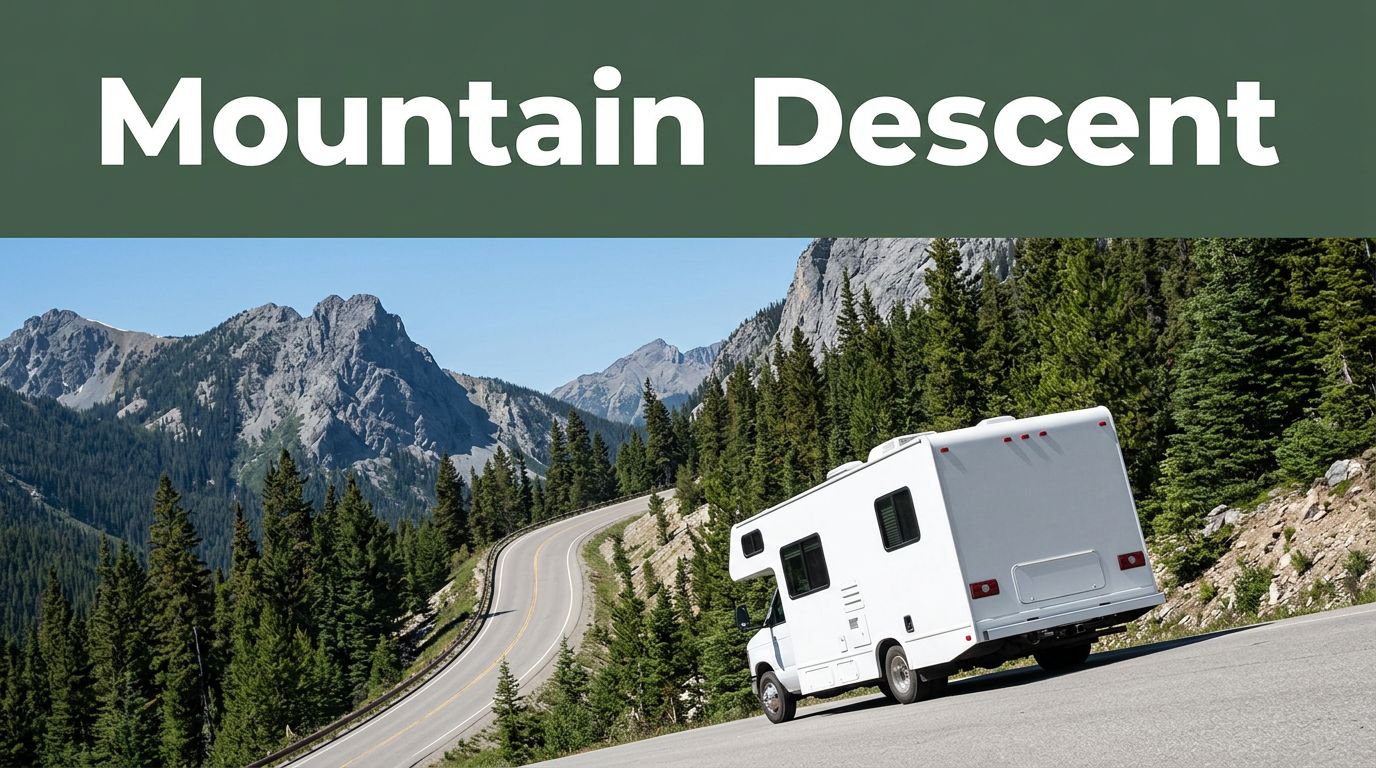
RV Mountain Driving: How to Descend Steep Grades Safely
A steep downhill can turn a relaxed camping day tense in a hurry. The view may be beautiful, but gravity is constantly pushing thousands of pounds of RV, passengers, gear, and possibly a towed vehicle downhill.
Mastering safe RV mountain driving is essential for any traveler. Whether you are navigating winding mountain passes or descending steep grades, having a clear plan is the best way to ensure a smooth trip. Because descending grades safely is a primary skill for travelers, you should focus on preparation, the right gear, and controlled speed. If you start a descent too fast or rely only on your brake pedal, heat builds quickly and can leave you with far less stopping power.
The work begins before your rig reaches the summit.
Key Takeaways
- Read grade signs early and slow down before the road drops away.
- Select a lower gear before beginning your descent, then rely on engine braking to manage your speed effectively.
- Use firm, brief applications of your service brakes to adjust speed when necessary instead of riding the brakes continuously.
- Pull over safely if you smell hot brakes, feel fading pedal response, or see smoke.
- Check weather conditions, route limits, and your RV transmission and braking guidance before mountain travel.
Read the Grade Before You Commit
Mountain roads provide useful warnings, but you need to spot them early enough to act. A sign that reads “6% grade, next 6 miles” means the road drops six feet for every 100 feet traveled. That may not sound dramatic, yet when navigating steep grades, it creates a steady force against your brakes for miles.
Watch for signs that list grade percentage, distance, sharp curves, runaway truck ramps, and lower speed limits. A downhill advisory speed is often far below the posted highway limit because it accounts for curves, sight lines, and braking distance. When you encounter mountain passes, take these warnings seriously to ensure a controlled descent.
Before the crest, check your mirrors and make a quick plan. Is there a slower vehicle ahead? Is a truck descending behind you? Are you towing a car or carrying a full fresh-water tank? Keep in mind that high altitude can affect vehicle performance, and that extra weight—combined with a full tank—changes how quickly your RV gathers speed.
Your route choice matters as much as your driving technique. A mountain pass may be legal for your RV but still feel stressful if it combines tight switchbacks, narrow shoulders, tunnels, or a long descent. Many seniors and full-time RVers prefer a longer route with gentler grades, especially in rain or high wind.
Use your RV’s actual height, length, weight, and fuel range when planning. Don’t depend on an app’s generic “RV route” setting without checking the road yourself. A reliable mountain directory, state transportation websites, campground hosts, and recent traveler reports can help you spot seasonal closures and construction before you hit the road.
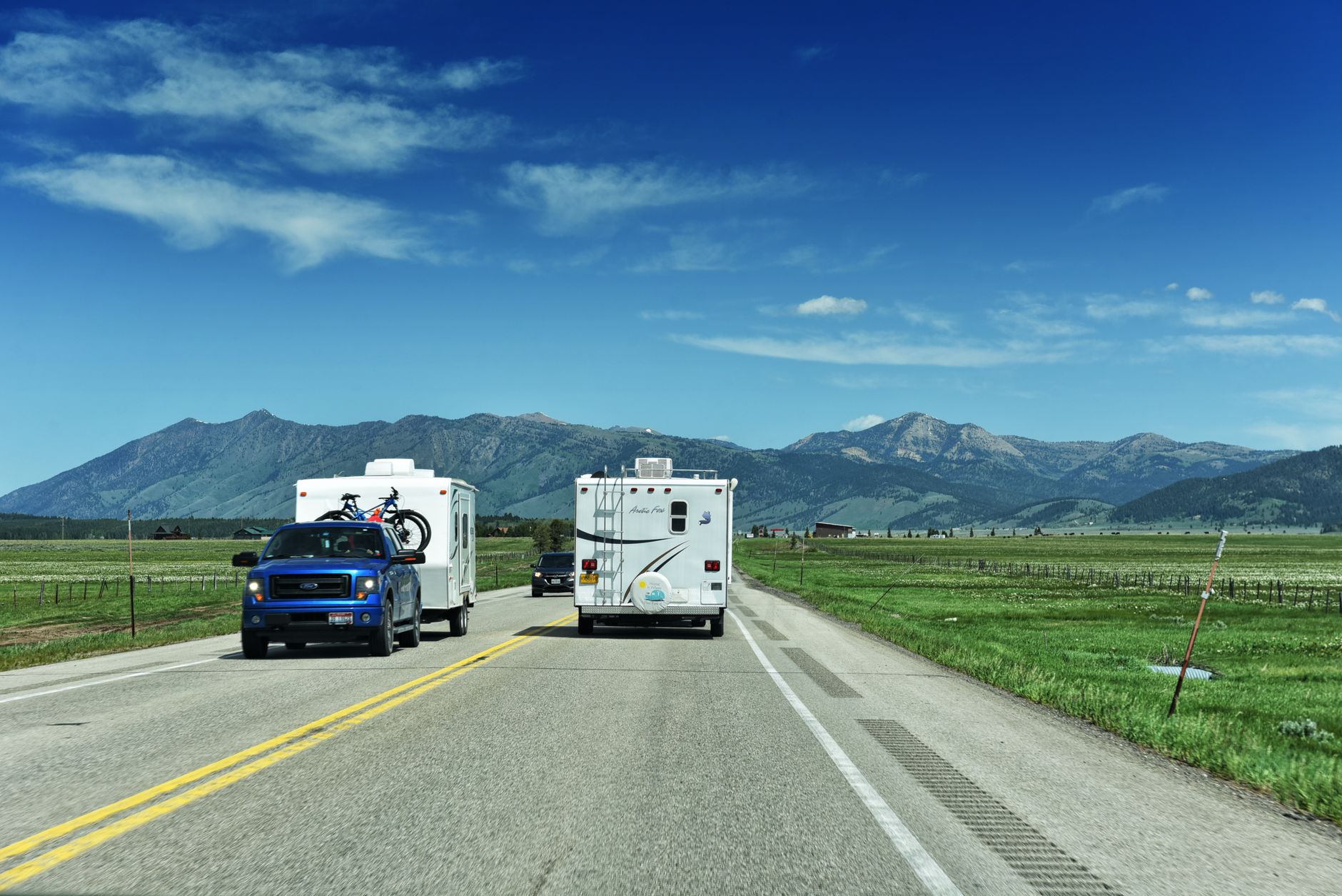
Photo by SUKHEE LEE
Camping trips are more enjoyable when the driving day leaves room for a slower route, a fuel stop, and an early arrival. The travel guides, planning tools, and community resources at View Our Website can help you build that extra margin into your itinerary.
On a steep grade, your target speed is the speed you can maintain without continuous braking.
Set Your Speed and Gear Before the Descent
The safest time to prepare for a steep descent is before the downhill begins. Reduce your speed while the road is still level or slightly uphill, and use manual gear selection to choose a setting that allows the engine to assist in controlling your pace. Selecting the right gear early is vital, as it allows for effective compression braking, which uses the internal resistance of the motor to slow the vehicle.
Gas-powered motorhomes often feature a Tow/Haul mode, which optimizes the automatic transmission to command earlier downshifts and hold lower gears longer. Diesel pushers may be equipped with an exhaust brake or a Jake Brake. These systems create backpressure or modify engine timing to assist with speed control, significantly reducing the heat burden on your service brakes.
No electronic system replaces driver judgment. Your owner’s manual provides essential information on your transmission, Tow/Haul mode, and auxiliary braking systems. Learn the location and operation of these controls before heading into mountain country.
A useful starting point is the classic truck-driving rule: descend in the same gear you used when ascending grades. While this is not perfect for every RV, it provides a sensible baseline. If you find your speed rising, keep an eye on your engine rpm and consider downshifting another gear as road speed allows. Never wait until your RV is racing downhill to force a shift. At excessive speeds, the transmission may refuse to downshift to protect the internal components. If you are going too fast, brake firmly to reduce speed before selecting a lower gear.
Keep your eyes further down the road than you would on flat ground. Curves, construction, wildlife, and slower vehicles can appear quickly on a descent. Maintain a generous following distance, especially when towing a car, as the added weight can push your motorhome forward.
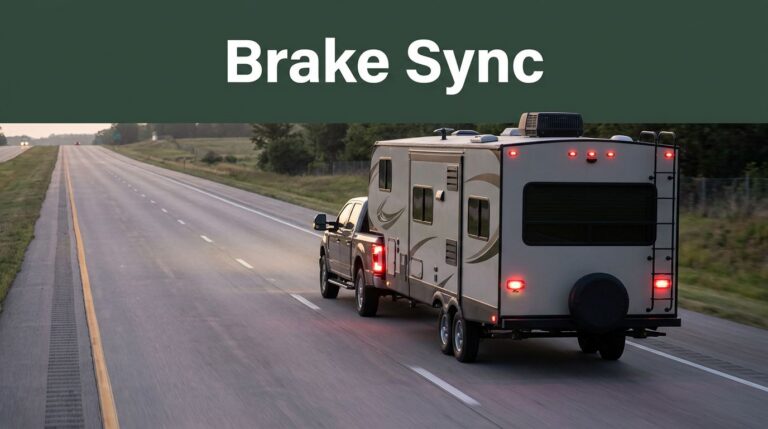
For a travel trailer or fifth wheel, utilize your tow vehicle’s tow mode and manual gear selection if available. Your trailer brake controller must be properly calibrated before the trip to ensure the trailer slows smoothly without locking its wheels. Most importantly, never shift into neutral to coast downhill. You will lose the benefits of compression braking, drastically increase the demand on your service brakes, and surrender your primary method of control. Coasting may seem quiet, but it can become a dangerous situation in seconds.
Use Brakes to Reduce Speed, Not Hold It
Your service brakes are a vital component of safe RV mountain driving. However, the goal is to use the service brakes as a backup to your transmission, rather than as the primary tool for holding your speed throughout the entire grade descent.
Riding the brakes creates continuous heat. As components reach high temperatures, they can lose friction, a dangerous condition known as brake fade. This can leave the pedal feeling normal even while the RV takes much longer to slow down due to overheating brakes.
Instead, set a low, comfortable speed by downshifting to a lower gear and engaging your engine brake. If your speed rises above that target, apply the brakes firmly for a few seconds to bring it back down. Then, release them fully so air can flow around the components and heat can dissipate.
For example, you might enter a grade at 35 mph in a low gear. If the RV creeps up to 40 mph, apply firm pressure to the brake pedal until you return to 30 or 35 mph. The exact numbers depend on the road, vehicle, weather, and traffic, so always follow posted advisories and respect your comfort level.
Avoid pumping the pedal. In most modern RVs and tow vehicles, firm, controlled pressure works best. If you find yourself needing constant braking to stay within a safe speed, your gear is likely too high or your starting speed was too fast.
Pay attention to warning signs that demand a safe pull-off:
- A sharp burning smell near the wheels or inside the coach
- Smoke, haze, or unusual heat from a wheel area
- A brake pedal that feels soft, sinks farther than normal, or requires significantly more pressure
- An RV that pulls to one side while braking
- A sudden need to use more pedal pressure to get the same response
If any of these appear, do not push onward hoping the brakes recover. Such symptoms are often precursors to total brake failure. Find a legal pull-off, turnout, or rest area. Set the parking brake only after you come to a complete stop, then focus on cooling the brakes for an extended period. Do not pour water on hot brake parts, as rapid cooling can damage critical components.
Runaway truck ramps are for emergencies. If you have lost control of your speed and cannot slow your RV, use one immediately. The ramp may damage your vehicle, but it can prevent a far worse outcome.
Adjust for Weather, Weight, and Fatigue
Dry pavement provides the widest safety margin. Changing road conditions, such as rain, snow, ice, sand, or wet leaves, can make any mountain descent unpredictable. In these situations, slow down earlier and use smoother steering, braking, and throttle inputs to maintain control.
Engine braking can affect traction on slick surfaces. If your drive wheels begin to slip, reduce the engine brake setting if your RV allows it, slow down gradually, and avoid abrupt inputs. For those towing a trailer, ensure your trailer brake controller is functioning correctly before you reach the grade. During long descents, keep a close eye on your transmission temperature and engine coolant levels to prevent mechanical stress.
Weight also plays a significant role in your vehicle’s performance. A fully loaded motorhome behaves differently than it does when empty. Verify your tire pressures when they are cold, and avoid overloading your axles. Properly distributed cargo improves stability through curves and during braking, which is essential for safe RV mountain driving.
Long, steep descents demand intense concentration. If you feel tired, hungry, dehydrated, or tense after a difficult climb, take a break at the top or before the next major grade. A short rest period helps prevent the rushed decisions that often lead to mistakes.
A co-pilot can assist by monitoring the route, reading grade signs, and limiting cabin distractions. Even with help, the driver must maintain a clear view, keep both hands on the wheel, and focus entirely on the road. Save your campground check-ins and phone calls for the next stop.
For practical route-planning ideas and seasonal camping tips, View All Our Newsletters. A little advance information can make a mountain driving day feel far more manageable.
Build Confidence One Grade at a Time
You do not need to avoid every mountain road to travel safely in an RV. Start with shorter, well-marked descents in dry weather. Practice selecting gears and using Tow/Haul or engine braking before tackling a long mountain pass.
Each descent teaches you how your particular rig responds. A Class A motorhome with diesel engines, a gas Class C, a camper van, or a truck towing a fifth wheel will all manage grades differently. Even if you are embracing van life, your compact rig still needs to navigate steep grades with caution to avoid overheating brakes or losing traction.
Prioritize vehicle maintenance by reviewing your RV manual, inspecting tires, and checking your braking system regularly. Always schedule a professional inspection before heading out on a long western trip. If you notice any performance changes, ask a qualified RV technician to inspect the issue rather than guessing at the cause.
Frequently Asked Questions
Why should I avoid riding my brakes on a long descent?
Riding the brakes continuously generates immense friction and heat, which leads to a dangerous condition known as brake fade. As the brakes overheat, they lose their effectiveness, requiring more pressure to slow the vehicle and potentially leading to total brake failure.
What should I do if I notice a burning smell while driving downhill?
A burning smell often indicates that your brakes are overheating. You should immediately find a safe place to pull over, away from traffic, and allow your braking system to cool down naturally. Do not pour water on the components, and do not continue driving until you are certain the brakes have fully cooled and regained their responsiveness.
Is the “descend in the same gear you used to climb” rule always accurate?
This rule serves as a helpful baseline for most drivers, but it is not a universal law for every RV. Factors like weight, engine type, and the specific steepness of the grade will influence your gear choice, so you must always monitor your speed and engine RPM to determine if a lower gear is necessary.
Drive the Grade, Not the Schedule
A safe downhill journey starts with patience at the summit. Choose a low gear, set a conservative speed, and let engine braking do the steady work while you use your service brakes only for short, firm corrections. Relying on your transmission to manage speed prevents your brakes from overheating, which is the most critical rule for mountain travel.
Mountain roads reward calm decisions. When you give your RV plenty of room to slow down, leave extra space around other vehicles, and stop before fatigue or brake heat becomes a problem, the descent becomes another memorable part of the camping journey. Always prioritize safety over your arrival time, especially when navigating steep grades.
This post may contain affiliate links. If you make a purchase through these links, I may earn a small commission at no extra cost to you.