
RV Departure Checklist for Seniors Who Miss Small Stuff
Most departure mistakes are not big. They are the little things left open, left plugged in, or left on the counter. That is why a comprehensive RV departure checklist matters, especially for seniors who want a calm, stress-free start to the day by following a reliable pre-departure checklist.
Leaving camp often happens in a rush. A neighbor stops to chat, the dog needs a walk, and breakfast dishes are still drying. A simple routine cuts through that noise and keeps your next drive safer.
Key Takeaways
- Use a consistent routine: Avoid relying on memory by building an RV departure checklist that follows the same, predictable zonal path every time you leave.
- Embrace physical touch points: Physically touch latches, locks, and hookups to ensure they are secure; this prevents the false memory of having already completed a task.
- Prioritize the final walkaround: Treat the walkaround as a mandatory safety net and consider speaking your checks out loud to maintain focus and avoid distractions.
- Personalize your list: Include your own repeat misses, such as specific medications, hearing aid chargers, or pet supplies, to make the list truly functional for your needs.
Why small details slip on departure day
Forgetfulness on travel morning does not mean you are careless. It usually means your brain is juggling too many tasks at once. You might be thinking about the route, the weather, daily medications, fuel, and whether the campground office opens before you pull out.
That mental load gets heavier after a few nights of camping. Gear spreads out, the coffee setup moves, and charging cables end up in odd spots. Even people who have been traveling for years miss things when their routine changes.
Seniors often feel this more acutely because comfort items are essential for life on the road. Reading glasses, hearing aid chargers, pill organizers, neck pillows, and backup cords all have a specific place. When one of these items gets moved, the whole morning can feel off. Whether you are a weekend camper, enjoy the freedom of van life, or are living as a full time RVer, keeping track of these essentials is a common challenge.
The fix is simple. Do not rely on memory when a consistent routine can do the work for you. Your departure checklist should carry the mental load so you do not have to.
A checklist isn’t a test of memory. It’s a way to stop using memory for jobs it doesn’t do well.
There is another benefit to this approach. A written list lowers stress between travel partners. Instead of asking if a task was completed every five minutes, both people know exactly what comes next. That makes departure smoother, and it cuts down on those halfway down the road doubts that send you looking for the next safe pull off.
Build your RV departure checklist around a fixed route
A strong departure routine follows the same path every time. That matters more than the format. A note card, clipboard, laminated sheet, or phone reminder can all work. What matters is the order.
Start with your manufacturer’s rules for slide-outs, stabilizer jacks, leveling, and towing. Those steps vary by rig, so your manual comes first. Once that sequence is clear, build the rest of your checklist using a zonal approach.
A simple order works well for most RV owners:
- Begin the interior teardown by securing loose items throughout the coach.
- Move to the exterior teardown to manage hookups and ground gear.
- Check compartments, doors, mats, and steps.
- Set up the driver area, mirrors, and tow vehicle navigation.
- Finish with a full walkaround before moving.
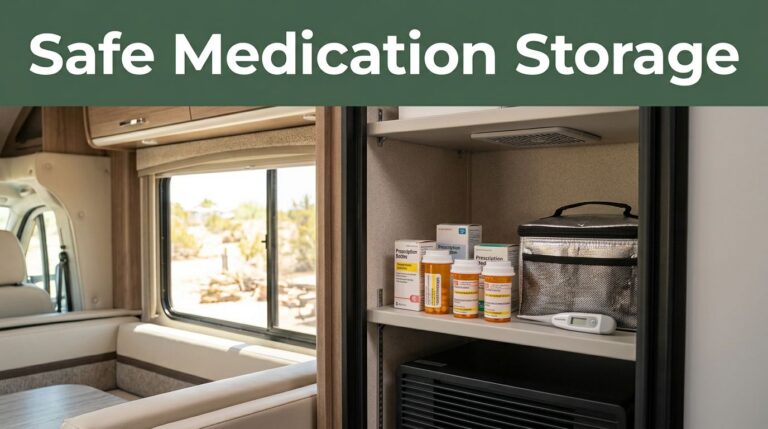
Inside, focus on anything that can swing, slide, spill, or bounce. Latch cabinets, close the fridge fully, secure the shower door, lower vents if needed, and clear counters. Put away the coffee maker. Check that the stove is off. If you use a CPAP, hearing aid charger, or medication basket, give those their own line on the list.
Outside, think in zones. Your water hose, pressure regulator, sewer connection, power cord, wheel chocks, leveling blocks, grill, camp chairs, and porch mat all need a home before you leave. Don’t trust yourself to remember these items on the way out. That works until the day it doesn’t.
Among the best camping tips, using the same route every time is near the top. Your eyes learn the pattern. Your feet do too. After a while, the list becomes less about remembering and more about confirming that your teardown is complete.
The small items seniors forget most often
Big jobs get attention, but the small ones cause the surprise. A forgotten latch or loose items can turn into broken gear, a delay, or an ugly roadside stop.
Here are some of the most common misses:
- Roof vents are left open, potentially leading to leaks or wind damage.
- Cabinets and drawers near the kitchen or bathroom are not latched properly.
- Glasses, keys, or medications remain on the dinette.
- The antenna is not fully retracted before pulling out.
- The step rug, camp mat, or folding table is left sitting outside.
- Essential campsite gear, such as the water pressure regulator or sewer hose, is forgotten at the pedestal.
- Electronic devices like a phone, tablet, or hearing aid case are left charging.
Those aren’t dramatic mistakes, but they create stress fast. Leaving roof vents open can let in dust or rain, while an unlatched cabinet or drawer can dump its contents on the first turn. Similarly, leaving behind medicine or a charging cable can ruin a travel day.

The smart move is to add your own repeat misses to your RV departure checklist. If you always forget the dog leash, write it down. If your partner always leaves a fan running, add that to the list as well. A useful checklist is personal, not pretty.
Many seniors also do better with physical touch points. In other words, do not just look at a latch; actually touch it. Do not just glance at the exterior cord bay; put a hand on the closed door to ensure it is secure. This touch point strategy cuts down on false memory, which is the common feeling that you already completed a task when you only thought about it.
If you get interrupted while performing your checks, go back one full step. Do not try to restart from memory. That one simple rule saves a lot of trouble on the road.
Make the final walkaround a hard stop
The final walk-around inspection should be non-negotiable. It is not an extra step; it is the last safety net before your RV moves.
Pick one direction and stick with it. Many people go clockwise because it feels natural, but either direction is fine. Start at the entry door and move slowly past each storage bay, wheel area, utility hookup, and body panel. Look high and low. As you move, verify that your bay doors are securely locked, your tire pressure looks correct, and your propane tanks are turned off. Check the steps, verify the water heater is powered down, and ensure all slide-outs are properly sealed. Don’t forget to confirm that your stabilizer jacks are fully retracted.
If you tow, add safety chains, trailer lights, and a final look at the tow vehicle connection to that same pass. If you travel solo, say each item out loud. It may feel silly, but it works. Spoken words slow the pace and sharpen focus. Be sure to look under the rig to ensure you have grabbed your wheel chocks.
For couples, one person should lead the walk-around inspection while the other stays clear and does not interrupt. Split roles before departure. One person handles the inside close-up. The other handles outside gear and the last sweep. Then both meet for a short confirm-and-go moment.
A good final check also includes the campsite itself. Look at the picnic table, fire ring area, utility post, and the patch of ground where chairs sat. Campsites often hide things. Leveling blocks, shore power cords, and grill tools can easily blend into dirt and leaves. That is why many seniors use a bright storage bin for departure-only items. If the bin is not back in the bay, you know something is still left behind.
That last lap may take two minutes. However, it can save you an hour, a broken part, or a frustrating return trip to the campground.
Low-tech reminder tools often work best
A one-page printable RV checklist beats a long note buried on your phone. Most seniors do best with a physical list they can see without hunting for it. Keep it clipped to the steering wheel, taped inside a cabinet door, or stored in a clear sleeve near the entry.
Laminated cards work well because you can use a dry-erase marker and wipe them clean. Magnets are also handy for a quick visual cue. Put one on the inside of the door that says steps, cords, and meds. When the door opens, the reminder is right there. Make sure your list includes essential tasks like switching your refrigerator power settings, checking the water pump, and ensuring your shore power cord is disconnected and properly stowed.
If you are heading to the dump station, use your checklist to remember to empty the grey water tank and the black water tank. It is also a good habit to verify your fresh water tank level before you hit the road.
Phone alarms still help, but use them for timing, not for the whole job. Set one for departure in 30 minutes and another for a final walkaround. That works better than trying to scroll through a long list while you are moving around the site.
Many RV owners also keep two versions of the same list. One stays inside. The other lives in an outside compartment. That way, you do not lose the system when you are already halfway through it.
If you want more practical reminders, route ideas, and travel planning help, View All Our Newsletters and View Our Website. Both fit well with a routine that keeps departure day calm, especially if you like useful camping tips without fluff.
The best checklist is short enough to use and specific enough to matter. If it takes ten minutes to read, you will stop using it. Keep it tight, update it after each trip, and let your real-life mistakes shape the next version.
Frequently Asked Questions
Why should I use a paper checklist instead of an app?
Physical lists are often more effective because they are always visible and require no navigation or battery life. Keeping a laminated card or a clipboard at eye level acts as a constant, reliable reminder that you cannot accidentally close or lose.
What should I do if I get interrupted during my departure process?
If you are distracted by a neighbor or a task, always go back one full step in your list rather than trying to remember where you left off. Starting from the previous confirmed point ensures you don’t skip a crucial safety detail in the chaos of a busy morning.
How can a checklist help improve my relationship with my travel partner?
A written checklist removes the need for constant questioning, which can lead to friction and misunderstandings between partners. When both people know exactly what to do based on a shared, agreed-upon list, the departure process becomes a collaborative effort rather than a source of stress.
A calmer start is the real goal
The small details often cause the most departure stress because they are easy to miss and difficult to trust to memory alone. A consistent written routine solves that problem. When your RV departure checklist follows the same order every time, you can pull away from your site with fewer doubts and far fewer surprises.
That matters even more for seniors, as your safety, comfort, and peace of mind should always remain the top priorities while traveling. Using a reliable pre-departure checklist turns a chaotic morning into a smooth transition. By leaning on your RV departure checklist, you remove the guesswork from your day. Ultimately, a thorough pre-departure checklist is not about achieving a perfect morning; it is about creating a calm one. When you have a routine in place, you can finally relax and enjoy the open road instead of worrying about whether you left a task unfinished.
This post may contain affiliate links. If you make a purchase through these links, I may earn a small commission at no extra cost to you.