
RV Battery Basics for Part-Time Travelers Who Want Reliable Power
If your lights fade on the second night, RV battery basics stop feeling basic. Part-time travelers often lose power for a simple reason, the battery sat too long between trips, or the rig has less capacity than they thought.
That catches a lot of campers, especially seniors who want comfort without extra fuss. A few clear habits can prevent weak furnace fans, dead batteries, and surprise repair bills. It starts with knowing what your RV battery does, and what it does not do.
Why part-time travel is hard on RV batteries
A part-time travel schedule sounds easy on equipment, but batteries don’t always agree. An RV that sits for weeks can have more battery trouble than one that gets used every few days. Small draws keep working in storage, and lead-acid batteries hate sitting partly discharged.
Most rigs have two battery systems. The chassis battery starts the engine. The house battery powers your lights, water pump, vent fans, slide-outs, and the control boards for many appliances. If you’re plugged into shore power, the converter usually keeps the house battery charged. Once you unplug, that battery becomes the heart of daily comfort.
A lot of new owners assume the battery only matters when they’re dry camping. That’s not true. Even in campgrounds, a weak battery can cause odd issues. Steps may move slowly, jacks can struggle, and the furnace fan might drop off when the night gets cold.
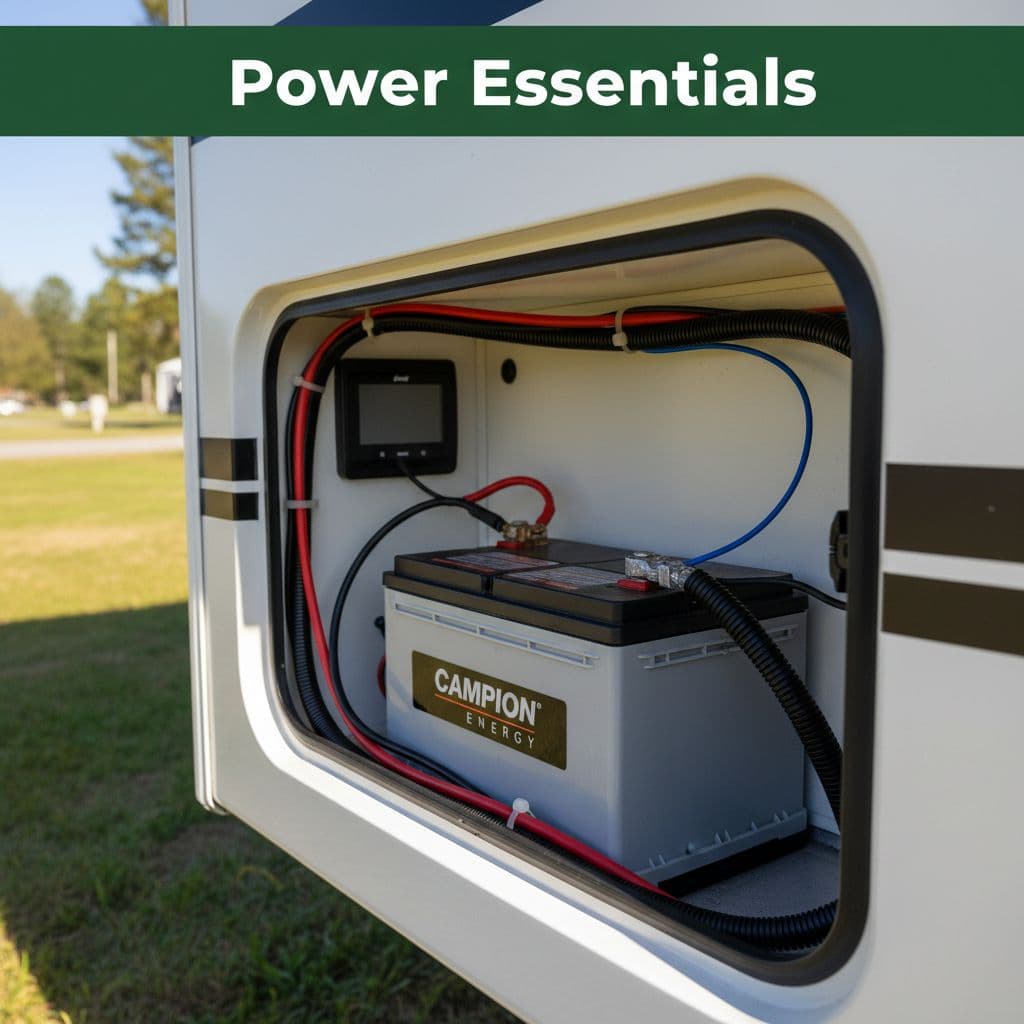
A clean battery bay makes it easier to spot corrosion, loose cables, and early signs of trouble.
The biggest issue for part-time campers is storage. Even when everything looks off, small parasitic loads may still pull power. Propane detectors, stereos, clocks, and control panels slowly drain the battery. After a few weeks, that can leave a lead-acid battery low enough to shorten its life.
A battery that sits half-charged for a month can age faster than one that powers a full weekend and gets recharged right away.
That’s why good battery habits matter even more for weekend camping than they do for daily use. If you understand the basics, you can avoid most of the common headaches before they start.
The best battery type for your camping style
Battery choice shapes how much work you do, how much power you have, and how often you replace the battery. For seniors, the best option is often the one that fits both your travel pattern and your tolerance for upkeep.
Here is a quick side-by-side view of the most common house battery types:
| Battery type | Best for | Main upside | Main downside |
|---|---|---|---|
| Flooded lead-acid | Budget-minded campers with hookups | Lower cost | Needs water checks, vents gas, dislikes deep discharge |
| AGM | Part-time travelers who want less maintenance | Sealed, cleaner, simple swap in many rigs | Costs more than flooded, still loses life if deeply drained |
| Lithium | Frequent boondockers and heavier power use | More usable capacity, lighter weight, fast charging | Higher upfront cost, may need charger or converter updates |
For many part-time RV owners, AGM hits a comfortable middle ground. It doesn’t need watering, it handles storage better than flooded lead-acid in many cases, and it’s simple to live with. If your trips are mostly weekend stays with hookups, AGM may be all you need.
Flooded lead-acid still works well if you don’t mind routine checks. You need to inspect water levels, keep the case clean, and charge it promptly after each trip. It’s the least expensive path, but it asks more from you.
Lithium has clear strengths. It gives you more usable power from the same rated capacity, charges faster, and weighs less. Still, a lithium setup that makes sense for van life or full time rv’ers may be more than a couple needs for monthly campground trips. In addition, some older RV converters do not charge lithium correctly.
The right answer depends on how you camp. If you spend most nights plugged in, pay for a reliable battery and easy care. If you like longer off-grid stays, want to run a CPAP, or hate watching every light switch, lithium starts to make more sense.
How much power you need, and how to recharge it
Battery size is usually listed in amp-hours. That number matters, but it can mislead people. A 100 amp-hour battery sounds large until you remember that not all battery types let you use the full amount without shortening battery life.
With lead-acid batteries, many owners try not to go below about 50 percent charge on a regular basis. That means a 100 amp-hour battery often gives you about 50 useful amp-hours if you want decent lifespan. Lithium changes that math because much more of its rated capacity is usable.
What uses the most power in a normal RV? Lights are usually modest. Phone charging barely moves the needle. The furnace fan, on the other hand, can drain a battery much faster than many people expect on a cold night. Water pumps, vent fans, CPAP machines, and inverters also add up. A coffee maker or hair dryer run through an inverter can flatten a small battery bank in a hurry.
If you mostly stay in campgrounds with hookups, one healthy battery may be enough. For two nights off-grid, you may want two batteries or one larger lithium battery. The right amount depends on your habits, the weather, and whether you depend on 12-volt comfort items overnight.
Charging matters as much as battery size. Shore power is the easiest source. Your converter charges the house battery when plugged in, but older converters may charge slowly or keep batteries at the wrong voltage for long periods. Your tow vehicle or motorhome alternator may add some charge while driving, but don’t assume a short drive will refill a battery.
A few checks before each trip help a lot:
- Charge the battery at least a day before departure.
- Look for loose cables, corrosion, or bulging battery cases.
- Plug into shore power and confirm the battery is charging.
- Unplug, then check your monitor so you know your starting point.
Good power planning doesn’t mean obsessing over numbers. It means knowing which appliances are light users, which ones are battery hogs, and how quickly your charger can recover after a night off-grid.
Simple battery care between trips
For part-time travelers, battery care between trips matters more than fancy equipment. The goal is simple, keep the battery charged, clean, and protected from long periods of neglect.
A battery monitor helps more than most upgrades. Voltage alone gives a rough snapshot, but only when the battery is resting. A true battery monitor tracks what goes in and out, so you can see state of charge with far more confidence.

A simple monitor tells you much more than guessing from dim lights or a single panel light.
If your RV sits at home, use the setup that matches your battery type. Many owners leave the rig plugged in, but that only works well if the converter has a good maintenance mode. Some older units can overcharge over time. A quality smart charger or maintainer is safer for long storage.
Lead-acid batteries need extra attention. Check water levels if you have flooded batteries, and use only distilled water. Clean corrosion from terminals, keep the hold-down snug, and recharge promptly after every trip. If the RV has a battery disconnect switch, use it during storage, but remember that some systems still have small draws.
Lithium batteries need less routine care, though they still need the right charger settings. In cold climates, charging below freezing can damage some lithium batteries unless the system has low-temperature protection or internal heating.
This is also where good habits beat expensive parts. Label your disconnect switch. Keep a simple note of normal monitor readings. If you’re unsure what your charger is doing, look it up before the next trip rather than after a dead-battery weekend.
Many seniors appreciate a reminder system because battery maintenance is easy to forget when the RV is parked. The RV Life Insider newsletter is a good place to keep those habits fresh. If you want seasonal reminders and practical camping tips, View All Our Newsletters. For trip planning, gear ideas, and more help for your next rv outing, View Our Website.
Final thoughts
Reliable power starts with a simple truth: batteries don’t like being ignored. Part-time travel can be hard on them because long gaps between trips often do more damage than steady use.
The best setup is the one that matches how you camp, how often you use hookups, and how much maintenance you want to handle. Once you understand your battery type, your charging method, and your biggest power draws, RV battery basics become easy to manage.
A healthy battery makes every trip smoother, from weekend camping close to home to longer seasonal travel. That’s peace of mind worth packing.
RV Life Insider
Income Partnerships
This post may contain affiliate links. If you make a purchase through these links, I may earn a small commission at no extra cost to you.