
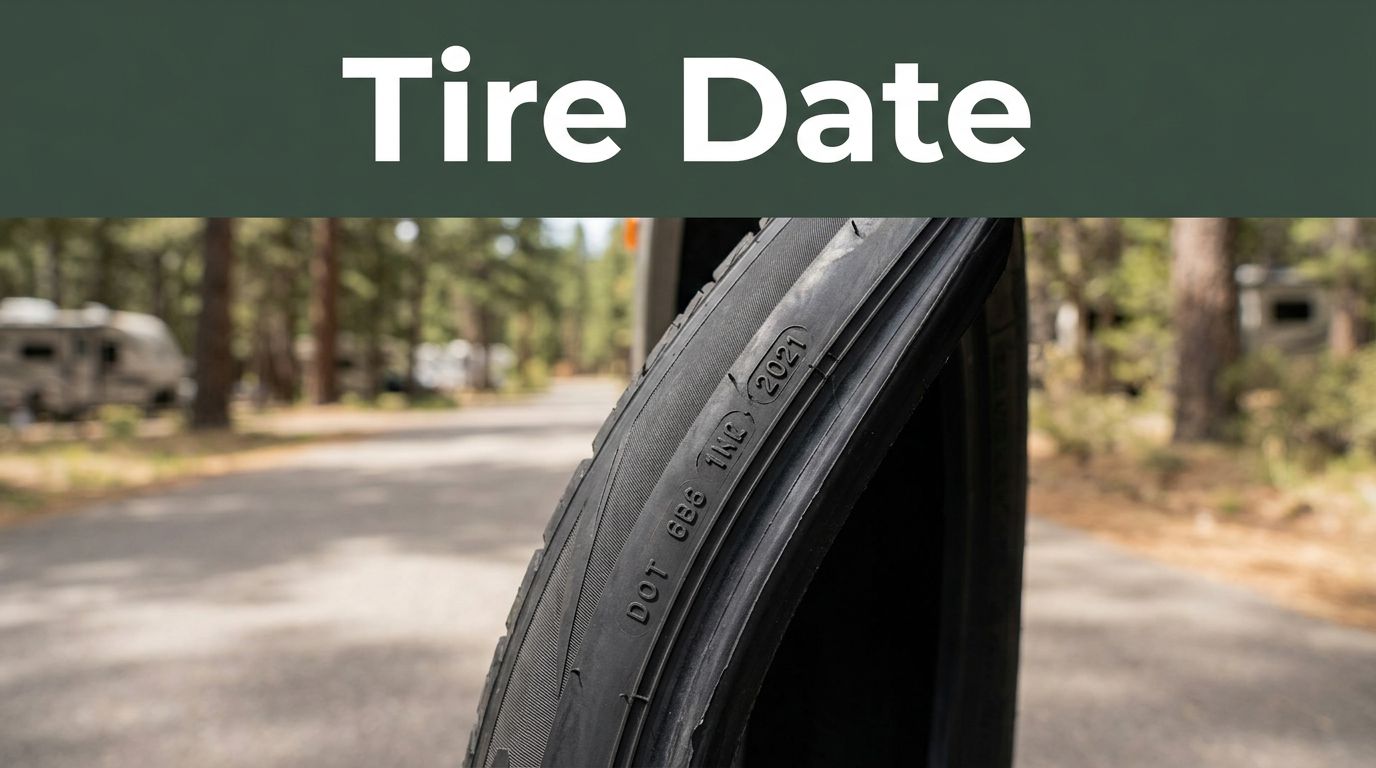
How to Read RV Tire Date Codes Before a Long Trip
A tire can look healthy and still be too old for highway miles. Sun, heat, long storage periods, and heavy loads age rubber from the inside, so a quick glance at the tread is never enough to determine true tire age.
Before a long RV trip, find the RV tire date codes and read them. It takes only a few minutes, yet it can prevent a stressful breakdown far from your next campground.
Key Takeaways
- RV tire date codes use a four-digit sequence that identifies the specific week and year your tire was manufactured.
- You can locate this code at the end of the DOT number on the tire sidewall, though you may need to check the inner sidewall if it is not visible on the outside.
- A code such as 1423 indicates the tire was produced during the 14th week of 2023.
- Do not rely solely on tread depth to judge tire health, as it does not reveal the actual age of the rubber, hidden internal damage, or signs of sidewall deterioration.
- Always verify production dates, inflation pressure, structural integrity, and load ratings before heading out on any major camping trip.
What the DOT Tire Date Code Tells You
Every road-going RV tire has a Department of Transportation tire identification number molded into its side wall. This number begins with the letters DOT and ends with a 4-digit date code on tires made in 2000 or later.
Those final four digits are the part that matters most before travel. The first two digits show the manufacturing week. The last two show the manufacture year.
For example:
| Tire Date Code | Manufacturing Date |
|---|---|
| 1423 | 14th week of 2023 |
| 4821 | 48th week of 2021 |
| 0520 | 5th week of 2020 |
| 3718 | 37th week of 2018 |
A tire marked 1423 was built in early April 2023. One marked 4821 was made late in November 2021.
The DOT code does not tell you when the tire was installed or how many miles it has traveled. It only provides the manufactured date. Still, that number is one of the clearest clues to whether a tire needs closer attention. Understanding the tire manufacturer date is vital because RVs often sit for weeks or months at a time. A tire that rolls only a few thousand miles each year can still grow brittle. That is especially true when it sits in direct sun, on hot pavement, or under a heavily loaded coach.
A tire with deep tread can still be an old tire. Read the date code before you trust its appearance.

Photo by wal_ 172619
How to Find the Date Code on Your RV Tires
Start on the outer side wall of each tire. Look for a raised string of letters and numbers beginning with “DOT.” The full DOT code can be long, but you only need the last four digits.
Sometimes you will find “DOT” on one side wall and the complete code on the other. Tire makers may place the full tire identification number on the inward-facing side. That means you may need a flashlight, kneel beside the tire, or use your phone camera to inspect the inside side wall.
A small inspection mirror can help with dual rear tires and tight wheel wells. If you cannot safely read the code, ask a tire shop to check it. Never crawl under an RV supported only by leveling jacks.
Use this quick routine before departure:
- Park on level ground, set the parking brake, and use wheel chocks if needed.
- Check every tire, including the spare and both tires in each dual-wheel position.
- Photograph each DOT code with your phone.
- Write down the dates and the specific DOT code in your RV maintenance notebook.
- Compare the oldest tire’s age with the replacement guidance from its manufacturer.
Don’t assume all tires match. A previous owner may have replaced only one tire after a flat. The tires may look similar, yet one could be several years older than the rest.
This matters on travel trailers, too. Trailer tires often endure long idle periods, sharp turns in campgrounds, and heavy loads near their limits. Specifically, ST tires, or Special Trailer tires, are designed for high load capacities rather than the driving dynamics of motorized RV tires. Checking the age of these tires belongs on every list of practical camping tips.
When an RV Tire Is Too Old for a Long Trip
There is no single expiration date that fits every RV tire, as tire age is a primary factor in determining when it is time for a replacement. Tire life depends on the brand, tire type, load, storage conditions, inflation habits, and exposure to heat. However, age should trigger a more careful decision well before tread wears out.
Many tire manufacturers recommend annual professional inspections after about five years of service. Some also set a maximum service life of 10 years from the date of manufacture, even if the tire appears usable. Always follow the instructions for your specific tire brand and RV manufacturer.
For a long trip, treat these age ranges as a practical guide:
| Tire Age | Practical Pre-Trip Response |
|---|---|
| Under 5 years | Inspect condition, pressure, tread, and load capacity. |
| 5 to 7 years | Inspect closely and consider a tire professional’s opinion. |
| 7 to 10 years | Plan replacement sooner, especially for hot-weather travel. |
| Over 10 years | Replace before a long highway trip. |
Heat speeds up rubber aging. A motorhome stored outside in Arizona, Texas, or Florida may need tires sooner than a similar RV stored indoors in a mild climate. Tires on a full-time rig also face more loading cycles than tires on a weekend camper.
Check the spare tire with the same care. Many RV owners forget it because it never touches the road. Yet the spare may be the oldest tire on the vehicle, exposed to heat under the chassis or on a rear-mounted carrier.
If the code shows a tire is old, don’t wait for dry rot or sidewall cracks to make the choice for you. Blowouts can damage wheel wells, plumbing, wiring, and nearby vehicles. They are also harder to manage when you are driving a large motorhome or towing on a busy interstate. When the time comes to replace trailer tires, always verify the date code on your new trailer tires before purchase to ensure they have not been sitting on a shelf for years.
Pair Date Codes With a Full Tire Inspection
The date code provides the age of your tire, but a pre-trip inspection is essential to reveal other warning signs that could impact the safe operation of your vehicle on the highway. Always check your tires when they are cold, meaning before driving more than a few miles.
First, use an accurate tire pressure gauge to check your levels. Inflate your tires to the pressure listed on the RV tire information placard, rather than the maximum number molded on the tire side wall, unless your manufacturer directs otherwise. For motorhomes with larger tires, weigh the fully loaded RV and consult the tire maker’s load and inflation table to ensure you are setting the correct cold pressure for your specific load capacity.
Next, look closely at the side walls and tread. Small surface marks can be difficult to judge, so clean off any dust and use a flashlight for better visibility. Pay close attention to the following areas:
- Cracks in the side wall, tread grooves, or around the valve stem
- Bulges, blisters, cuts, and exposed cords
- Uneven tread wear, especially on one shoulder
- Stones, screws, or other objects lodged in the tread
- Missing valve caps or corroded valve stems
- Tires rubbing against suspension parts or adjacent dual tires
A bulge indicates that the internal structure of the tire may have failed. Do not drive on a damaged tire to the next town; replace it immediately.
Additionally, verify the tire load index, speed rating, and overall tire specifications against the information on your RV placard. A tire may be new, but it could still be the wrong choice if it cannot carry your current axle load. This is a common concern for full time RVers who add solar equipment, tools, supplies, or heavier furniture over time.
For those embracing van life, tire age deserves the same level of attention. While a camper van may appear lighter than a large Class A motorhome, it can still run close to its gross vehicle weight rating. Extra water, batteries, bikes, and gear add up quickly, making it vital to confirm your tires are rated for the total weight of your build.
Storage Habits That Help Tires Last
Good storage cannot make an old tire young again, but it can slow unnecessary deterioration. Proper care is particularly important for trailer tires, which often remain stationary for longer periods than motorhomes. When your RV sits between camping trips, park on a firm, dry surface and avoid standing water. Keep the tires inflated to the recommended cold pressure.
Tire covers can block direct ultraviolet exposure, particularly when the RV stays outside for long periods. Choose covers that fit without trapping excessive moisture, and remove them before moving the RV.
Move the RV periodically if practical, but do not use a short drive as a substitute for inspection. A few miles around town will not repair aged rubber or correct a pressure problem.
Before heading out, inspect tires after the RV has been loaded. Water tanks, food, clothing, and outdoor gear can change axle weight. The RV Life Insider website has travel planning resources that can help keep those pre-departure tasks organized.
For regular reminders on maintenance, route planning, and safer camping routines, you can also View All Our Newsletters.
Frequently Asked Questions
Do I need to check the date code on my spare tire?
Yes, you should always check the spare tire with the same care as your main tires. Spares are often forgotten because they do not touch the road, but they can be the oldest tires on your vehicle and may suffer from heat-related deterioration while mounted on the chassis.
What if I cannot find the DOT code on the outer sidewall?
If the DOT code is not visible on the outside, check the inner sidewall of the tire. You may need a flashlight or a small inspection mirror to see it, but remember to never crawl underneath the RV while it is supported only by leveling jacks.
Does a tire with deep tread mean it is safe to use?
No, tread depth does not indicate the internal health or age of a tire. Tires can develop brittleness or hidden structural damage from sun exposure and long storage periods, so you must verify the manufacturing date regardless of how much tread remains.
How often should I have my RV tires professionally inspected?
Many manufacturers suggest having your tires professionally inspected annually once they reach five years of service. If your tires are seven to ten years old, you should plan for replacement soon, as tires older than a decade are generally considered unsafe for long highway trips.
Read the Code Before You Roll
Checking your RV tire date codes transforms a vague safety concern into a clear maintenance task. By locating the DOT code and reading the final four digits, you can accurately judge the tire age alongside other critical factors like tire pressure, physical condition, and load capacity.
Spending a few minutes in the driveway can save you from a blown tire on a mountain pass or an inconvenient delay on the side of the road. Before you head to your next campground reservation, make checking your DOT code and overall tire age a standard part of your pre-departure checklist. Being proactive with these simple checks ensures that your tires are ready for the road, providing peace of mind for every mile of your journey.
This post may contain affiliate links. If you make a purchase through these links, I may earn a small commission at no extra cost to you.