How to Create an RV Medical Emergency Plan
A medical emergency can turn a peaceful camping morning into a high-pressure situation within minutes. When you are miles from your regular doctor, prioritizing emergency preparedness through a clear RV medical emergency plan helps you make calm decisions and access necessary care faster.
This matters even more for seniors, full-time RVers, and anyone managing prescriptions, mobility concerns, allergies, or chronic conditions on the road. A few practical preparations can protect your health without taking the joy out of travel.
Key Takeaways
- Keep medical records, health insurance coverage, and emergency contacts in one waterproof folder and on your phone.
- Carry enough of your prescription list for your planned trip, plus extra in case of travel delays.
- Map hospitals, urgent care centers, pharmacies, and specialty providers before moving to a new area.
- Stock an RV first-aid kit for cuts, burns, allergic reactions, stomach illness, and minor injuries.
- Practice how you will call for help, exit the RV, and notify loved ones.
Start Your RV Medical Emergency Plan Before Departure
A useful plan begins at home, when there is time to think clearly. Gather your travel partner, discuss likely health concerns, and decide what each person should do if the other cannot speak or move safely.
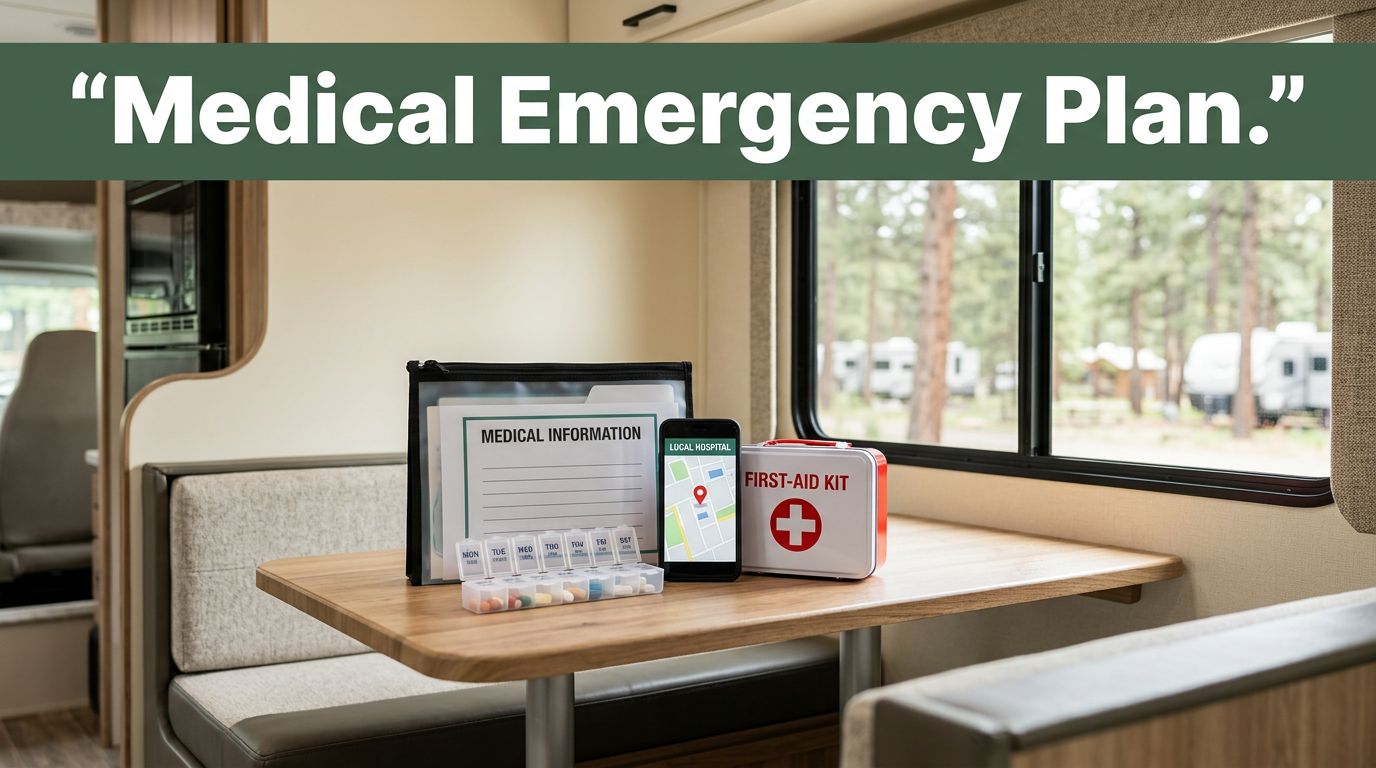
Write down the basics first. Include your full names, dates of birth, home address, primary doctor, specialists, pharmacy, and emergency contacts. Add your insurance member number, Medicare information if applicable, and any travel assistance program contact details.
Your emergency folder should also function as a portable health file for every traveler. List your medical history, including current conditions, past surgeries, allergies, and your complete prescription list. Include dosage schedules and information on medical devices such as pacemakers, insulin pumps, hearing aids, or CPAP equipment. If someone takes blood thinners or has a history of heart trouble, put that information near the top.
Keep printed copies in a waterproof pouch near the RV exit. Store secure digital backups in your phone and a cloud account. A wallet card can also help when you are separated from your RV or unable to unlock a device.
Emergency crews need facts quickly: who you are, what you take, what you are allergic to, and where you are.
For seniors who use advance directives, include copies of your health care proxy, medical power of attorney, and living will. Tell your travel companion where these papers are stored. A hospital cannot act on paperwork it cannot find.
Medication deserves its own plan. Bring enough medication for the entire journey, plus a cushion for breakdowns, weather closures, or an extended campground stay. Keep prescriptions in their original labeled containers, not in a daily organizer alone. Ask your doctor or pharmacist how to handle medications that need refrigeration, especially during hot-weather camping.
Before leaving, call your health insurer to verify your health insurance coverage, specifically regarding out-of-network urgent care, emergency room visits, telehealth access, and prescription refills in another state. Many plans provide a 24-hour nurse line. Save that number in both phones.
For additional road-readiness ideas, this RV emergency travel plan guide covers medical events alongside fire and severe-weather preparation.
Build a First-Aid Kit for RV Travel
The plastic first-aid box that came with your RV is rarely enough for a long trip. Think of your medical supply storage as a specialized Go Bag, a portable and accessible collection that ensures you can reach essential items without climbing over gear. Create a larger, clearly marked kit and place it in a central location. Avoid storing it in an outside compartment that could be locked, blocked, or subjected to extreme heat.
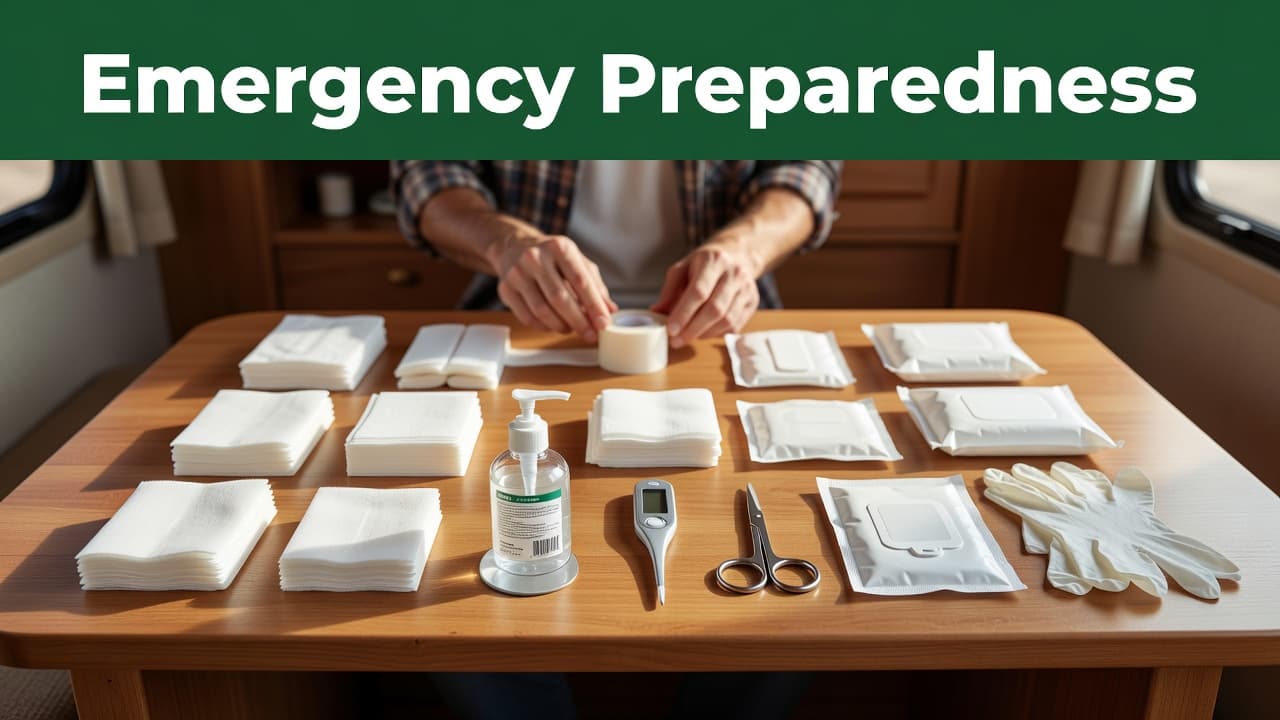
Start with supplies for everyday problems. Adhesive bandages, sterile gauze, medical tape, antiseptic wipes, saline, tweezers, scissors, elastic wraps, and disposable gloves will handle many minor injuries. Add a digital thermometer, instant cold pack, burn gel, hydrocortisone cream, antihistamine, antacid, anti-diarrheal medicine, and pain relievers that are safe for you.
Include a CPR face shield, emergency blanket, flashlight, spare batteries, and a simple first-aid reference guide. If you travel far from services, pack extra water and shelf-stable snacks in the same area.
Some supplies require more thought. Keep prescribed inhalers, epinephrine auto-injectors, glucose tablets, and other personal emergency medicines available to the person who may need them. Do not bury these items under camping chairs or seasonal clothing.
A tourniquet and hemostatic gauze may be reasonable for remote travelers, but only if you learn how to use them properly. The American Red Cross offers first-aid and CPR training in many communities. A refresher course is a vital step in emergency preparedness, as it can make the contents of your kit far more useful during a crisis.
Check the kit at the start of every travel season. Replace expired medication, dead batteries, dried-out wipes, and used supplies. Also check your prescription inventory before each relocation day, not after you arrive in a small town with a limited pharmacy. Consistent maintenance ensures your emergency preparedness remains reliable throughout your journey.
Map Medical Care Along Your Route
An emergency plan should follow your route, not stay in a drawer. Before every major move, search for the nearest hospital, urgent care centers, pharmacy, and veterinary clinic if pets travel with you. Save the contact information for each medical facility offline, or write the addresses and phone numbers in a travel notebook.
At a campground, learn the exact street address, your site number, and the fastest evacuation routes. Cell service may be weak, and a confused caller can lose precious minutes trying to describe a forest road or a county park.
When calling 911, give the dispatcher the campground name, street address, site number, and visible landmarks. If you use a navigation app, share your coordinates when possible. Then, send someone to the campground entrance if responders may have trouble finding your site.
Travelers who require dialysis, oncology appointments, oxygen, or other scheduled care should map providers before selecting destinations. Confirm that the clinic accepts your insurance and can accommodate a visiting patient. Consider exploring telehealth services as a backup if you have questions about your care while on the road. Do not assume that a large town has the specific specialty services you need.
The same preparation helps with less urgent situations. A urinary tract infection, dehydration, infected cut, or medication reaction may need same-day care without requiring an ambulance. This guide to health emergencies and RV travel offers useful advice on locating care near your destination.
Plan around terrain and weather, too. A beautiful boondocking site may be a poor choice if someone needs fast access to an emergency room. During heat waves, keep extra drinking water, know the signs of heat illness, and run your air conditioning or generator as needed. In cold weather, protect medications from freezing.
Set Communication and Evacuation Roles
In an emergency, unclear roles create confusion. Decide in advance who calls 911, who retrieves the medical folder, who unlocks the RV, and who coordinates potential medical evacuation. If you are among the many solo RVers on the road, notify a nearby neighbor or campground host that you may need help, especially if you are recovering from an illness or surgery.
Put your emergency contact information in your phone under ICE, meaning In Case of Emergency. Add these details to a printed list as well. Include one trusted person who has permission to speak with doctors and coordinate emergency medical transportation if needed.
Full time RVers often change locations so quickly that relatives lose track of them. Send a simple itinerary message before moving, including the campground name, dates, and a contact number. If you work while traveling, this is also the time to implement a business backup plan so colleagues know how to reach you if you are unavailable. Your loved ones do not need every turn on the map, but they should know where to start looking.
Practice a quick RV exit. Check whether steps, handrails, rugs, and pathways could cause a fall. Keep shoes, glasses, a flashlight, and phones in the same spot at night. If one person has limited mobility, decide whether they can safely exit through the main door and where they will wait for help.
Campground staff can be helpful, but they are not medical responders. Many parks have their own procedures, so review the RV park emergency protocol basics when you arrive and ask where emergency vehicles enter.
Review the Plan Before Every Trip
Your plan needs regular attention because medications, doctors, insurance plans, and physical abilities change. Review your RV medical emergency plan before a long trip, after a new diagnosis, and whenever you switch pharmacies or health plans. It is also a smart time to verify that your travel insurance is still active and that you have up-to-date information for your RV return service if you need assistance getting your rig home after a health crisis.
Take ten minutes to test the practical details. Can both travelers find the first-aid kit in the dark? Does each phone have emergency contacts saved? Is the medical folder still current? Are enough medications packed for a potential travel delay? Ensuring every detail is accounted for makes your RV medical emergency plan a reliable safety net.
RV Life Insider supports senior travelers with practical safety advice, travel ideas, and camping tips for everyday life on the road. You can View Our Website for more resources, then join our RV lifestyle newsletter for fresh guidance sent to your inbox.
Frequently Asked Questions
How often should I review my RV medical emergency plan?
You should review your medical emergency plan at the start of every travel season, before any long-distance trip, and whenever there is a change in your health, prescriptions, or insurance coverage. Regular updates ensure that all contact information and medical supplies remain current and reliable. Frequent reviews help you stay prepared for unexpected health challenges while on the road.
Should I carry my entire medical history in my RV?
Yes, keeping a portable, waterproof medical file is essential for effective communication with emergency responders. This file should include a list of your chronic conditions, past surgeries, allergies, and a complete, up-to-date prescription list with dosages. Having this information readily available allows medical professionals to provide safe and informed care regardless of your location.
What should I do if I have a medical emergency in a remote area?
Prior to arriving at a remote destination, identify the nearest urgent care centers, hospitals, and emergency services, and save their contact information offline. If you must call 911, clearly state your campground name, exact site number, and provide GPS coordinates if you have them. Always designate someone to meet emergency responders at the entrance to guide them to your specific location.
A Plan Makes Room for Better Travel
A medical emergency plan cannot prevent every health problem, but it gives you a clear path when stress is high. Updated records, reliable medication supplies, nearby care options, and practiced communication keep small problems from becoming harder to manage.
Whether you are enjoying van life, weekend camping, or living as full-time RVers, having a comprehensive strategy provides reliable nationwide coverage that offers true peace of mind. Preparation protects the freedom that makes travel worthwhile. Keep your plan current, share it with your travel partner, and review it before the next set of wheels rolls.
This post may contain affiliate links. If you make a purchase through these links, I may earn a small commission at no extra cost to you.