How to Adjust Towing Mirrors for Safer Lane Changes
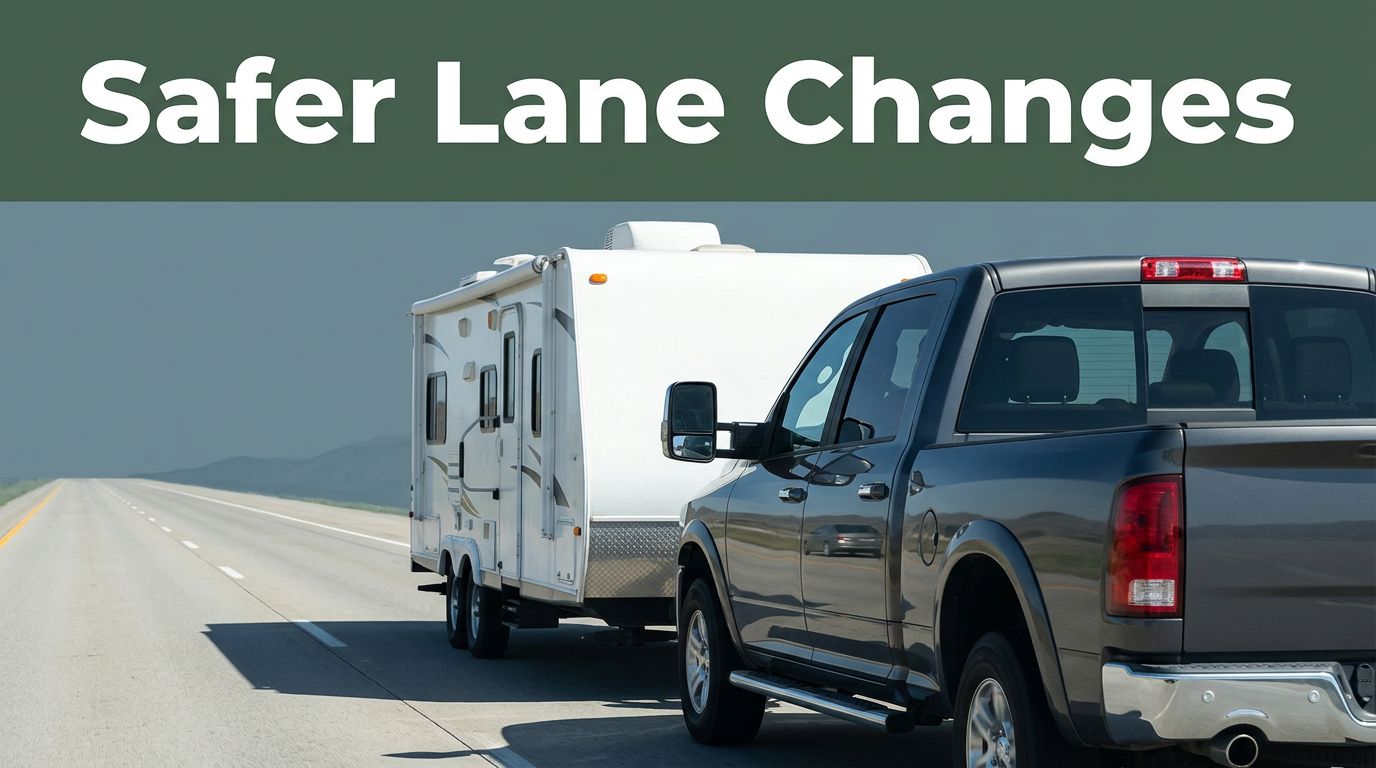
Executing lane changes can feel routine until your trailer hides a car beside you. With an RV or travel trailer behind the truck, a poorly aimed mirror can leave a long, dangerous gap in your field of vision.
The fix takes only a few minutes before you roll out of the campground. Properly adjusted towing mirrors show your trailer, the lane beside it, and the traffic closing from behind, ensuring you can make safer lane changes on the road.
Set your seating position first, then give your towing mirrors the attention they deserve.
Key Takeaways
- Adjust your towing mirrors only after setting the driver’s seat, steering wheel, and normal driving posture.
- Keep a narrow slice of your truck and trailer visible to judge distance without wasting mirror space.
- Use the flat side mirrors for true distance and the convex mirror to watch blind spots and nearby lanes.
- Recheck mirror aim after hitching up, changing drivers, folding mirrors, or taking rough roads.
- A routine check of your side mirrors supports, but never replaces, turn signals, a slow lane scan, and a shoulder check.
Why Towing Mirrors Need a Different View
A standard side mirror works well when you are driving an unloaded pickup truck. Add a fifth wheel, travel trailer, boat, enclosed cargo trailer, or caravan, and the vehicle’s normal mirrors may show mostly the broad sides of the trailer. That view will not tell you enough about traffic behind your trailer.
Extended towing mirrors solve the reach problem. However, their size creates another issue. If you aim these towing mirrors too far inward, they duplicate the rear window view and show too much of your own vehicle. Aim them too far outward, and you lose a useful reference for the position of the trailer.
Your goal is maintaining clear rearward vision. You should be able to track a passing vehicle from your inside rearview mirror to a side mirror without letting it disappear for several seconds.
This is especially helpful for seniors who may prefer a more deliberate driving pace. It also reduces stress on crowded interstate ramps, two-lane highways, and busy fuel stops. For full time RVers, a reliable mirror routine becomes as familiar as checking tire pressure and locking cabinet doors.
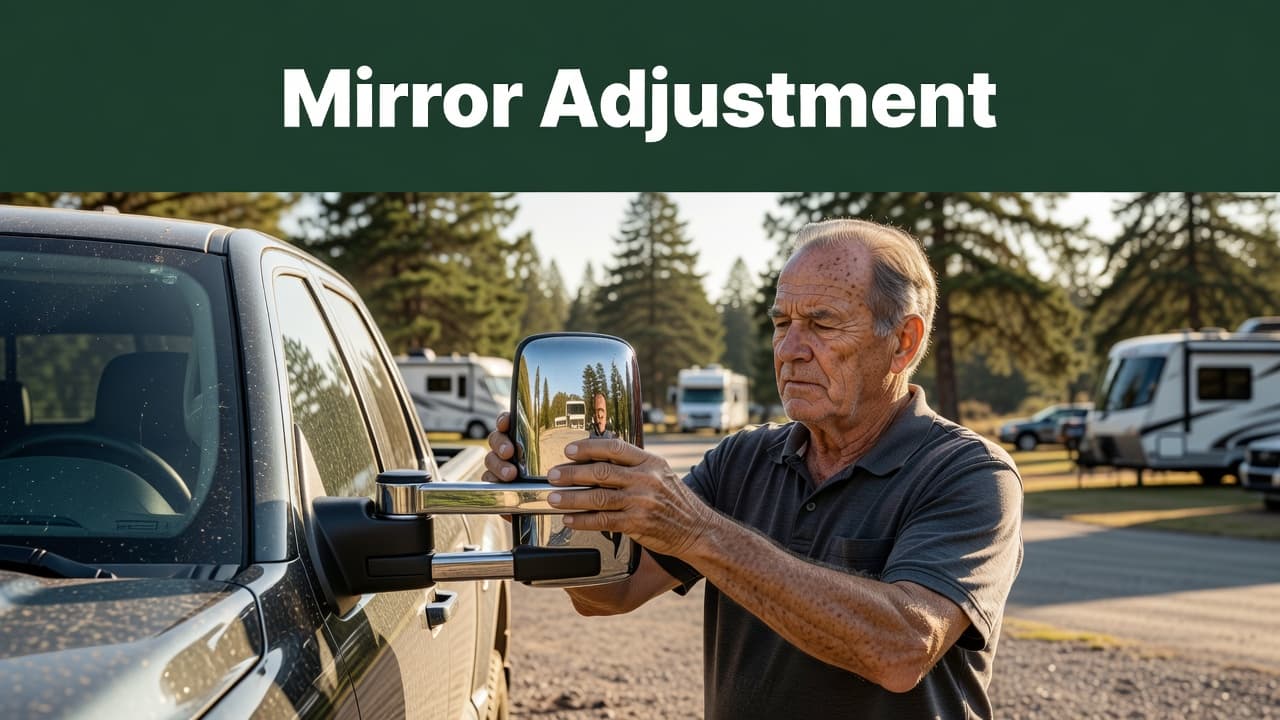
Many mirrors have a large flat upper pane and a smaller convex lower pane. The flat glass gives a more accurate picture of distance. The convex section widens your field of view, although vehicles appear smaller and farther away than they are.
A mirror is set correctly when it helps you see traffic beside the trailer, not when it gives the clearest view of your own door handle.
Prepare the Driver’s Position Before You Adjust Mirrors
You should always be seated in the driver’s seat when you adjust towing mirrors, rather than standing outside the truck. Sit where you will drive, with your back against the seat and both hands able to reach the wheel comfortably. A small change in seat height or recline can shift your sightline enough to spoil a previously good setup.
First, set the seat distance so you can fully press the brake pedal without stretching. Then adjust the steering wheel, lumbar support, and head restraint. Put on the glasses or sunglasses you normally use for daytime driving.
Next, park on level ground with the trailer hitched and straight behind the tow vehicle. Keeping the wheels pointed forward while parked on flat terrain ensures an unobstructed view of your entire towing setup. If the trailer sits at an angle, you can still adjust your side mirrors, but the final view will be less accurate.
Power-fold mirrors deserve an extra check. Confirm both sides have fully extended and locked into their towing position. Manual telescoping mirrors should extend equally. Uneven extension creates different blind spots on each side.
For a useful visual reference, Nissan’s tow mirror setup guide also starts with the driver seated and the mirrors in their normal towing position.
How to Adjust Towing Mirrors Step by Step
Set the Large Flat Mirror
Begin with the driver’s side. Move the mirror outward until only a thin vertical strip of the truck’s side appears at the inside edge. You do not need to see half the truck. That small strip helps you judge where the trailer tracks during a turn.
Tilt the mirror vertically until the horizon sits roughly in the middle. You should see enough pavement to monitor lane lines near the trailer tires, while still keeping a useful view of vehicles behind you.
Now look toward the trailer. The mirror should show its full side, or nearly all of it, including the rear corner. If the trailer’s rear corner disappears, extend the towing mirrors farther or adjust the glass slightly inward. You need that corner when merging, passing, and backing into a camping site.
Repeat the process on the passenger side. Most drivers can see less directly on that side, so do not be surprised if its aim feels a little different. These towing mirrors should still show a slim piece of the truck, the trailer’s far rear corner, and the lane beside the trailer.
Aim the Convex Mirror for Blind Spots
If your mirror assembly includes a convex pane, use it as your wide-angle warning system. Point it outward enough to show the neighboring lane alongside your trailer, which significantly enhances visibility. Tilt it down until you can see the pavement near the rear wheels and the first lane stripe.
A good convex view picks up a vehicle as it comes alongside the trailer. You should also see a bicycle, motorcycle, or low car that would otherwise disappear beside the passenger door.
Do not use the convex mirror alone to judge whether you have room to merge. Its curved glass makes objects look farther away. Check the flat mirror, the rearview mirror, and the road ahead before moving over.
Some aftermarket mirror systems add a separate lower spot mirror. The same rule applies. Aim it to fill the blind spots, not to repeat what the main mirror already shows.
Verify the Overlap
With the truck and RV parked, have a travel partner walk slowly behind the trailer, then along each side. Watch their movement through the rearview mirror, flat towing mirror, and convex mirror to confirm your field of vision is covered.
You want the person to remain visible as they pass from one view to the next. A brief overlap between mirrors is better than a blank zone. If your partner vanishes, move the mirror outward a little and test again.
When traveling solo, use a quiet parking lot. Place a traffic cone, folding chair, or bright campsite marker at the rear corner of the trailer. Pull forward and watch where it appears in each mirror. This takes longer, but it shows where your blind spots begin.
Test Your Mirror Settings Before Highway Speed
The first few miles after leaving camp are the best time to confirm your setup. Use low-speed streets or a calm section of road before you enter heavy traffic to prioritize your driving safety. Watch how lane lines run alongside the trailer and notice whether the rear corner stays visible.
A mirror setting that looks perfect at the campsite can feel wrong on the road. Trailer sway, a crowned road, and a different driving posture all change what you see. Pull into a safe lot and make small adjustments rather than reaching for the controls in traffic. Remember that maintaining an unobstructed view is a legal requirement in many jurisdictions, so ensure your setup is dialed in before increasing your speed.
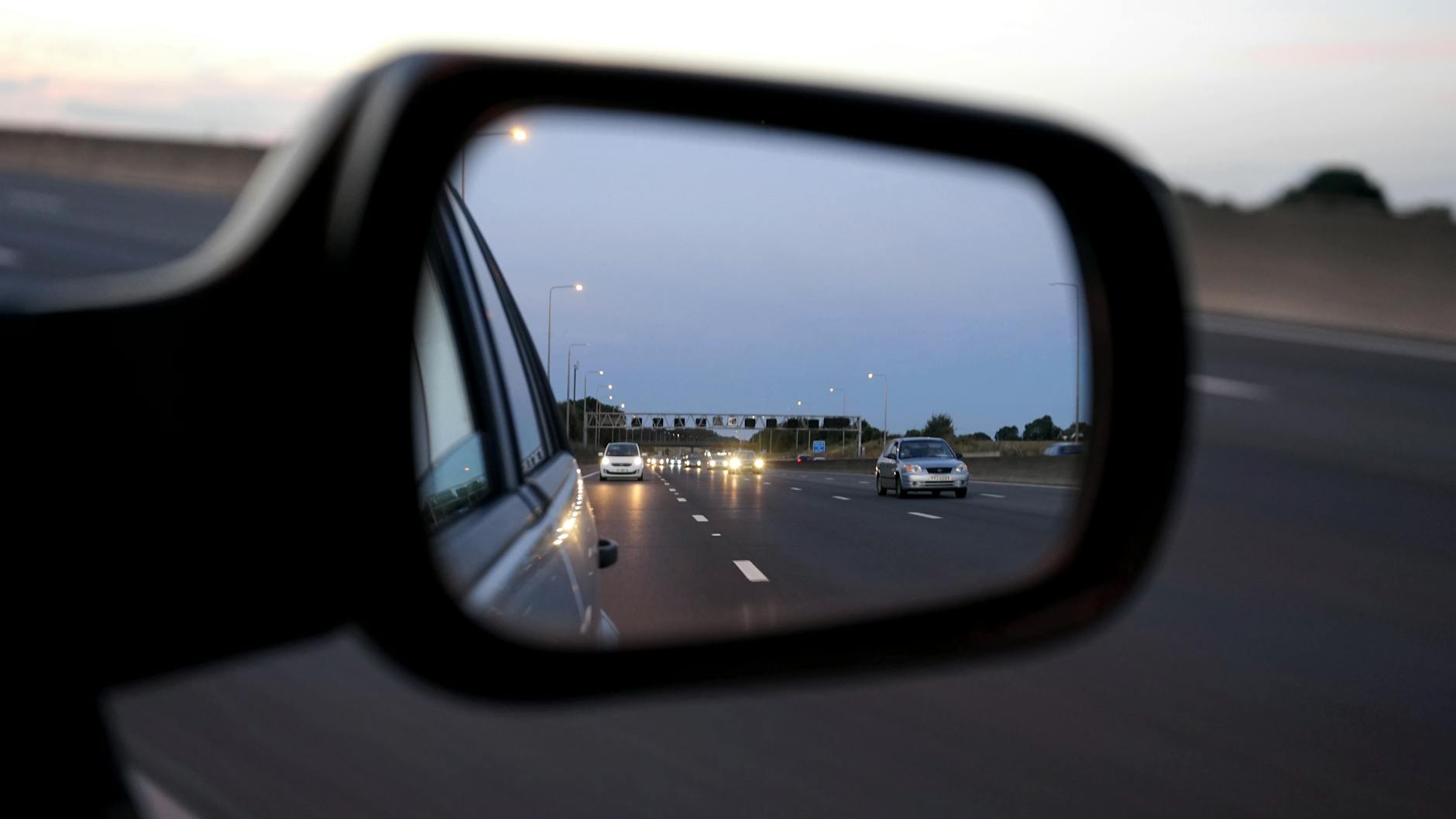
Photo by Mike Bird
Use a steady routine for every lane change:
- Check the flat portion of your towing mirrors for traffic approaching from behind.
- Check the convex section for vehicles beside the trailer or tow vehicle.
- Signal early, then look ahead to confirm the lane has room.
- Make a brief shoulder check toward the adjacent lane.
- Move over gradually during your lane changes and keep watching the mirror until the trailer is centered.
This sequence matters most when passing slower traffic. Wait until you can see the entire front of the vehicle you passed in your mirror before returning to the lane. A little extra distance is kinder to the driver behind you and protects your trailer’s rear corner.
Common Mirror Adjustment Mistakes
The most common mistake is aiming both mirrors inward. Many drivers do this because seeing the truck feels reassuring. Yet a wide view of your own doors wastes space that could reveal a sedan beside the trailer.
Another problem is setting the mirrors while unhitched. A truck-only view won’t account for the trailer’s width or length, and it highlights the limitations of factory-fitted mirrors that lack the reach needed for towing. Always inspect the mirror angle once the rig is connected and loaded for travel.
Dirty side mirrors also hide useful detail. Road spray, bugs, and morning dew can turn a clear view into glare, significantly reducing your visibility on the road. Carry a microfiber cloth and mirror-safe cleaner in the cab. At dawn and dusk, dim or adjust mirrors if headlights create distracting reflections.
Drivers also forget to reset towing mirrors after someone else uses the tow vehicle. Couples often share driving duties, and one seat adjustment can alter both mirror views. Make mirror checks part of every driver swap.
RV Life Insider shares practical safety reminders, trip ideas, and camping tips built for travelers who value a calmer road day. You can subscribe to the RV Life Insider newsletter for new guidance delivered to your inbox.
Mirror Habits for RV Travel and Van Life
Long trips reward small routines. Before every departure, walk around the rig, inspect the hitch connection, check lights, and look at both mirror housings. Confirm that nothing blocks the glass, including a loose strap, folded extension, or wet window.
For van life travelers towing a small trailer, conventional mirrors may seem adequate. Still, the trailer can hide a compact car on a curve or during a merge, making maneuvering more challenging. Add a clip-on towing mirror only if it fits securely and does not shake at highway speeds.
Wind can make any mirror vibrate. If the image blurs badly, inspect the mounting hardware and mirror arms. This is especially true for powered towing mirrors, which have internal motors that can be sensitive to excess vibration. Do not accept a shaky reflection as normal. If you are using extension mirrors, you should verify the installation method after traveling over rough roads or a minor brush with an obstacle. A dealership service department or qualified mechanic can check these components for you.
Online discussions about side-mirror positioning can offer useful real-world perspectives, including this driver conversation about minimizing blind spots. Still, your own rig, seat height, trailer width, and eyesight should guide the final adjustment.
For more road-ready advice, travel guides, community stories, and RV resources, View Our Website. You can also View All Our Newsletters to find topics that fit your next trip.
Frequently Asked Questions
How often should I recheck my towing mirrors?
You should verify your mirror alignment every time you hitch up your trailer, change drivers, or after folding your mirrors in at a tight spot. Even small adjustments to your seat height or steering wheel position can shift your sightline and warrant a quick mirror touch-up before you hit the highway.
Can I use my standard mirrors for towing?
While standard mirrors work for an unloaded pickup, they often cannot see past the width of a travel trailer or large RV. Extended towing mirrors are necessary to eliminate dangerous blind spots and allow you to monitor the rear corners of your trailer during lane changes.
Why do objects look different in the convex mirror?
The curved glass of the convex pane widens your field of view to catch vehicles in adjacent lanes, but it causes objects to appear smaller and farther away than they actually are. Because of this distortion, always use the flat mirror to judge true distance and proximity before merging or changing lanes.
What should I do if my mirrors vibrate at highway speeds?
Excessive vibration can make a reflection blurry and unreliable, so check that your mounting hardware is tight and the mirror arms are securely locked. If you use aftermarket clip-on mirrors, ensure they are properly installed and stable, as a shaking mirror significantly hampers your ability to monitor traffic safely.
A Clearer View Makes Every Lane Change Calmer
Properly adjusted towing mirrors give you a reliable moving picture of the road around your trailer. By optimizing your rearward vision, these tools help you spot traffic earlier, judge your trailer path more accurately, and change lanes without feeling rushed.
Make your adjustments after you have fully settled into the driver seat, then test the view at low speed. A few careful minutes at camp can make the next stretch of highway feel far more manageable.
This post may contain affiliate links. If you make a purchase through these links, I may earn a small commission at no extra cost to you.