RV Medication Storage: Keep Prescriptions Safe on the Road
A sunny campsite can turn an RV cabinet into a small oven within hours. That makes proper RV medication storage part of road trip planning, not an afterthought.
Prescription medicines can lose potency and stability when exposed to heat, cold, moisture, or direct light. For seniors, full-time RVers, and anyone managing several prescriptions, a simple storage routine protects both your health and your peace of mind.
Key Takeaways
- Keep medicine in the climate-controlled living area, never in exterior bays, a glove box, or a hot vehicle.
- Follow the temperature and light instructions printed on each prescription label.
- Use a thermometer-equipped cooler or an insulated medical bag to protect temperature-sensitive medications.
- Keep prescriptions in their original packaging and carry an updated medication list.
- Ask a pharmacist what to do after a medication has overheated, frozen, or gotten wet.
RV Medication Storage Starts With the Right Location
Most prescription labels call for controlled room temperature, often 68 F to 77 F. Many products allow brief excursions between 59 F and 86 F, but the exact storage instructions on your bottle take priority.
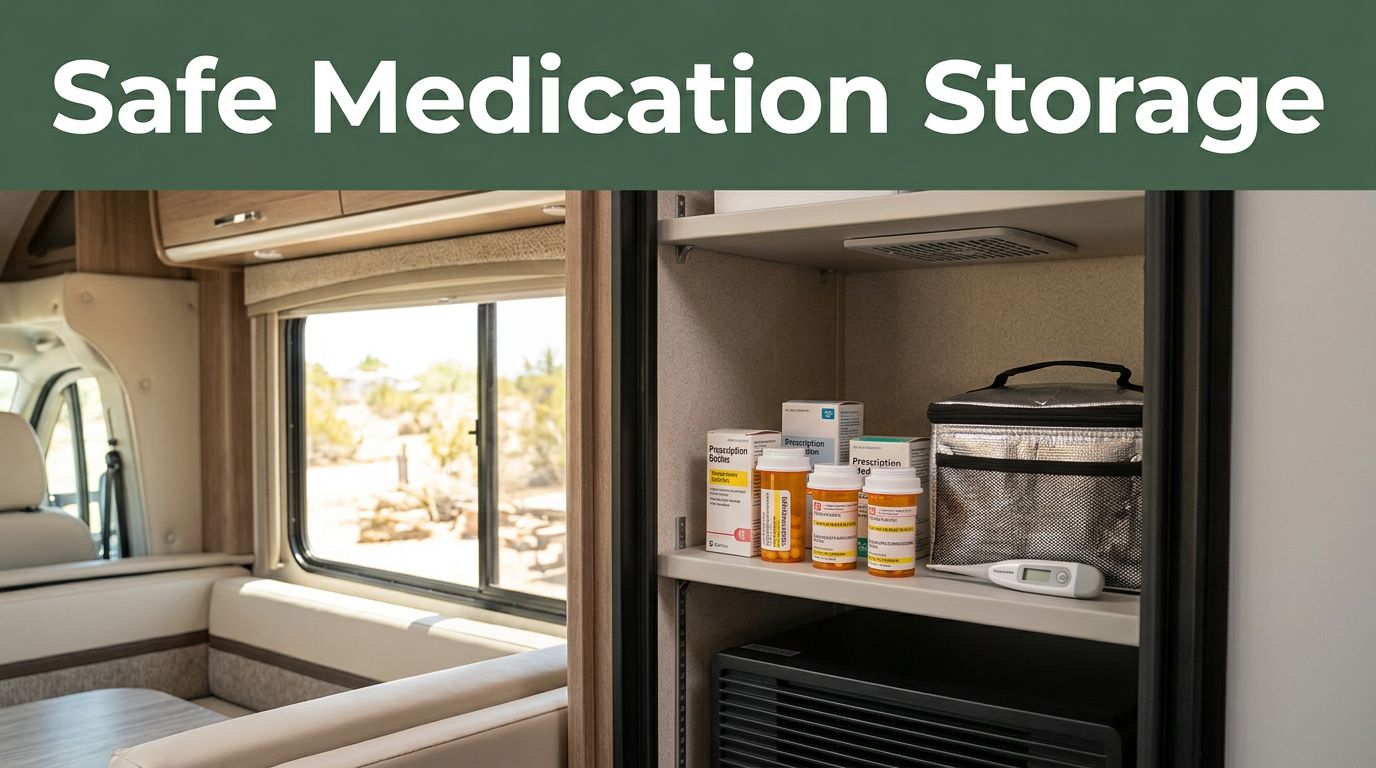
In an RV, the safest location is usually an interior cabinet away from the stove, furnace vent, windshield, shower, and exterior wall. A bedroom wardrobe shelf or high interior pantry cabinet may work well if it stays dry and remains out of children’s reach, offering practical storage options for everyday travel.
Avoid the bathroom medicine cabinet. Steam from showers raises humidity, while temperature swings can be sharp in a compact rig. Careful medicine cabinet organization helps you avoid areas where steam and moisture cause damage. The same issue applies to a cabinet over the kitchen sink or beside the propane range.
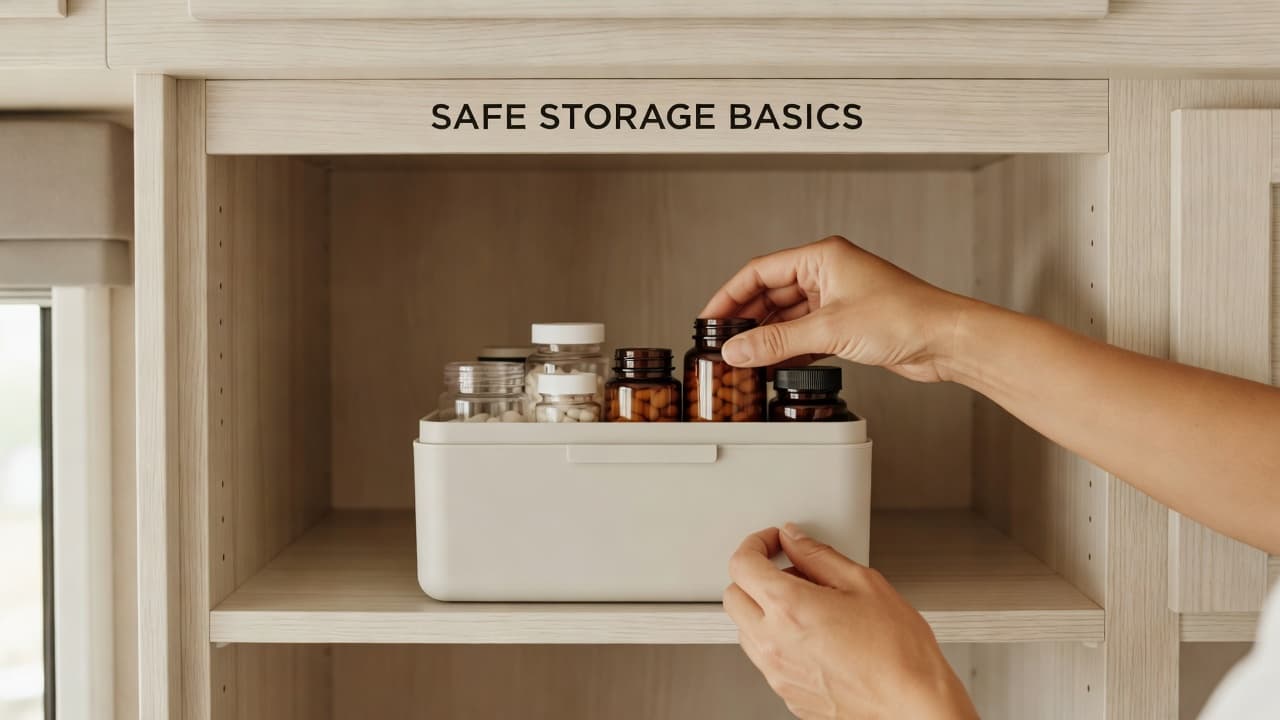
Keep bottles in their original packaging whenever possible. The label provides the drug name, dose, pharmacy number, expiration date, and storage instructions. It also protects pills from light and humidity. A weekly pill organizer is helpful, but refill it from original containers and keep those containers nearby.
Federal rules require prescription drugs to remain under the temperature and conditions stated on their labels. The wording in federal prescription drug storage requirements is a useful reminder that there is no one-size-fits-all temperature rule.
An RV refrigerator is not automatically a safe place for medicine. Unless the label says to refrigerate it, cold storage can damage a room-temperature medication as easily as heat can.
Secure the cabinet door with a childproof latch or travel latch. On rough roads, bottles can bounce, crack, or spill into a drawer. A small plastic bin with a locking lid keeps the group together and makes it easier to move them during a stopover.
Protect Medicines From RV Heat, Cold, and Moisture
Heat is the biggest threat during a summer camping trip. Even if the air conditioner runs while you drive, the cab, dashboard, overhead bunk, and front cabinets can warm quickly in the sun. Never store prescriptions in a tow vehicle’s glove compartment, pass-through storage bay, trunk, or outside kitchen compartment.
Park with the awning out when practical, use window shades, and leave the air conditioning on when shore power, electrical hookups, or a reliable generator is available. Those habits help the whole coach, but they don’t replace checking the medicine storage spot.
Put a compact digital thermometer in the cabinet or storage bin. Check it after an afternoon hike, a long driving day, or any time the RV loses power. A simple high-low thermometer can show whether the cabinet crossed a safe range while you were away.
Humidity also causes trouble. Keep bottles tightly closed, and don’t transfer pills into unsealed plastic bags. Desiccant packets that arrive inside a prescription bottle should usually stay there unless your pharmacist says otherwise. They help absorb moisture that can make tablets crumble or stick together.
Pharmacists advise keeping most medicines cool, dry, and out of sunlight. The University of Illinois guidance on medication storage also points out that temperature-sensitive medications, including epinephrine, need their protective carrier or packaging.
Check the label with guidance from your pharmacy for phrases such as “protect from light,” “do not freeze,” or “refrigerate.” Eye drops, liquid antibiotics, insulin, injectable medicines, biologics, and some emergency medications need more attention than standard tablets. Do not assume that two medicines from the same place have identical storage needs.
If you travel through cold country, keep the medication kit inside the heated living area at night. A bottle against an uninsulated exterior wall may freeze even when the thermostat reads comfortably inside. Wrap the storage bin in a towel during a severe cold snap, but don’t place it directly against a furnace vent.
Handle Refrigerated Prescriptions With Care
Refrigerated medications commonly need a range of 36 F to 46 F. Insulin, some injectable therapies, and proper insulin storage for certain biologic drugs may fall into this category. The pharmacy label and manufacturer instructions tell you what applies to your prescription.
An RV refrigerator can work if it holds temperature consistently. However, absorption units can vary with outside heat, coach leveling, and power changes. A refrigerator thermometer is essential. Keep medication away from the freezer plate and back wall, where it can freeze inside your RV refrigerator.
For travel days, use an insulated medical cooler, an electric cooler, or a hard-sided cooler with a thermometer. Place a barrier, such as a folded towel, between the medicine and ice packs. Direct contact with frozen gel packs can freeze sensitive products.
A temperature-monitoring case gives you more confidence when you drive for several hours or stop at a restaurant. Some travelers use a Frio Wallet for medicines that benefit from evaporative cooling, though it is not a substitute for refrigeration when a label requires 36 F to 46 F.
Before a long trip, make sure you have a reliable backup plan and ask the pharmacist four practical questions:
- What temperature range does this medicine require?
- How long can it remain outside that range?
- Can it be frozen, or must it be protected from freezing?
- What signs mean it should be replaced?
Write the answers on a card inside your medication bin. This small detail is useful if one spouse handles the medicine at home and the other takes charge during travel.
For RV-specific ideas about coolers, refrigerator placement, and summer parking, see these medication storage tips for RV travel. The goal is not to fill a cooler with ice. It is to keep the medicine in its labeled temperature range.
Build a Medication Kit for Travel Days
Good RV medication storage also means knowing what you have. Start each road trip with enough prescription medicine for the planned route, plus a reasonable buffer for weather delays, campground extensions, or a pharmacy that needs time to transfer a refill.
Carry a printed medication list in the kit and another copy in your wallet. Include prescription names, strengths, doses, allergies, prescribing clinicians, pharmacy contact information, and emergency contacts. A phone photo is helpful, but a paper copy still works if your battery dies or service disappears.
Use one clearly marked storage bin for regular prescriptions. Keep a separate small pouch for the medical supplies that must stay with you, such as heart medicine, inhalers, rescue medication, or insulin. Bring that pouch into a hotel, restaurant, attraction, or repair shop rather than leaving it in the rig.
Medication safety is also personal security. Avoid leaving prescription bottles in plain sight through an RV window. A locking cabinet or portable locking case helps during repairs, open-house tours, or campground visitors. Don’t put medications into the RV safe if that safe gets hot or cold.
For road-ready health and safety ideas shared with older travelers, RV Life Insider publishes practical articles, trip resources, and a friendly newsletter collection. Regular reminders can be useful before a seasonal move or a longer camping trip.
Prevent Mix-Ups When Routines Change
Travel changes the clock. A late arrival, a time-zone crossing, or a busy day at a national park can make a familiar medication routine easy to miss. Use a pill organizer if it helps, but choose one with secure compartments that will not open during travel.
Set a phone alarm for time-sensitive medicines. If you use a paper calendar, write the medication time beside your travel itinerary. For prescriptions tied to meals, pack a small snack in case a drive runs longer than planned.
Seniors who take several medicines should review the entire list with a local pharmacy before leaving for an extended trip. Ask about food interactions, sun sensitivity, duplicate ingredients in over-the-counter cold remedies, and whether any medication affects driving alertness.
Never share medication with a travel companion, even when symptoms sound similar. Also, avoid combining loose pills in one unmarked container. A white tablet can look like many other white tablets once it loses its label.
Check your supply every time you move campsites. Count specialty medicines and controlled prescriptions before departure, then put the bin back in its assigned cabinet. That routine prevents a bottle from remaining in a nightstand drawer or tote bag after a hurried pack-up.
What to Do After a Temperature Problem
If your air conditioner fails, refrigerator loses power, or medication sits in a hot tow vehicle, don’t guess. Move the medicine to a safe location, note how long it was exposed, and call the dispensing pharmacy or manufacturer.
Look for visible changes, including discoloration, cloudiness, unusual odor, softened capsules, leaking packages, or tablets stuck together. Visible damage is a clear warning, but a normal appearance does not prove the medicine is still safe.
Don’t take a questionable prescription until you receive guidance. Be ready to activate your backup plan if a product gets overheated or frozen, as the right answer may be to continue using it, replace it, or obtain an emergency supply. Keep the pharmacy number saved in your phone and printed in your travel file.
Frequently Asked Questions
Can I store my medications in the RV’s bathroom medicine cabinet?
No, you should avoid the bathroom medicine cabinet because steam from showers raises humidity and temperature swings are often sharp in a compact rig. Instead, choose a dry interior cabinet away from moisture sources like the shower or kitchen sink.
Is the RV refrigerator automatically safe for all medications?
An RV refrigerator is not automatically a safe place for medicine because cold storage can damage room-temperature medications just as easily as heat can. You should only store medications in the refrigerator if the prescription label explicitly instructs you to do so.
What should I do if my medication is exposed to excessive heat or cold?
If your medication experiences a temperature excursion, move it to a safe location immediately, note how long it was exposed, and call your dispensing pharmacy or the manufacturer. Do not guess or take a questionable prescription until you receive professional guidance on whether it remains safe to use.
A Safer Medicine Cabinet Wherever You Park
A dependable medication routine begins with a cool, dry, secure space inside the RV. Add original containers, temperature checks, and a travel-day kit, and your prescriptions are less likely to become an unexpected problem on the road.
RV medication storage deserves the same attention as tire pressure, propane checks, and safe drinking water. Prioritizing medication safety with a few minutes of preparation protects the prescriptions that help you enjoy every campsite.
This post may contain affiliate links. If you make a purchase through these links, I may earn a small commission at no extra cost to you.