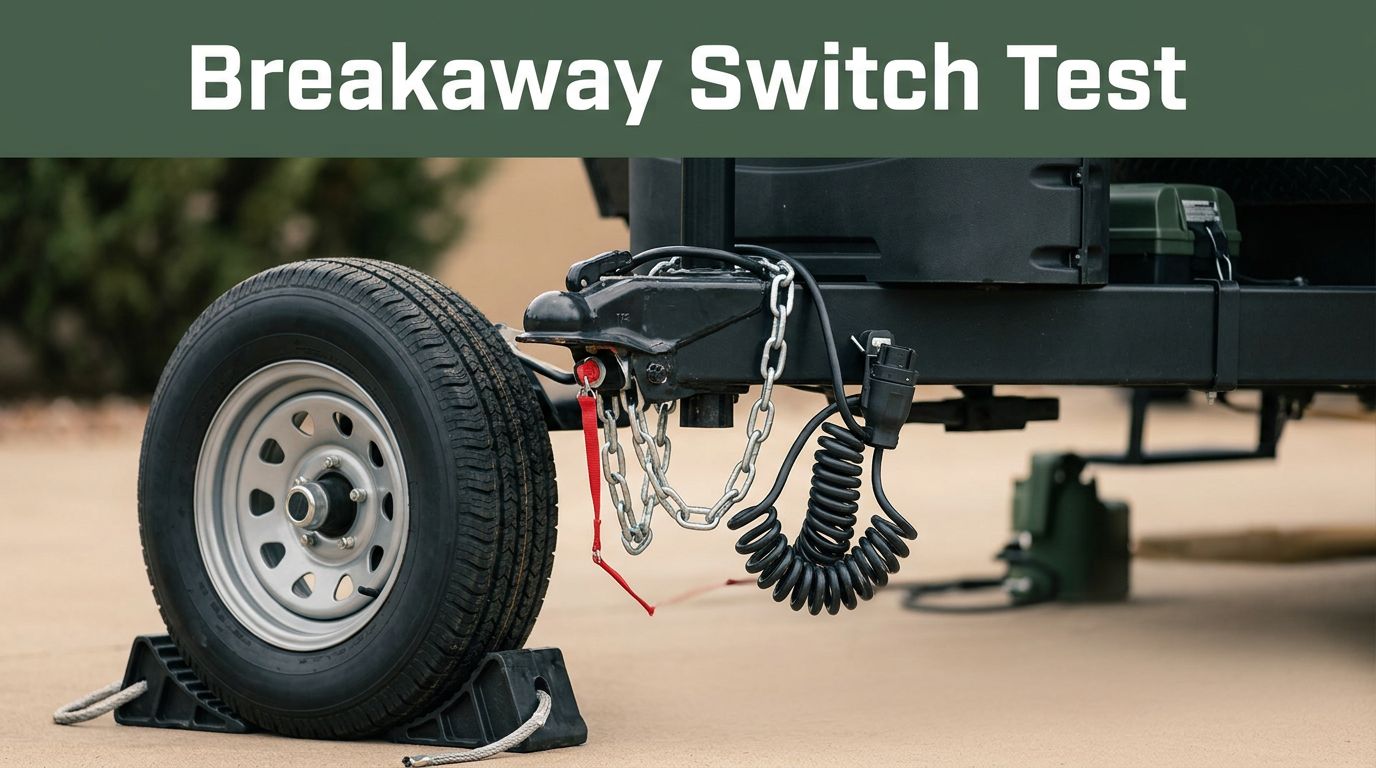
How to Test an RV Breakaway Switch Before Towing
An emergency breakaway switch is a critical safety device on your trailer. If the trailer separates from the tow vehicle, it activates the trailer brakes to help stop a runaway RV.
An RV breakaway switch test takes only a few minutes before departure, yet it can reveal a weak battery, damaged cable, or failed brake circuit. Make it part of your hitch-up routine, especially before a long camping trip.
This post may contain affiliate links. If you make a purchase through these links, I may earn a small commission at no extra cost to you.
Key Takeaways
- Test the RV breakaway switch while parked, with the trailer hitched, wheels chocked, and the 7-way cord unplugged.
- Pull the lanyard pin straight out briefly and listen for the electric trailer brakes to activate, then reinsert the pin promptly.
- Inspect the breakaway cable, attachment point, switch, battery, wiring, and brake magnets for damage, corrosion, or loose connections.
- Never tow against applied emergency brakes or leave the pin out, since doing so can overheat brake components and drain the battery.
- Make the breakaway switch test part of your regular hitch-up routine, especially before long trips and after winter storage.
What the Breakaway Switch Does for Your RV
The breakaway switch is usually mounted on the trailer tongue near the coupler. A thin steel cable, also called a safety lanyard, runs from the switch to the tow vehicle. Inside the switch is a removable lanyard pin.
If the trailer comes loose, the safety lanyard pulls out the lanyard pin. The emergency breakaway switch then sends battery power from the auxiliary trailer battery to the electric brakes. The trailer brakes should stay applied until the pin goes back in or the battery loses power.
This system works separately from your in-cab brake controller. That separation matters. A brake controller can work perfectly while the breakaway switch, trailer battery, or trailer brakes have failed.
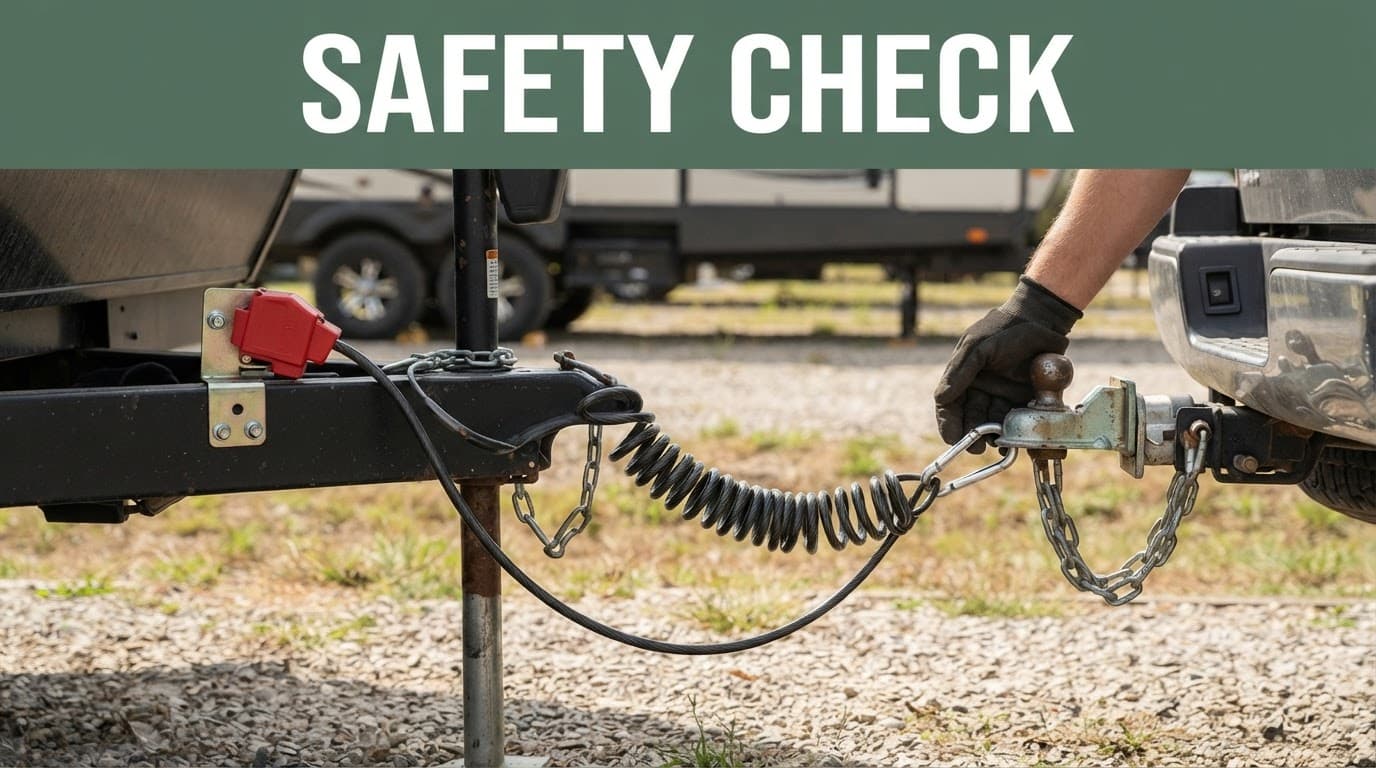
Before towing, make a routine inspection of the cable and breakaway switch on the tow vehicle. It should be free of kinks, deep rust, broken strands, or sharp bends. The cable needs enough slack for turns, but it must pull the pin before the safety chains become fully tight.
Attach the breakaway cable directly to a solid point on the tow vehicle. Don’t clip it to the hitch ball, safety chains, or a removable ball mount. Those parts could leave with the trailer in a separation.
The breakaway cable should pull straight out of the switch. A sideways pull can bind the lanyard pin and delay brake activation.
For many seniors, a quick walk-around prevents the awkward bending and troubleshooting that can spoil departure morning. It’s one of those practical camping tips that pays off long before you reach the highway.
How to Perform an RV Breakaway Switch Test
A proper RV breakaway switch test, also called a stationary pull test, should be done while parked, never while driving. Choose level ground, keep the trailer hitched to the tow vehicle, and chock the trailer wheels first.
You will need a charged trailer battery, wheel chocks, and access to the switch. A multimeter can help with deeper troubleshooting, but you don’t need one for this basic test.
- Put the tow vehicle in Park, set its parking brake, and chock the trailer wheels securely. Turn off the ignition and unplug the 7-way cord from the tow vehicle.
- Inspect the breakaway cable’s attachment point. Confirm that it is connected to the tow vehicle frame or a dedicated loop, not the safety chains or hitch hardware.
- Hold the switch body steady, then pull the pin straight out using the cable or pull tab. This lanyard pin should come out smoothly, without twisting the pin or yanking the cable sideways.
- Listen closely near the trailer wheels for brake activation. Electric brakes often produce a low hum when the brake magnet receives power. Surge brakes use a hydraulic actuator instead, so they generally won’t make the same electrical humming sound.
- Reinsert the pin fully and promptly to end brake activation. The humming should stop. Then reconnect the 7-way cord and remove the wheel chocks only when you’re ready to leave.
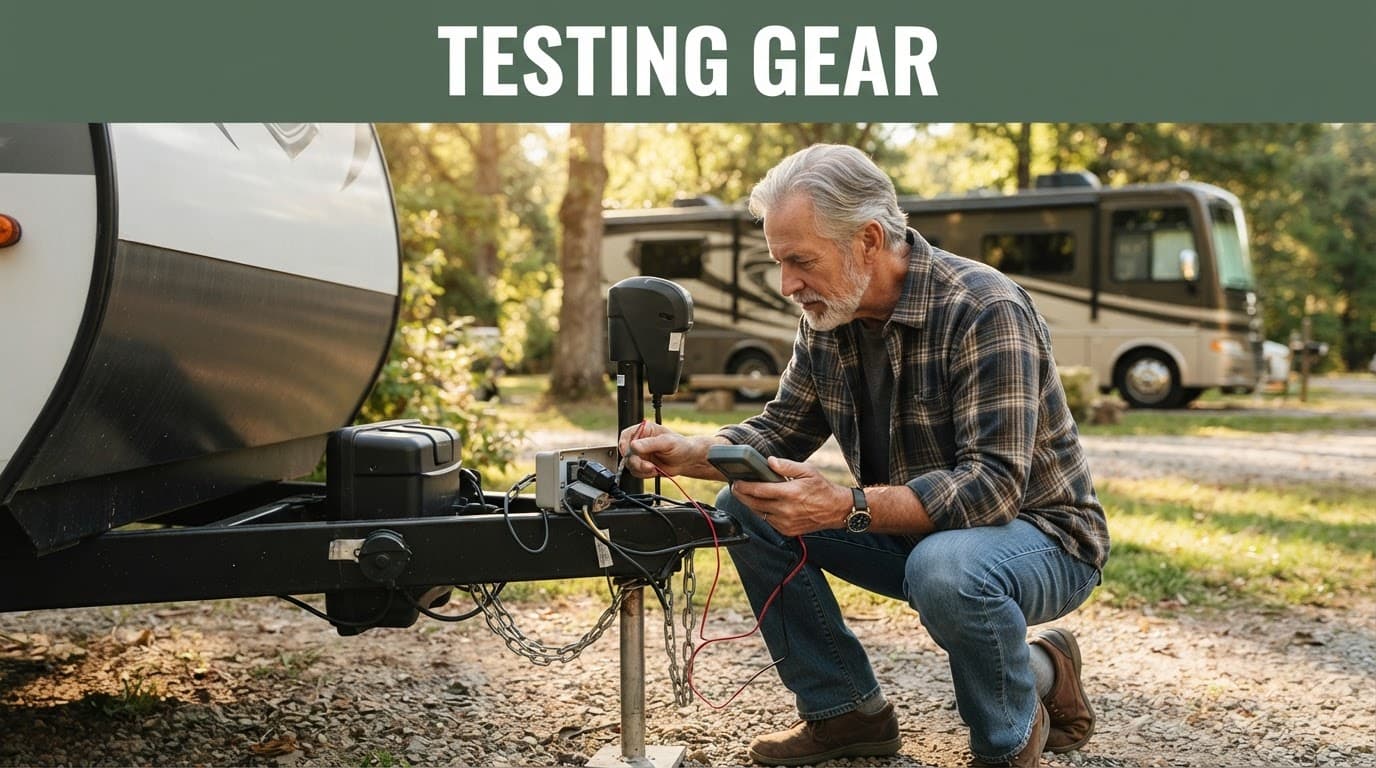
Don’t leave the pin out while you pack the RV. Constant brake activation can drain the breakaway battery and heat the brake magnet. A brief pull test is enough, and you should pull the pin only long enough to confirm the system responds.
The Commercial Vehicle Safety Alliance’s electric trailer breakaway inspection guidance also calls for confirming brake power after disconnecting the towing vehicle’s power supply. Unplugging the 7-way cord before your test helps confirm that the trailer’s own emergency battery is supplying the power.
Signs Your Breakaway System Needs Attention
Silent brakes after you pull the lanyard pin are the clearest warning sign. However, a buzzing circuit doesn’t always prove full brake engagement at every wheel. Treat any unusual result as a reason to inspect the brake system before towing, especially if the emergency breakaway switch doesn’t activate the brakes as expected.
Start with the trailer battery. Most RVs have a small sealed battery in a plastic box on the A-frame. Check for corroded terminals, loose wires, a cracked case, or lost battery power caused by a battery that won’t hold a charge. A battery tender or charger may be part of the trailer’s charging setup, but it still needs periodic checks.
Next, inspect the breakaway switch. Dirt and road spray can work into the housing, while a corroded switch, a pin that feels difficult to remove, a frayed cable, or a cracked plastic body calls for replacement. Breakaway switches are inexpensive, and a damaged one shouldn’t stay on the trailer for another season.
The wiring between the switch, battery, and brake system also deserves a close look. Search for rubbed insulation, loose butt connectors, and green corrosion on terminals, then trace the wiring leading to each individual brake magnet. If you own a multimeter, check that the switch closes the circuit when the pin is removed and that each brake magnet receives power. Lippert’s breakaway switch troubleshooting advice recommends checking continuity and looking for a fuse in the circuit.
If the pin is out and the brakes stay silent, don’t assume the issue is only the switch. The battery, ground connection, brake wiring, and individual brake magnets can all be responsible. A qualified RV technician can test current draw and brake response without guesswork.
Test the System Without Damaging Your Brakes
Many RV owners wonder if they should try towing against the applied brakes during a pull test. Don’t do that. Dragging a trailer with the emergency trailer brakes engaged can damage brake components and provides little useful information about the brake system.
A safe RV breakaway switch test relies on a sound battery, adequate voltage, and brief brake activation. With the trailer parked securely, pull the pin while the trailer is unplugged from the 7-way cord, then confirm brake engagement without moving the RV. This safety device should activate the trailer brakes independently of the tow vehicle.
If you want stronger confirmation, ask an RV service shop to inspect the brake system during annual maintenance, alongside servicing the wheel bearings.
Use this simple schedule to keep the task manageable:
| When to check | What to do |
|---|---|
| Before each towing day | Inspect the cable, pin, battery box, and attachment point |
| Before a long trip | Pull the pin briefly with the 7-way cord unplugged |
| At seasonal maintenance | Check battery condition, wiring, trailer brakes, and switch operation |
| After winter storage | Test before the first trip and clean corrosion from terminals |
The same routine works for weekend campers, full-time RV’ers, and people easing into van life with a small travel trailer. A trailer may sit for weeks, and small batteries often show weakness after storage.
Check the owner’s manual for your trailer and brake system, since manufacturers may list a preferred battery test or replacement interval. Breakaway switch testing instructions also stress engaging the trailer brakes with the pin removed rather than relying on the tow vehicle connection.
Make It Part of Your Departure Routine
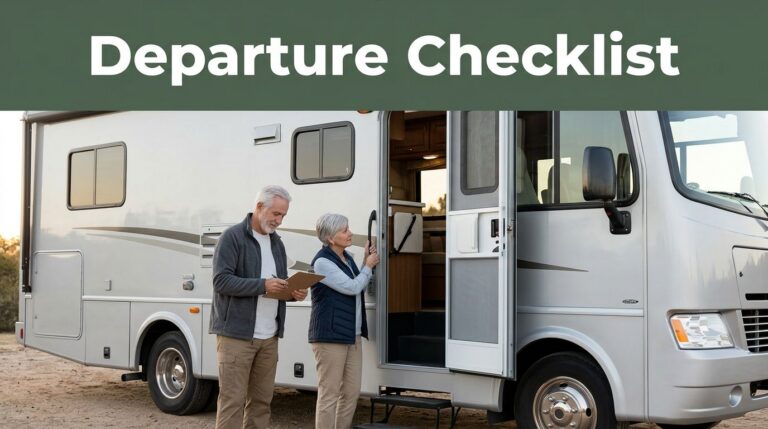
A good departure routine keeps safety steps from depending on memory. Include a routine inspection of the emergency breakaway switch and safety lanyard after hitching and connecting the cable, but before pulling out of the campsite.
Many campers already check tire pressure, hitch latch position, safety chains, lights, trailer brakes, and cargo. Add the breakaway switch to that same walk-around. Keep a pair of sturdy wheel chocks where you can reach them without emptying a storage compartment.
For senior RVers, that consistency can make travel days calmer and more stress-free. You don’t need to crouch under the trailer or haul out a toolbox for the basic test. You only need a secure parking spot, a charged battery, and a few focused minutes.
RV Life Insider shares practical maintenance reminders, travel ideas, and road-tested advice for campers. You can subscribe to RV Life Insider for new posts in your inbox, or View All Our Newsletters when you want more ideas for the road.
Frequently Asked Questions
How often should I test my RV breakaway switch?
Inspect the cable, switch, battery box, and attachment point before each towing day. Perform a brief stationary pull test before long trips, after storage, and whenever the trailer’s braking system has been serviced.
Should the 7-way cord be plugged in during the test?
No. Unplug the 7-way cord before pulling the pin so the test confirms that the trailer’s breakaway battery can power the brakes independently. Reconnect the cord after you reinsert the pin.
What should I hear when the breakaway switch works?
With electric trailer brakes, you may hear a low hum near the trailer wheels when the pin is removed. Silent brakes indicate that the battery, switch, wiring, ground, or brake magnets may need inspection.
Can I test the breakaway switch while driving?
No. Perform the test only while the trailer is parked securely on level ground, hitched to the tow vehicle, and supported by wheel chocks. Never tow against applied emergency brakes because this can damage the braking components.
What should I do if the breakaway brakes do not activate?
Start by checking the trailer battery, terminals, switch, wiring, ground connections, and brake magnets for corrosion or damage. If you cannot identify the problem, have a qualified RV technician test the system before towing.
Final Thoughts on Breakaway Switch Safety
A working emergency breakaway switch activates the trailer brakes if your RV becomes disconnected from the tow vehicle. Before towing, check the cable attachment, unplug the tow vehicle, pull the pin briefly, listen for brake activation, and return the pin immediately to protect the brake system.
Make the RV breakaway switch test part of every towing day. This small habit helps ensure your trailer brakes are ready when you need them and protects your RV, your fellow travelers, and the freedom that makes camping so rewarding.
For more RV safety articles, travel planning tools, community resources, and marketplace finds, View Our Website.