Full-Time RV Insurance: What Changes After Retirement
Full-time RV insurance adds protection for everyday life when your motorhome or trailer becomes your permanent residence. A policy built for occasional camping may leave gaps once the campground is also your home.
For retired travelers, the biggest change is liability while parked, along with protecting belongings and paying for somewhere else to stay after covered damage. Those costs can put pressure on a fixed income. Start with how you live in the rig, then separate the coverage you already have from what full-timing adds.
Key takeaways for senior campers
- Full-timer coverage adds protection for residential use, including certain injuries and property damage while parked.
- Driving liability, damage to your RV, visitor injuries, and belongings fall under different coverages.
- Full-timer coverage is optional by law, but driving requirements and lender requirements still apply.
- Roadside assistance and health insurance handle separate problems, so neither replaces an RV policy.
When your RV becomes your permanent residence
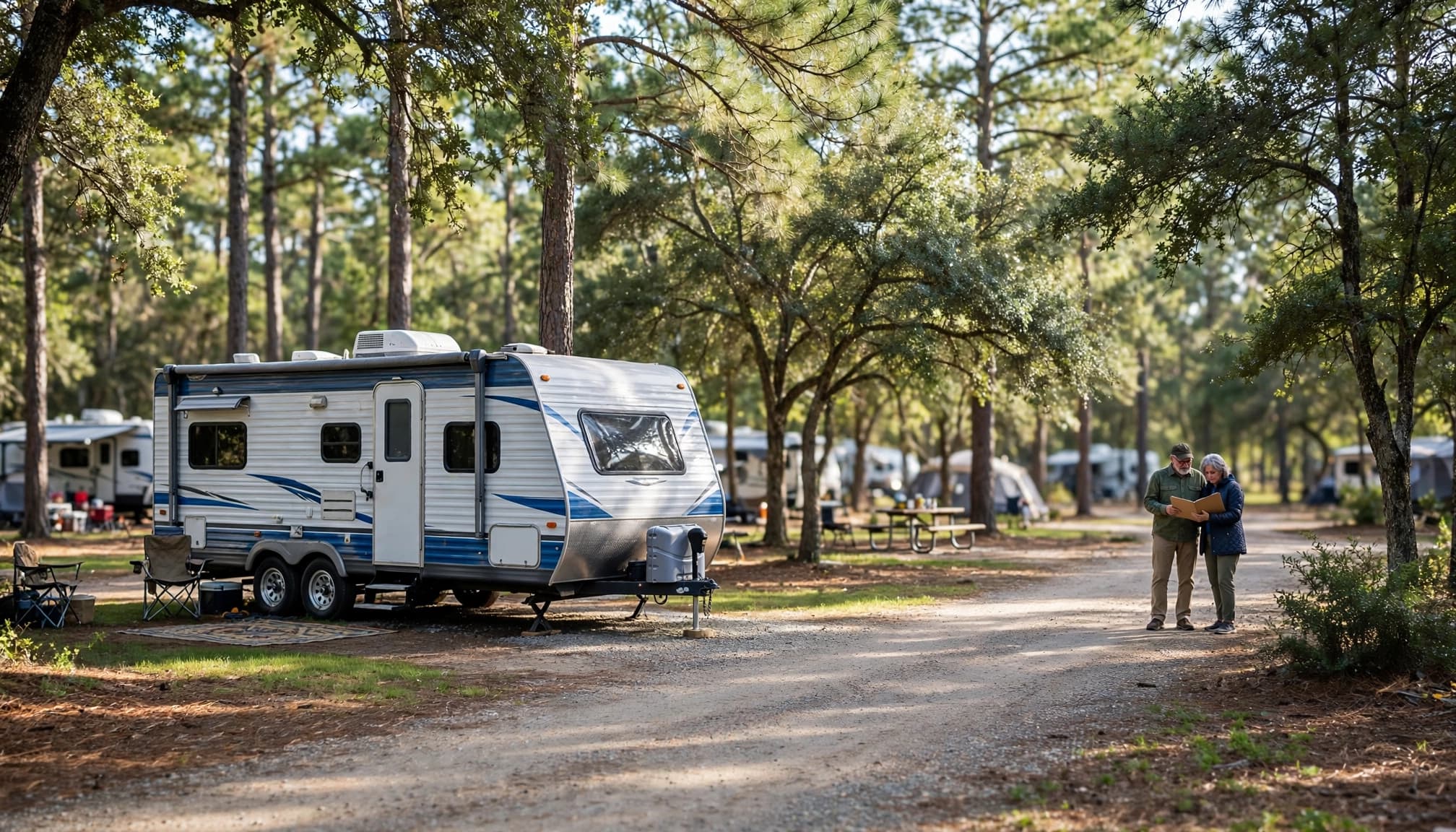
Describe how you actually use the rig
Full-time RV living changes the insurance question because the vehicle now carries your daily household life. You cook, sleep, welcome visitors, and keep important belongings there throughout the year.
Progressive describes full-time use as using an RV as your permanent residence, typically more than six months annually. That is its guidance, rather than a universal rule across insurers.
For seniors comparing full-time RV living with part-time RV use in retirement, the distinction starts with residence. Count the months you camp, but also describe whether you maintain another home.
Separate residential coverage from driving requirements
Full-timer coverage isn’t required by law. It can still protect retirement assets if you’re responsible for an injury or property damage while parked.
In most states, motorhome drivers are required by law to carry liability coverage. Collision and comprehensive coverage may be optional under state law, while a lender may require them on a financed rig.
Those are separate obligations. Keeping the lender satisfied doesn’t automatically mean your policy covers full-time residential use.
What stays in your standard RV policy
A policy marketed as full coverage combines auto and homeowners protections, but each has a distinct job.
AAA’s RV insurance information describes the basic protections, including liability, collision, comprehensive, uninsured motorist, and medical payments coverage.
Keep driving liability in place
Bodily injury liability addresses injuries you’re legally responsible for causing while driving. Property damage liability addresses damage you cause to someone else’s property.
Uninsured motorist coverage addresses eligible losses involving an uninsured driver, subject to the policy and state rules. Medical payments coverage can address eligible medical expenses after an accident.
These protections remain relevant whether you take short RV road trips or move between campgrounds all year.
Know what protects your own RV
Collision coverage addresses covered crash damage to your rig. Comprehensive coverage addresses covered noncollision losses, such as theft, fire, or storm damage.
Neither is a maintenance plan. Worn tires, aging seals, and ordinary mechanical trouble still need money set aside.
That distinction matters after retirement. A repair bill can arrive without an insurance claim attached.
What full-time RV insurance adds at the campsite
Full-timer coverage addresses risks that continue after you turn off the engine. Progressive’s full-time RV coverage explanation identifies three additions worth understanding.
Full-time liability covers responsibility for harm
Full-time liability coverage can pay for injuries or property damage you’re liable for while the RV is parked, up to your coverage limit.
If a neighbor slips while visiting your motorhome, personal liability coverage may respond when you’re legally responsible. For senior campers who regularly welcome friends over, this is a practical household concern.
Ask your insurer whether personal liability coverage applies to visitors while the RV is parked, and confirm the coverage limit.
The parked setting matters. Driving liability alone doesn’t answer every question about living at a campsite.
Medical payments covers eligible visitor injuries
Medical payments coverage can pay a visitor’s medical costs after an injury inside or near your RV, regardless of fault.
That differs from liability coverage, which depends on legal responsibility. A friend’s broken arm may involve medical payments even when you weren’t responsible for the fall.
The benefit has its own limit and terms. It also doesn’t replace your own health insurance.
Loss assessment covers certain shared-area charges
Loss assessment coverage can help with eligible fees an RV association charges owners for repairs to common areas.
Progressive gives a windstorm-damaged shared picnic area as an example, with coverage up to $5,000. This concerns an association assessment, rather than an ordinary campsite bill.
Ask whether assessments from your RV association qualify under the policy. This coverage becomes more relevant when your retirement camping arrangement includes ownership and shared-property obligations.
Protect belongings and a temporary place to stay

Account for the things you live with
Optional personal property coverage can help repair or replace belongings such as furniture and appliances after a covered loss. Full-timers often carry much more than weekend campers.
Clothing, kitchen equipment, electronics, and camping gear add up. Useful RV accessories for seniors can also make replacing the contents more expensive than expected.
Keep a simple inventory with photographs and purchase records. A folder stored outside the RV keeps those details available if the rig is damaged.
Separate stored property from travel expenses
An active homeowners insurance or renters policy may cover belongings kept in a storage facility. Ask whether that storage facility applies the same limits and covered causes as belongings kept in the RV. Valuable jewelry or antiques may need separate floater coverage. The NAIC’s guidance on stored possessions explains why storage can require additional protection.
Don’t count on a former homeowners policy after it ends.
Travel expenses coverage handles a different problem. It can pay eligible hotel and rental-car costs while the RV is repaired after covered damage. For full-timers, losing use of the rig also means losing use of the bedroom and kitchen.
That makes temporary lodging part of the housing budget.
Keep towing and roadside help separate
A travel trailer creates two insurance questions: damage or injury it causes while being towed, and damage to the trailer itself.
AAA explains that auto insurance typically extends coverage to a towed trailer. That commonly concerns liability while towing. It doesn’t mean the tow vehicle’s policy automatically pays to repair or replace the trailer.
The trailer’s physical damage coverage and residential protection remain separate concerns. This distinction is especially useful for retirees starting with a small travel trailer.
Roadside service gets help to the rig
Roadside assistance focuses on breakdown help, such as towing, jump-starts, lockouts, and tire changes. It generally doesn’t pay for the underlying mechanical repair.
For Arizona and Utah members, AAA Plus RV benefits include emergency fuel delivery, tire changes, locksmith reimbursement, battery service, and up to 100 miles of towing per breakdown. The regional AAA membership plan comparison distinguishes RV benefits from basic membership.
Match dispatch needs to your vehicle
Keep your rig’s length, weight rating, tow vehicle details, membership number, and emergency contacts in the cab. Dispatchers need those details to arrange suitable equipment.
Our guide to RV roadside assistance for seniors covers those practical differences. Avoid paying twice for overlapping benefits, but don’t assume passenger-car towing can handle a large motorhome.
Build insurance into your retirement camping budget
The cost of full-time RV insurance depends on the RV’s type, age, and value. How often and where you use it, your chosen limits and deductibles, and the insurer’s rating factors also affect the premium. A weekend policy and a full-timer policy aren’t equivalent purchases.
Broader protection can mean a higher premium. Still, a lower quote may leave out visitor coverage, belongings, or temporary lodging. Don’t compare policies by the label “full coverage” alone.
Compare quotes using the same full-time use, coverages, limits, and deductibles. Otherwise, the price comparison doesn’t tell you much.
Ask whether the policy classifies the RV for full-time or recreational use and what parked-liability protection applies. Check the coverage limit or sublimit for belongings and temporary lodging, plus the deductibles and exclusions that could affect a claim.
For RV travel on a budget, treat insurance as a fixed expense. Fuel and campground spending can change with your travel pace, but the premium remains part of your monthly floor.
Our guide to RV budgeting for retirees separates those fixed bills from flexible spending. That makes it easier to see what remains for camping.
Keep routine maintenance money and an emergency reserve separate, too. Insurance doesn’t replace either one.
Longer campground stays can reduce fuel spending and sometimes lower nightly costs. Those savings give a fixed income more breathing room without cutting protection.
Questions retired RV travelers often ask
Does full-timer coverage replace my health insurance?
No. Visitor medical payments coverage addresses eligible injuries to other people. Your own healthcare still depends on your health insurance.
Travel can affect provider access, routine appointments, prescriptions, and follow-up care. A snowbird spending months outside a home region may face different practical limits than someone taking nearby weekend trips.
Our guide to Medicare coverage for RV travelers explains those distinctions for senior camping. Put healthcare costs beside insurance and campsite costs when planning an extended stay.
Does “full coverage” mean everything is covered?
No. The phrase doesn’t mean every loss, belonging, or living arrangement is insured.
A policy with liability, collision, and comprehensive coverage can still lack full-timer additions. It can also have separate limits for belongings, visitor injuries, and travel expenses.
Read the named coverages rather than relying on the phrase. Fewer assumptions make a retirement travel budget easier to manage.
Match the policy to the home you actually use
When your RV becomes your permanent residence, parked-life protection deserves the same attention as driving coverage. Visitor injuries, household belongings, and temporary lodging can all affect your retirement savings.
Before switching to full-time camping, put your actual living arrangement and the named coverages side by side. Keep roadside help, healthcare, and maintenance money in their own categories.
A clear division of responsibilities leaves fewer surprises when an ordinary camping day goes sideways.