Best RV Surge Protectors for First-Time Owners
A bad campground pedestal can damage your RV surge protector-free setup in seconds, and the repair bill can ruin a trip fast. For first-time owners, this is one of the simplest upgrades you can make before your next camping weekend.
The good news is that you don’t need to know much about electricity to choose well. You only need the right amp rating, a few key safety features, and a clear idea of how you camp.
Why new RV owners should never skip power protection
Campground power isn’t always clean. One site may be wired well, while the next pedestal may have low voltage, an open ground, or a sudden surge. Your air conditioner, converter, microwave, TV, and fridge all depend on stable power.
That is why RV surge protectors matter so much for beginners. The better ones do more than stop a spike. They check the pedestal before power reaches your coach, and some shut power off when conditions turn unsafe.
Low voltage is one of the biggest threats. It often shows up on hot days when the park is full and everyone is running air conditioning. A surge is dramatic, but low voltage can quietly wear down expensive equipment over time. A solid unit helps catch both problems.
For seniors, that peace of mind matters. No one wants to start a trip by chasing a power issue, moving campsites, or calling for service. Among all the camping tips that save money, using a surge protector ranks near the top.
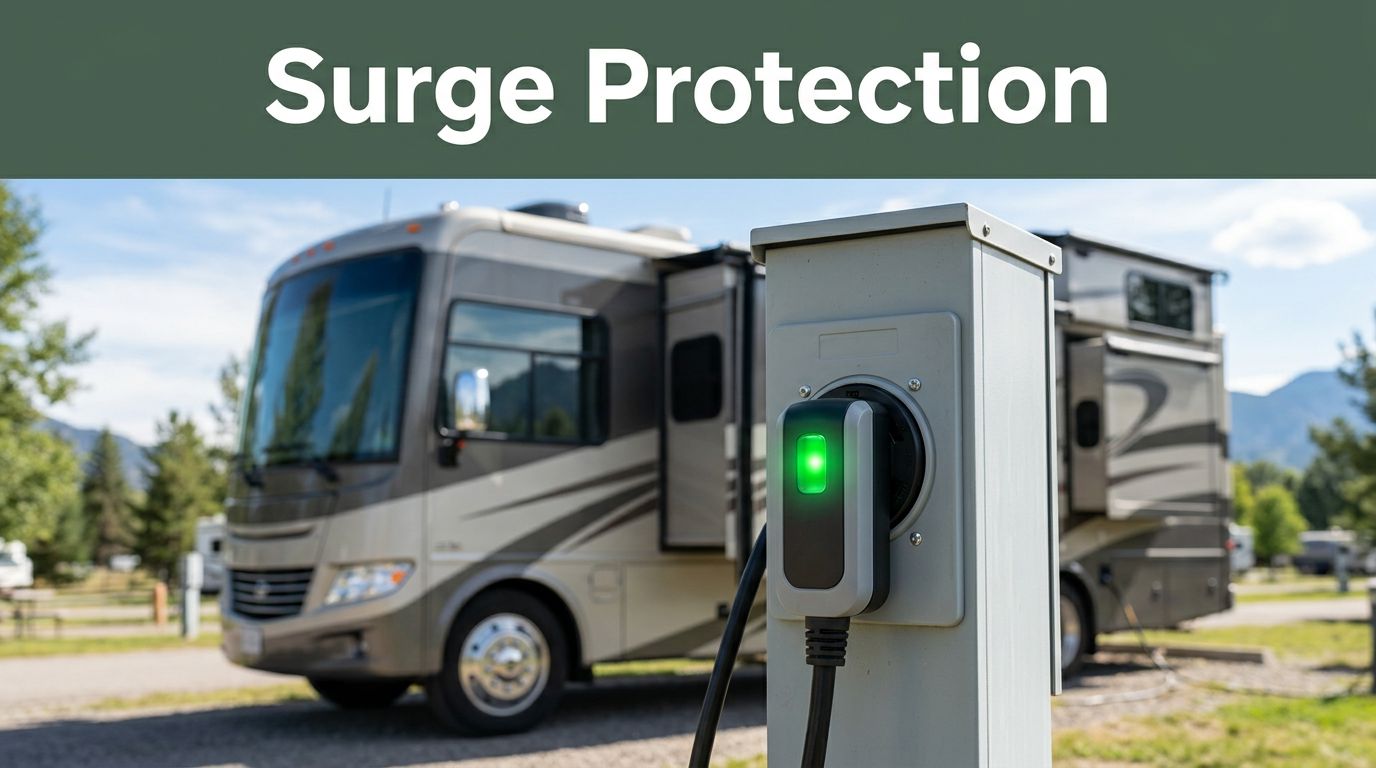
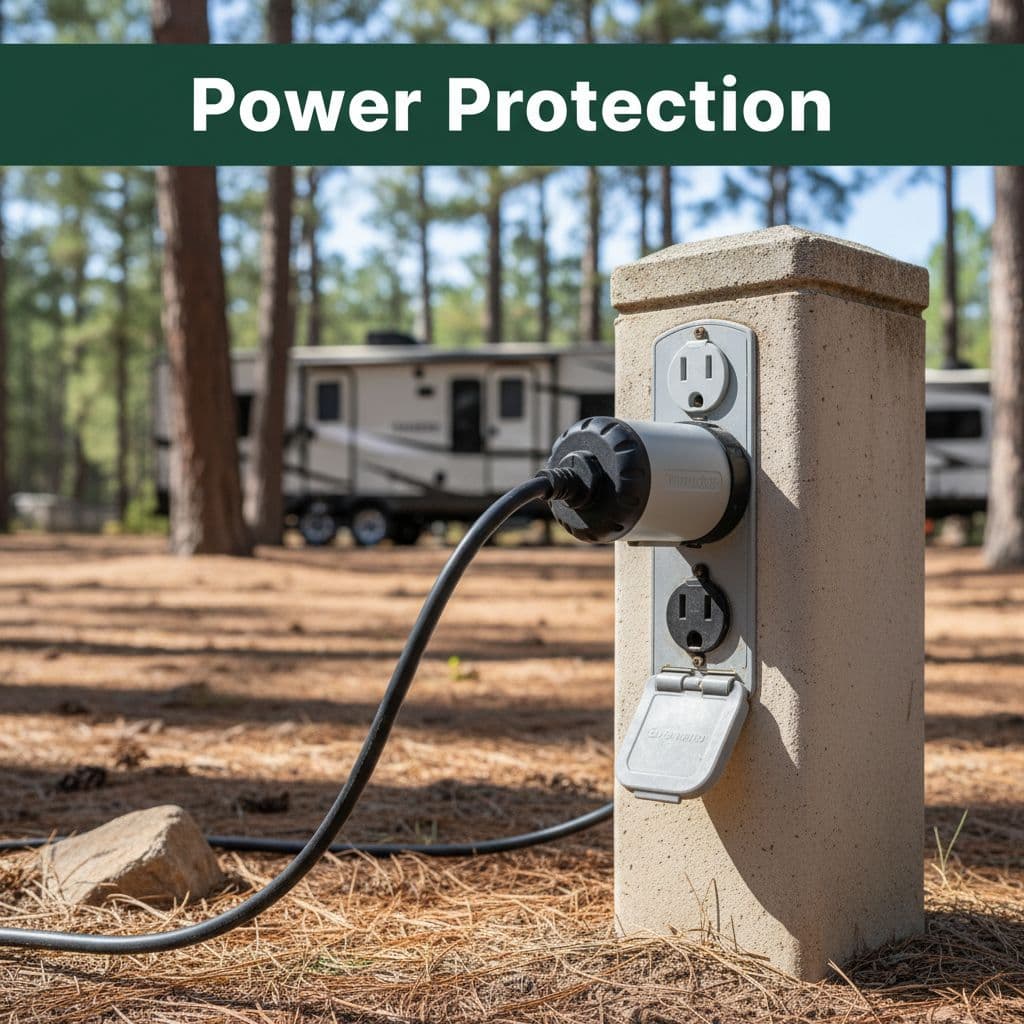
Plug the protector into the pedestal first. If the power is bad, you want the device to block it before your RV connects.
Some products are sold as surge protectors, while others are labeled EMS units, short for electrical management system. In plain terms, EMS-style models are usually the safer buy for a first-timer because they monitor more than one problem.
If you want a quick outside view before you buy, this video on whether RV surge protectors are worth it gives a useful beginner overview.
How to choose the right RV surge protector
Start with your amp service. Most smaller trailers use 30 amp service. Many larger fifth wheels and motorhomes use 50 amp. Match the protector to the service on your rig, not the outlet adapter you happen to carry.
This quick comparison makes the choice easier:
| Your setup | Best match | Why it fits |
|---|---|---|
| Small trailer or older camper | 30-amp portable unit | Easy to use, lower cost, simple for weekends |
| Large fifth wheel or motorhome | 50-amp unit | Handles higher electrical demand |
| You want a set-it-and-forget-it option | Hardwired unit | Stays inside the RV and can’t walk away |
| You want easy setup and easy replacement | Portable unit | Plugs in fast and moves with you |
For most first-time owners, a portable model is the easiest place to start. You plug it into the pedestal, wait for the device to read the power, and then connect the RV cord. There’s no installation, and you can move it to another coach later.
A hardwired model sits inside the RV, usually near the power cord entry. That keeps it out of weather and out of sight. Still, it takes more effort to install, and some owners prefer an RV tech to handle it.
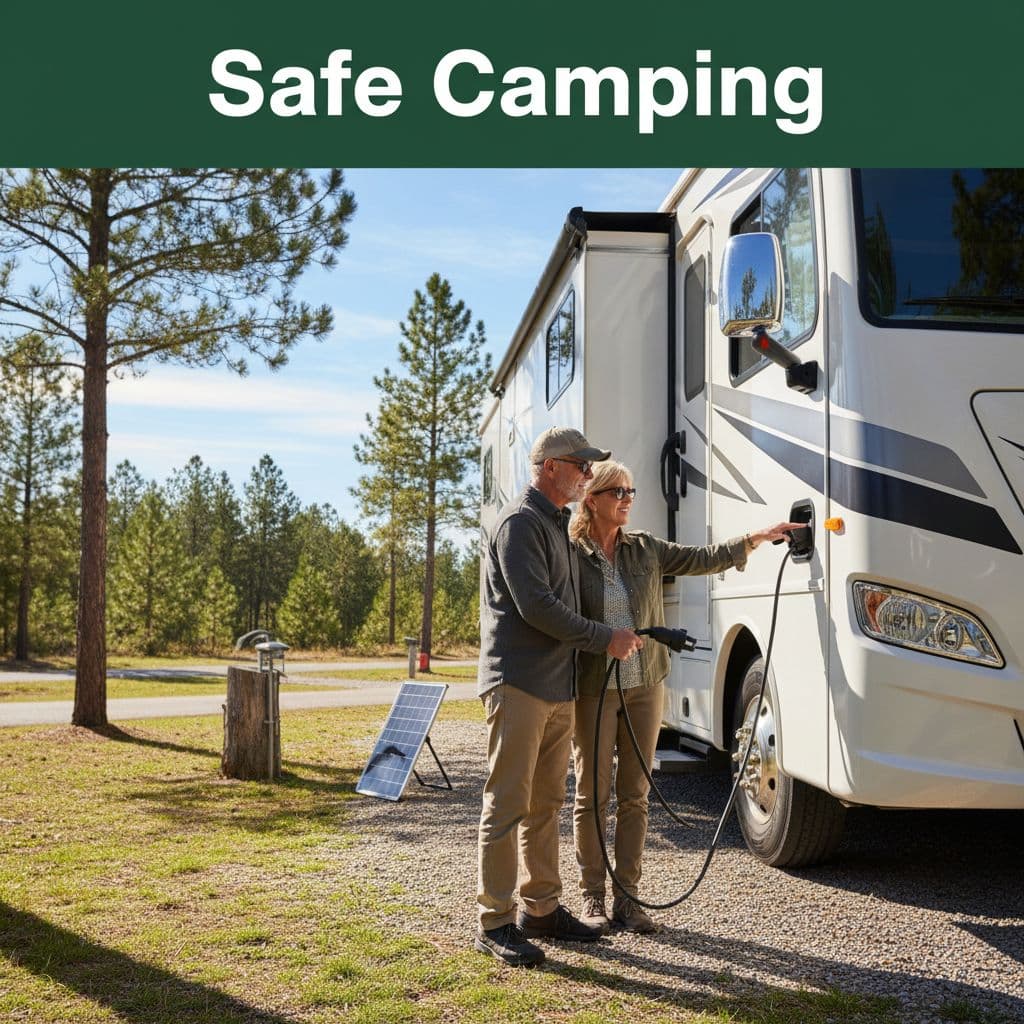
After amp rating and style, pay attention to these features:
- Automatic shutoff for unsafe voltage
- Error codes for bad pedestal wiring
- Weather-resistant housing for outdoor use
- Replaceable surge module, if offered
- Bluetooth or a simple display, if you want easy monitoring
Bluetooth is not required, but it can help. If bending at the pedestal is hard, being able to check status from inside is a nice bonus for seniors. Meanwhile, a replaceable surge module can save money after a major hit.
Even if you travel light for van life or short weekend camping, the rule stays the same: protect the rig first, then settle in. That habit is common among full time rv’ers because they know campground power can change from park to park.
Best picks for first-time owners
No single protector is perfect for every rig, but a few names come up often because they are easy to understand and built for real travel.
Hughes Watchdog, a strong pick for replaceable protection
The Hughes Watchdog gets frequent praise in owner groups because its surge module is replaceable. That matters after a major event, since you may not need to replace the whole unit. Community posts in a Roadtrek owners discussion and a GoRVing Reddit thread both mention that feature, along with Bluetooth on some versions.
For a beginner, that mix makes sense. You get clear status checks and a path to cheaper repair after a surge. If you want a portable unit with modern monitoring, this one deserves a close look.
Hughes Autoformer Gen II 30 Amp, a beginner-friendly portable option
If your RV uses 30-amp service, the Hughes Autoformer Gen II WiFi and Bluetooth portable model is one of the more visible options in current roundups. A recent RVUpgrades list of top RV surge protectors highlights it among the leading choices.
This style works well for a first-time owner with a travel trailer or smaller motorhome. You get a plug-and-play setup, app-based monitoring on supported versions, and solid protection without opening any panels inside the coach.
Progressive Industries Hardwire 50 Amp, best for owners who want it installed once
The same RVUpgrades roundup also points to the Progressive Industries Hardwire 50 Amp model as a top option. Hardwired units appeal to owners who want the device protected inside the RV and ready every time they plug in.
This is a strong fit for larger coaches and for people who prefer fewer moving parts at setup. If you stay out for weeks at a time, or if outside lifting and bending are harder than they used to be, a built-in unit can make life easier.
50A Surge Guard portable EMS, a practical choice for bigger rigs and long trips
For larger motorhomes and fifth wheels, TechnoRV’s guide for full-time travel recommends a 50A Surge Guard portable total electrical protection unit. The reason is simple: bigger rigs draw more power and often carry more costly appliances.
Even if you are not one of the full time rv’ers on the road year-round, that recommendation still helps. A big coach with dual air conditioners has more to lose from bad power, so stronger protection makes sense.
Simple setup tips and mistakes to avoid
A surge protector only helps if you use it the right way. The good news is that the routine takes less than a minute once you get used to it.
First, turn the pedestal breaker off. Next, plug in the protector. Then turn the breaker on and let the unit read the power. After it shows safe status, connect your RV cord.
A few mistakes cause trouble:
- Using the wrong amp rating
- Plugging the RV in before the protector checks power
- Ignoring error codes because “the lights still came on”
- Leaving a portable unit unsecured in a busy campground
If your unit shows a wiring fault, don’t guess. Ask the campground for another site or another pedestal. Bad power rarely fixes itself. This is one of those camping tips that saves both money and stress.
It also helps to check your own cord ends and adapters. Burn marks, loose blades, or cracked plastic are warning signs. A surge protector can’t fix a worn-out plug.
If you like practical help like this, RV Life Insider has more than one way to keep you prepared. You can View All Our Newsletters for regular tips and updates, or View Our Website for travel guides, planning tools, blogs, and community resources.
Final thoughts
The best choice for most first-time owners is a protector that matches the RV’s amp service and blocks more than simple surges. Low voltage and bad wiring are often the real troublemakers at campgrounds.
A portable 30-amp or 50-amp EMS-style unit is usually the easiest starting point. If you want less setup at each stop, a hardwired model can be worth it.
Good power protection is not flashy, but it pays off every time you plug in. For new owners, that kind of quiet confidence makes camping a lot more enjoyable.
This post may contain affiliate links. If you make a purchase through these links, I may earn a small commission at no extra cost to you.