Smart Road Trip Essentials for Comfortable RV Camping
A long drive feels shorter when your gear does its job. The best smart road trip essentials aren’t flashy, they save your back, cut setup time, and stop small hassles before they grow.
That matters even more when you love rv travel, camping, or van life and want the trip to stay easy. If you’re one of many seniors on the road, comfort and simplicity beat clutter every time. Start with the items that earn their spot every day.
Choose gear that saves effort every day
In an rv, every drawer, cabinet, and storage bay has a price. If an item takes up room, it should save time, strain, or worry. That simple rule keeps your packing list sharp.
For seniors, the best essentials often look ordinary. A sturdy step stool is not exciting, but it can save your knees. A bright headlamp feels basic, yet it keeps both hands free after dark. For full time rv’ers, those small wins stack up fast because they happen every day.
This quick comparison shows what usually earns space first:
| Item | Why it matters on the road | What to look for |
|---|---|---|
| Step stool with grip | Makes entry, storage access, and setup easier | Wide base, non-slip top |
| Headlamp or clip light | Helps at hookups and night walks | Bright beam, easy button |
| Water pressure regulator | Protects your plumbing at campgrounds | Adjustable or well-rated brass model |
| Tire pressure monitor or gauge | Catches slow leaks before they become bigger problems | Large display, easy-to-read numbers |
| Compact power station | Keeps phones, lights, and small gear charged | Clear screen, simple ports |
The pattern is clear. Good gear reduces repeat trips, awkward reaching, and heavy lifting. That matters more than novelty.
The right road gear lowers effort every single day, not only in an emergency.
Most camping tips focus on meals, fire pits, or the fun parts of camp life. Those matter, too. Still, comfort starts with the dull basics. Can you reach what you need without climbing? Can you see the hookups? Can you grab a light in seconds?
Try each item at home before your next trip. Open it, carry it, store it, and use it once in the dark. If it feels fussy in the driveway, it will feel worse at a wet campsite.
Power, light, and weather matter more than novelty
Trips go smoother when power and weather are under control. You don’t need a rolling tech showroom, but you do need a few dependable tools.
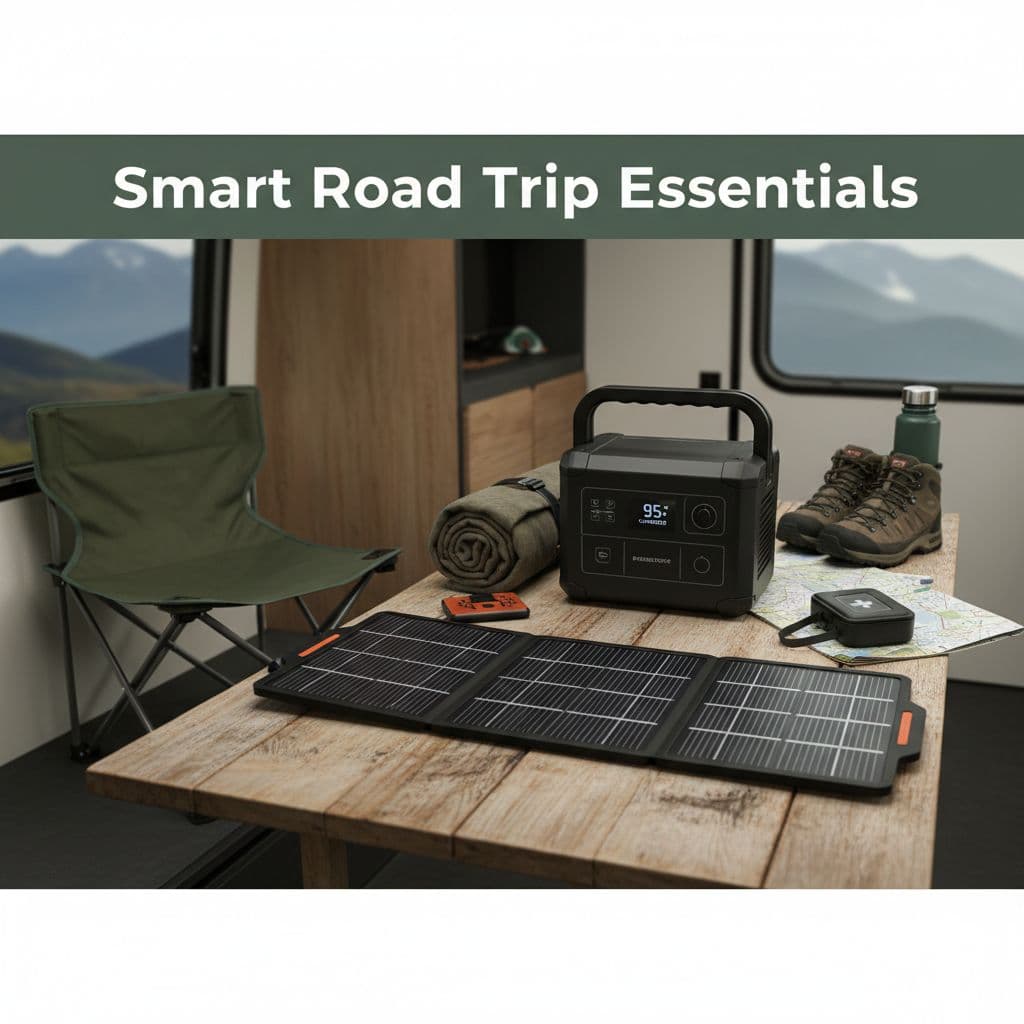
A compact power station is one of the smartest upgrades for modern camping. It keeps phones, lanterns, and small medical devices charged without a tangle of cords. Add a portable solar panel if you like longer stops or more off-grid days, especially if you mix campground stays with quieter boondocking.
Light matters just as much. Keep one lantern inside, one flashlight near the door, and a headlamp in the outside storage bay. That setup covers late arrivals, power loss, and early-morning campground walks. Rechargeable lights are handy, but carry fresh backup batteries if your favorite gear needs them.
Weather deserves its own kit. Pack a compact rain jacket, a quick-dry towel, and one spare pair of shoes you don’t mind getting muddy. A small mat near the door keeps dirt outside where it belongs. Meanwhile, a rechargeable fan can make warm nights more bearable, even with hookups.
If you camp often, store charging gear in one labeled pouch. Put short cords, adapters, and wall plugs in that single place. Then you won’t waste ten minutes hunting for the right cable at every stop.
Van life travelers know this well because smaller rigs punish loose systems fast. The same rule helps any rv setup. Keep power simple, keep light easy to reach, and plan for weather before it arrives.
Build a campsite that feels easy, not busy
A good campsite should feel like a place to rest, not another project. That starts with how your space works for your body.
Choose chairs with firm seats, solid armrests, and a height that lets you stand without a struggle. Deep lounge chairs look inviting in photos, but they can be hard to get out of after dinner. A folding side table also helps because drinks, books, and medications need a safe place that isn’t the ground.
The first 15 minutes after parking set the tone for the stay. If you have to bend, drag, and shuffle gear around, your evening starts with fatigue. Keep the most-used items together, such as leveling blocks, gloves, hookup tools, and the door mat. Then your setup becomes a routine instead of a hunt.
Kitchen comfort matters, too. You don’t need a large camp kitchen to eat well. A stable prep surface, one sharp knife with a cover, and a few stackable containers do more than a pile of gimmicks. If you cook outside, use waist-high work surfaces when you can. Your back will thank you by day three.
For seniors, nighttime safety deserves extra attention. Add motion lights near the entry steps and along the path to the bathroom if your campsite allows it. Keep slip-resistant shoes by the door. Also, leave a clear path inside the rv before bed. One loose bag on the floor can turn a quiet night into a bad fall.
Some of the best camping tips are also the least glamorous. Put comfort first. Trim anything that adds work. A calm campsite is easier to enjoy, and easier to break down when it’s time to move.
Use tech that helps, then keep a paper backup
Good travel tech should feel quiet in the background. It should solve a real problem, not create another one.
A stable phone mount is worth having because directions are safer when the screen stays put. Offline maps are just as helpful, especially in rural areas where a signal fades. Add a weather app or weather radio, and you can make better choices before wind or storms roll in.
A few upgrades pay off quickly in many rigs. A tire pressure monitoring system can warn you about trouble before a tire fails. A battery monitor helps you understand power use without guessing. If backing up makes you tense, a good camera system can lower that stress at fuel stops and tight campgrounds.
Still, don’t trust screens alone. Keep printed reservation details, campground phone numbers, and a paper map in the cab. Write down medication names and important contacts, too. When a battery dies or service drops, paper keeps moving.
If you like practical route notes, seasonal reminders, and gear ideas, the RV Life Insider newsletter lineup is worth a look. You can View All Our Newsletters when you want fresh ideas without digging through search results. For travel guides, planning tools, blogs, marketplace finds, and community resources, you can also View Our Website.
That mix works because smart travel is not only about what sits in a storage bay. Good information saves time, helps with planning, and keeps road days calmer.
Pack for your body, not someone else’s checklist
The internet loves giant packing lists. Most of them ignore the person carrying the gear.
Your own road kit should match how you move, sleep, and recover. If your lower back gets stiff, bring the cushion you already trust. If cold mornings bother your hands, keep gloves near the door. If bending is the hardest part of setup, carry a grabber tool and a kneeling pad.
This is where seniors often make the smartest choices. They stop packing for fantasy trips and start packing for the days they actually live. That usually means fewer gadgets and better basics. A supportive camp chair, easy-on shoes with grip, a simple pill organizer, and a good water bottle can matter more than another cooking accessory.
Full time rv’ers often learn this the hard way. An object can look useful in a store and become dead weight by month two. Weekend campers can learn faster by paying attention after each trip. If you didn’t use something twice, ask why it came along. If an item made camp life easier both times, give it a permanent home.
The same idea fits van life, towable camping, and large motorhomes. Space changes, but daily comfort does not. Pack for real habits, real weather, and the real body you bring to camp. That’s how the road stays open and enjoyable.
A simpler road feels better
The easiest trips rarely come from owning more gear. They come from choosing a few smart items that cut strain, save time, and keep daily tasks calm.
That is the heart of smart road trip essentials for rv travel. Pick tools that help in low light, rough weather, and tired moments, because those are the times that shape the trip.
When your setup fits your body and your routine, the miles feel lighter. The road doesn’t need to be complicated to be good.
This post may contain affiliate links. If you make a purchase through these links, I may earn a small commission at no extra cost to you.