RV Generator Basics for Part-Time Travelers Who Camp
Nothing gets your attention faster than dead power when the coffee maker is ready and the campground pedestal isn’t. That’s why a few rv generator basics matter, even if you only travel on weekends or a few weeks each year.
Part-time RV travel has its own pace. You want comfort, quiet, and simple gear that works when you need it, so it helps to know what a generator can do, how much power you need, and how to use it without hassle.
What a generator does for your RV, and what it can’t do
A generator gives your rv 120-volt power when you don’t have hookups. That means you can run household-style appliances, charge batteries through your converter, and keep key systems going during a short outage.
However, a generator doesn’t erase all limits. Your battery bank, inverter, and solar setup still matter. Lights, fans, the water pump, and phone chargers often run fine from battery power alone, while bigger loads need more muscle.
Most travelers notice the difference with high-draw items. A coffee maker, microwave, hair dryer, and rooftop air conditioner can push past what batteries handle well. If you camp in warm weather, or if you use a CPAP machine at night, power planning gets more important.
Part-time travelers often buy too much generator because they picture every worst-case need at once. In real life, your best choice depends on how you camp. If most trips include hookups, a small portable unit may be enough as backup power. If you boondock often, or stay in hot areas, you may want more capacity.
The type of rv matters too. Larger motorhomes often have built-in generators, while travel trailers and fifth wheels usually rely on portable units. Many seniors prefer inverter generators because they run quieter and produce cleaner power for phones, laptops, and modern electronics. Still, weight matters, so a lighter unit with wheels can be easier to live with than a bigger model that rarely leaves the garage.
How to choose the right generator size
The first number to understand is wattage. Every appliance has running watts, and some have higher starting watts when they first kick on. Your generator has to handle both.
Here are common power ranges to keep in mind before you shop:
| Appliance or device | Typical running watts | Possible startup demand |
|---|---|---|
| Phone charger | 10 to 20 | Minimal |
| CPAP machine | 30 to 60 | Minimal, higher with humidifier |
| Coffee maker | 600 to 1,200 | Usually close to running load |
| Microwave | 900 to 1,500 | Slight surge |
| 13,500 BTU RV air conditioner | 1,500 to 2,000 | 2,800 to 3,500 or more |
Those numbers vary by brand and model, so check the appliance label and your owner’s manual. The big takeaway is simple: air conditioning changes everything. A generator that handles battery charging and morning coffee may still struggle with one rooftop AC.
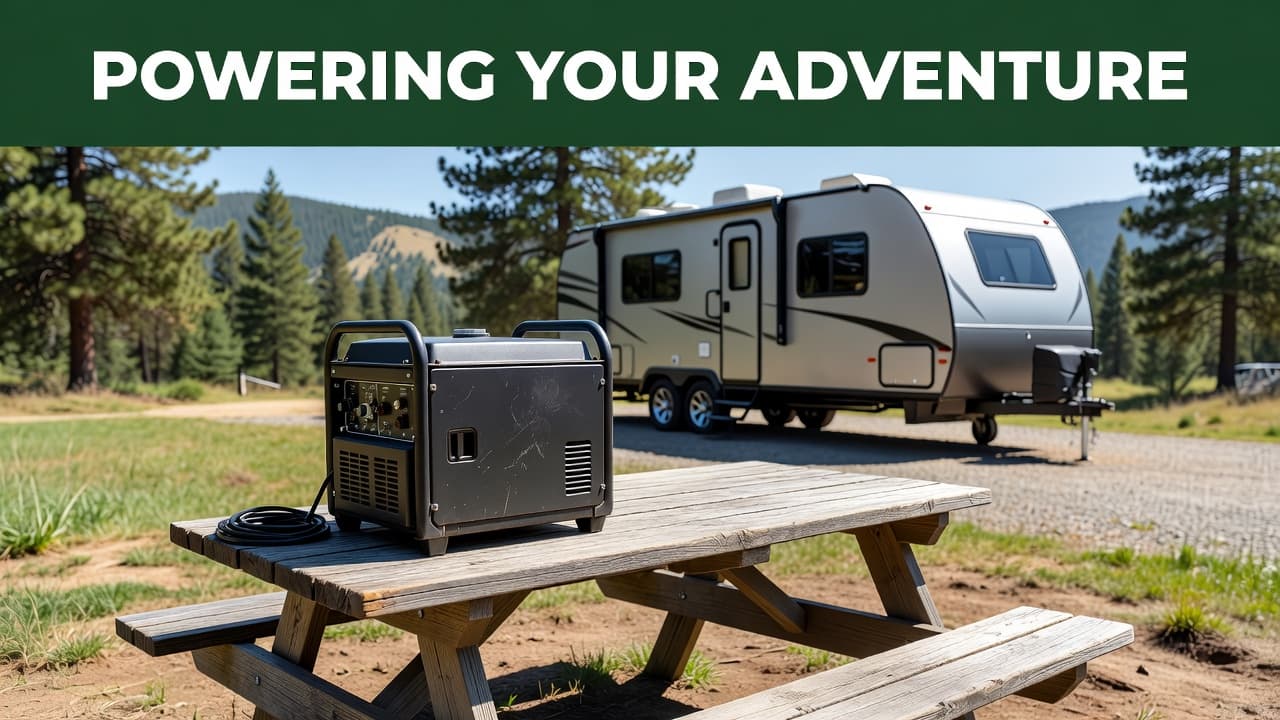
For many part-time campers, a 2,000-watt inverter generator hits a sweet spot. It’s often enough for charging, small appliances, and quiet backup use. If you want to run one air conditioner, you may need a 3,000-watt class generator, a soft-start kit on the AC, or two smaller units that run in parallel.
Noise matters almost as much as wattage. Inverter generators usually cost more, but they are quieter and friendlier to nearby campers. That’s a big plus in close campgrounds. They also tend to be easier on sensitive electronics, which matters if you carry tablets, laptops, or medical gear.
Fuel type matters too. Most portable units use gasoline, while some onboard generators use propane or diesel. Gas models are common and easy to find, but they need careful storage between trips. For seniors, handle design, wheel kits, and lift weight are often as important as raw output.
Safe setup matters more than most people think
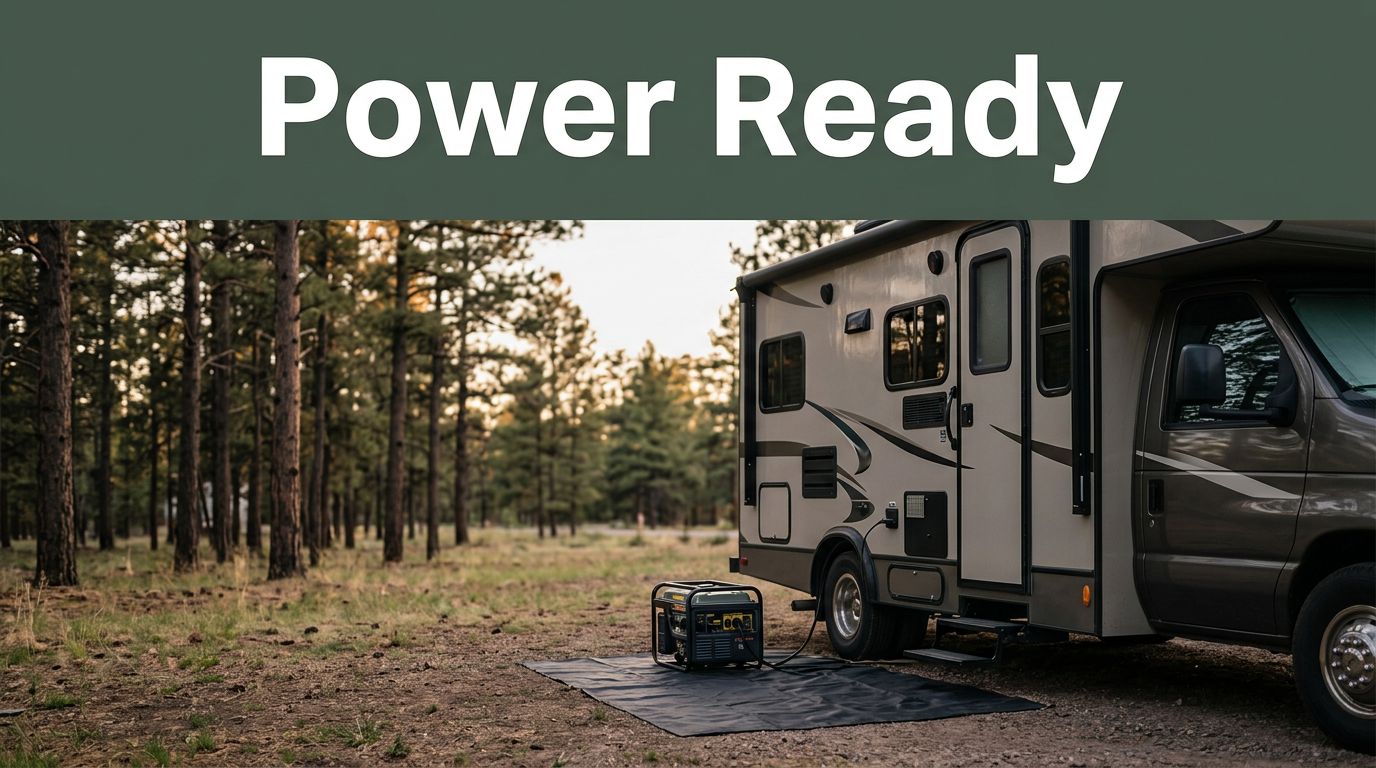
Good generator habits start with placement. Carbon monoxide is the biggest risk, and you can’t see or smell it. Never run a generator inside a garage, tow vehicle, storage bay, tent, or under your rv.
Keep the generator outside, well away from doors, windows, vents, and your neighbors’ campsite.
Set it on dry, level ground and point the exhaust away from people. If rain moves in, use only a cover made for generator use that leaves full air flow. Don’t drape a tarp over the machine. Heat and fumes need a clear path out.
Your power cord matters too. Use a heavy-duty cord rated for the load, and keep connections off wet ground when you can. If your rv uses 30-amp or 50-amp service, make sure your adapters are the right type and in good shape. A cheap, worn adapter can turn a simple setup into a frustrating one.
Camping etiquette also counts. Many campgrounds post quiet hours, and some limit generator use to certain times. Even where rules are loose, your neighbors still hear the machine. A quiet inverter model helps, but timing helps more. Run the generator when you need it, then shut it down.
Among the best camping tips for shared spaces, this one is easy to remember: power should make your trip better, not everyone else’s worse. That applies whether you camp in a national park, a fairground, or a small private campground.
Routine maintenance keeps problems small
Most generator trouble starts between trips, not during them. Fuel gets old, carburetors gum up, and a machine that ran fine last fall suddenly won’t start in spring.
That is why part-time travelers should run the generator every month or so, even in the off-season. Let it warm up, then put a light load on it for a short time. A small space heater, battery charger, or similar load helps the engine and electrical side do real work.
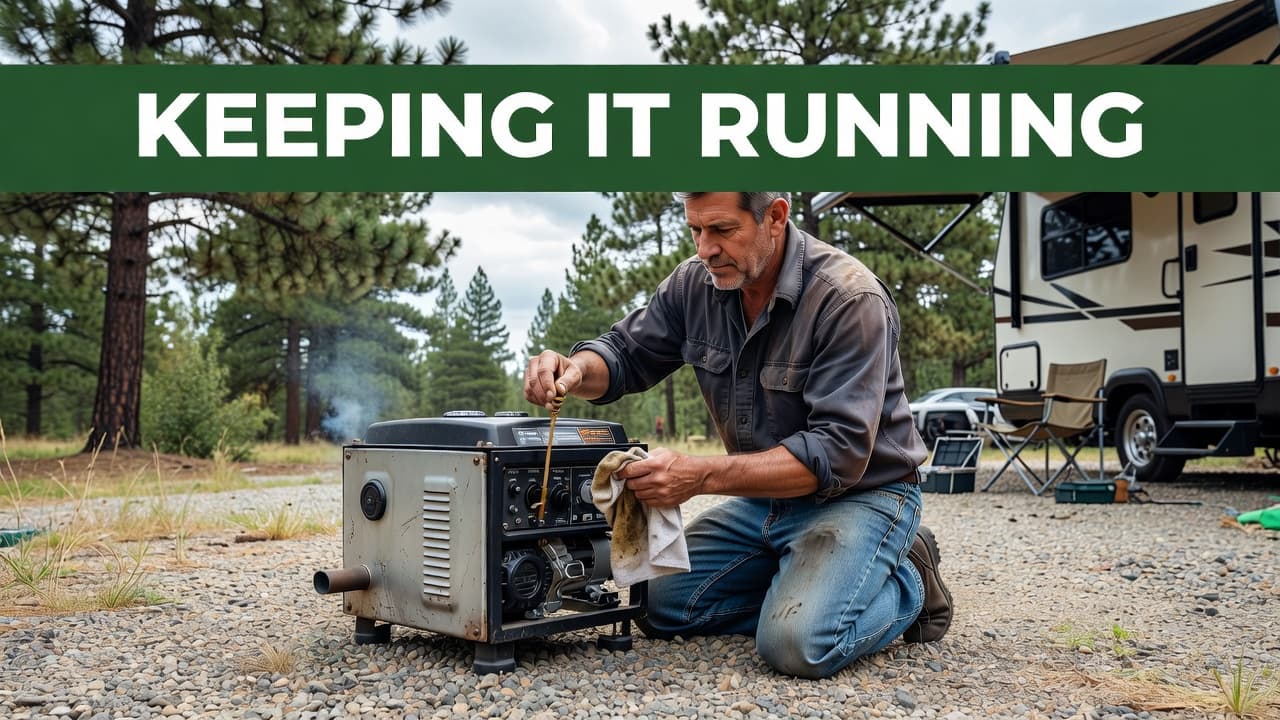
Before each trip, check the oil level, air filter, spark plug, and fuel lines. Most portable generators need an early oil change in the first few dozen hours, then regular changes after that. The exact interval depends on the model, so follow the manual rather than guessing.
Fresh fuel helps more than many owners realize. If gasoline will sit for more than a few weeks, add stabilizer. Some generators also benefit from draining the carburetor before long storage. Keep spare fuel in an approved can, and never store it inside the living area of the rv.
Listen to the machine when it runs. Surging, hard starts, smoke, or weak output usually point to a problem worth fixing before your next trip. Many full time rv’ers learn these signs quickly because they use their gear often. Part-time campers need a written routine, because long gaps make small issues easy to miss.
Smart habits for part-time RV travel
Weekend travel creates a different pattern than van life or full-time road living. In van life setups, power systems get used almost every day. The same goes for many full time rv’ers. Part-time owners may go months without touching the generator, so simple habits matter more.
A short pre-trip check saves time at the campsite:
- Start the generator at home and let it run long enough to confirm smooth power.
- Pack the right cord, adapter, fresh fuel, oil, and a small funnel.
- Test your carbon monoxide alarm before every trip.
- Check campground rules so you know when generator hours begin and end.
Another good habit is load discipline. Use battery power for lights, fans, and device charging when you can. Save generator time for heavy loads like the microwave, coffee maker, or air conditioner. That cuts noise, fuel use, and wear.
Many seniors also keep a small note inside the rv with the wattage of common appliances. That way, no one has to guess whether the toaster, microwave, and AC can run together. A simple note beats a dead breaker and a rough morning.
If you like practical camping tips beyond power setup, the RV Life Insider newsletter is worth a look. You can View All Our Newsletters for updates, and View Our Website for travel guides, planning tools, blogs, products, and community resources that fit real rv travel.
Final thoughts
A generator should make part-time camping easier, not more complicated. The best setup matches your real power needs, fits how you camp, and stays safe around people and pets.
When you buy the right size, place it wisely, and keep up with simple care, rv generator basics stop feeling technical. They become one more part of a calm, comfortable trip, even when shore power isn’t there.
This post may contain affiliate links. If you make a purchase through these links, I may earn a small commission at no extra cost to you.